
Earth City, MO · Earth City Expressway & I-70
Commercial Dumpster Rental in Earth City, MO
We automate your roll-off. You'll never run out of room. Fair price. Great service.
American Compaction Services · 20, 30 and 40 yard roll-off containers, compacted on site, for the parcel hubs, distribution buildings and office parcels of the Earth City park.
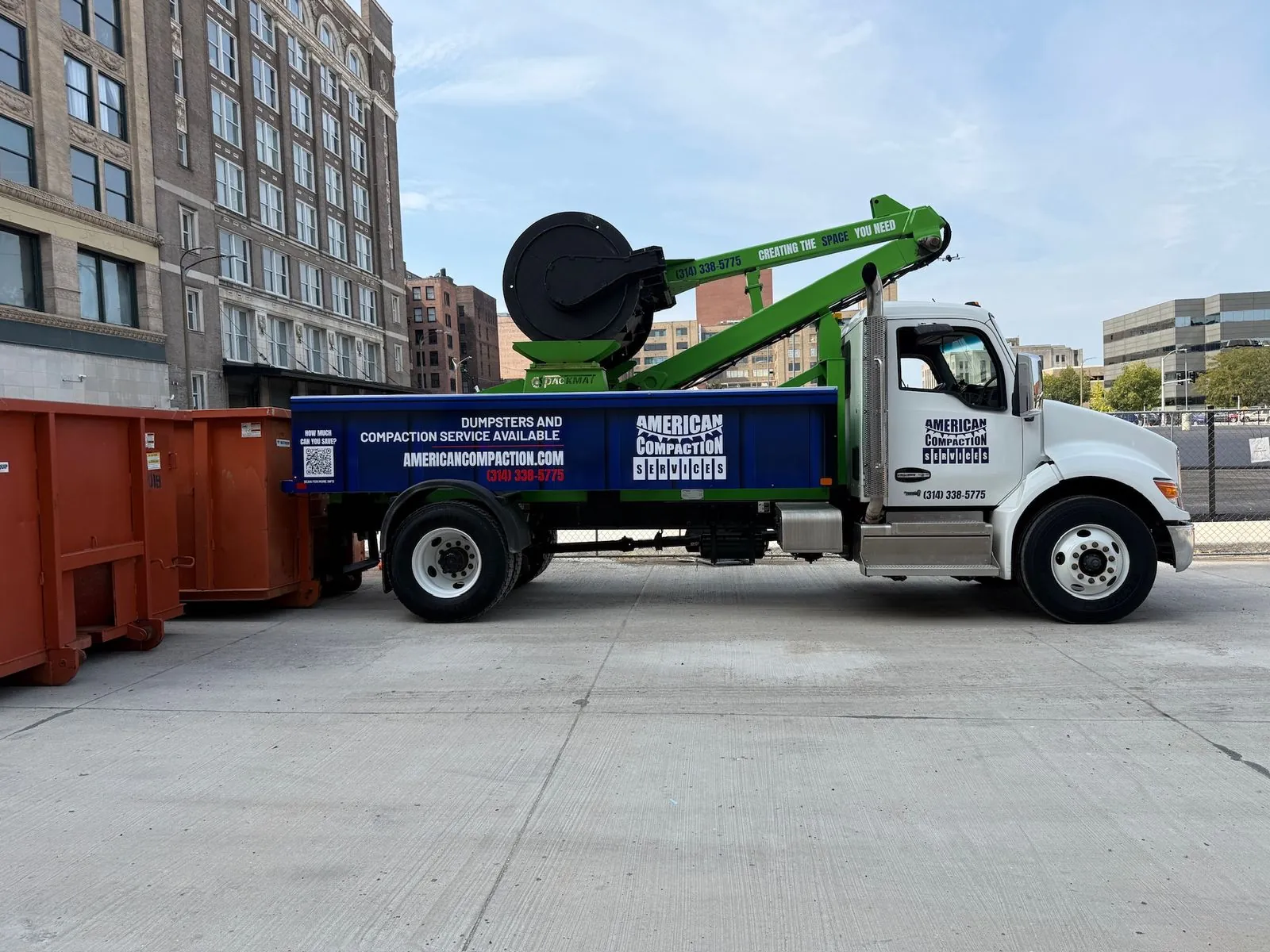
American Compaction Services provides waste management through commercial dumpster rental and on-site compaction in Earth City, the business park in the Missouri River bottoms west of Bridgeton. We supply open-top roll-off containers to the distribution centers, parcel hubs and office buildings along the Earth City Expressway, Rider Trail and Corporate Woods Drive, and we compact them on site so each container holds more before it is pulled.
- Earth City Expressway & I-70
- Commercial accounts only
- Self-contained mobile compaction unit
Earth City was planned as a single industrial and office park, and it fills its containers the way a freight park does. Inbound loads arrive palletized and wrapped, outbound loads leave in fresh packaging, and what stays behind is corrugate, stretch film, banding and broken pallets. Very little of it is heavy. A container on an Earth City dock is usually full of air well before the truck pulling it is near its limit, and that gap is what on-site compaction works on.
Earth City at Work
What Fills a Container in the Earth City Park
Earth City is not a town. It is unincorporated St. Louis County land laid out as one business park, held behind its own levee on the Missouri River floodplain and reached from I-70 at the Earth City Expressway exit. The expressway runs north toward Route 370, Rider Trail loops through the distribution blocks beside it, and Corporate Woods Drive carries the office end. Bridgeton lies to the east and Riverport south across I-70, but nearly everything with an Earth City address is a warehouse, a hub or an office building, and they fill containers three different ways.
Parcel Hubs and Sortation
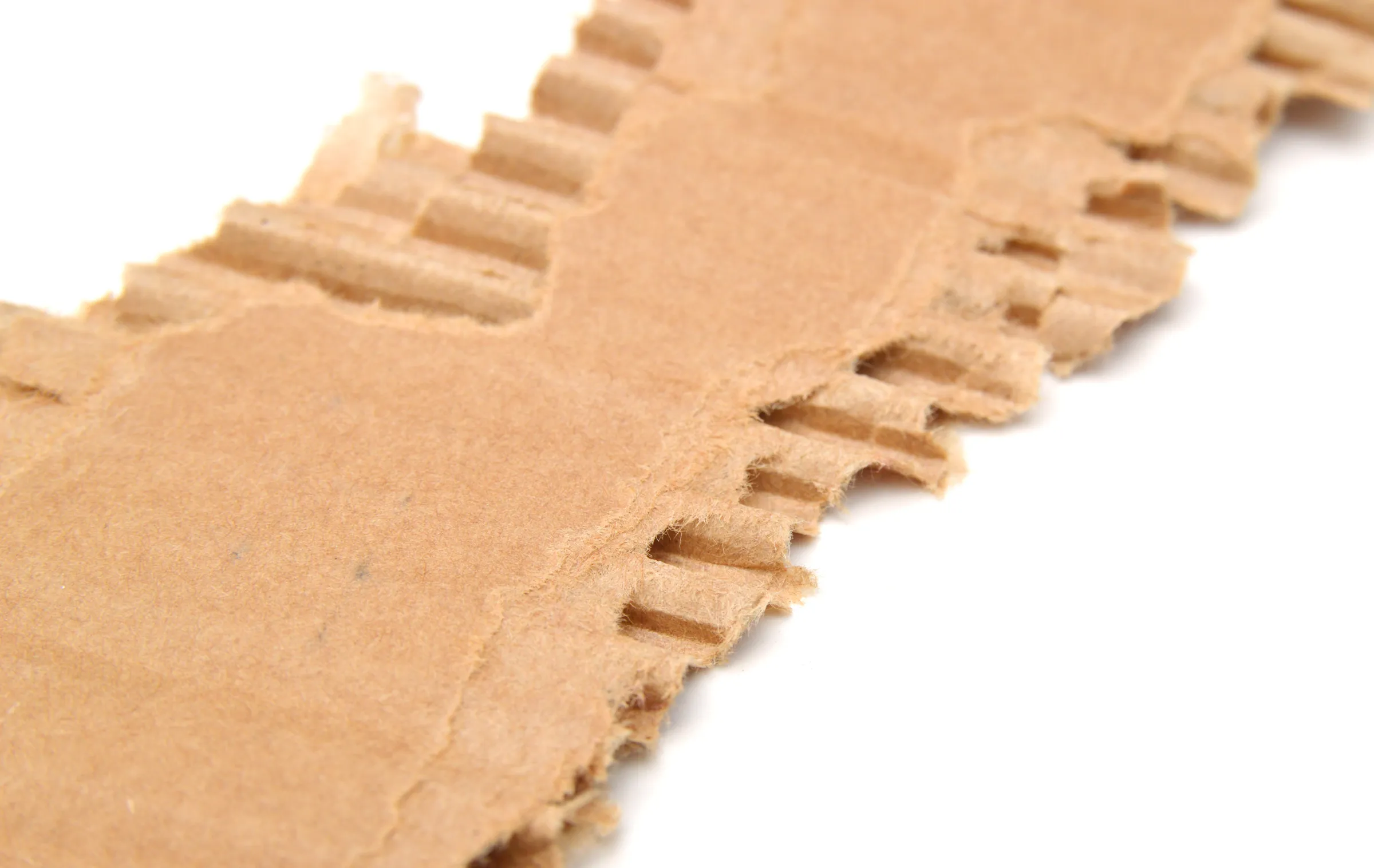
UPS runs a hub in Earth City and FedEx runs a parcel operation here. A hub's waste rises and falls with parcel volume: damaged cartons, over-wrap, broken pallets and sortation packaging, heavier in peak weeks. It is nearly all cardboard and film, the load compaction reduces most, and a hub container that looks full is often holding a fraction of what it could.
Distribution Centers on Rider Trail
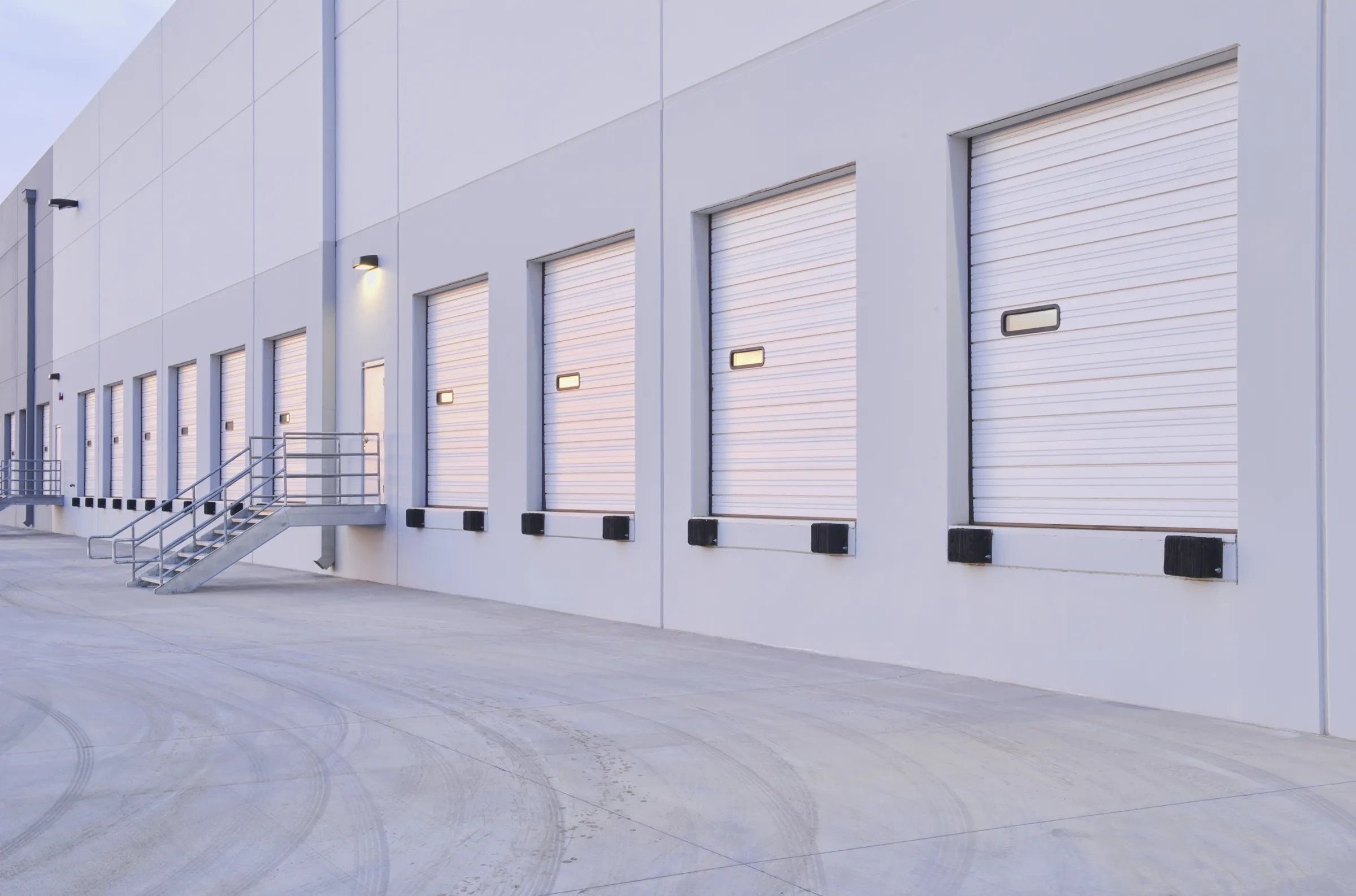
Walmart, GEODIS and New Balance are among the distribution operators in the park, alongside smaller tenants in multi-tenant buildings. Their docks produce the steady stream: corrugate from inbound cases, stretch film from every pallet, banding, dunnage and pallets past repair. A standing 40 yard here is pulled on the freight's schedule, and every pull that leaves with loose corrugate is a trip paid for at full price.
Office Parcels on Corporate Woods Drive
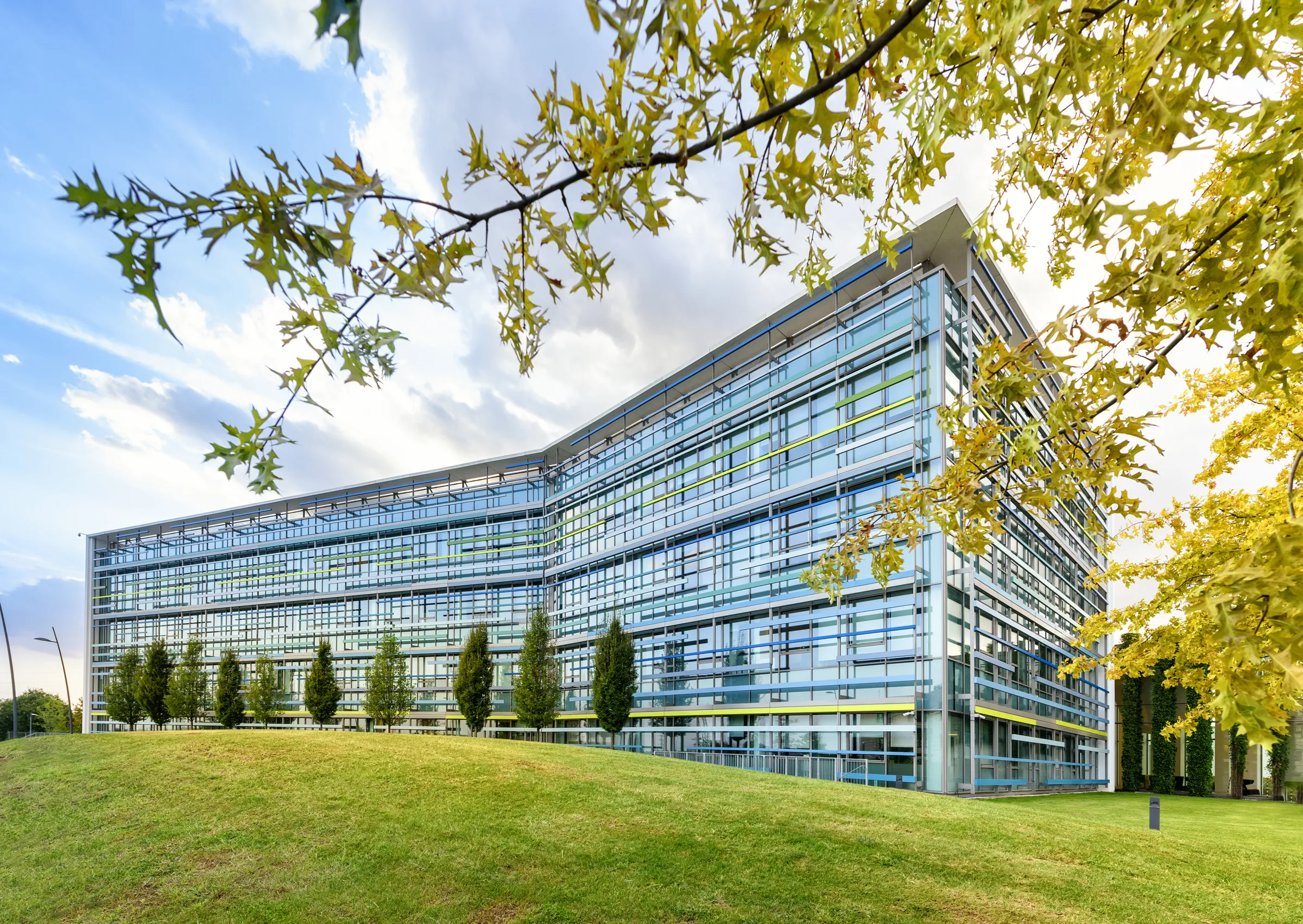
The park's office side sits along Corporate Woods Drive, and its waste comes in projects rather than streams: a floor cleared for a new tenant, furniture and ceiling grid out one week and crated equipment in the next.
The Account
Commercial Dumpster Rental in Earth City: How the Account Works
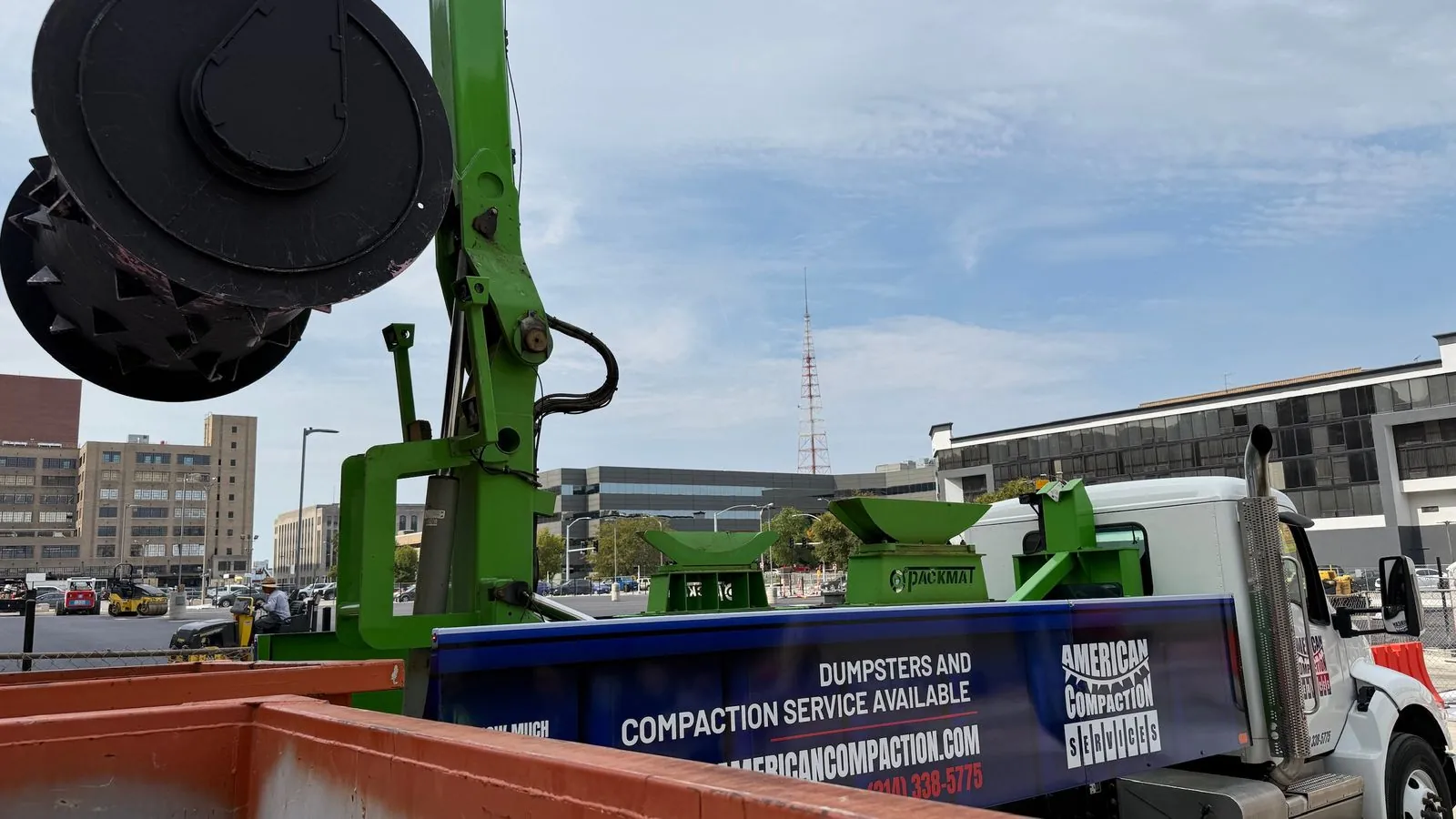
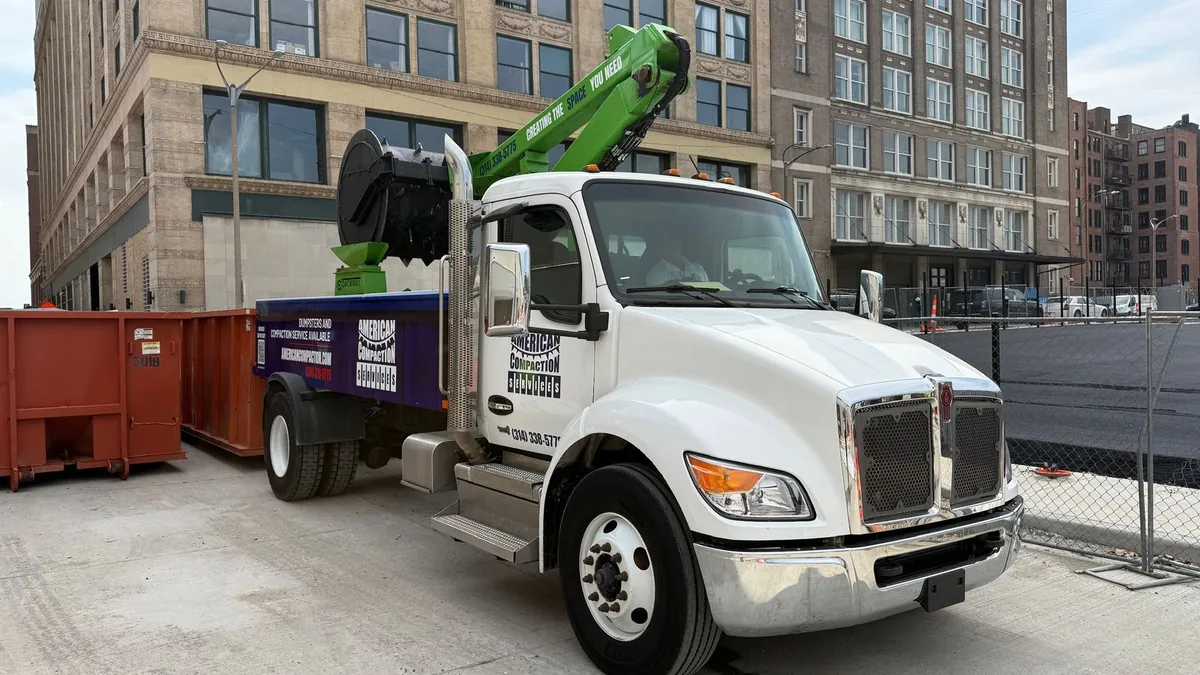
In Earth City, American Compaction Services runs 20, 30 and 40 yard open-top roll-offs and compacts any of them where they sit. ACS provides waste management through dumpster rental and on-site compaction.
Start from wherever you are. Already have a dumpster? Keep it and keep your hauler; we compact what's in it. Need dumpster service? We supply the container and compact it on site. No contract to sign: no exclusivity, no minimum, no term. A dock usually runs a standing container with visits between pulls; an office refit takes a container for the length of the job.
We work with businesses: contractors, builders, roofers, property managers and facility operators. We don't serve homeowners hiring directly.
Free on-site demo: we compact one of your own containers while you watch. The demo carries no obligation and is photographed before and after. If it isn't a fit, we tell you on the spot.
Job Types
Container Service by Job Type in the Earth City Park
Standing Containers on Distribution and Hub Docks
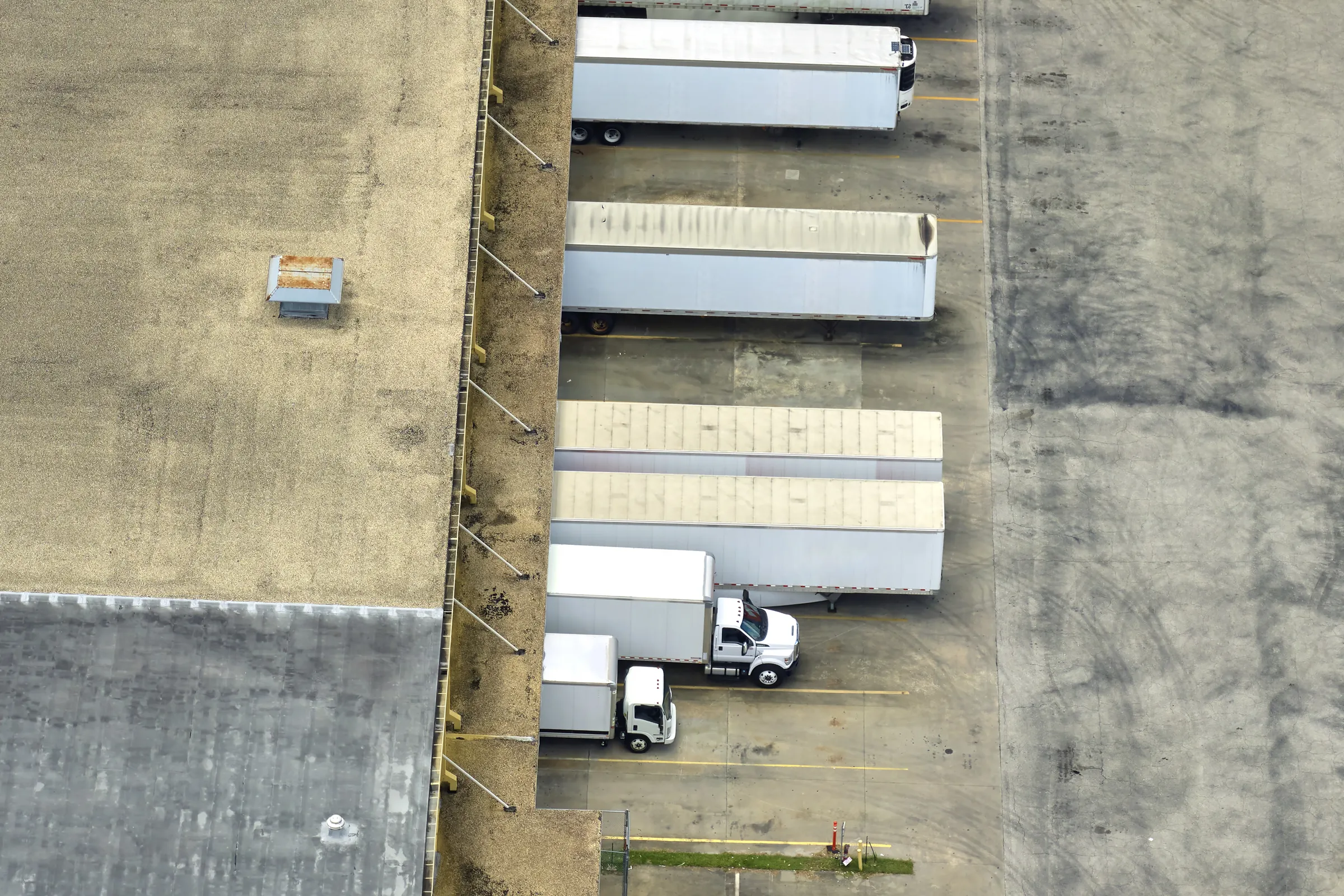
This is the core Earth City account: a 40 yard on a set pull schedule, with compaction visits between pulls to work the corrugate and film down. In a multi-tenant Rider Trail building the container often serves one tenant's doors, so visits follow that tenant's receiving hours. The St. Louis compaction page covers the metro-wide routing behind those visits.
Tenant Changeovers and Racking Installs
When a distribution building changes hands, the changeover fills containers twice: once with what the last tenant left behind, then with racking cartons, conveyor crating and mezzanine packaging as the new tenant moves in. That is jobsite work, sized and scheduled as construction dumpster rental; the St. Louis construction page has the jobsite rules.
Office Refits on Corporate Woods Drive
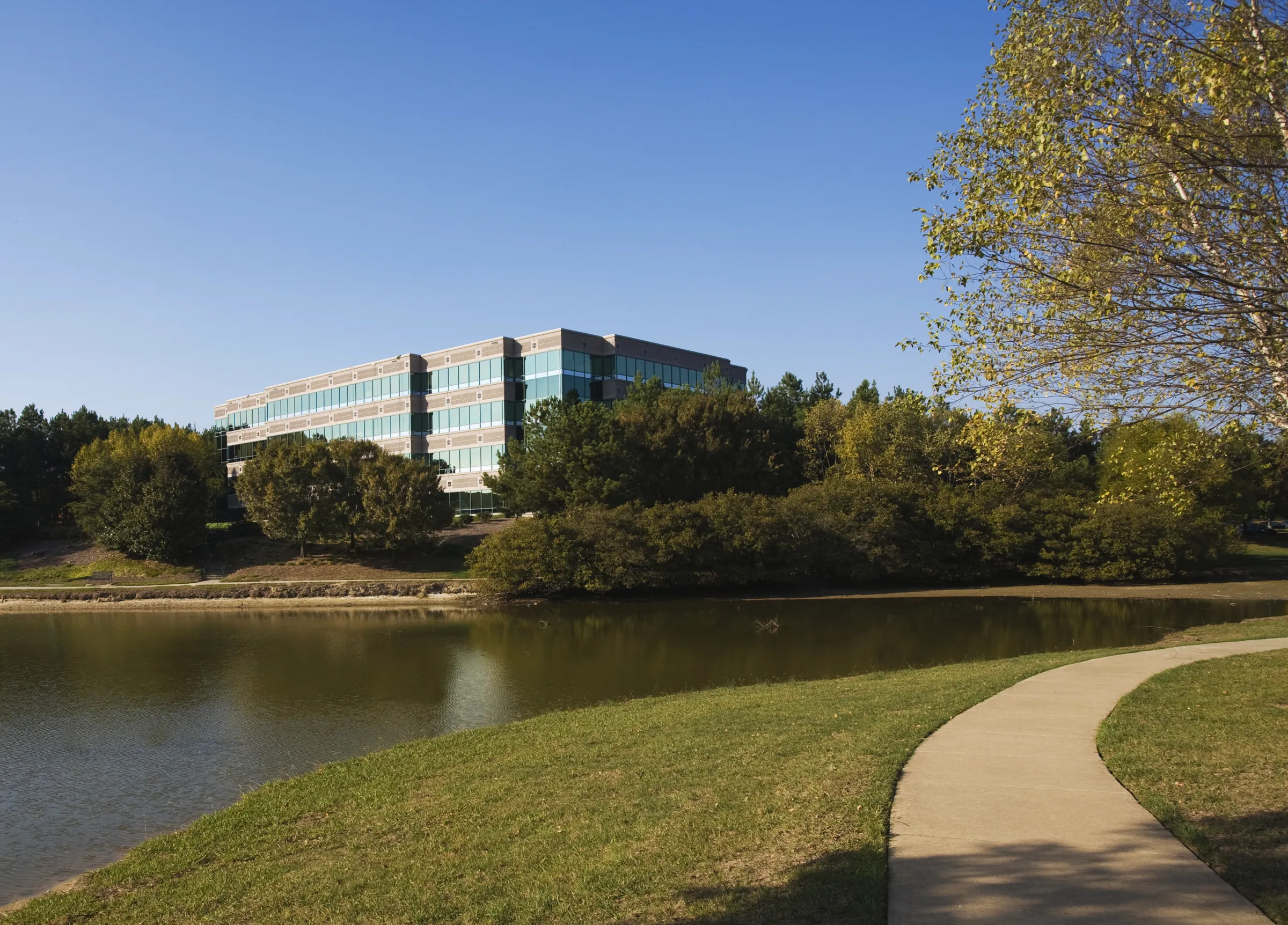
Strip-out and fit-out, one after the other, usually a 30 yard with a swap between the two stages, set on the service side of the building and pulled outside the hours the lot is full.
On-Site Compaction
On-Site Compaction in Earth City: Working the Air Out of Freight Waste
Cardboard and film are the materials compaction reduces most, and Earth City's docks produce little else. Nothing leaves the container during a visit except air, so the material decides the result. Compaction can reduce volume by up to 70%, depending entirely on the material. It is never a guarantee.
| Material | Compaction |
|---|---|
| Cardboard and packaging | Compacts well |
| Plastics | Compacts well |
| Pallets and wood | Compacts well |
| Furniture and bulky commercial waste | Compacts well |
| Light construction debris | Compacts well |
| Concrete, masonry and roofing shingles | Never compacted |
| Red iron, liquids and hazardous waste | Never compacted |
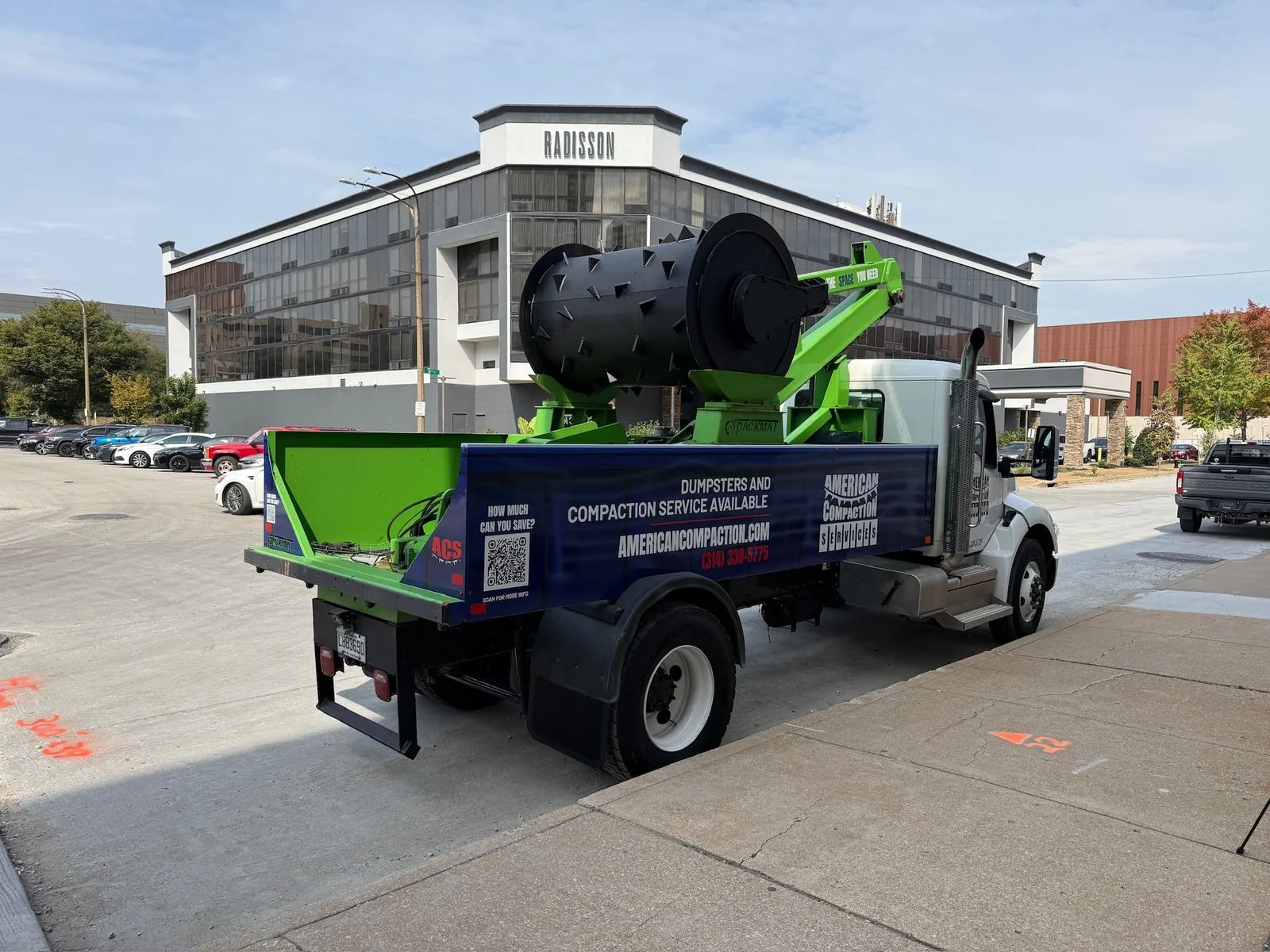
An Earth City dock stream sits at the top of the compacts-well list. Pallets past repair compact well too, and the mixed debris of a tenant changeover or an office refit counts as light construction debris. How many compaction visits fall between pulls is set by your fill rate.
A loose container that looks full is mostly air. Compaction can reduce volume by up to 70%, depending on the material. A corrugate-and-film load is mostly air, which is why a hub container has so much room to give back.
Compaction reduces haul-offs; it never eliminates them. A compaction visit is itself a visit. What changes is that a short on-site visit happens instead of a haul-off. If it won't move your number, we'll tell you on the spot.
Cost Context
What Drives the Bill on an Earth City Dock
In general terms the pricing guide covers the bill; on an Earth City dock, four things move it.
The Run Out of the Bottoms
Every pull is a round trip to the disposal facility for that material. There is no disposal site inside the park, so every Earth City run starts the same way: out to the Earth City Expressway and onto I-70 or Route 370. Which facilities take St. Louis loads is covered on the St. Louis overview. The longer the run, the more each pull you avoid is worth.
County Road, Not City Street
A container on the street or right-of-way needs approval from the local jurisdiction, and the rules vary by city. Earth City has no city hall. The roads inside the park are St. Louis County's, and a container in county right-of-way needs a St. Louis County special use permit before it goes down; on a state route, the permit is MoDOT's. A spot in your own truck court needs the landlord's approval rather than a permit, and that is where nearly every Earth City container sits.
Guard Shacks, Trailer Lots and Yard Moves
At a hub or a large distribution center, access means a guard gate, a trailer drop lot and a yard tractor moving trailers all day. American Compaction Services places the container where the roll-off truck can reach it without waiting on a yard move.
The 40 Is the Working Container Here
Freight waste is bulky and light, so the 40 yard does the work on Earth City docks; offices and changeovers lean toward 30s. The number compaction changes is how often the container leaves; the savings calculator turns your pull count into a planning figure.
These results are estimates from the numbers you enter. They are not a quote, a promise or a guarantee.
Sizes
Sizing a Container for an Earth City Site
The dock and what comes off it decide the size; the dumpster sizes page has the three compared.
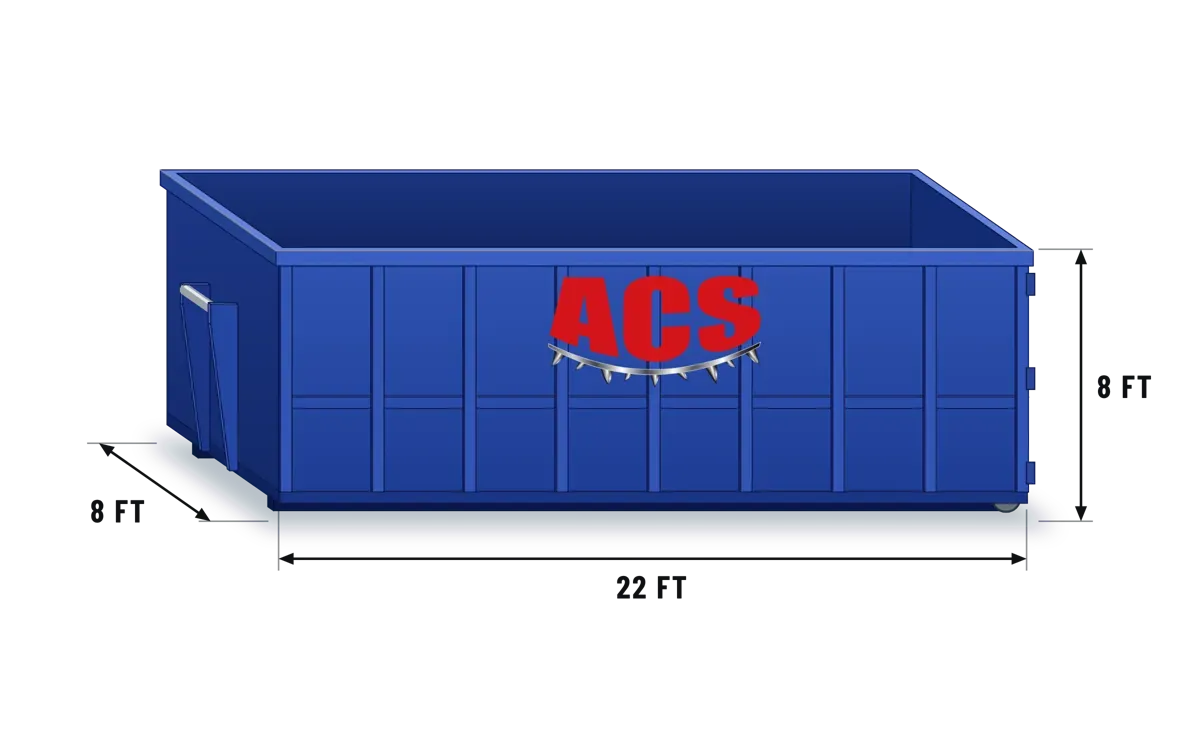
A 40 Yard on a Rider Trail Dock
Corrugate, film and pallets in volume, with a court long enough for the truck to line up. The container compaction has the most to do in.
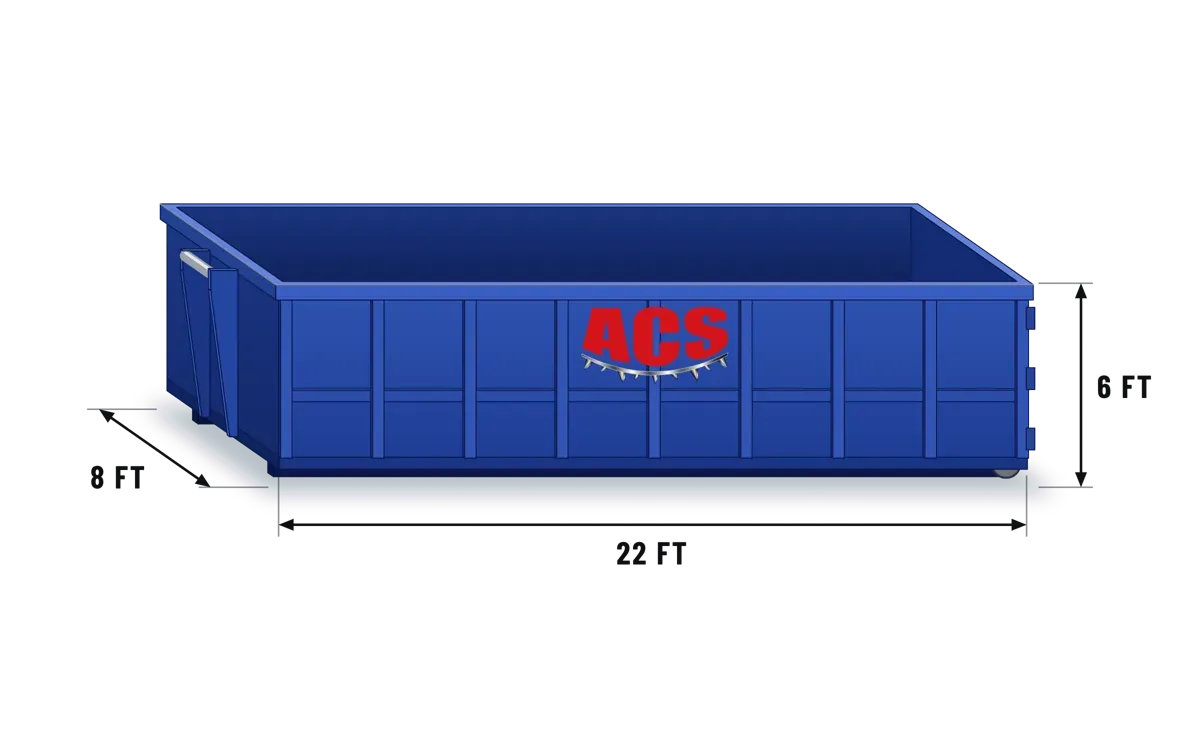
A 30 Yard for a Corporate Woods Drive Refit
Office refits and tenant changeovers: room on the lot, mixed debris in the box.
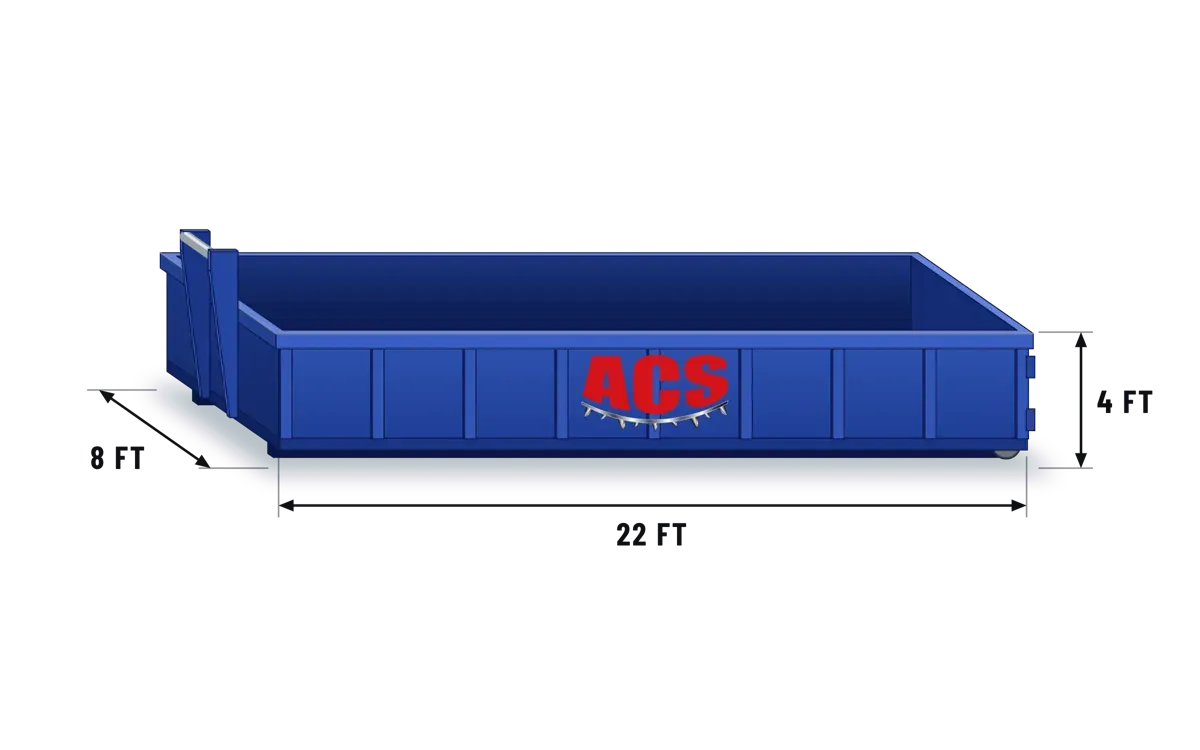
A 20 Yard Where the Court Is Tight or the Load Is Dense
A waste door boxed in by trailer positions, or a load that reaches its weight before it reaches the rim.
Drive Time
Getting to Earth City
Earth City is part of our St. Louis City and County service area. A compaction visit is booked on a route day; pulls and swaps run on the pickup schedule. Every Earth City site is reached from the Earth City Expressway, from I-70 or Route 370.
A short drive changes what a visit can be: a dock that runs heavy for a week can ask for one more visit rather than one more pull, often on short notice. We do not publish a guaranteed turnaround window. The St. Louis team that quotes your job is the team that schedules it.
On Site
Serving Earth City Sites: Placement, Access and Safety
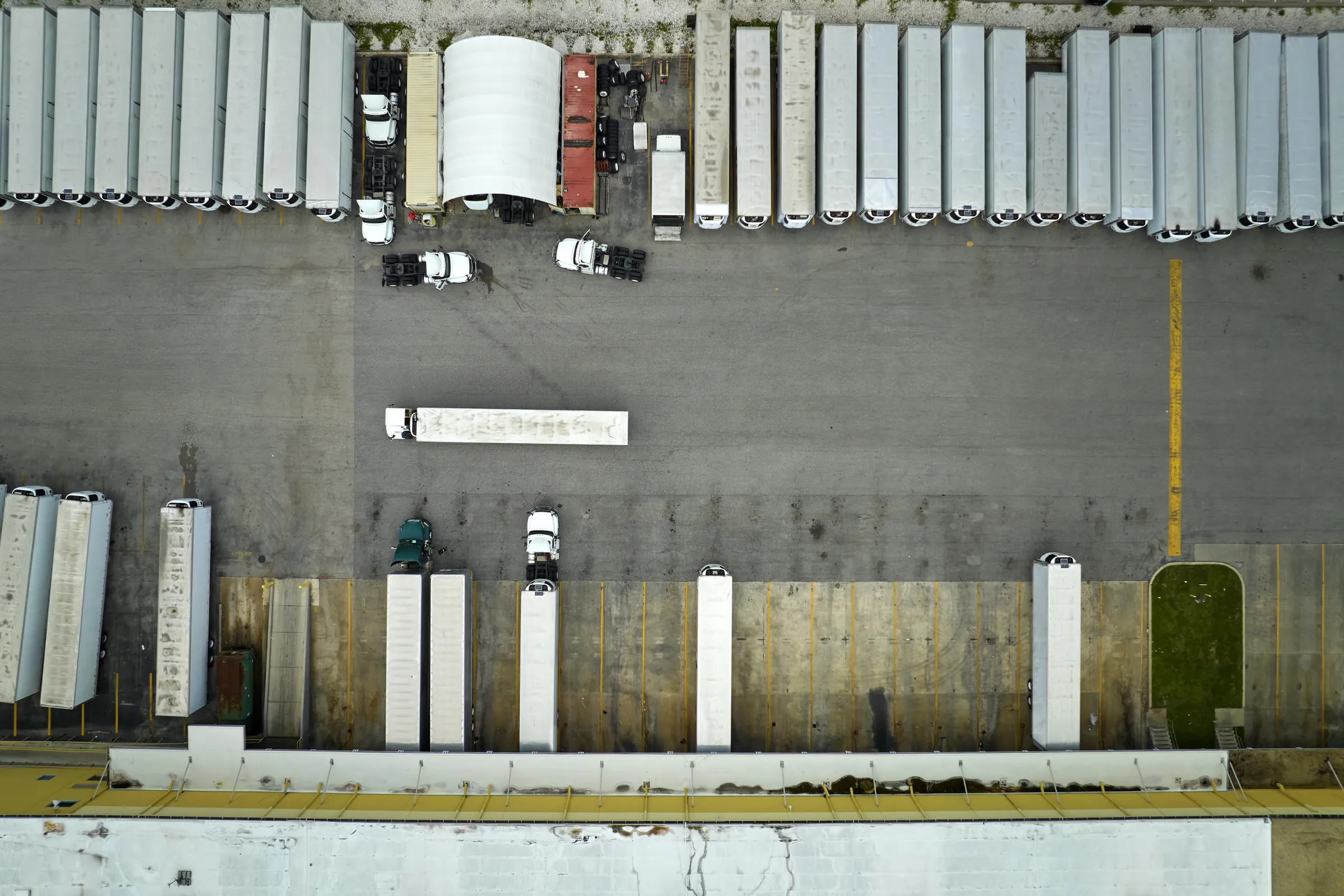
Shared Truck Courts in Multi-Tenant Buildings
In a multi-tenant Rider Trail building, the truck court belongs to the landlord and the dock doors to the tenants. American Compaction Services asks who controls the pavement before anything is placed, so the container sits at your doors without taking a neighbor's trailer position.
Gate Check-In at the Hubs
A hub usually runs a guard gate, a check-in and sometimes an escort. Those steps go into the account up front, with the gate's busiest hours, so the unit and the roll-off truck arrive when expected and leave without holding up a trailer.
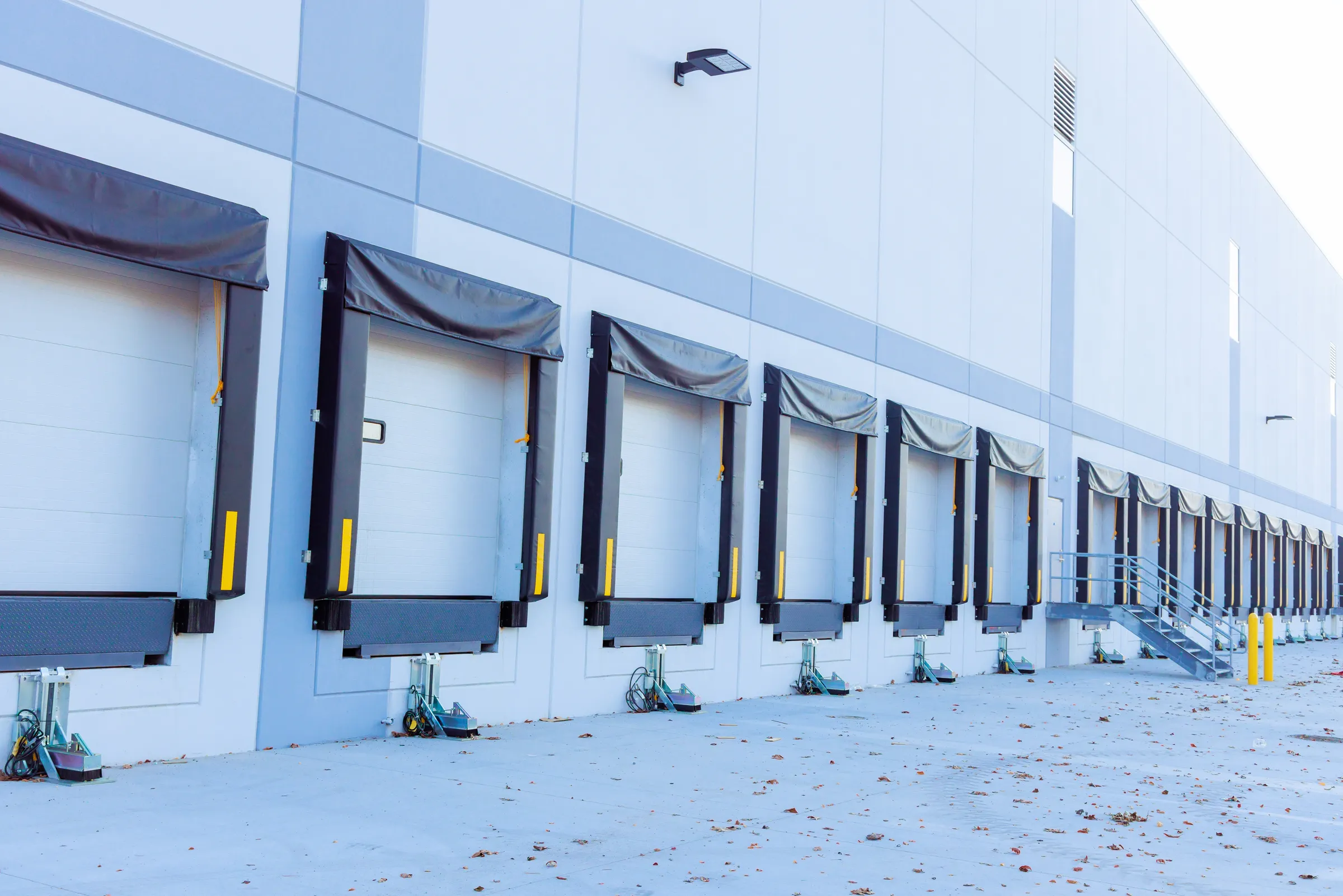
Live Dock Doors and the Waste Door
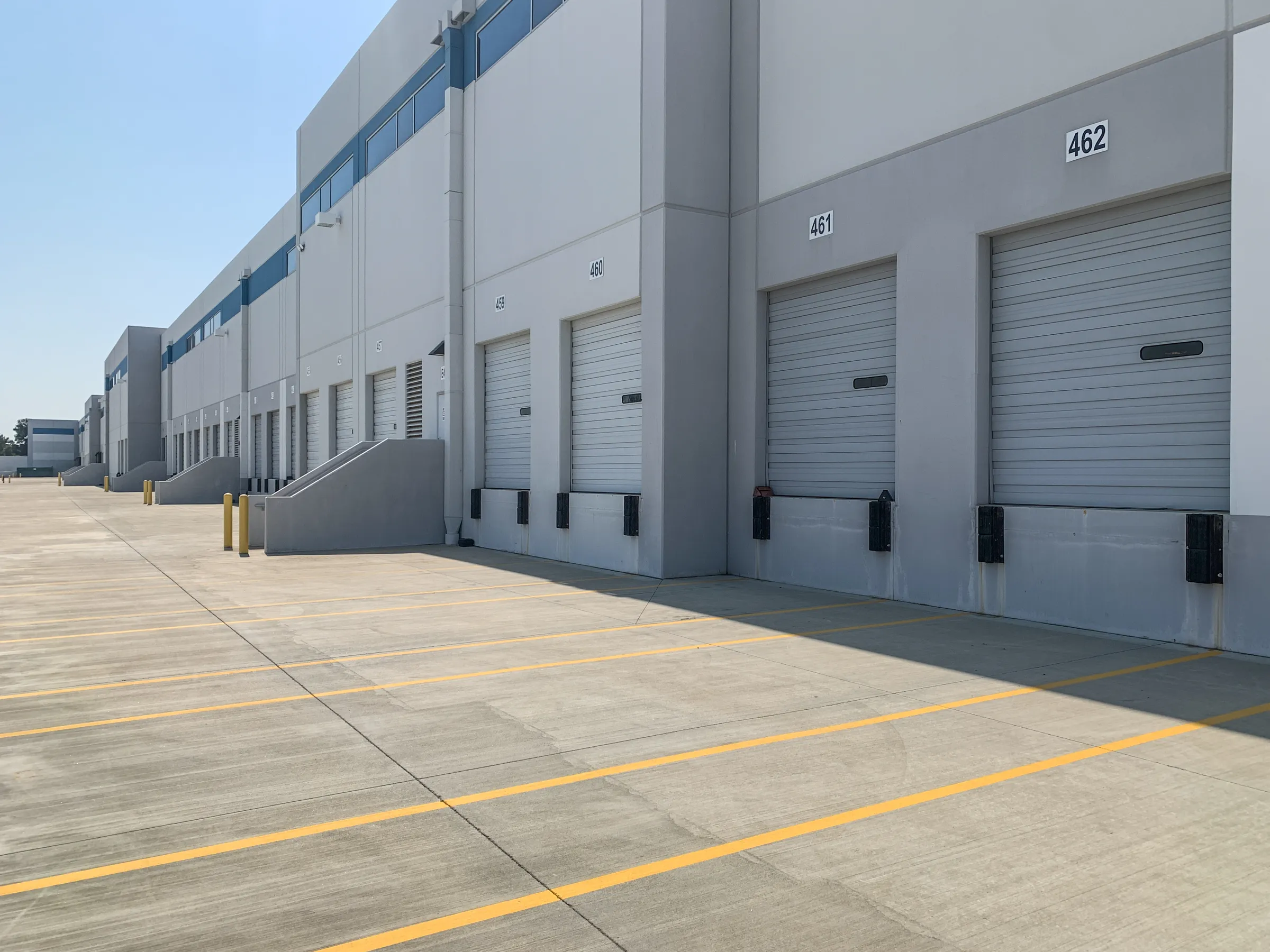
The truck needs roughly sixty feet of straight-line approach and clear overhead. At an Earth City dock that means a dedicated waste door or the end of the apron, never a door the freight needs and never under a canopy the truck cannot lift beneath.
Concrete Aprons and Paved Lots
Dock aprons in the park are mostly heavy concrete built for trailers; office lots on Corporate Woods Drive are paved parking. We'll confirm placement and access with you before delivery.
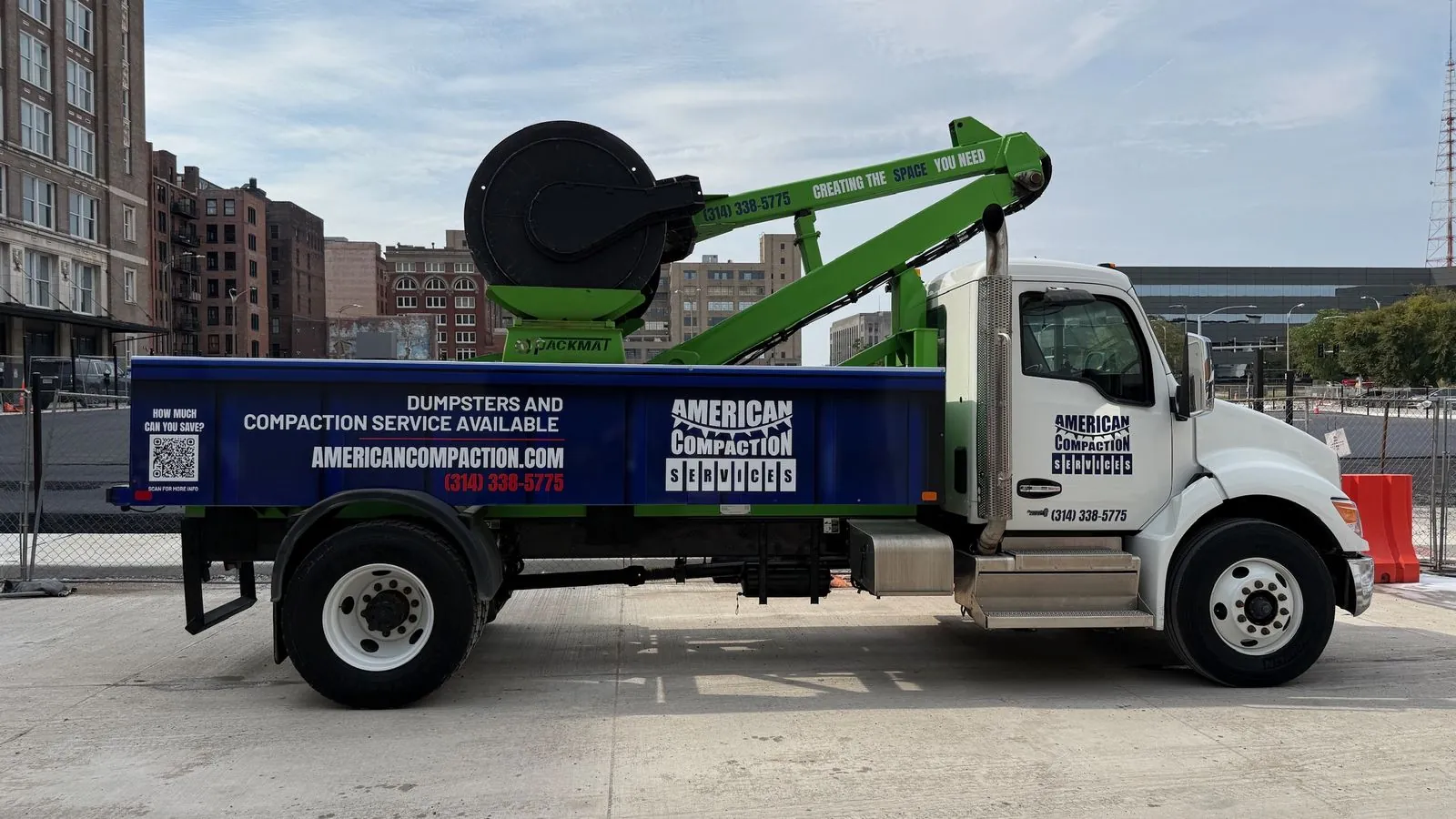
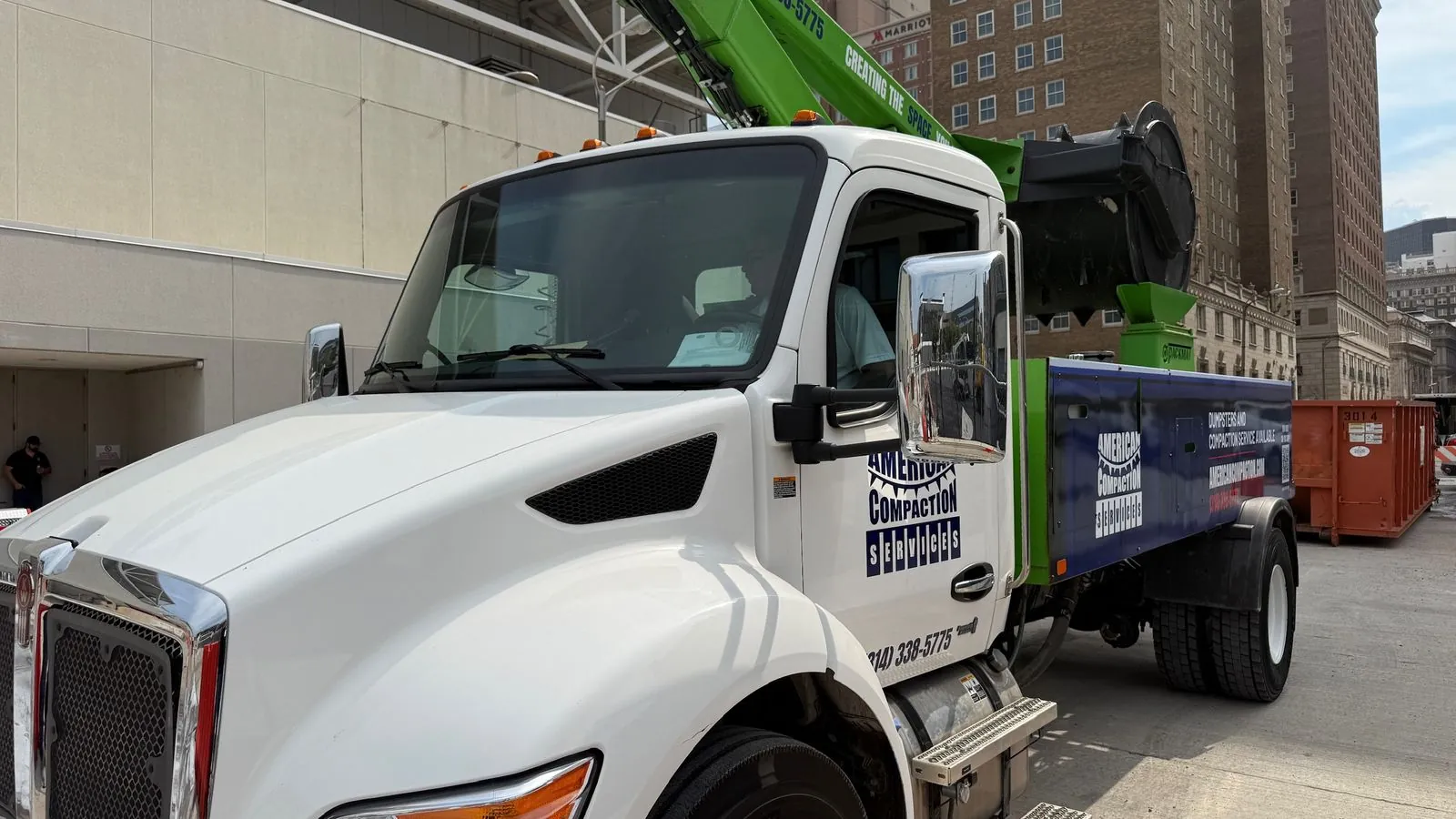
American Compaction Services keeps the unit off the container at every visit. A heavy steel drum, narrower than the container, works the load down and never touches the walls. The drum works on its own weight, with no hydraulic down-force. Safeguard wheels and end guards keep the unit off the container's structure. Our operators run a zero-touch policy. Every visit includes a before-and-after inspection with photo documentation.
We will not compact liquids; dirt, soil, aggregate or other dense material with no air in it; hazardous or regulated waste; sealed drums or pressurized vessels; or anything the receiving hauler won't accept. On a pure dense load like broken concrete, we'll tell you to skip compaction and have it hauled. The accepted materials page lists what a container may hold at all.
Commercial Dumpster Rental in Earth City: Questions
Near Earth City: Related Pages and Neighboring Communities

Start Commercial Dumpster Rental in Earth City
An Earth City account starts with three things: what comes off your dock, where a container could sit, and how often it leaves today. Put them in the request form or give us a call. From there, American Compaction Services – St. Louis works out the container for the dock, visit times that clear your sorts and receiving hours, and an honest answer on whether compaction moves your pull count.
With roll-off, every haul is a call. With American Compaction Services, nobody has to call.
We set you up on a schedule and we compact on site. Dumpsters and compaction. All handled.
You already pay for dumpster space. Compaction lets you use more of it.
Getting started takes four details
- A photo of your dumpster and the space around it
- Your location
- What goes in the box
- The container size, if you know it
They help us plan for site access and match compaction service to your site.
We will prove it. Call or text (314) 338-5775.