

Demolition
Demolition Dumpster Rental
We automate your roll-off. You'll never run out of room. Fair price. Great service.
Demolition dumpster rental is a weight problem before it is a volume problem. American Compaction Services supplies 20, 30 and 40 yard roll-off containers for teardowns, interior strip-outs and storm cleanup, sized for what the material weighs rather than how much room it takes. On a demolition job the container fills by weight long before it fills by volume. Get that wrong and you pay for trips that leave half a container behind.
We work with demolition and excavation contractors, general contractors, plants clearing out equipment lines, and property managers dealing with damaged structures. We supply the container with optional compaction for eligible non-concrete waste. Concrete is never compacted or used in demos. This page covers how the container, the loading and the schedule work on heavy debris, including the parts where our own service is the wrong answer.
The Real Cost
Why Demolition Dumpster Rental Is a Weight Problem First
Most container advice starts with cubic yards. Demolition does not. Plaster, tile, brick, block, dimensional lumber and broken concrete reach the truck's legal payload while the container still has room showing. The space left over is not money left on the table. The road limit ended the load.
The failures are familiar. A 40-yard arrives, the crew fills it a third of the way with masonry, and the driver refuses it as overweight. Or a 20-yard goes out on a full interior strip-out and burns three swaps in a week, because the material was light and bulky and the container was sized for something else.
Most demolition jobs produce two streams at once: a heavy fraction of concrete, masonry and tile, and a light, bulky fraction of drywall, grid, framing, insulation and cabinetry. Run both through one container and each makes the other worse: the heavy fraction ends the load on weight while the light fraction wastes the space.
Then there is the trip: a driver, a truck, fuel, road time, a scale ticket and a disposal charge, every pull. There is no clever way around the weight. What you can change is how many trips the mass takes, whether each leaves at full legal payload, and whether the light half of the job is riding in the wrong container.
Jobs We Supply
Demolition Jobs We Supply Containers For
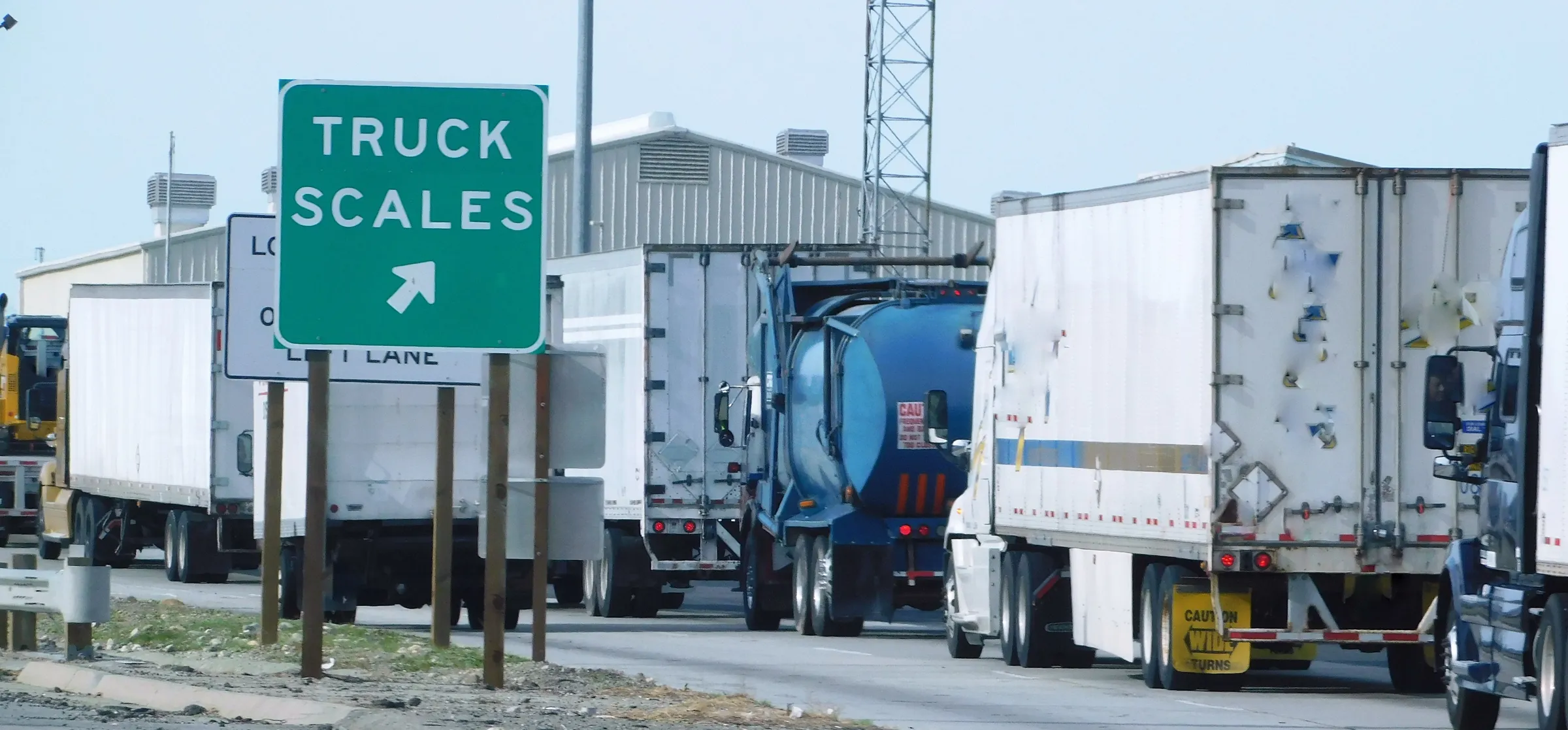
American Compaction Services supplies containers for four job types, and each one loads differently.
Interior demolition and strip-outs
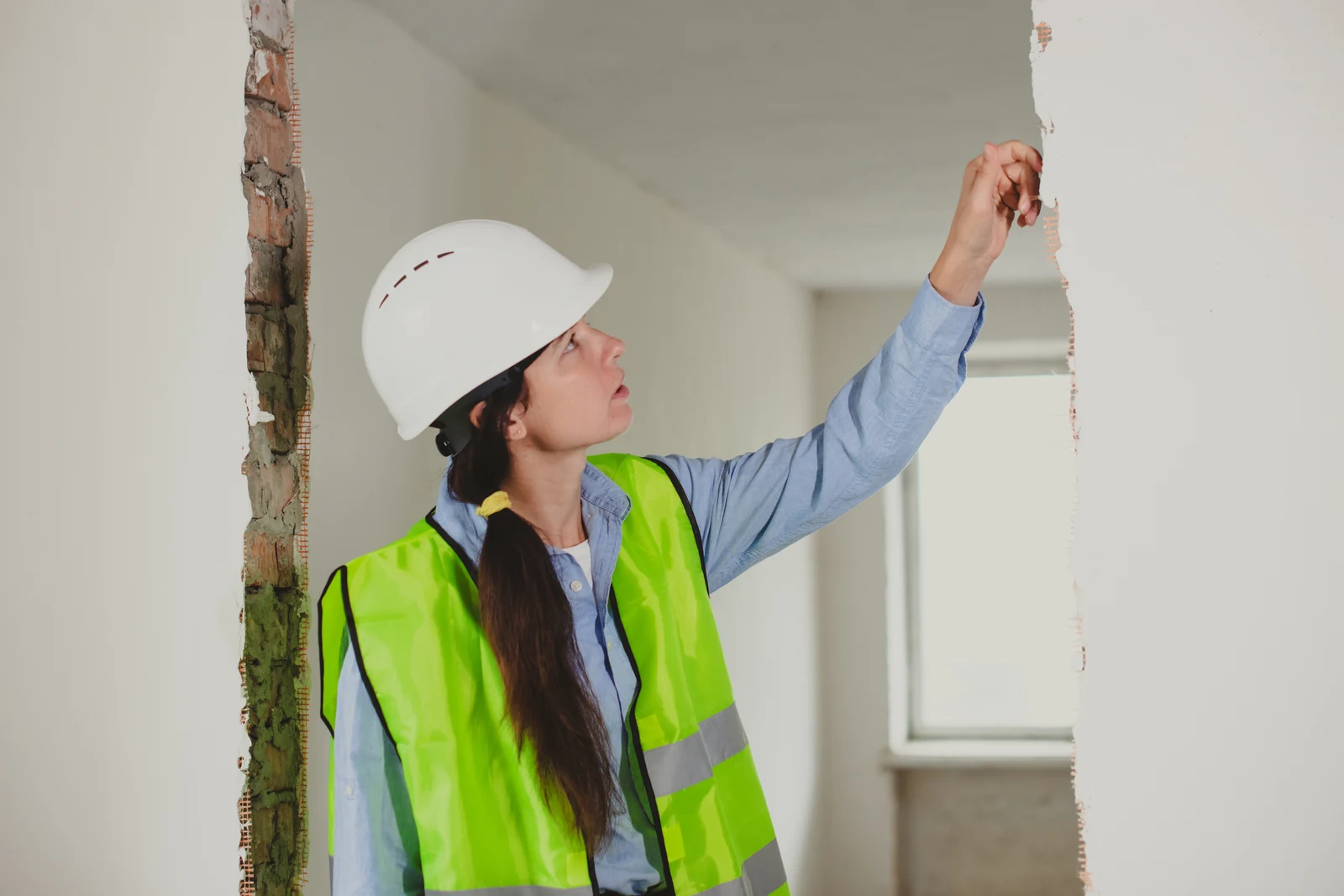
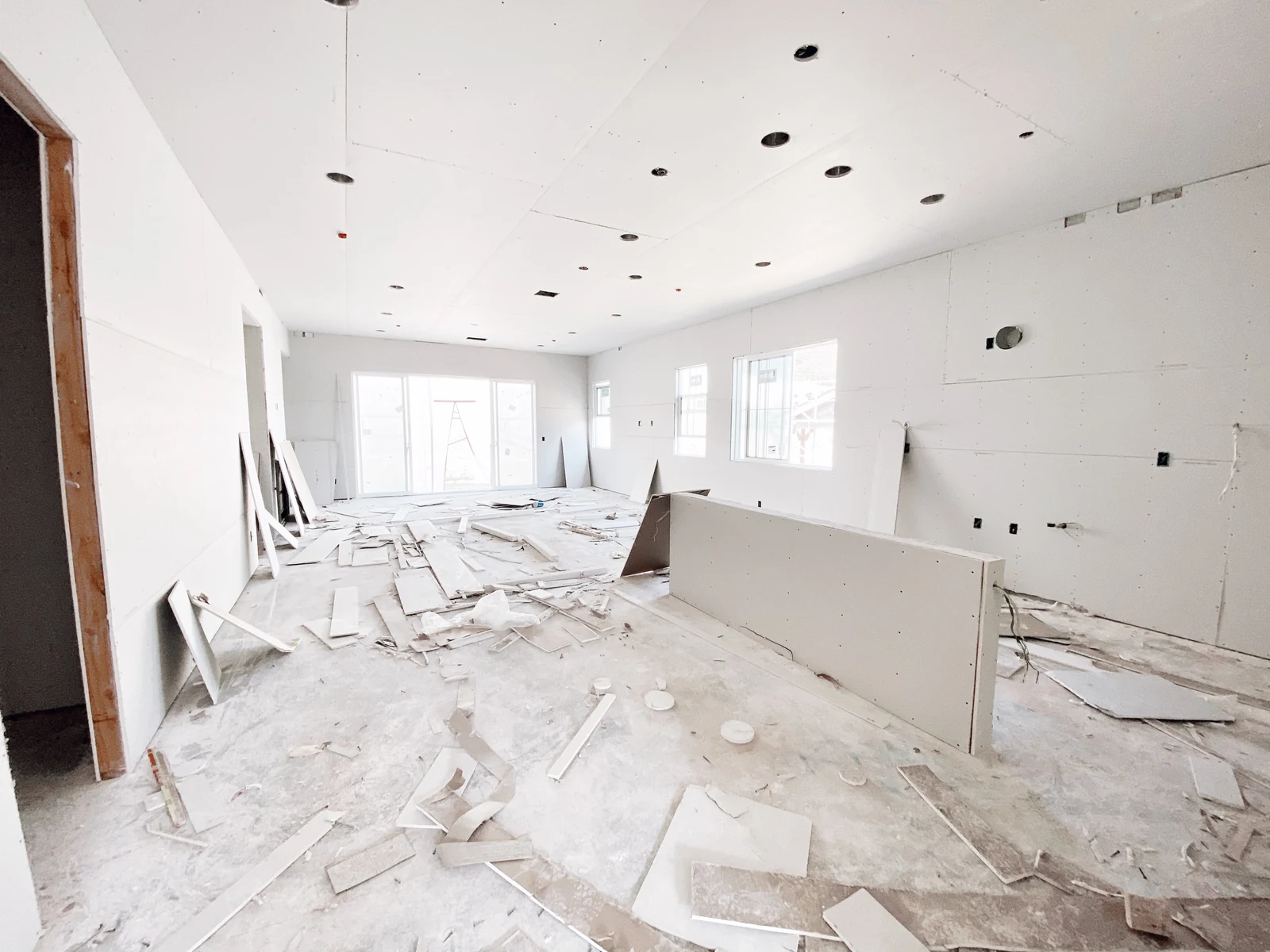
Tenant strip-outs, office gut jobs, retail conversions, restaurant strip-outs and plant reconfigurations. The debris is mixed and mostly bulky, with a heavy fraction from tile, mortar beds and masonry partitions. This is the demolition job type that benefits most from on-site compaction.
Structure teardown
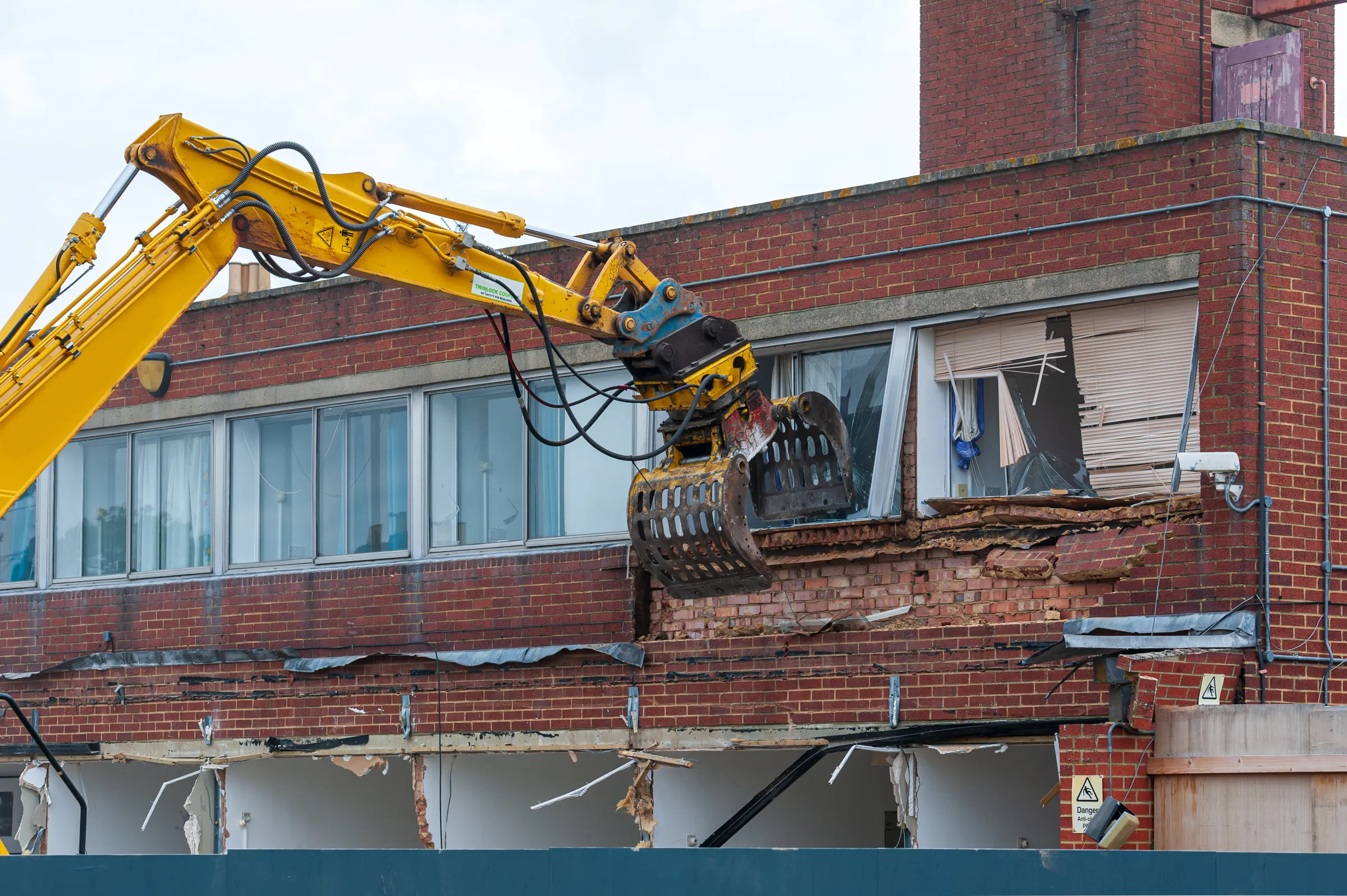
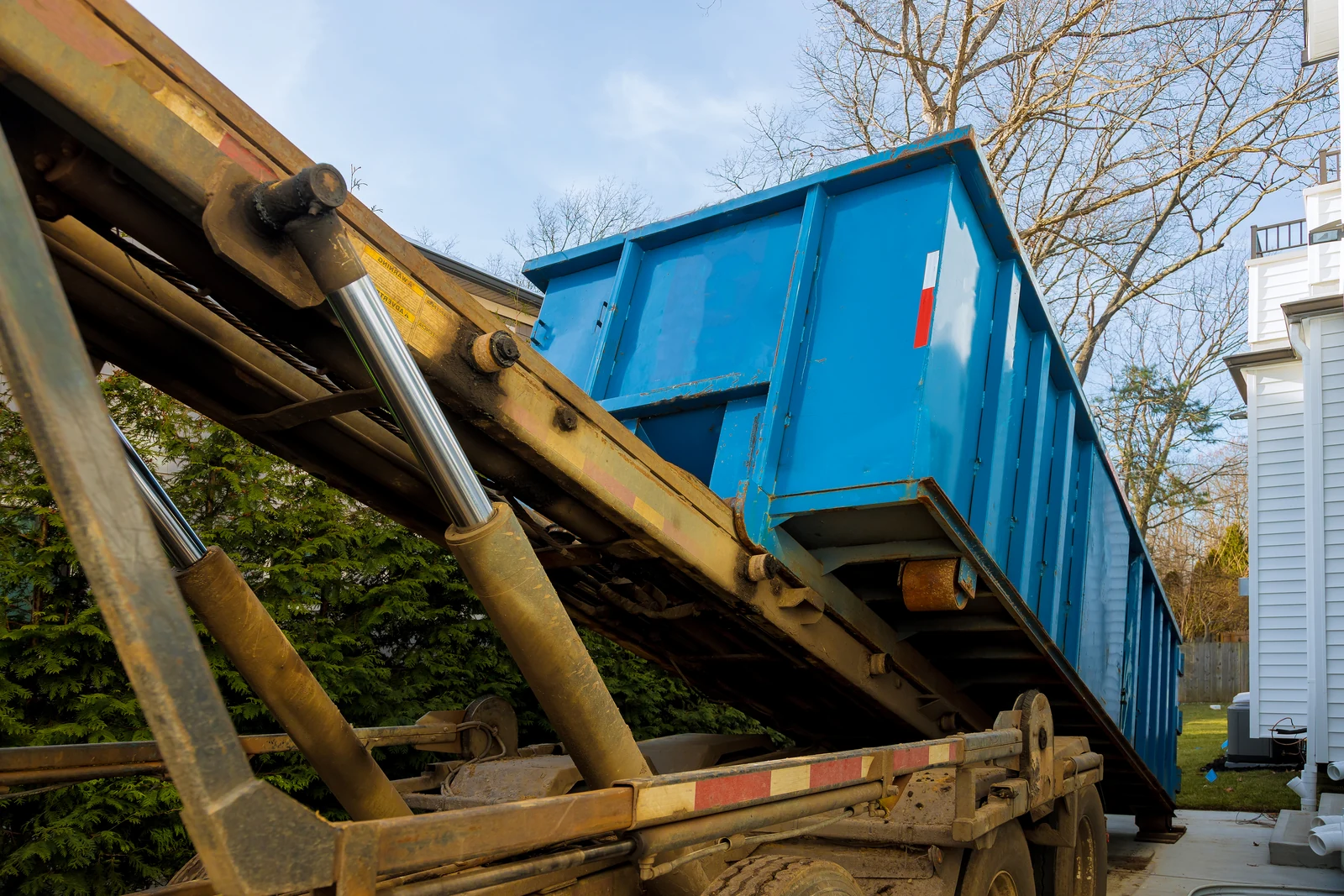
Full and partial building demolition, outbuilding removal and aging industrial structures. Teardown runs on swaps: a container leaves full and another is set in the same spot, planned ahead against the demolition sequence.
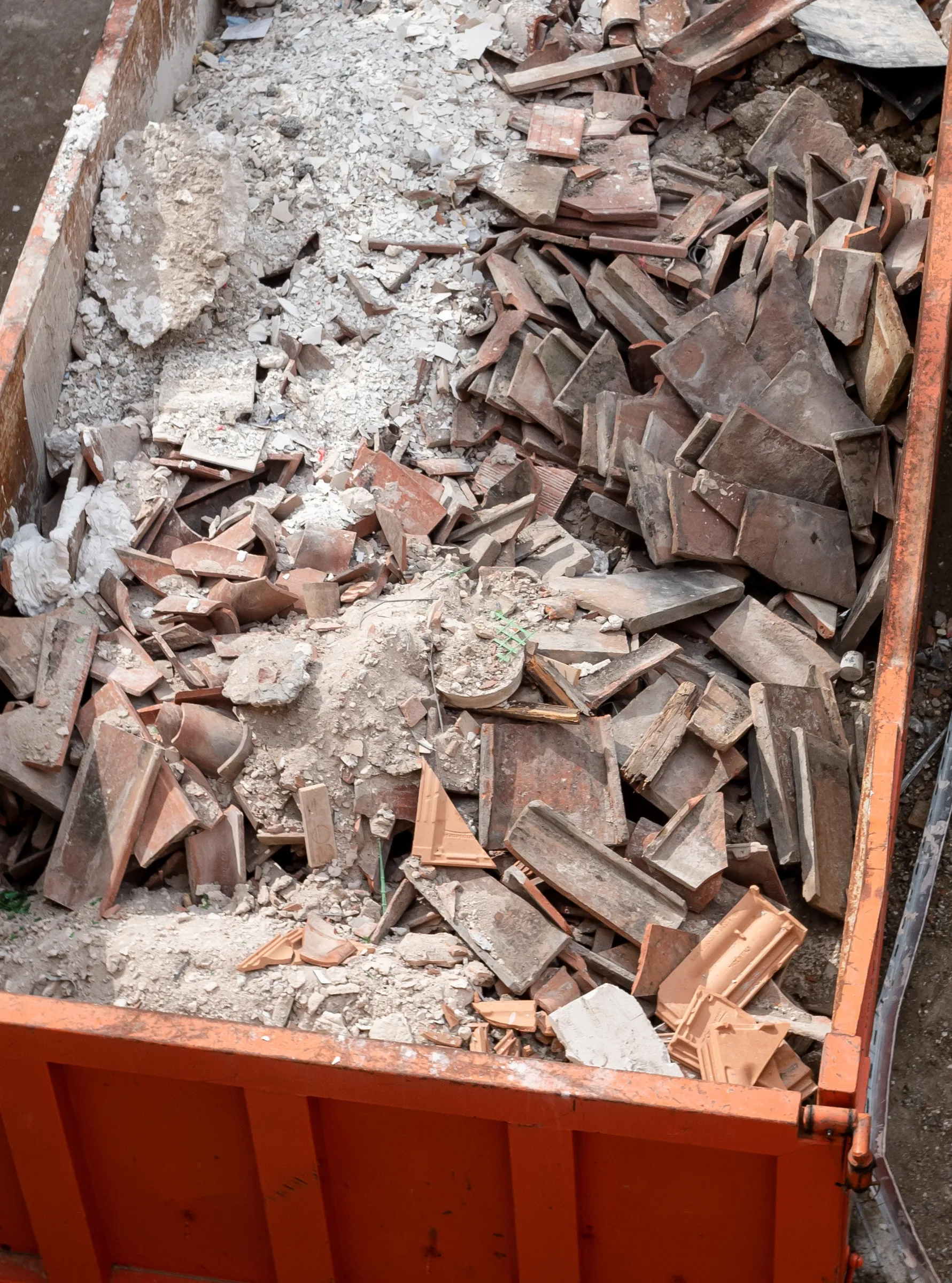
Heavy and dense debris
Tile, mortar beds and other dense demolition debris. Tell us before the container is set that the load will be dense: it changes the size, the routing and whether the receiving hauler will take it.
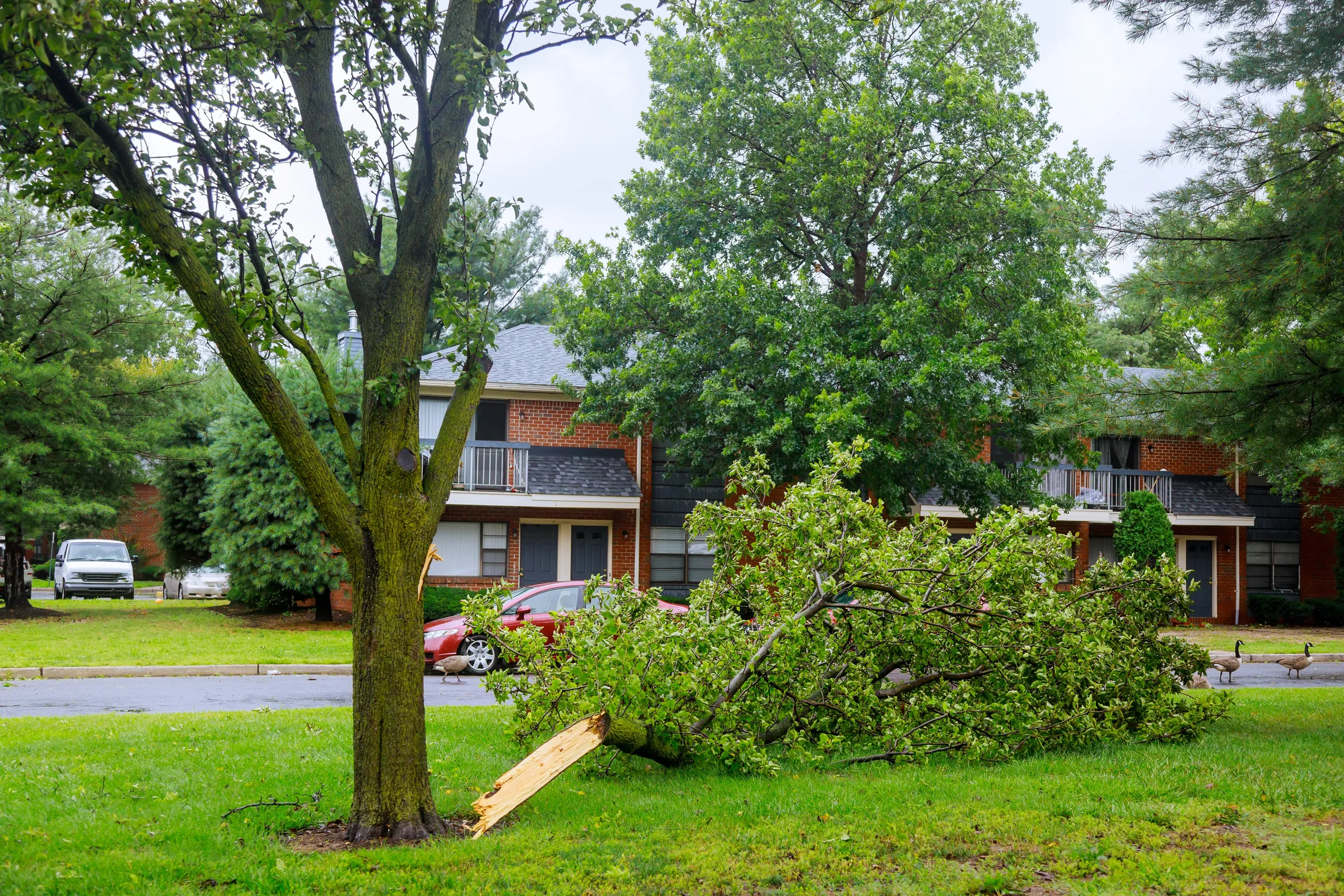
Storm and tree debris cleanup
Limbs, downed trees, roof material, fencing and structural debris on the ground at a commercial property. It is a volume problem while the material is woody and dry, and a weight problem once it is wet.
Every account is a business. We do not rent to homeowners.
Container Sizes
Sizing a Demolition Debris Container
American Compaction Services sizes demolition containers from the material, not the square footage of the building.
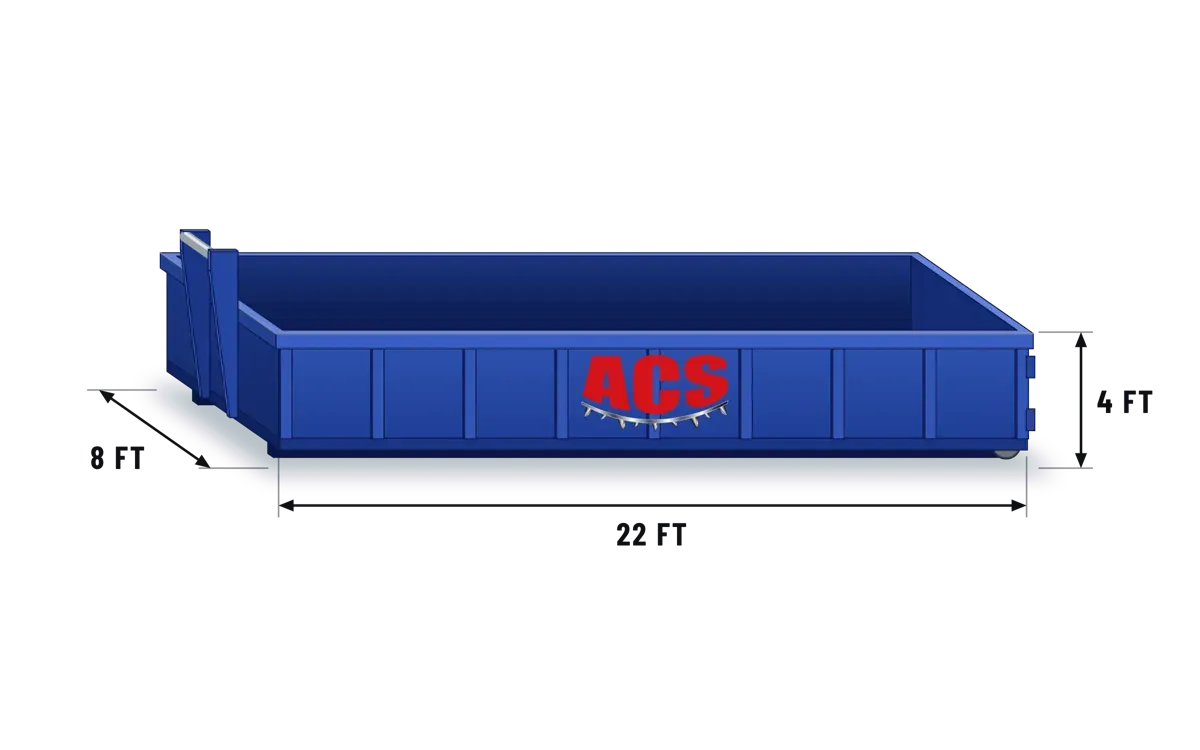
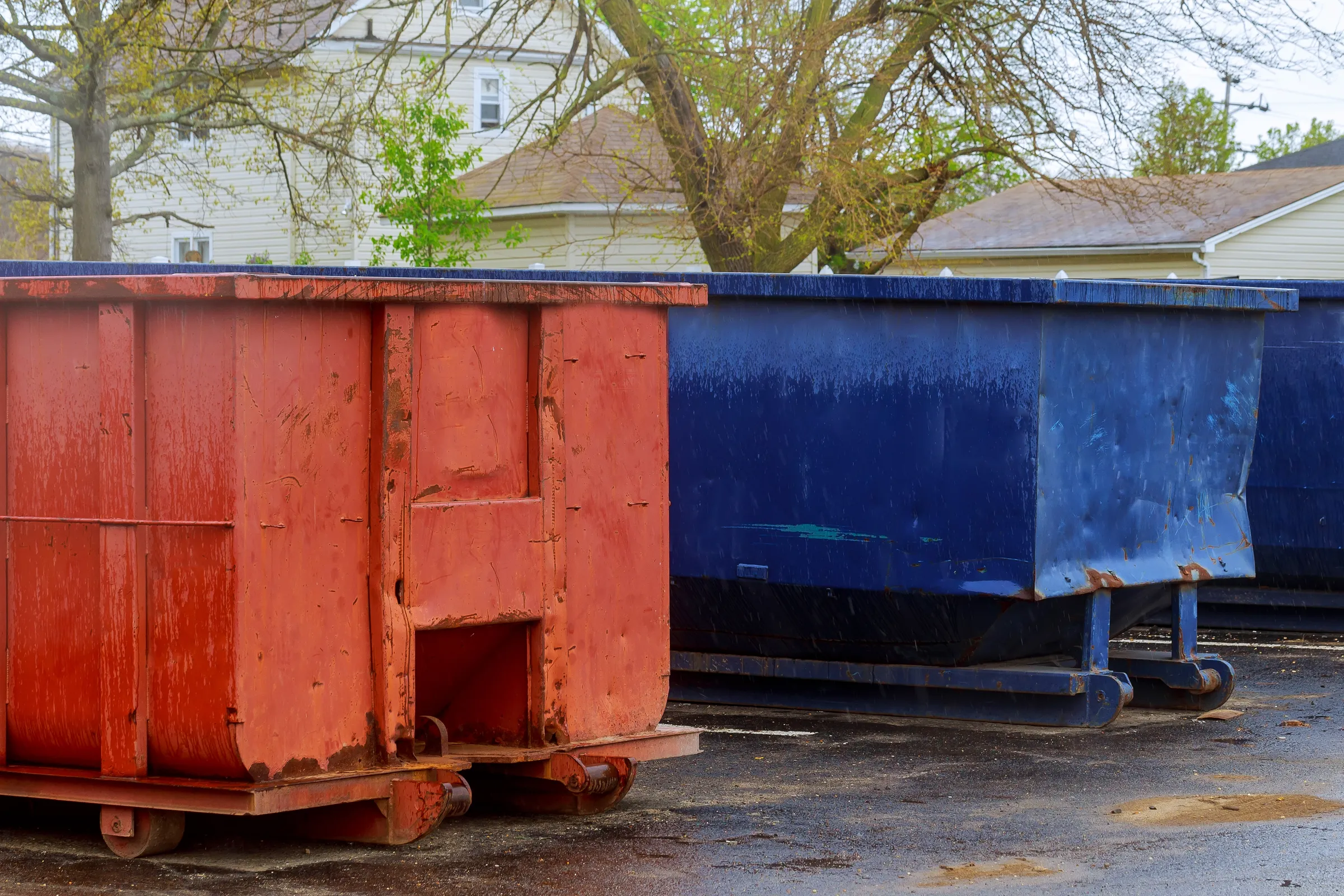
About 22' × 8' × 4' (L × W × H)
20-yard for smaller tear-outs
Interior demolition and smaller jobs, where low walls keep the load within reach of a crew loading by hand. Heavy or dense debris? Tell us first so we can plan for weight limits.
See 20 yard dumpster rental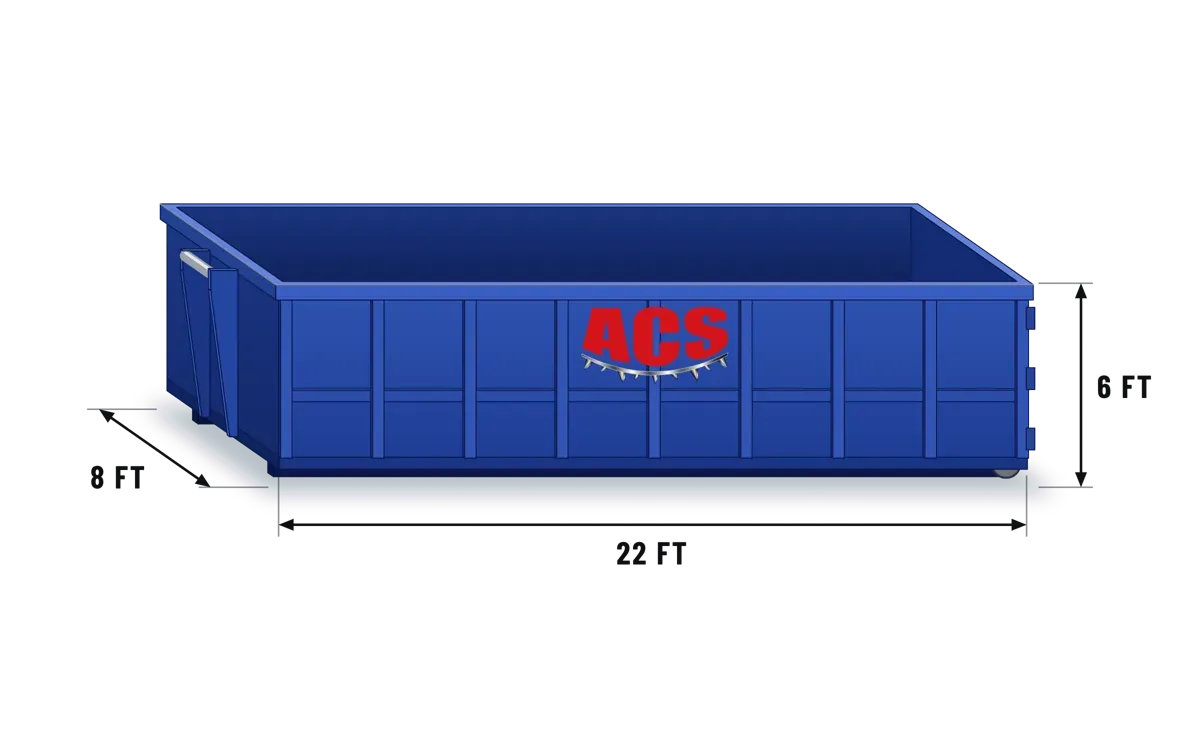
About 22' × 8' × 6' (L × W × H)
30-yard for mixed demolition debris
Teardown debris where the heavy and light fractions share a container. A sensible starting point when the heavy-to-light ratio is not yet known.
See 30 yard dumpster rental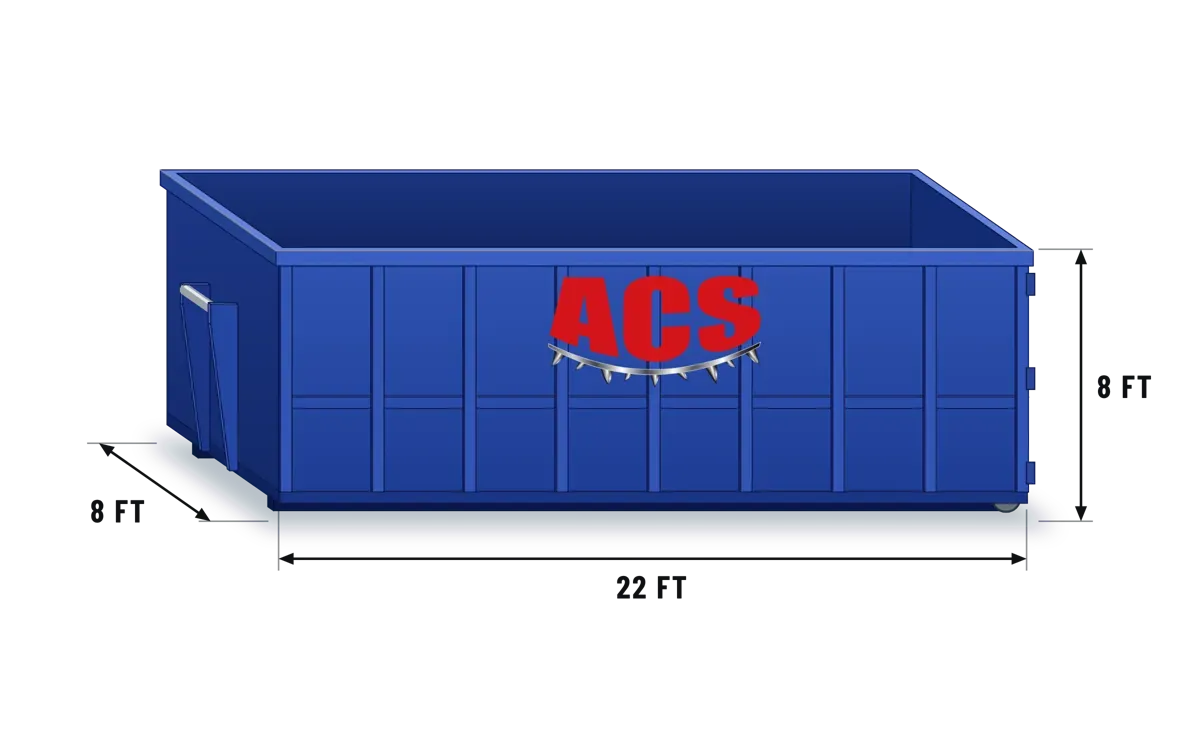
About 22' × 8' × 8' (L × W × H)
40-yard for bulky, light debris
Interior strip-outs, dry woody storm debris and light structural material. It is the wrong container for heavy, dense debris, and we will say so rather than have it placed.
See 40 yard dumpster rentalApproximate dimensions. Containers vary; confirm the actual size for your site before the first placement.
Guessing large on heavy debris produces a container that cannot legally be hauled. Guessing small on bulky debris produces swap after swap. Describe the material and the sequence, and we will size it.
Accepted Materials
What Goes in a Demolition Container
What a roll-off can take is set by the receiving facility, and the accepted materials page keeps the full list of what is not accepted. Mixed demolition debris is normal; what matters is that the heavy fraction is declared and the light fraction goes where it can be worked.
What we compact
Cardboard and packaging; plastic film and wrap; wood and pallets; construction and demolition debris, including drywall, insulation, ceiling grid and fiberglass; compost and organics, as long as your hauler accepts it. On a demolition job, that means the bulky fraction.
Declared dense loads
Heavy material has weight limits, so call us first and we'll plan the right container. Skip that call, and the risk is a container refused as overweight at the pull, which turns a scheduled pull into an expensive return trip.
Wrong Container?
Signs the Container on Your Demolition Job Is Wrong
A few signals come up again and again.
A load got refused as overweight.
The container was sized for volume on material that ends on weight.
The container leaves visibly half full.
Either a smaller container would have done the same work, or it was pulled early.
Swaps are dictating the schedule.
The crew is waiting on containers instead of the containers waiting on the crew.
Debris is being staged on the ground.
Double handling is real labor.
The debris mix changed mid-job.
A strip-out that turned into slab work, or the reverse, needs a different container.
Nobody asked what the debris was made of.
If the container was quoted on cubic yards alone, the sizing was a guess.
Any one of these is worth a call. Several at once means the size, the swap cadence or both need to change.
Volume on the Job
Most "Full" Demolition Boxes Are Full of Air
Light demolition streams pack a lot of air between studs, drywall and packaging. Compaction puts that space back to work so the same container takes fewer pickups.
Up to 70%
Volume reduction, depending on the material
Fewer pickups
Same container, more room between pulls
A loose container that looks full is mostly air. Compaction can reduce volume by up to 70%, depending on the material. Dense streams like masonry gain less from compaction; we will say so before the first visit rather than sell a service that does nothing.
| Load type | Typical materials | How to plan it |
|---|---|---|
| Dense: fills by weight | Tile, mortar and other heavy, dense debris | Smaller containers, and more of them |
| Bulky: fills by volume | Drywall, ceiling grid, framing scrap, insulation, cabinetry, packaging | Larger containers; this is where compaction earns its place |
| Mixed: depends on the ratio | Teardown debris with both fractions in one load | Talk it through before delivery; the heavy-to-light ratio decides the size |
Get the material right and the sizing follows from it.
Loading Discipline
Loading a Heavy Debris Container Without Wasting the Trip
Keep the heavy fraction separate where the job allows.
One container reaches payload, the other reaches volume, and both trips are full trips.
Load flat and load level.
Spread heavy material across the floor of the container instead of piling it at one end. A level load travels; a mounded one may not.
Break down what breaks down.
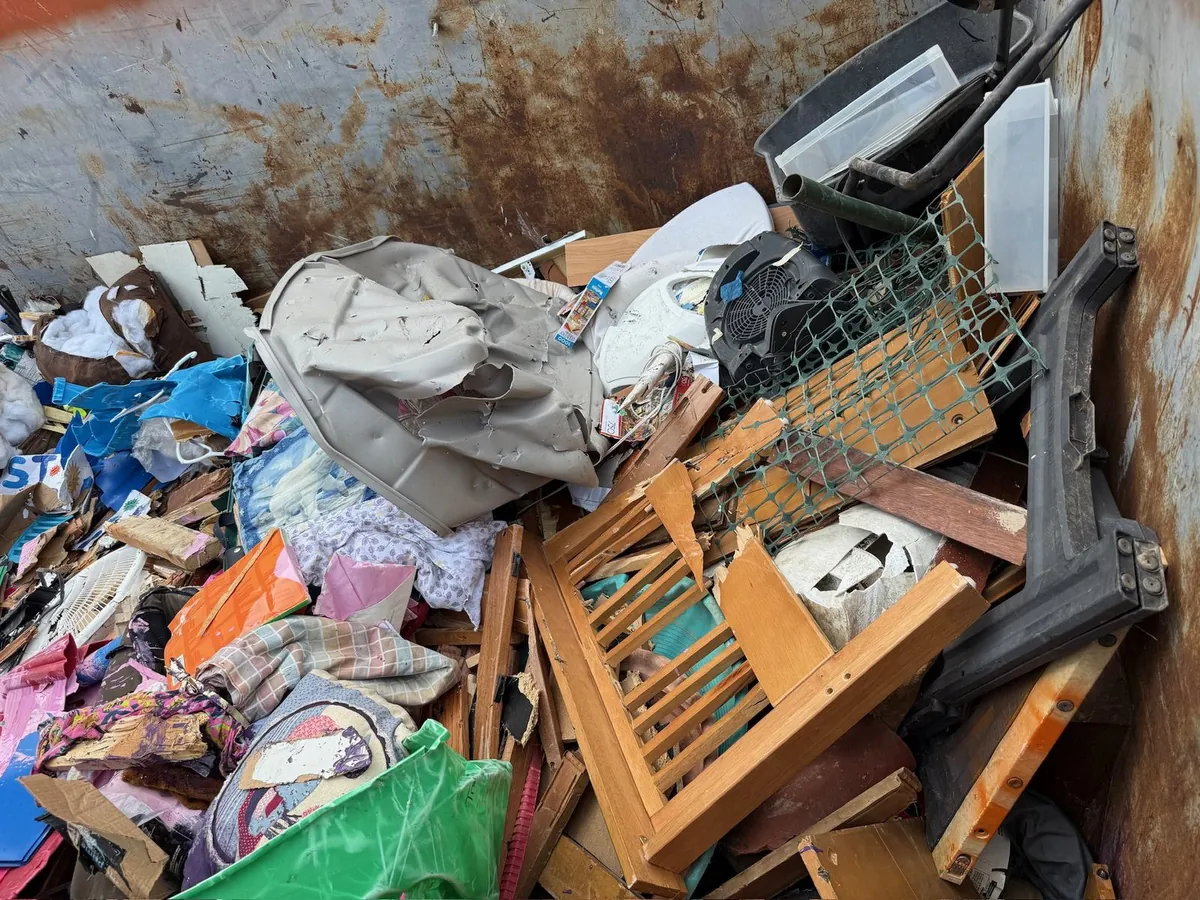
Cabinetry, doors, framing and crating take far less room flat than whole.
Nothing above the rails.
A load above the top rail cannot be tarped and cannot legally travel, and it turns a scheduled pull into a return trip.
Say what is in it before the pull.
A slab dropped into an interior-debris container changes the truck, the routing and whether the load can be taken at all.
Place it where the machine can reach.
Set the container within reach of the excavator or loader, doors facing the work, on a surface that holds it loaded; moving material twice adds up fast. The truck needs roughly sixty feet of straight-line approach and clear overhead. We'll confirm placement and access with you before delivery.
The Honest Part
What We Won't Compact, and What We Won't Take
Compaction is weakest on demolition debris, and American Compaction Services would rather say so here than after a visit that returns nothing. Light construction debris and wood compact well; concrete, masonry and red iron are never compacted. Compaction can help on the bulky fraction. It will not transform a demolition job.
Keep concrete separate from eligible non-concrete bulky waste being considered for compaction.
Call ahead for heavy material
Heavy material has weight limits, so call us first and we'll plan the right container.
What we won't take at all
The list of what cannot go in a container, and why, lives on the accepted materials page. Check it before the strip-out starts. If your hauler will not take it, it does not go in, and we do not work it.
Storm Cleanup
Storm Debris Cleanup at Commercial Properties
Storm debris arrives mixed: limbs and downed trees, torn roofing and fencing, damaged signage, soaked insulation and structural material. The volume shows up all at once, access to the site is often compromised, and the property needs to reopen.
Dry woody debris can compress reasonably well, so it suits a larger container with compaction visits between pulls. Wet and structural debris pulls the load toward the weight ceiling, so it wants a smaller container and a declared load. American Compaction Services schedules storm cleanup containers around site access and reopening, not around a fixed route.
The Difference
Where Compaction Helps on Demolition Dumpster Rental
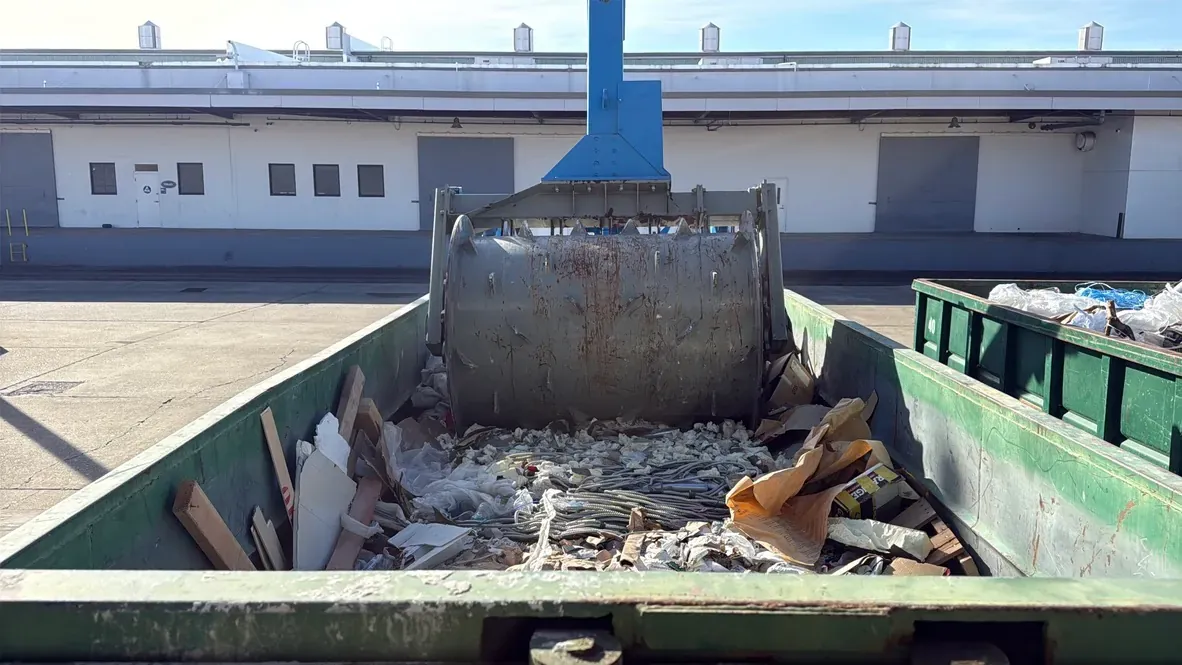
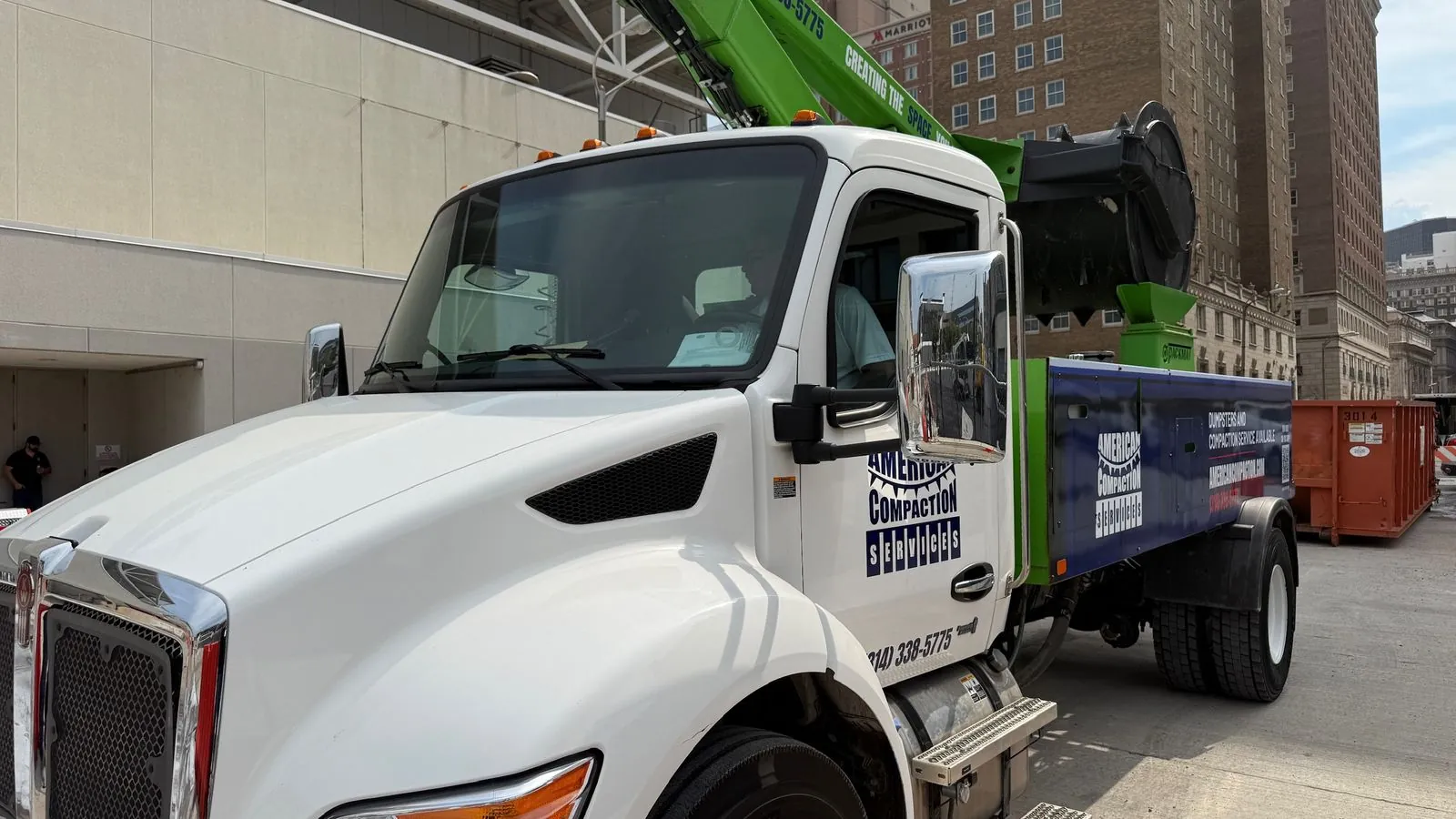
Compaction earns its place on the bulky fraction, the drywall, grid, framing, insulation and packaging that fill a container by volume and leave it light. A mobile compaction unit works the container where it sits, and the container does not leave the pad until it is genuinely full.
Compaction can reduce volume by up to 70%, depending entirely on the material. It is never a guarantee.
| Material | Compaction |
|---|---|
| Cardboard and packaging | Compacts well |
| Plastics | Compacts well |
| Pallets and wood | Compacts well |
| Furniture and bulky commercial waste | Compacts well |
| Light construction debris | Compacts well |
| Concrete, masonry and roofing shingles | Never compacted |
| Red iron, liquids and hazardous waste | Never compacted |
Read that table from the bottom; that is where demolition sits. Compaction helps reduce waste volume by up to 70% depending on the material. Expect the lower end. Compaction visits are set by your fill rate, and none at all on a declared dense load.
Compaction makes room; it does not raise the legal limit. Compaction reduces haul-offs; it never eliminates them. A compaction visit is itself a visit.
Two ways to start
Already have a dumpster? Keep it and keep your hauler; we compact eligible non-concrete waste. Need dumpster service? We supply the container, with compaction only for eligible non-concrete waste. Concrete is never compacted. No contract to sign: no exclusivity, no minimum, no term. The on-site waste compaction page covers the visit and the unit in detail.
See it on your own debris
Free on-site demo: after confirming suitability, we compact eligible non-concrete waste in one of your own containers while you watch. The demo carries no obligation and is photographed before and after. If it isn't a fit, we tell you on the spot. Keep concrete separate from eligible non-concrete waste.
The pricing guide explains what drives the bill, and the savings calculator gives a planning number from your own inputs. These results are estimates from the numbers you enter. They are not a quote, a promise or a guarantee.
The Process
How Demolition Container Service Runs, Start to Finish
- 1
1. You describe the job.
What is coming down, what it is made of, how long it runs and what the site looks like.
- 2
2. We size it honestly.
Tell us about heavy or dense debris and we plan for weight limits; bulky debris gets a larger one. If compaction will not help your stream, we say so at this stage.
- 3
3. Free on-site demo, if it applies.
On eligible non-concrete waste in a container you already have, after suitability is confirmed.
- 4
4. Delivery and placement.
The container is set within reach of the machine, doors facing the work, on a surface that will hold it loaded.
- 5
5. You load it.
Flat, level, nothing above the rails, with the heavy and light fractions apart where the job allows.
- 6
6. Compaction visits where they make sense.
On the bulky fraction, compaction visits are set by your fill rate. On a declared dense load, none.
- 7
7. Pull or swap.
The container is pulled at its real ceiling, weight or volume, or swapped for an empty one so the job is never without a container.
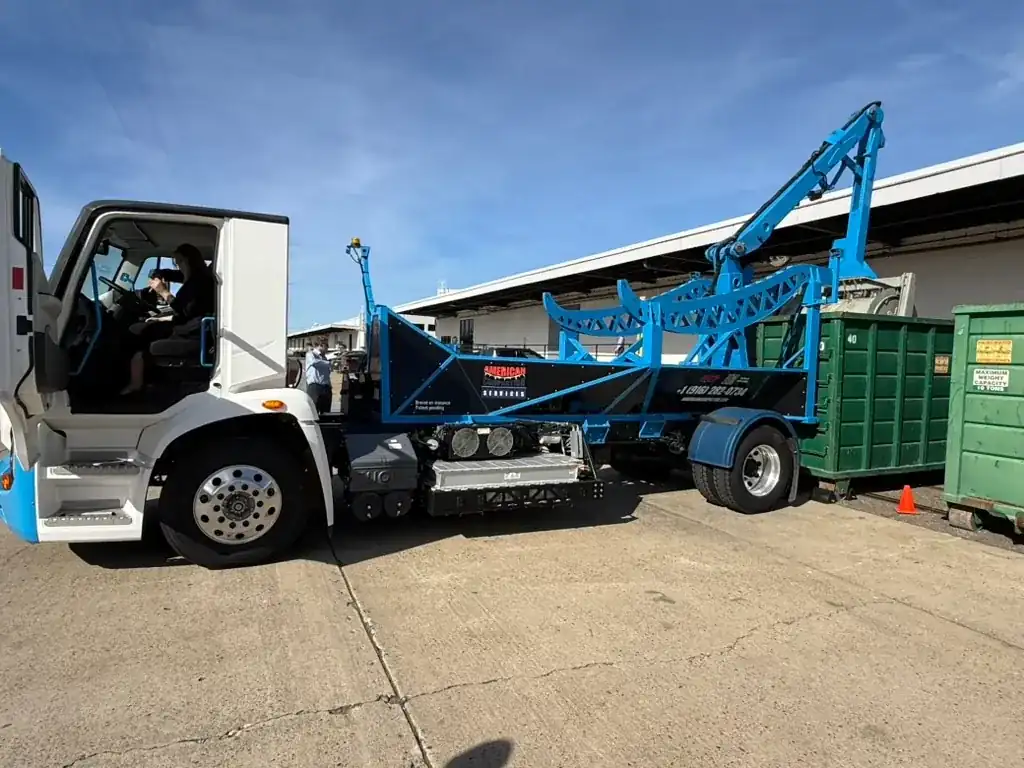
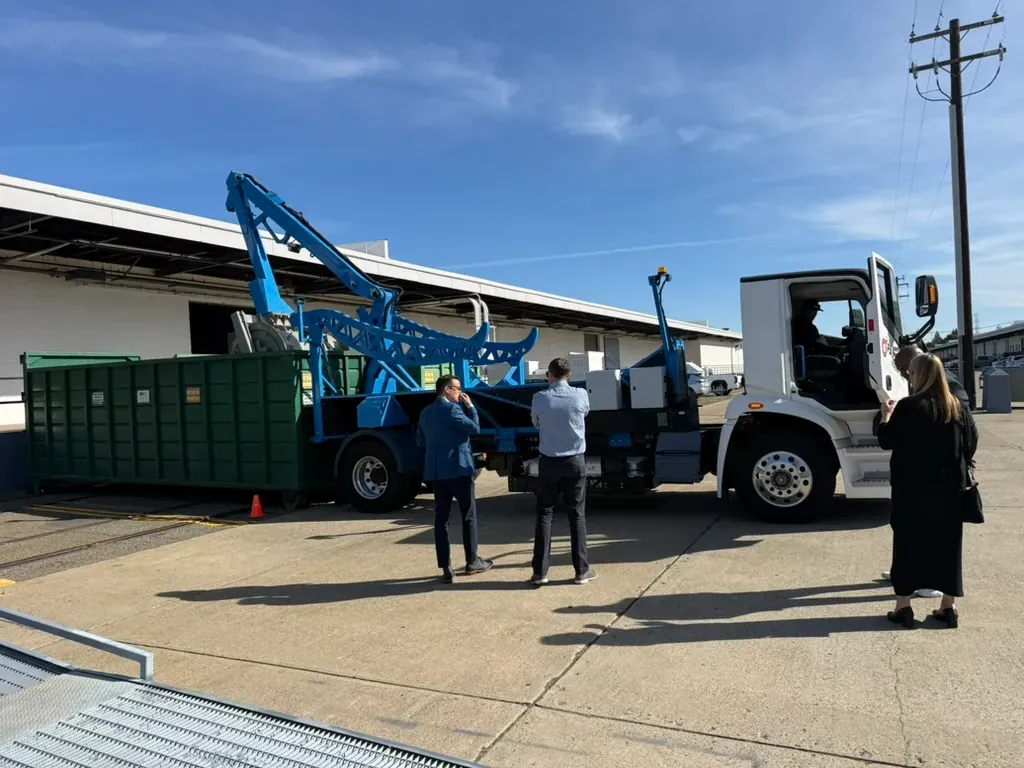
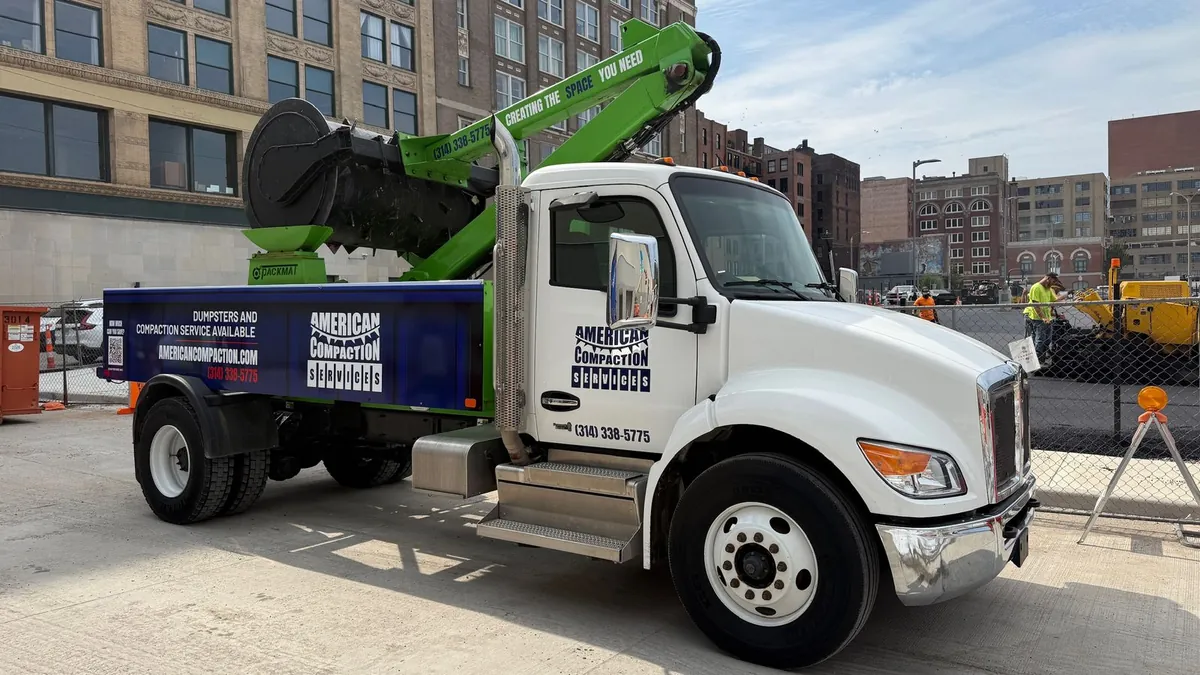
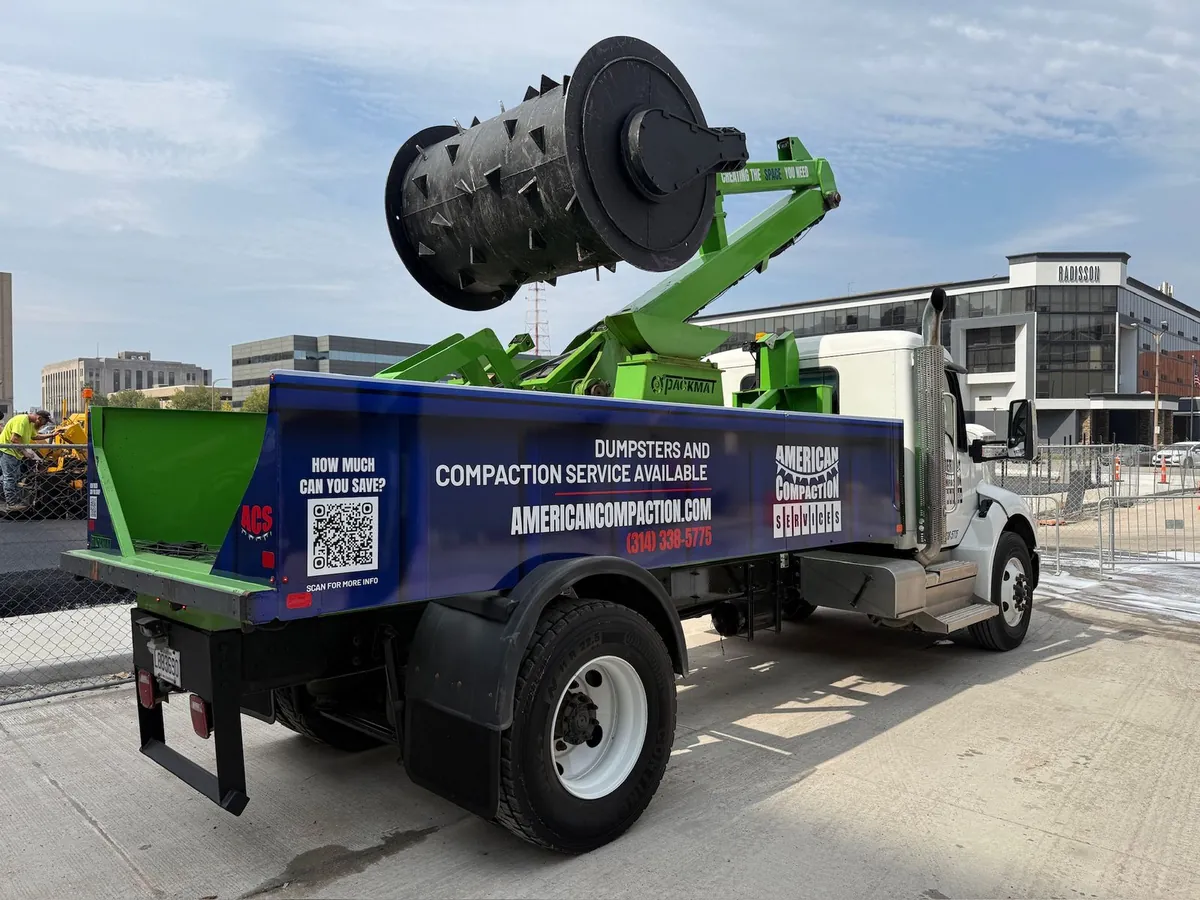
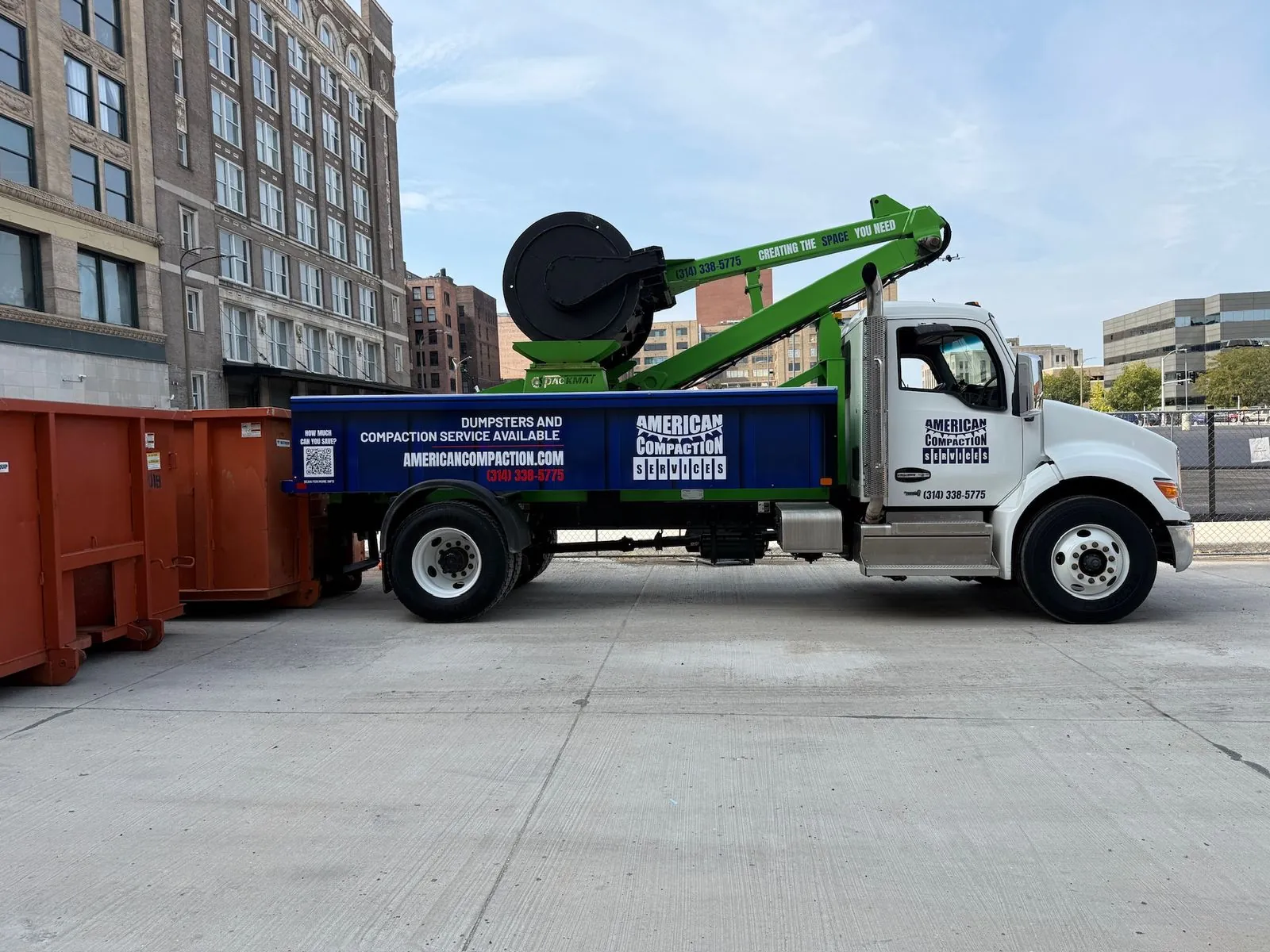
American Compaction Services builds the visit around not touching the container. Every visit includes a before-and-after inspection with photo documentation. A heavy steel drum, narrower than the container, works the load down and never touches the walls. The drum works on its own weight, with no hydraulic down-force. Safeguard wheels and end guards keep the unit off the container's structure, and our operators run a zero-touch policy. That matters most when the container belongs to your hauler: it goes back to work the way it came.
Why American Compaction Services
Why American Compaction Services for Demolition Work
Sized for weight, not for the biggest container.
On heavy or dense debris we plan for weight limits with you from what you tell us, even when that is the smaller sale.
Straight answers about compaction.
Built around compaction does not mean compacting everything. If it won't move your number, we'll tell you on the spot.
Keep your hauler.
If a hauler already services your site, keep the container and keep the hauler; we compact eligible non-concrete waste. Concrete is never compacted.
Business accounts, no contract.
Contractors, plants, facility operators and property managers. No contract to sign: no exclusivity, no minimum, no term.
Documented handling.
Every visit includes a before-and-after inspection with photo documentation, on your container or ours.
Where We Operate
Available in These Markets
American Compaction Services supplies demolition containers market by market. Each market has its own page, phone number and service area, and the market page covers the local details and how to reach the team there.
If your city is not on the list, the locations page shows every market we serve.
Frequently Asked Questions About Demolition Dumpster Rental
Related Services
Roll-Off Dumpster Rental
pulls, swaps and who does what.
On-Site Waste Compaction
how the unit works a container in place.
Construction Dumpster Rental
containers by phase, from teardown to buildout.
Roofing Dumpster Rental
another weight-first stream, sized for tear-off debris.
Industrial Dumpster Rental
standing service for plants.
Cutting Waste Costs on Demolition Jobs
why weight drives the bill, and where the mixed fraction still pays.
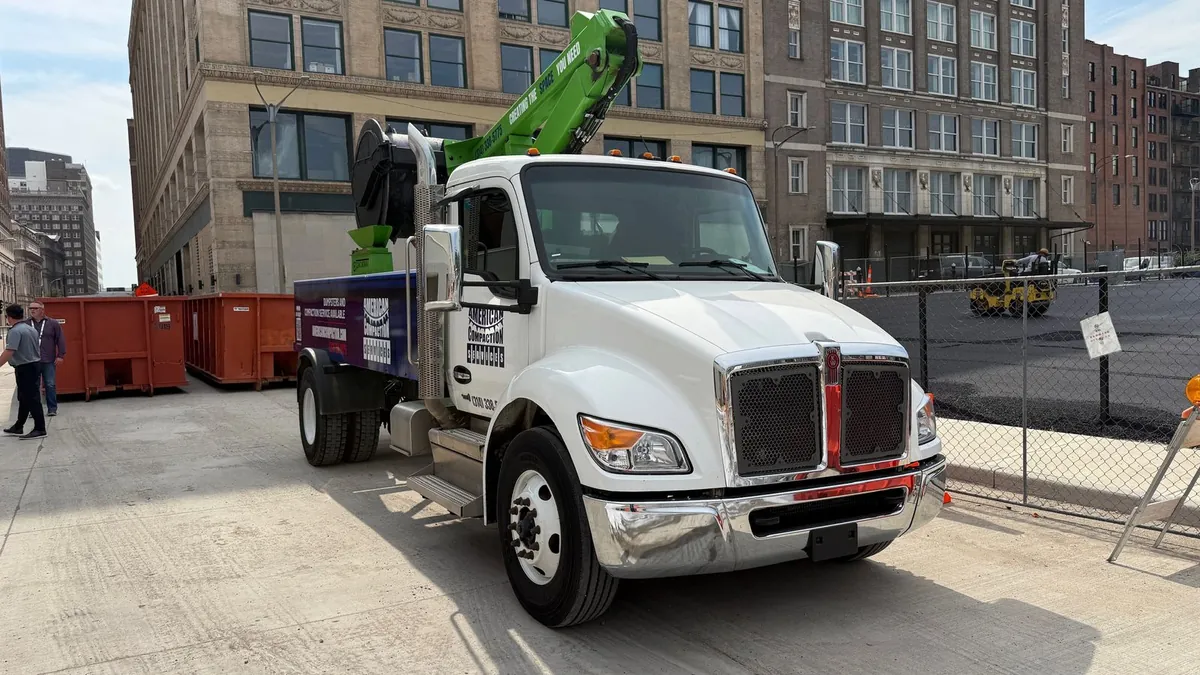
Start Your Demolition Dumpster Rental
Tell us what you are tearing down and what the debris is made of. American Compaction Services will size the container for its weight, plan the swaps against the job, and tell you honestly whether compaction changes anything on your site. The on-site demo is free.
Safer than pushing a load down with a loader or excavator
We compact the load right in your roll-off, on site. The box stays where it is. The room comes back.
Up to 70% less volume, depending on the material.
With roll-off, every haul is a call. With American Compaction Services, nobody has to call.
We set you up on a schedule and we compact on site. Dumpsters and compaction. All handled.
You already pay for dumpster space. Compaction lets you use more of it.
Getting started takes four details
- A photo of your dumpster and the space around it
- Your location
- What goes in the box
- The container size, if you know it
They help us plan for site access and match compaction service to your site.
We will prove it. Call or text (877) 651-7660.