

Contractor Accounts
Contractor Dumpster Rental
We automate your roll-off. You'll never run out of room. Fair price. Great service.
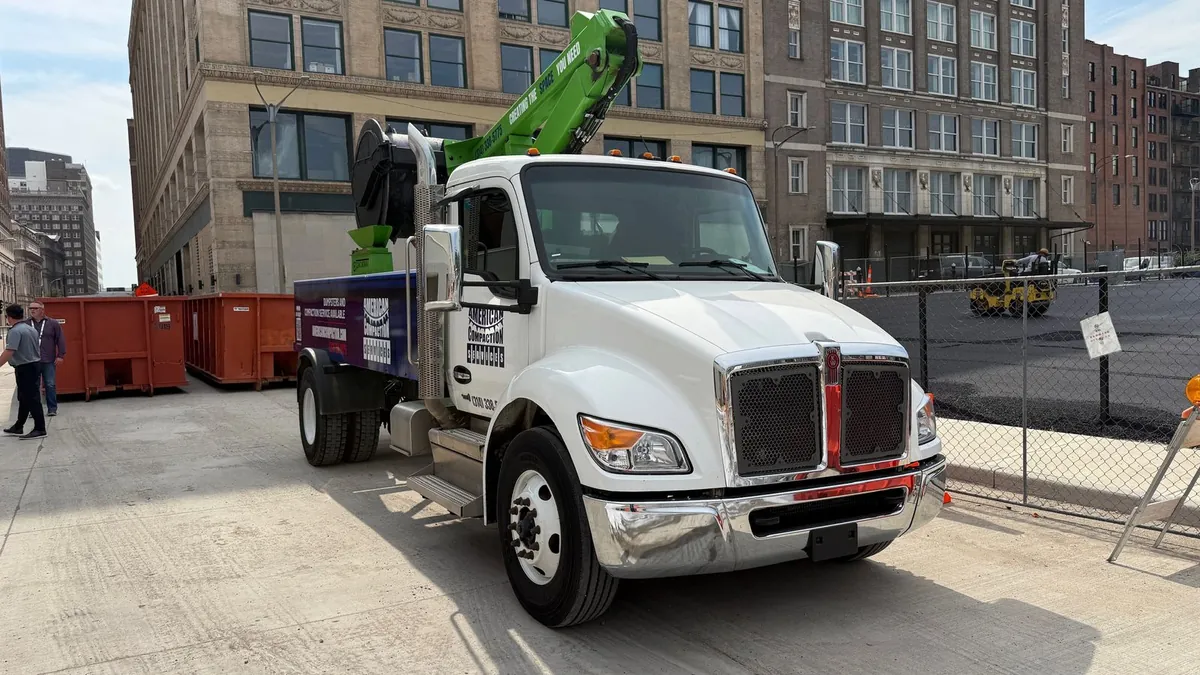
Contractor dumpster rental works as an account, not a series of one-off orders. American Compaction Services sets a contractor up once, then supplies 20, 30 and 40 yard roll-off containers to every jobsite you run and compacts them on site, so each one holds more before a swap. Most contractors do not have a dumpster problem. They have a dumpster logistics problem.
We work with general contractors, remodelers, fit-out and flip crews, builders and the specialty trades. ACS provides waste management through dumpster rental and on-site compaction. If you run more than one active job at a time, this page covers how the container side of that gets handled.

The Real Cost
What Contractor Dumpster Rental Actually Has to Deliver
A container is the easy part. Where contractor dumpster rental goes wrong is in three places, and none of them is the container.
The arrival. A container that shows up after demolition starts means a crew standing around and debris piled on a floor the next trade needs.
The swap. A container full on Thursday with nobody coming until Monday means debris stacked beside it, a messy site for a walkthrough and a crew working around the pile.
The account itself. A new order, new paperwork and new site instructions on every job, when you are running four jobs at once.
The fix is structural. Every jobsite hangs off one account with its site instructions already on file, so a swap request for a named job means something. Then there is the trip: every swap is a full truck trip, and on tight-margin renovation work, swap count is one of the few cost lines you can still control after the bid is signed. Compaction reduces haul-offs; it never eliminates them. A compaction visit is itself a visit. What changes is that a short on-site visit happens instead of a haul-off.
Signs your container setup is costing you
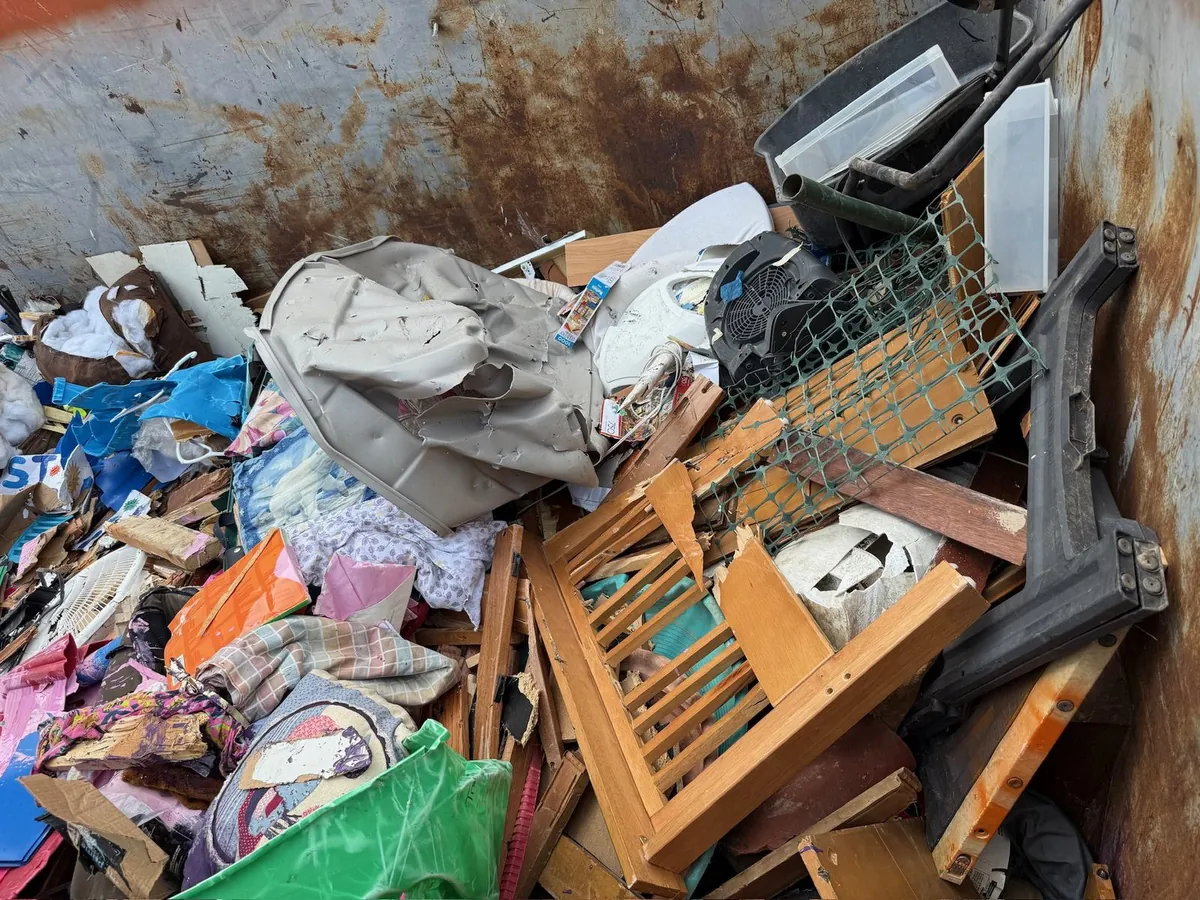
Debris piles up beside the container between swaps. The size or the cadence is wrong.
Crews hand-carry debris across the site. The container could not be placed where the work is.
Swaps get called at the last minute. On-call service outside a set cadence is the hardest way to move a container.
Every job means a new order. The account is not doing its job.
Containers leave light. If it looks full at a fraction of its weight, you paid for a trip that hauled space.
Disposal eats a line you priced tight. Swap count is usually why.
Who We Serve
Contractor Accounts We Set Up
American Compaction Services sets up accounts for contractors who run more than one job, or one job after another.
Every account is a business. When a contractor is the account, a renovation, a flip or a new-build subdivision is commercial work, whatever the building is. The customer we turn away is the homeowner hiring directly: we do not rent to homeowners.
General contractors
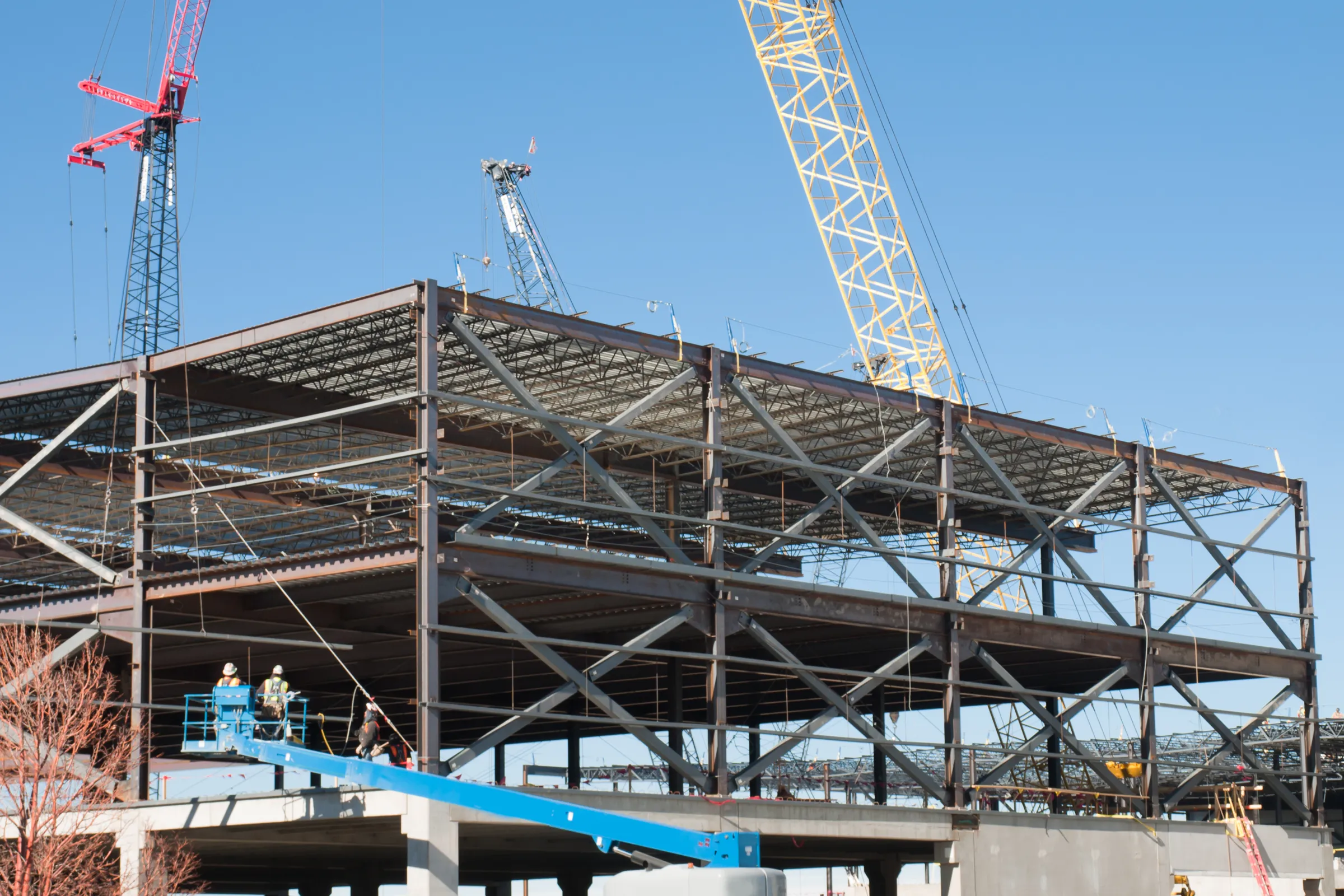
Several jobs, phases and trades at once, each needing a container sized to where that job is. For phasing a single large build, the construction dumpster rental page covers containers by phase.
Remodelers and renovation crews
Interior demolition, cabinetry, flooring, drywall, trim and packaging, usually on a tight site with limited placement. Renovation debris is bulky and light, which makes it one of the better candidates for on-site compaction.
Fit-out and tenant improvement crews
Short jobs dominated by packaging and fixture debris, often inside an occupied building with set delivery hours and one usable spot for the container.
Flip and investor crews
Fast turnarounds: heavy cleanout volume at the front, then a long tail of finish debris, so the container schedule spikes and then drops. The account is with the contractor or the investing company doing the work, and the work is commercial whatever the building is.
Builders across several lots
A builder putting up houses across a subdivision is a business account, and the work is commercial. Each lot or phase can run its own container, all on one account.
Specialty trades
Framing, drywall, flooring, mechanical and electrical crews need a container for a defined window, where placement matters more than size. Tear-offs have their own rules; the roofing dumpster rental page covers them.
The Account
One Account, Every Jobsite: How Recurring Service Runs
This is the core of contractor dumpster rental with American Compaction Services. The account belongs to your company, and every jobsite hangs off it.

- 1
Set up once
The account is set up at the company level, and each new job is added as an address when it opens. Setting up the container on job number twelve should take a phone call, not an intake process.
- 2
Site instructions carry over
Gate codes, placement notes, the surface, the on-site contact and truck-hour rules are recorded per address, so the crew is not repeating them every time a container comes or goes.
- 3
Deliveries planned against the build calendar
Tell us when each job starts and how long its phases run, and deliveries are planned against those dates.
- 4
Swaps on a cadence where the work allows
Where the work is predictable, such as repeat fit-outs, similar renovations or unit turnovers a property manager contracts out, swaps run on a cadence. Where it is not, they are called as the job needs them.
- 5
Your hauler at one job, ours at another
The two ways to start can differ by jobsite. At one job, we compact the container your hauler already set; at another, we supply the container and compact it. Both sit on the same account.
No contract to sign: no exclusivity, no minimum, no term.
Container Sizes
Which Container Size for Which Kind of Job
Three sizes cover nearly every contractor job. Size for the heaviest phase of the job, then let the schedule flex around it; each size has its own page with dimensions, loading and access.
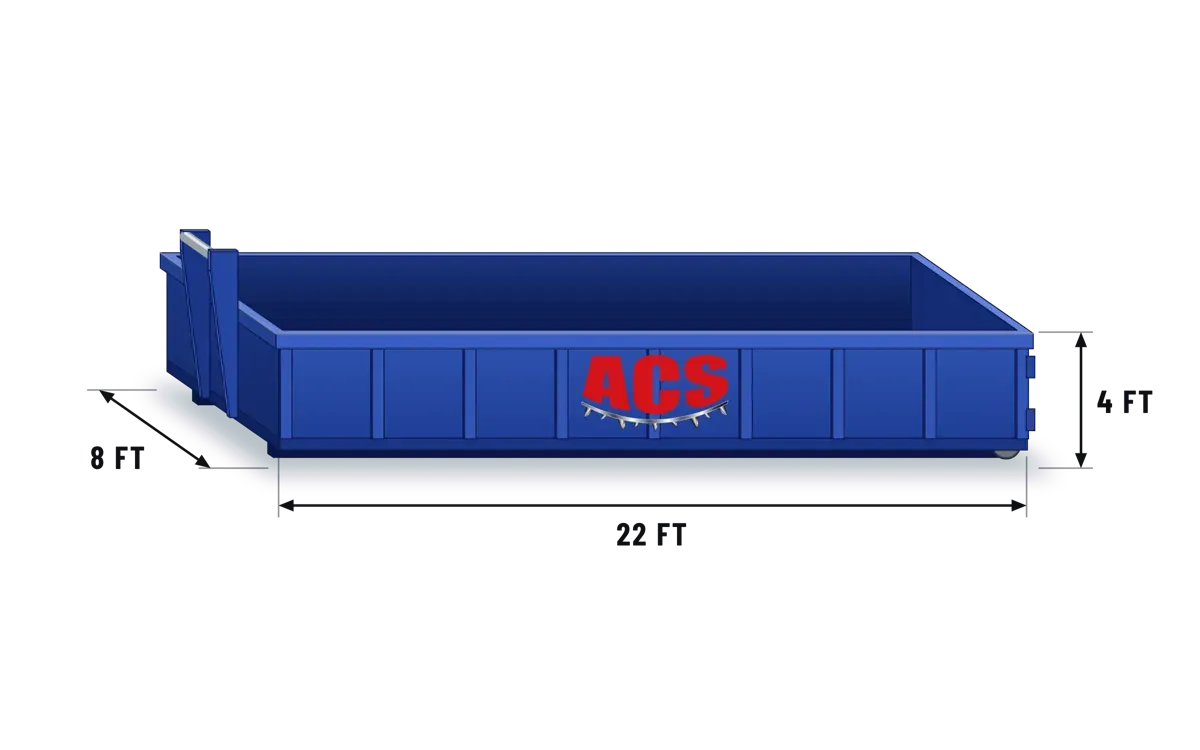
20-Yard: interior work and occupied buildings
About 22' × 8' × 4' (L × W × H)
Interior demolition and small commercial renovations. Heavy or dense debris? Tell us first so we can plan for weight limits. The low walls let a crew load over the side by hand. A smaller container does not always take less ground, so plan the spot the same way.
See this size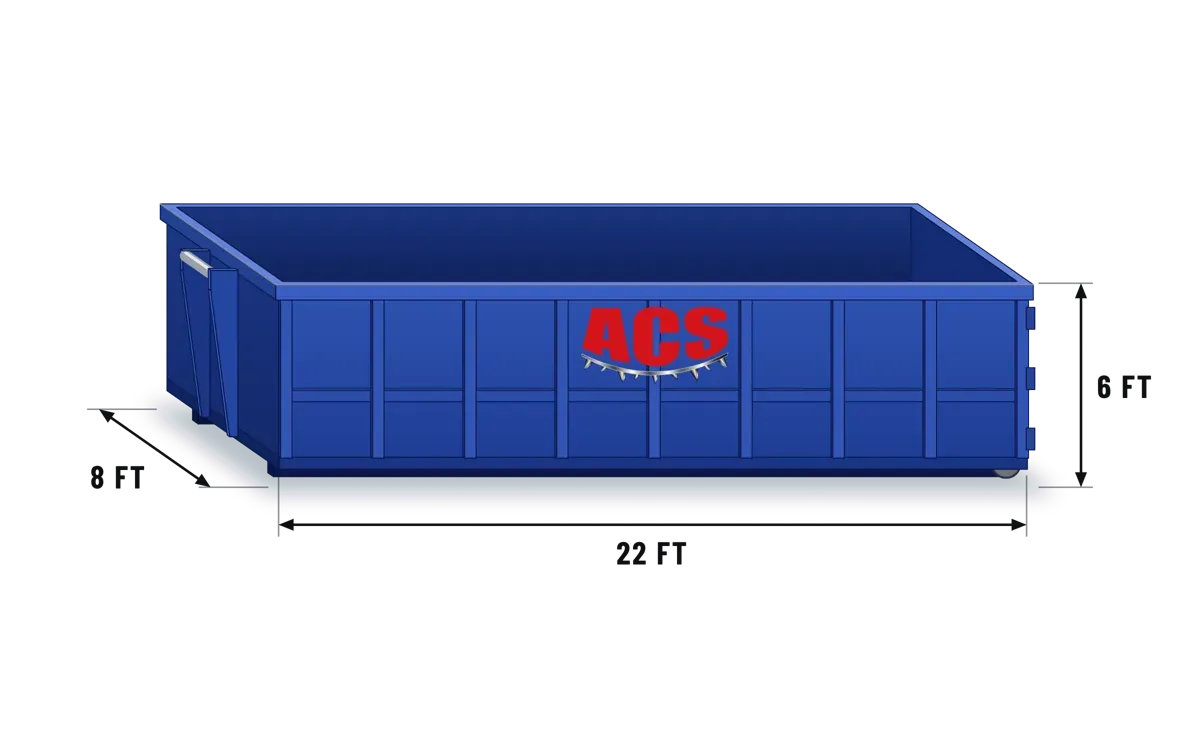
30-Yard: the usual starting point
About 22' × 8' × 6' (L × W × H)
Mixed renovation and build-out debris: framing scrap, drywall, cabinetry, flooring and packaging. It is where most contractor jobs start.
See this size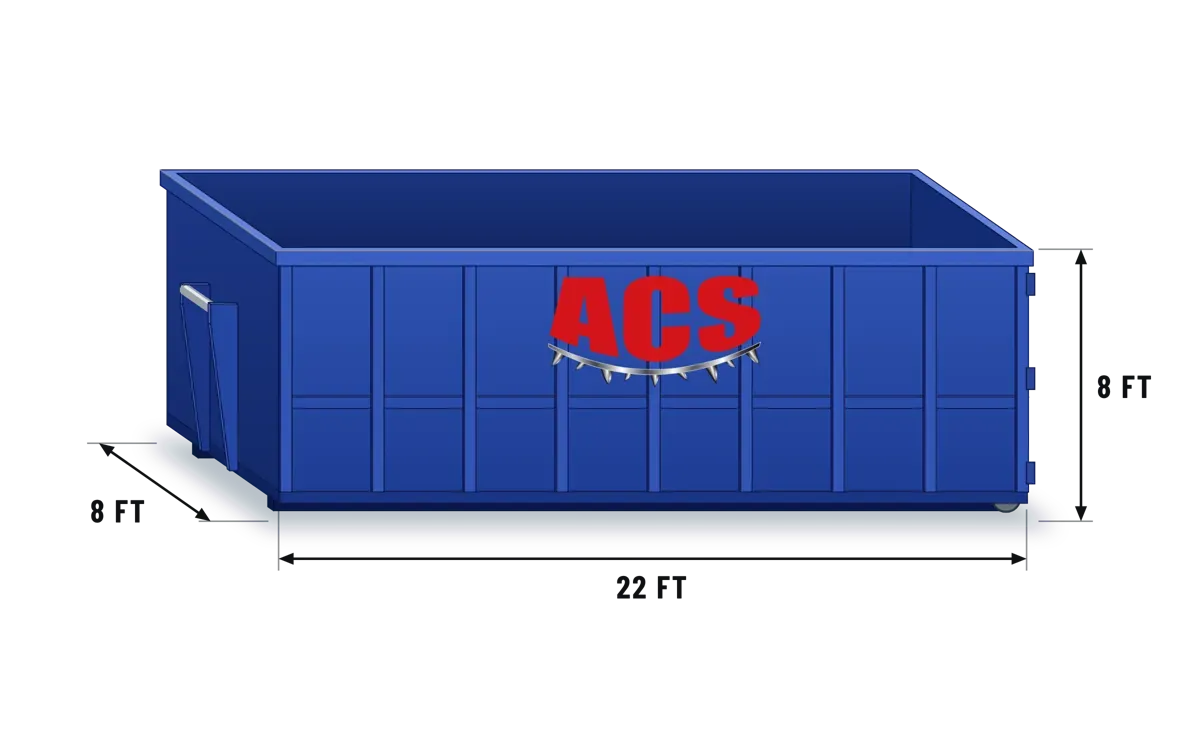
40-Yard: large fit-outs and cleanout phases
About 22' × 8' × 8' (L × W × H)
Full-building renovations, large fit-outs and cleanout phases, where the debris is light and bulky. Weight limits still apply.
See this sizeApproximate dimensions. Containers vary; confirm the actual size for your site before the first placement.
The size can change between jobs and between phases of one job, all on the same account.
Accepted Materials
What Goes in a Contractor Container, and What Doesn't
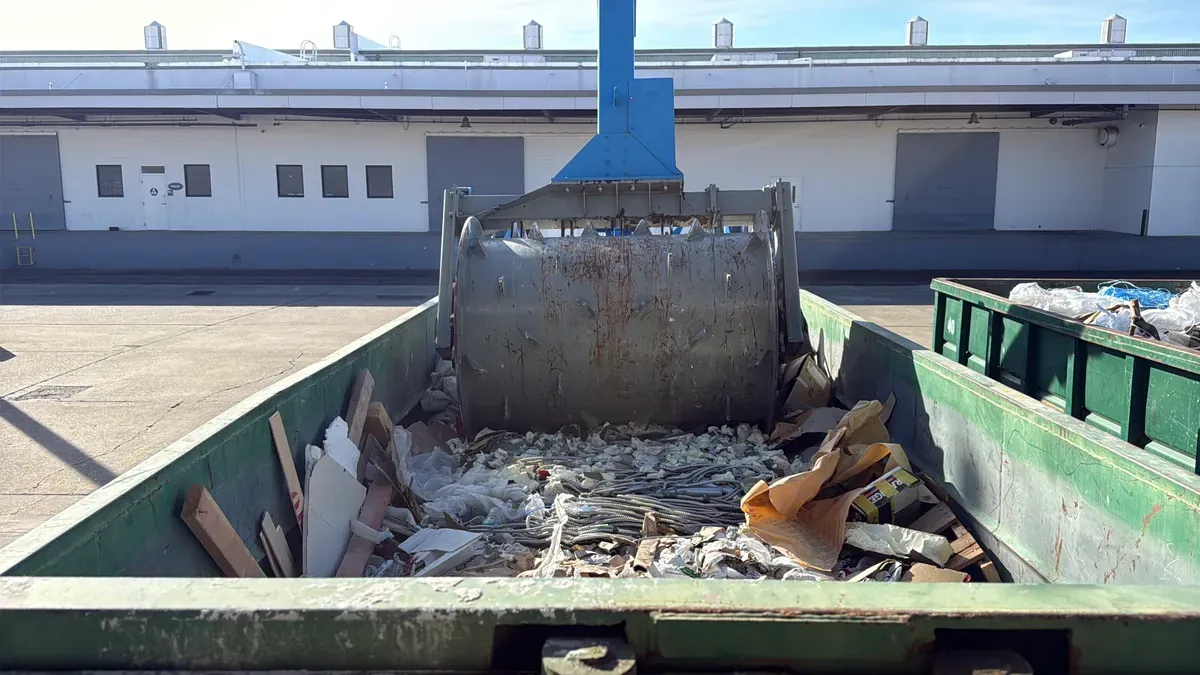
Contractor jobsites produce mixed construction and renovation debris, and mixed loads are normal. What a container can take is set by the receiving facility; the accepted materials page has the full list. For compaction, American Compaction Services draws the lines here.
What we compact
Cardboard and packaging; plastic film and wrap; wood and pallets; construction and demolition debris, including drywall, insulation, ceiling grid and fiberglass; compost and organics, as long as your hauler accepts it.
What we won't compact
We will not compact liquids; dirt, soil, aggregate or other dense material with no air in it; hazardous or regulated waste; sealed drums or pressurized vessels; or anything the receiving hauler won't accept. On a pure dense load like broken concrete, we'll tell you to skip compaction and have it hauled.
Paint, solvents, adhesives and fuel show up on renovation sites by accident. They stay out of the load, and if any went in, say so before the swap. When a job turns into heavy teardown, tell us first: the demolition page covers weight limits and where compaction stops helping.
Swap Cadence
How Often Contractor Containers Get Swapped
Swap frequency sets what a job's waste line costs more directly than anything else on it. Jobs move in waves. Demolition week runs fast and bulky. The middle of the job slows down. Finish work produces less volume, but it lands right when the site needs to look clean for a walkthrough.
Size for the heaviest phase, then let the schedule flex. Demolition week may need more than one pull; the middle of the job may need far fewer. With compaction, visits are set by your fill rate, and packaging-heavy fit-outs tend to give the visits the most to work with. A short job whose container leaves once or twice has too few trips to save, and we will say so.
When a container fills faster than the schedule, there are three ways to add capacity.
Swap it more often
The default, and the costliest way to add capacity, because every swap is a full truck trip. It is the right call during demolition weeks and against a hard deadline.
Size up
Step from a 20 to a 30, or a 30 to a 40, where the placement allows it and the material is light. On a tight renovation site with one usable spot, sizing up often is not an option at all.
Compact what is already there
Same container, same spot, more room. It wins when the load has air in it and the job runs long enough for trips to come off the schedule; the ratios are below.
Scheduling
Scheduling and Swap Timing: What to Expect
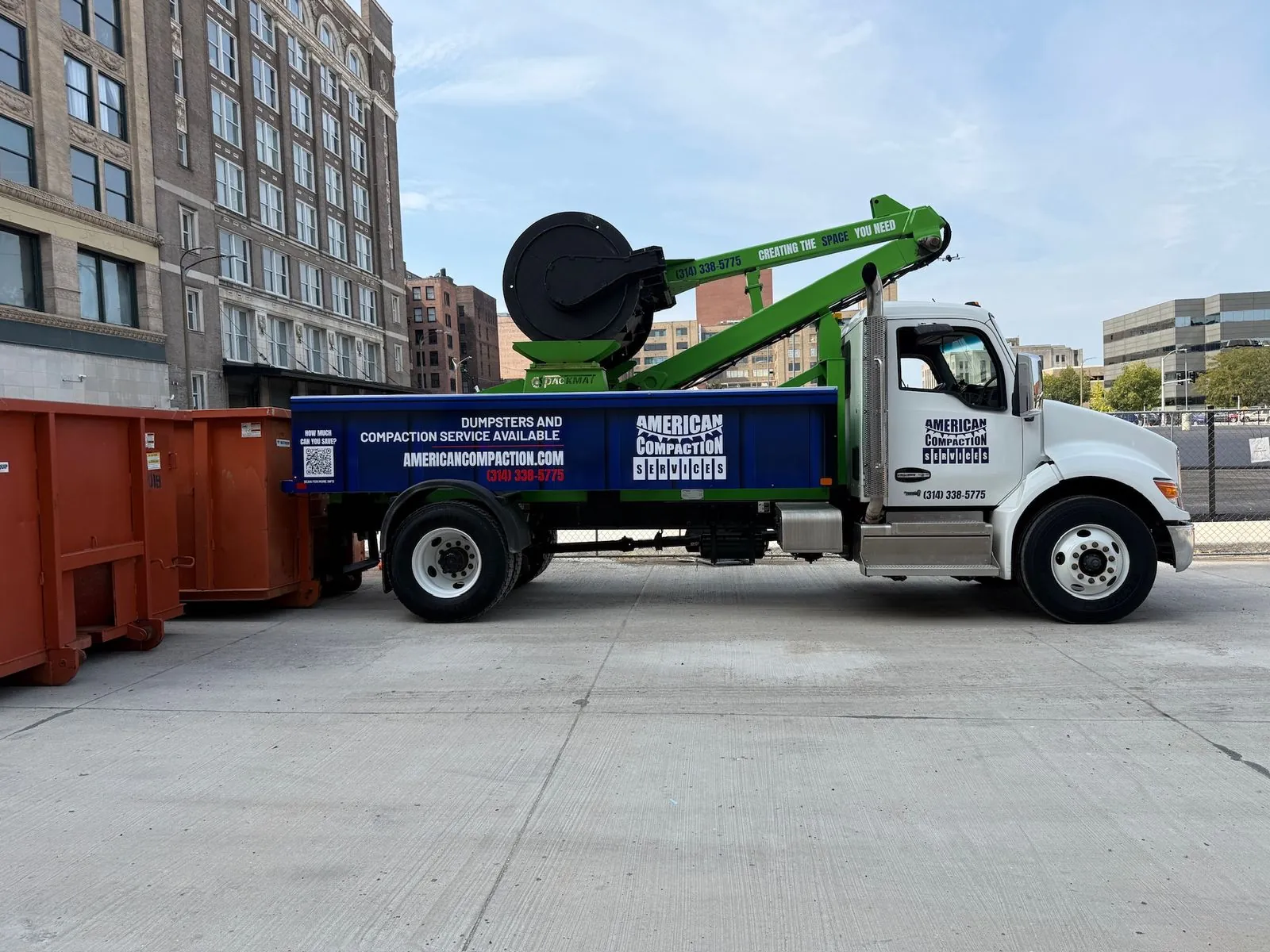
We do not publish a guaranteed turnaround window. What we can do is plan around the way contractors actually work.
Scheduled work runs smoother than short-notice work
A delivery or swap booked against a known date is easier to hold than one called in the same morning.
Delivery is planned against your start date
Tell us the start date when the job is won, not when demolition begins, and the container is planned in before the crew needs it.
Site access decides more than people expect
The truck needs roughly sixty feet of straight-line approach and clear overhead. Gates, bollards, parked trailers, material stacks and power lines are the usual obstructions. We'll confirm placement and access with you before delivery.
A standing schedule is worth setting up
For repeat work, a standing cadence per address beats calling each swap in, adjusted as each job moves through its phases.
The Difference
How On-Site Compaction Changes Contractor Dumpster Rental
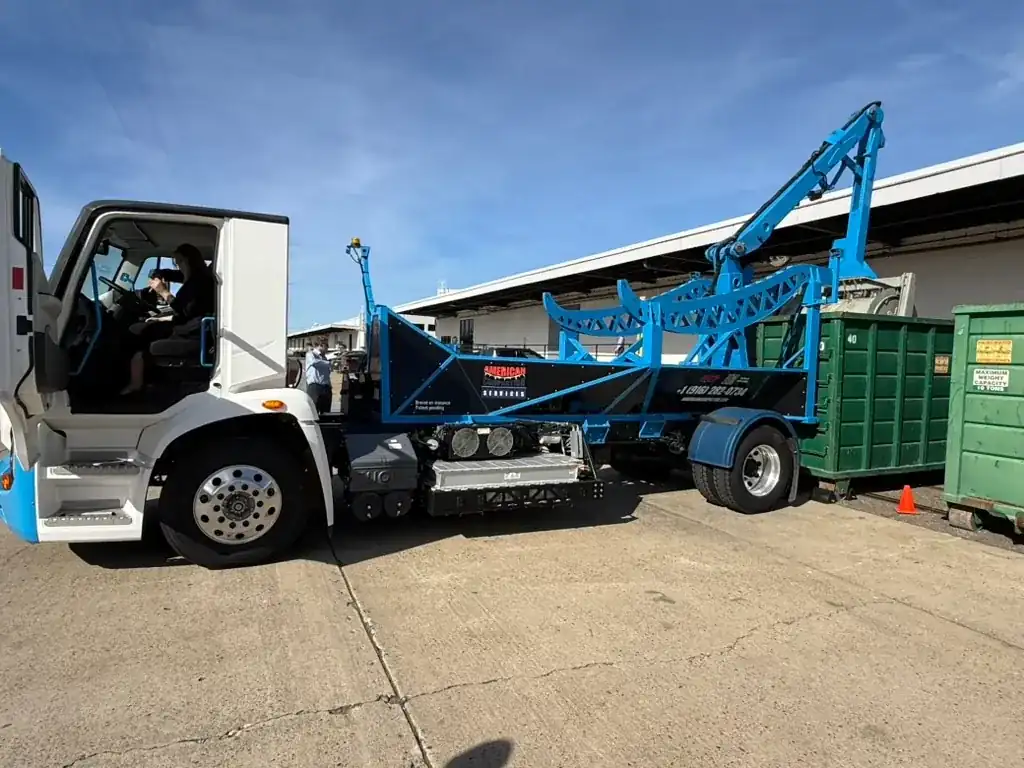
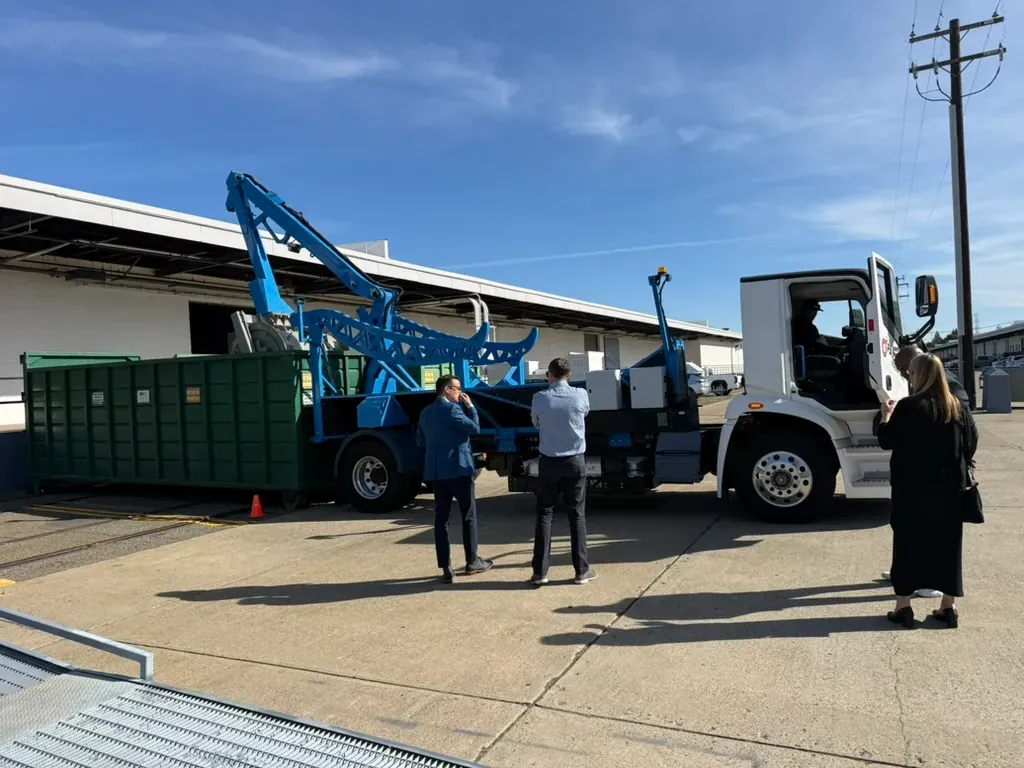
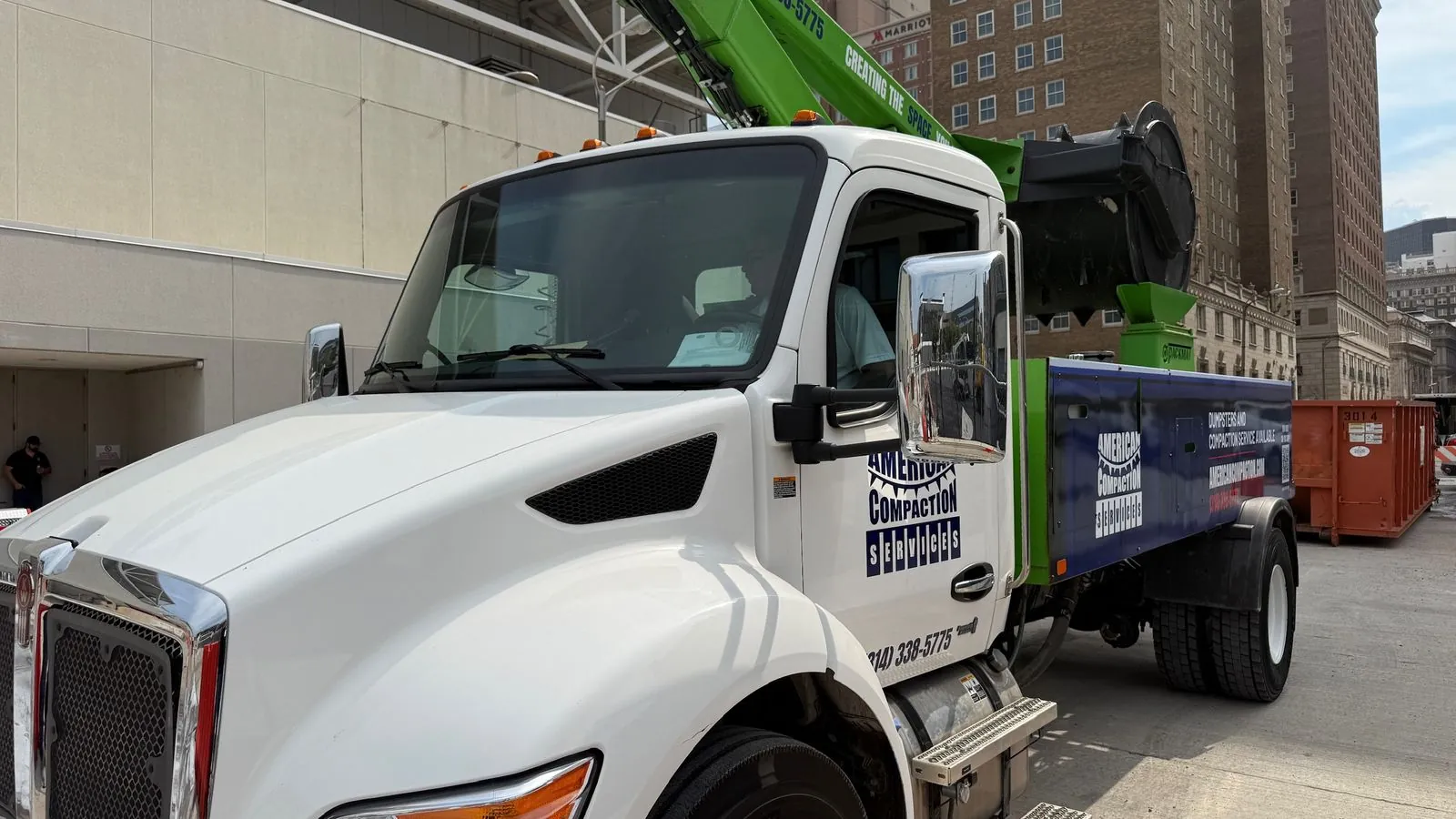
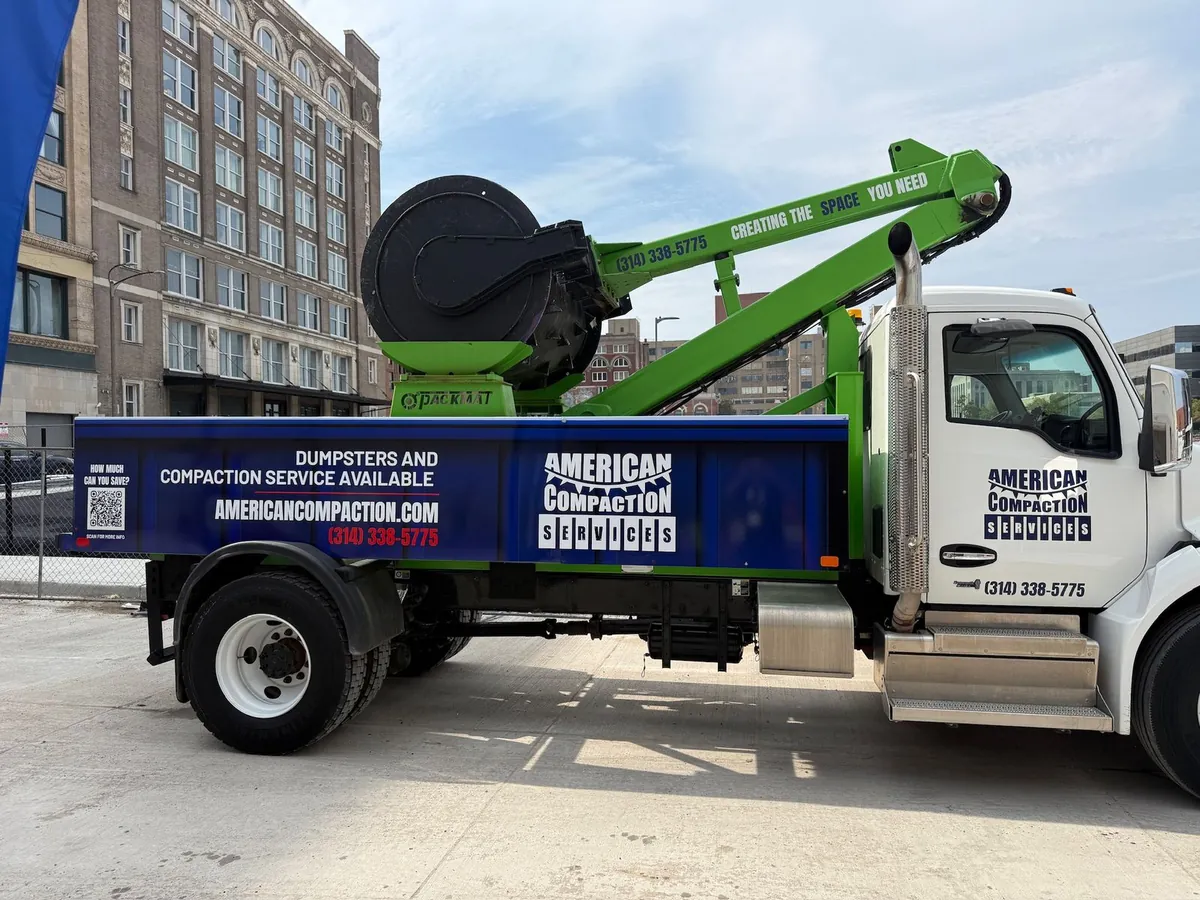
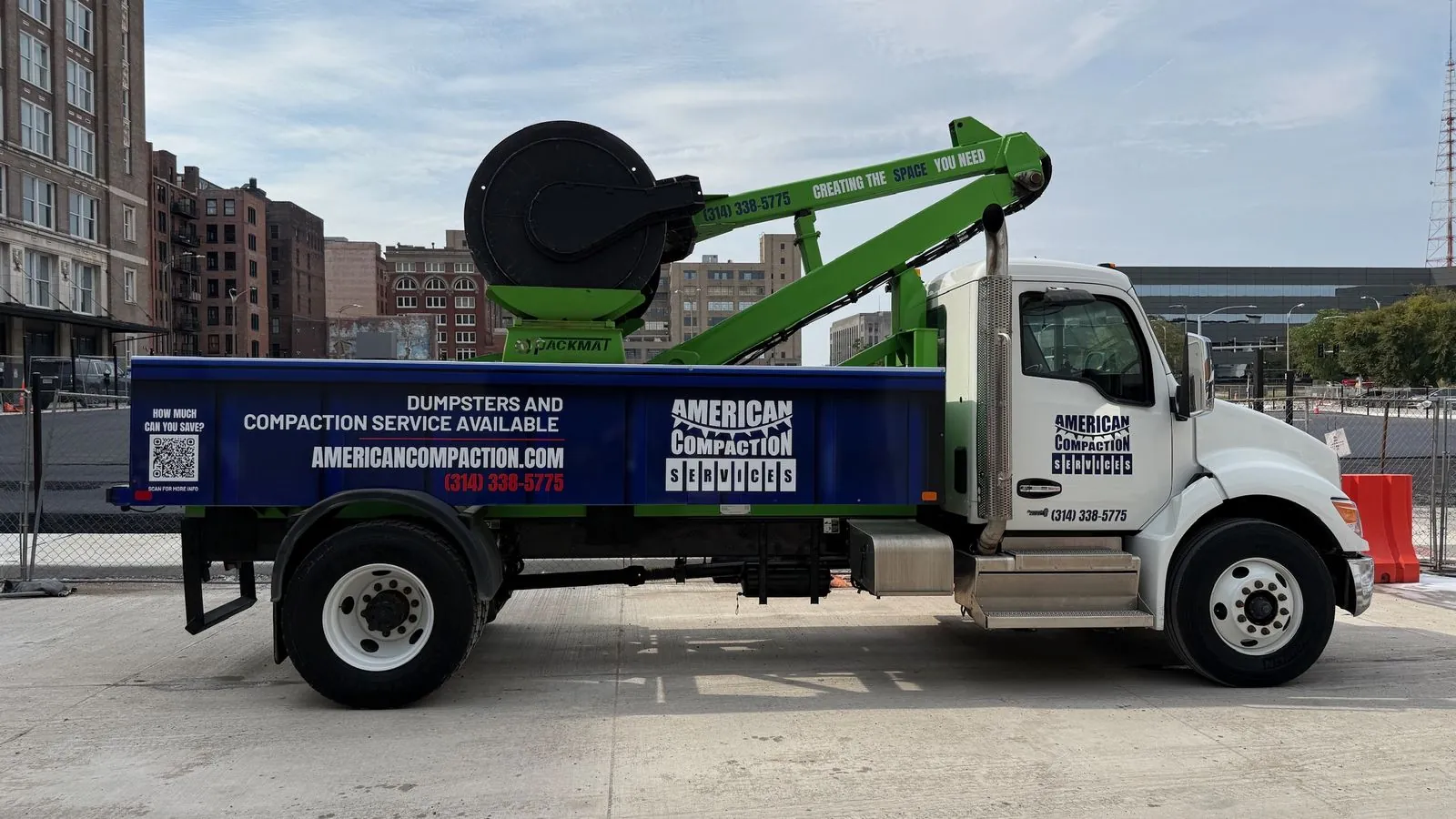
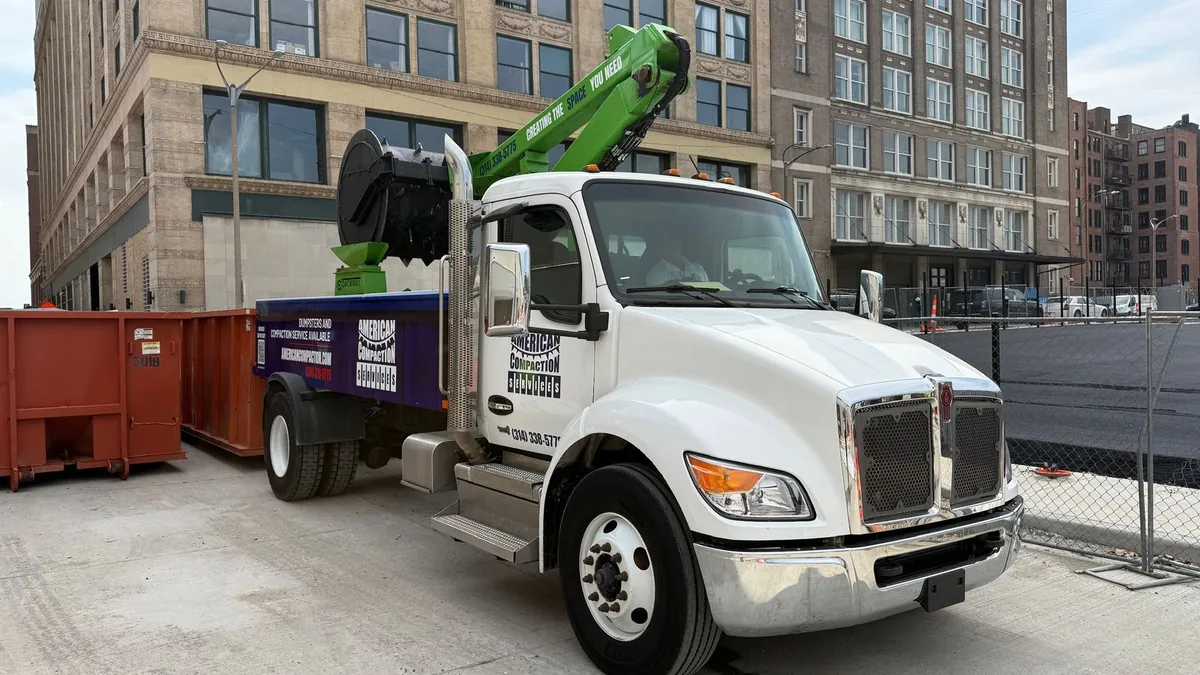
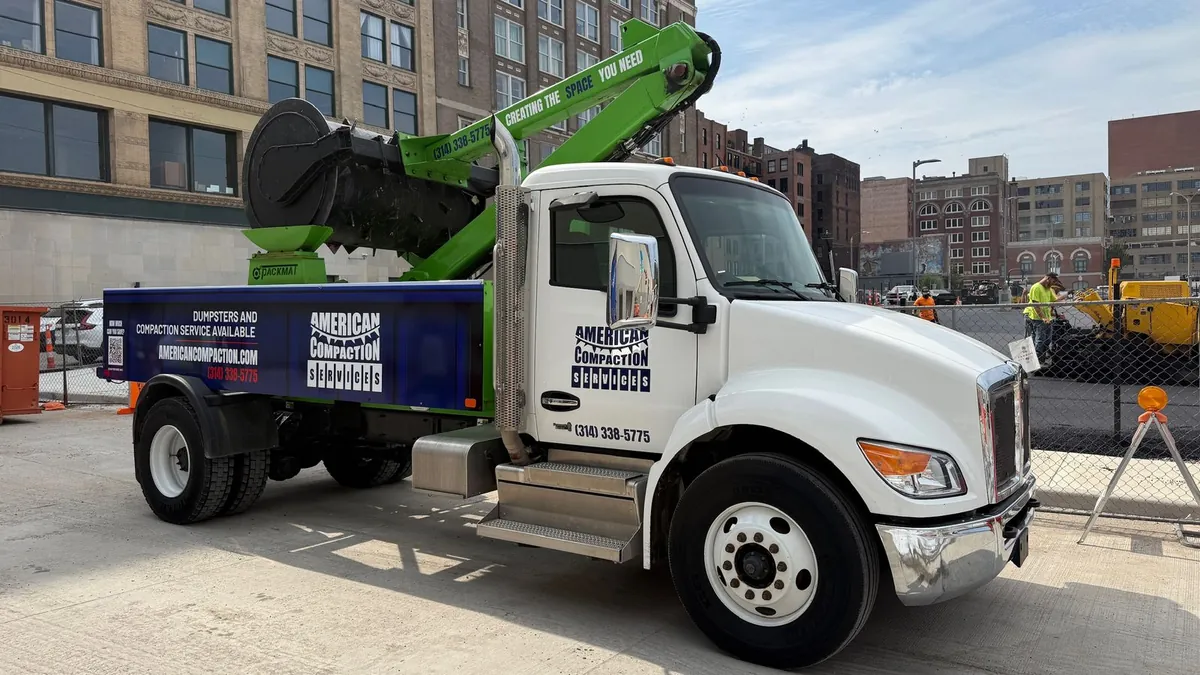
This is what American Compaction Services adds to a contractor account: the container gets worked before it goes. A mobile compaction unit comes to the jobsite and works the load down where it sits. The container never moves, and the crew keeps loading it.
Compaction can reduce volume by up to 70%, depending entirely on the material. It is never a guarantee.
| Material | Compaction |
|---|---|
| Cardboard and packaging | Compacts well |
| Plastics | Compacts well |
| Pallets and wood | Compacts well |
| Furniture and bulky commercial waste | Compacts well |
| Light construction debris | Compacts well |
| Concrete, masonry and roofing shingles | Never compacted |
| Red iron, liquids and hazardous waste | Never compacted |
Contractor debris spans that table. Fixture crates, appliance boxes and packaging sit near the top; framing scrap, drywall and pallets compact well too. Compaction helps reduce waste volume by up to 70% depending on the material. Compaction visits are set by your fill rate.
A loose container that looks full is mostly air. Compaction can reduce volume by up to 70%, depending on the material.
Two ways to start
Already have a dumpster? Keep it and keep your hauler; we compact what's in it. Need dumpster service? We supply the container and compact it on site. The on-site waste compaction page walks through a visit step by step.
See it on a job you are already running
Free on-site demo: we compact one of your own containers while you watch. The demo carries no obligation and is photographed before and after. If it isn't a fit, we tell you on the spot. The crew keeps working.
The pricing guide explains what drives a contractor's waste bill, and the savings calculator runs the trip arithmetic on your own numbers. These results are estimates from the numbers you enter. They are not a quote, a promise or a guarantee.
The Process
How a Contractor Account Runs, Start to Finish
- 1
1. You describe how you work.
How many jobs you run, what kind, what the debris looks like and how often your containers leave now.
- 2
2. Free on-site demo.
At a job you are already running, on a container that is already there.
- 3
3. The account is set up once.
At the company level, with addresses added as jobs open.
- 4
4. Delivery and placement.
The container is set with the doors facing the way the crew loads, on a surface that will hold a loaded container and the truck that pulls it.
- 5
5. Your crews fill it.
Normal work. Nobody has to change how they load, though breaking down crates and cartons still helps.
- 6
6. Compaction visits.
Compaction visits are set by your fill rate.
- 7
7. Swap or pull.
When the container is genuinely full, it is pulled and brought back empty, or swapped for an empty one so the job keeps a container.
- 8
8. The next job.
Steps one through three do not repeat. The next address goes on the account and the container follows.
Container safety is built into the compaction step. A heavy steel drum, narrower than the container, works the load down and never touches the walls. The drum works on its own weight, with no hydraulic down-force. Safeguard wheels and end guards keep the unit off the container's structure. Our operators run a zero-touch policy. Every visit includes a before-and-after inspection with photo documentation. If the container on your jobsite belongs to your hauler, it goes back to work the way it came.
Why American Compaction Services
Why Contractor Accounts Run With American Compaction Services
The account follows you, not the job.
One account covers every jobsite you run, each with its own size, placement notes and schedule.
Built around compaction.
On suitable debris, a compaction visit makes room before the next swap.
Keep your hauler.
If your hauler already has a container on a job, the container stays and so does the hauler. We compact what is in it.
Straight answers about fit.
Dense teardown gains little, and a short job has few swaps to save. If it won't move your number, we'll tell you on the spot.
Business accounts, no contract.
Contractors, builders, remodelers and trades. No contract to sign: no exclusivity, no minimum, no term.
Documented handling.
Every visit includes a before-and-after inspection with photo documentation, on your container or ours.
Where We Operate
Available in These Markets
American Compaction Services sets up contractor accounts market by market. Each market has its own page, phone number and service area, and the market page covers the local details and how to reach the team there.
If your city is not on the list, the locations page shows every market we serve.
Frequently Asked Questions About Contractor Dumpster Rental
Related Services and Guides
Roll-Off Dumpster Rental
pulls, swaps and who does what.
On-Site Waste Compaction
how the unit works a container in place.
Construction Dumpster Rental
containers by phase on a single build.
Roofing Dumpster Rental
tear-offs, shingle weight and placement.
Demolition Dumpster Rental
heavy debris and weight limits.
How Businesses Cut Roll-Off Haul Costs
the levers that move a haul bill.
Start Your Contractor Dumpster Rental
Tell us how many jobs you run, what your debris looks like and how often your containers leave now. American Compaction Services will set the account up once, size each container to its job, and tell you honestly whether compaction changes your numbers. The on-site demo is free.
Safer than pushing a load down with a loader or excavator
We compact the load right in your roll-off, on site. The box stays where it is. The room comes back.
Up to 70% less volume, depending on the material.
With roll-off, every haul is a call. With American Compaction Services, nobody has to call.
We set you up on a schedule and we compact on site. Dumpsters and compaction. All handled.
You already pay for dumpster space. Compaction lets you use more of it.
Getting started takes four details
- A photo of your dumpster and the space around it
- Your location
- What goes in the box
- The container size, if you know it
They help us plan for site access and match compaction service to your site.
We will prove it. Call or text (877) 651-7660.