

Roofing
Roofing Dumpster Rental
We automate your roll-off. You'll never run out of room. Fair price. Great service.
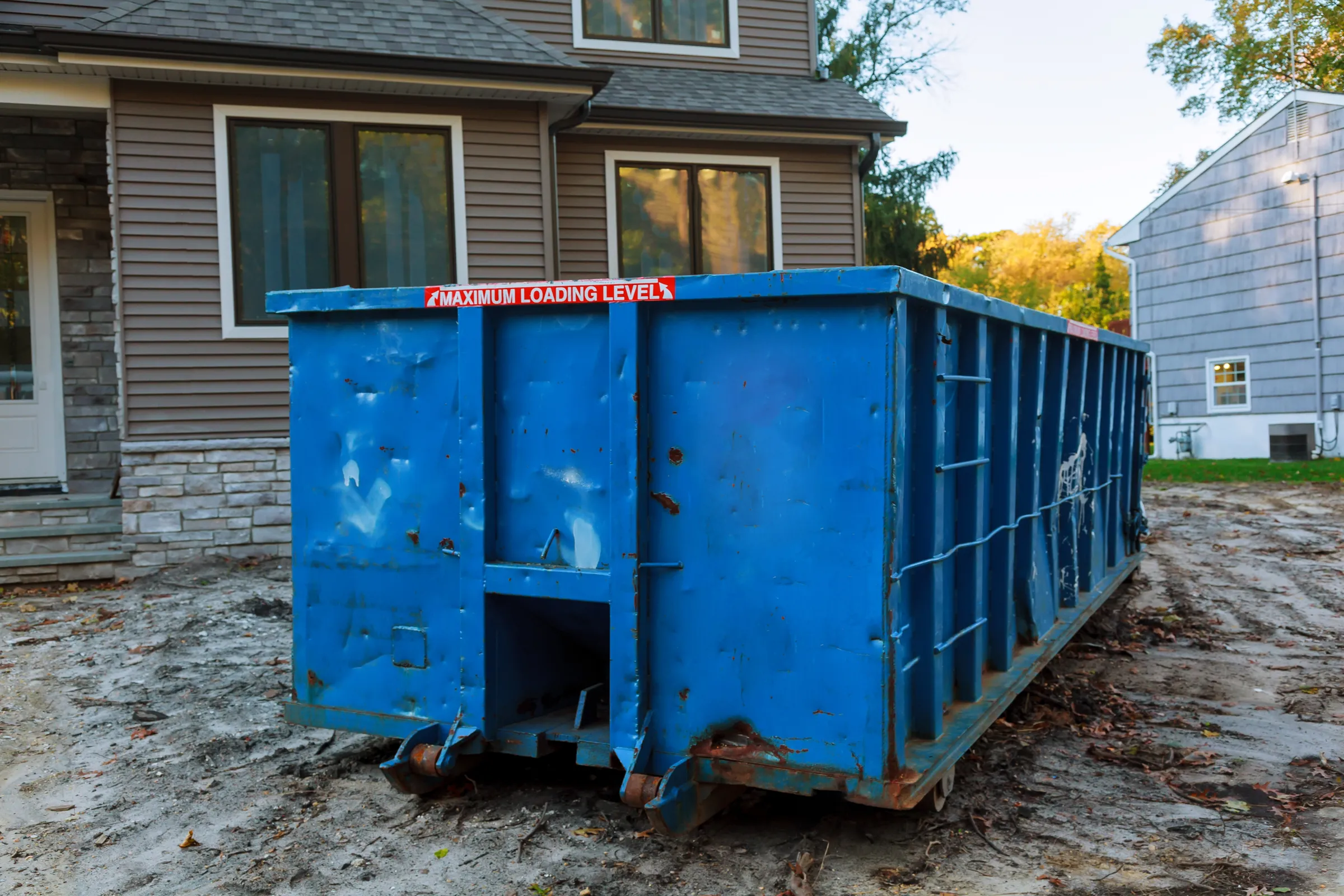
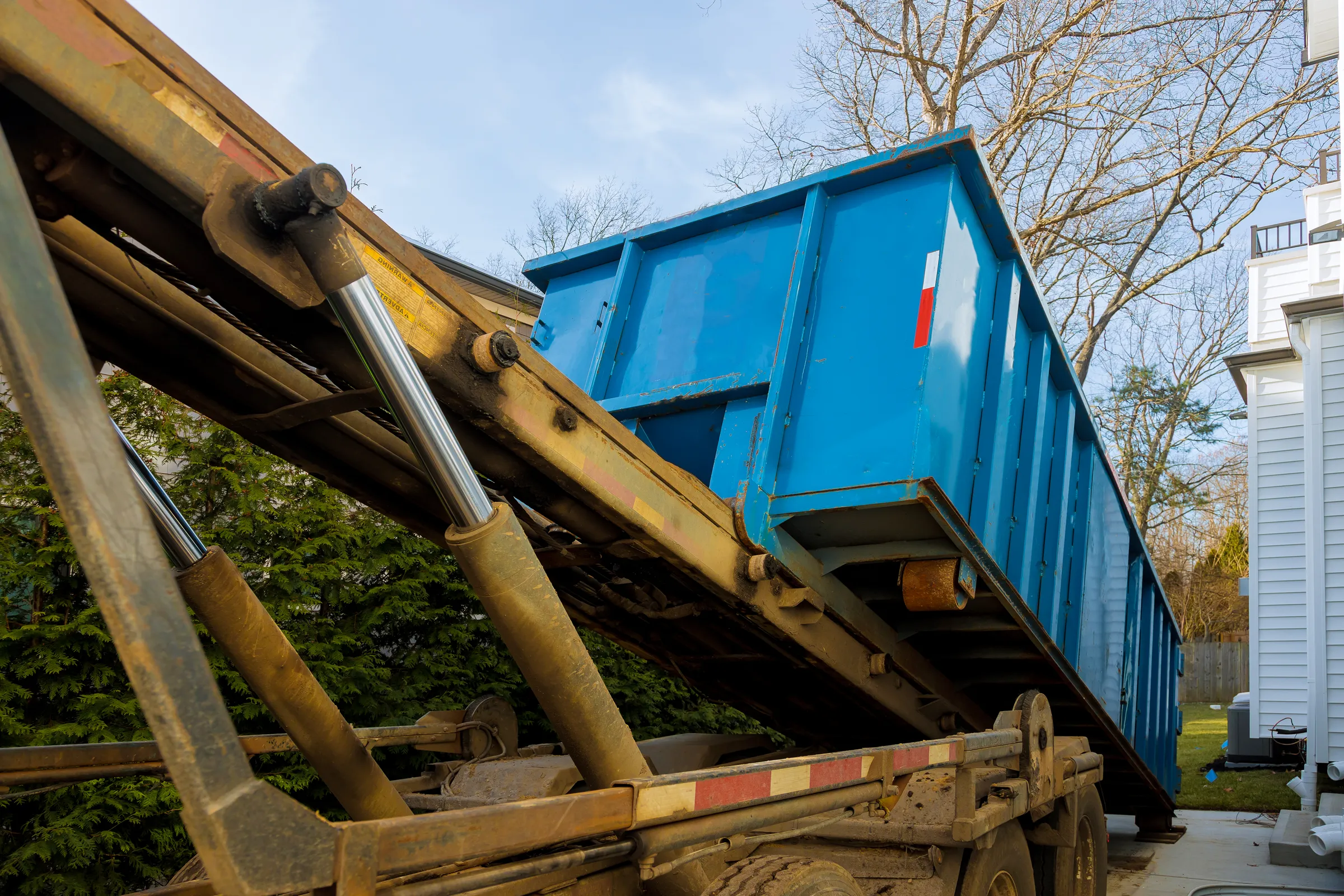
Roofing dumpster rental is sized by weight and timed to the tear-off. American Compaction Services supplies 20, 30 and 40 yard roll-off containers to roofing contractors, sized for shingle weight rather than roof area and planned in before tear-off day, so the crew loads straight off the roof. A roofing company is the account whatever roof it is on: a low-slope commercial re-roof, a multi-building property or a house.
ACS provides waste management through dumpster rental and on-site compaction. This page covers what a tear-off needs from a container: weight, staging, placement and timing, and the honest answer on compaction: roofing shingles are never compacted.
The Real Cost
Why Roofing Dumpster Rental Starts With Weight and Timing
Asphalt shingles are dense. A tear-off is measured in squares, and every square comes off the roof as weight. A second or third layer multiplies the tonnage without changing the size of the roof. So a shingle container reaches the legal payload while it still looks half empty, and the biggest container on offer just means more room you are not allowed to use.
Timing is the other half. A container that arrives after the tear-off starts means shingles on the ground, handled twice: once off the roof and again off the lawn, the lot or the walkway. Two roofers running loads in a truck and trailer are two roofers not on the roof.
Then there is where the shingles go. Disposal rules for roofing material are set locally and change from market to market, so on most tear-offs the container on the job is the disposal plan. Each market's page covers the local rules: find your market.
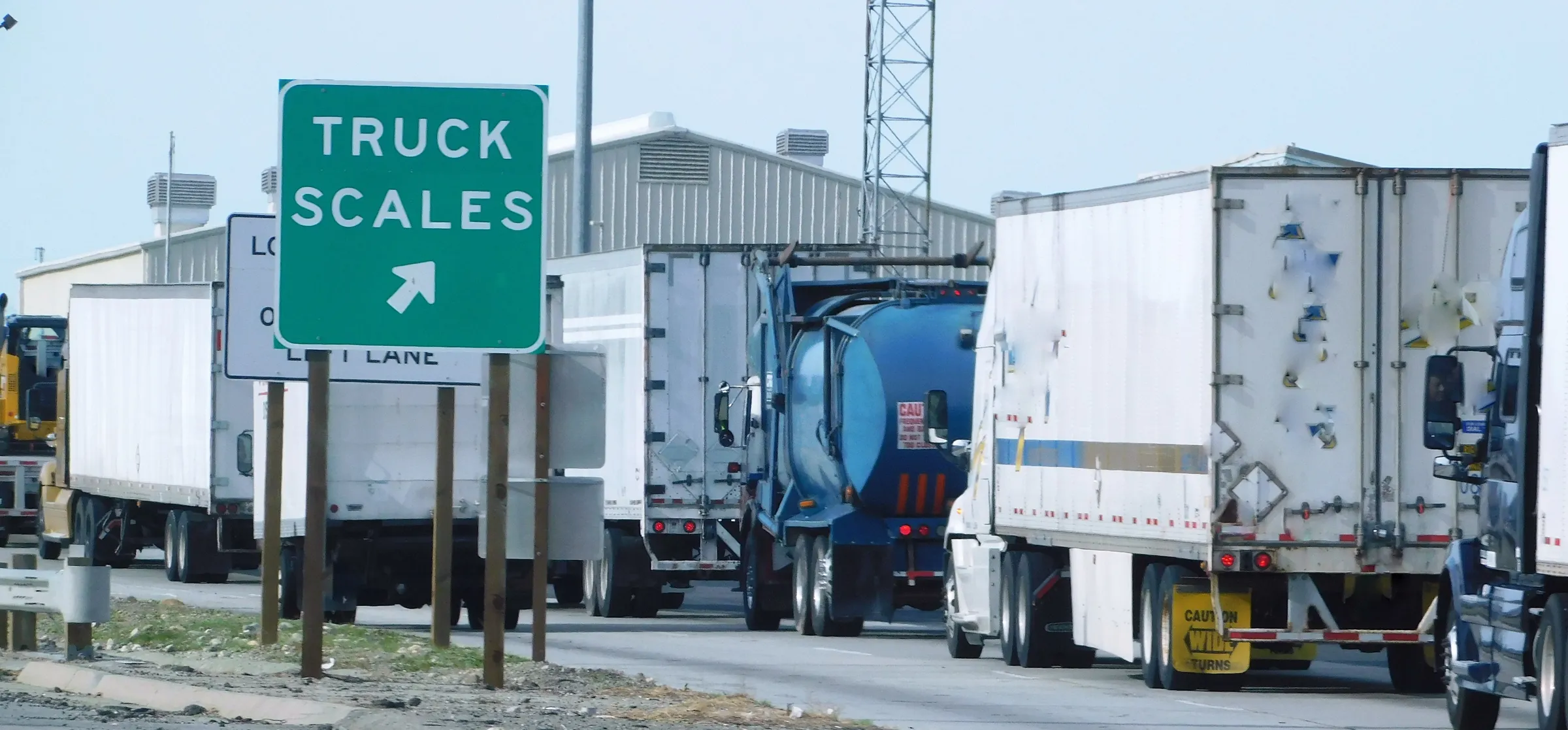
Every pull is a full truck trip: a driver, a roll-off truck, road time, a scale ticket and a disposal charge. On shingles the load ends on weight, so the savings come from sizing the container right and pulling it at payload, not from squeezing air out of a load that has little to give. A container sized for the job keeps shingles, nails and debris in one footprint, and the property sees a job with a plan rather than a job with a mess.

Jobs We Supply
When a Roof Tear-Off Needs a Container on Site
Not every roof repair needs a roll-off. Most full tear-offs do, and American Compaction Services sets containers for these.
A roofing contractor is a business account whatever roof it is on, so a house re-roof by a roofing company is commercial work. Property managers who commission a re-roof are business accounts too. We do not rent to homeowners, including a homeowner re-roofing their own house.
The roof is coming off, not being patched
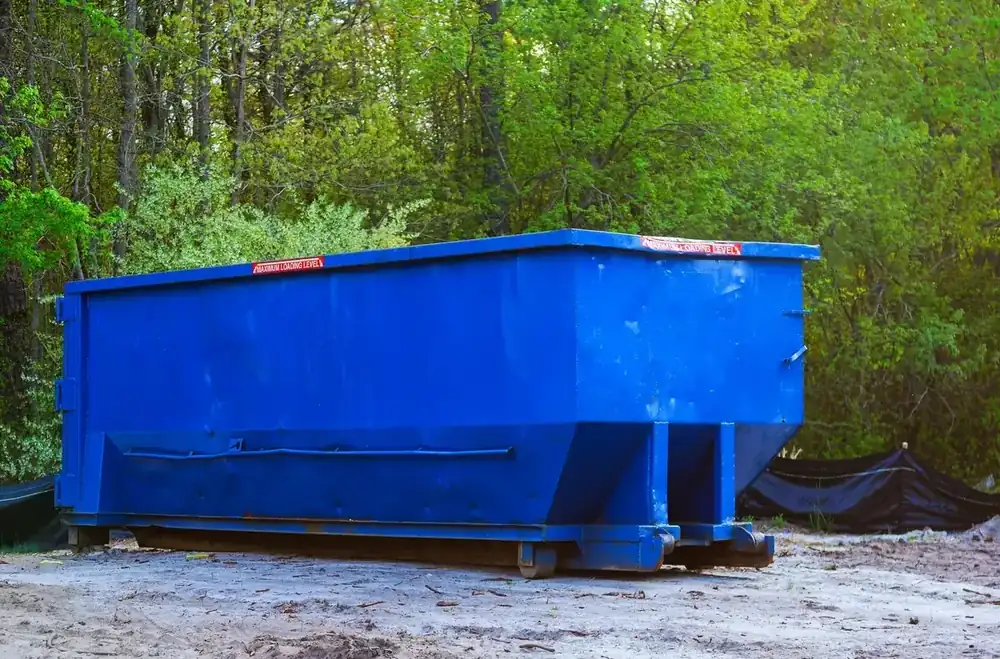
A full tear-off produces material measured in tons, all at once, and it has to go somewhere the moment it leaves the roof.
There is more than one layer
Every extra layer adds tonnage without adding roof. Two layers of shingles can change the container size, the number of pulls, or both.
It is a low-slope roof
Built-up roofing, membrane, insulation board and sometimes gravel ballast. The debris is bulkier and more mixed than a shingle tear-off, and it loads differently.
The property cannot hold a debris pile
Occupied stores, restaurants, offices, managed properties and houses with landscaping and walkways to protect. A pile on the ground is a hazard and a complaint.
The crew is losing hours to hauling
A truck and trailer shuttling loads is crew time off the roof, on every job.
The job is one of several
Storm and claim work stacks tear-offs into the same weeks, across several addresses at once.
Container Sizes
Shingle Weight and the Right Roofing Dumpster Size
American Compaction Services sizes roofing containers by weight. Describe the square footage, the number of layers and whether decking is coming off, and the size follows.
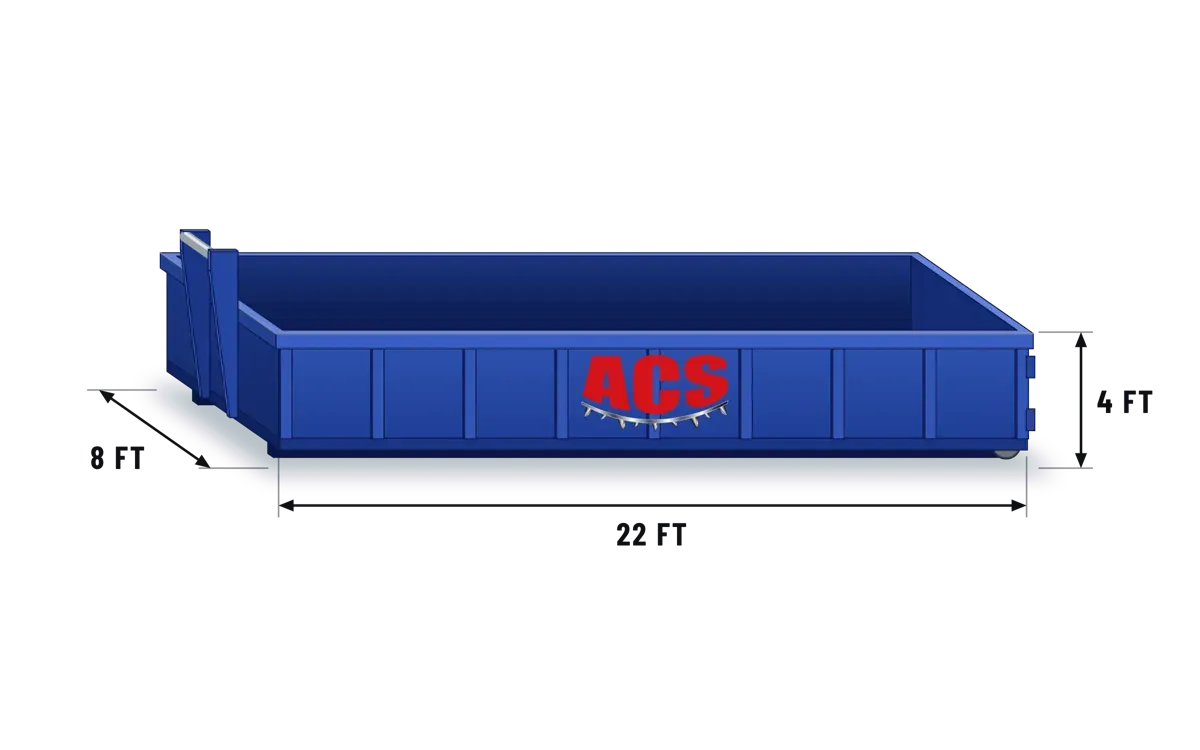
About 22' × 8' × 4' (L × W × H)
20-Yard: the default for shingle tear-offs
For most single-roof tear-offs a roofing contractor runs, this is the right container. Shingles end the load on weight either way, and the low walls take a load from a chute or a toss off the roof edge.
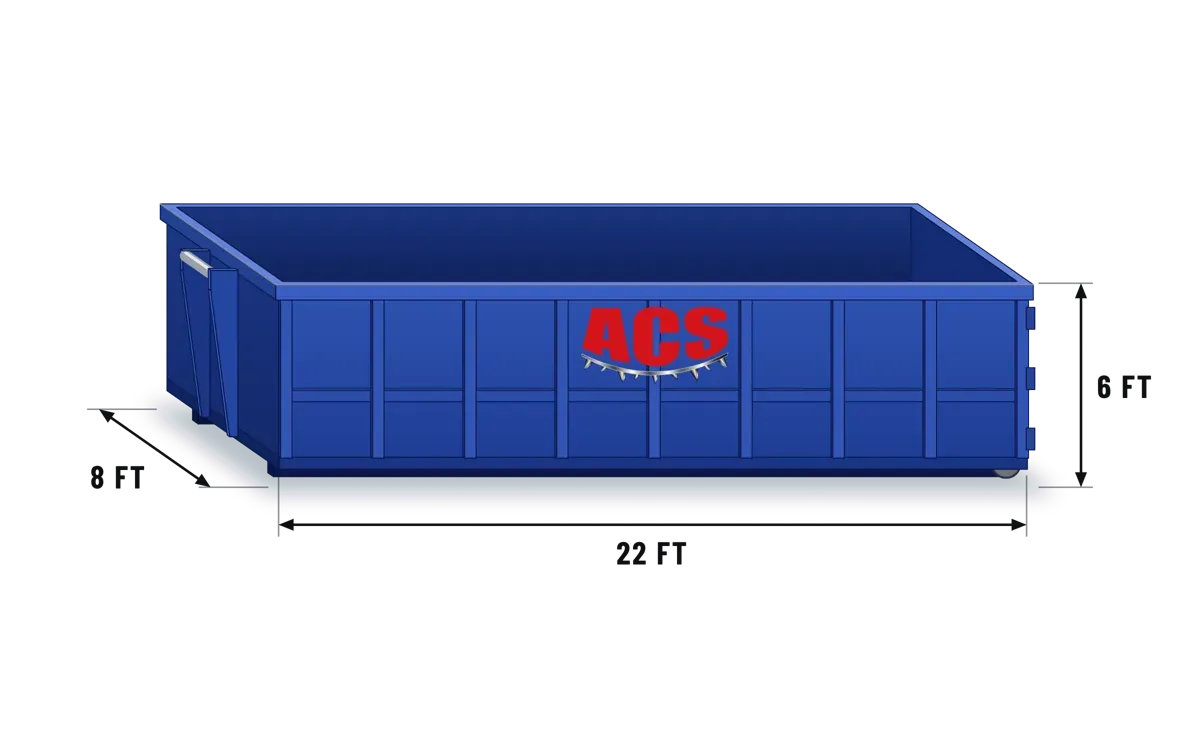
About 22' × 8' × 6' (L × W × H)
30-Yard: bigger tear-offs and mixed debris
A bigger roof, or a tear-off with decking, ridge vents, gutters, packaging from the new material and carpentry debris mixed in. Larger commercial re-roofs and multi-building properties usually land here.
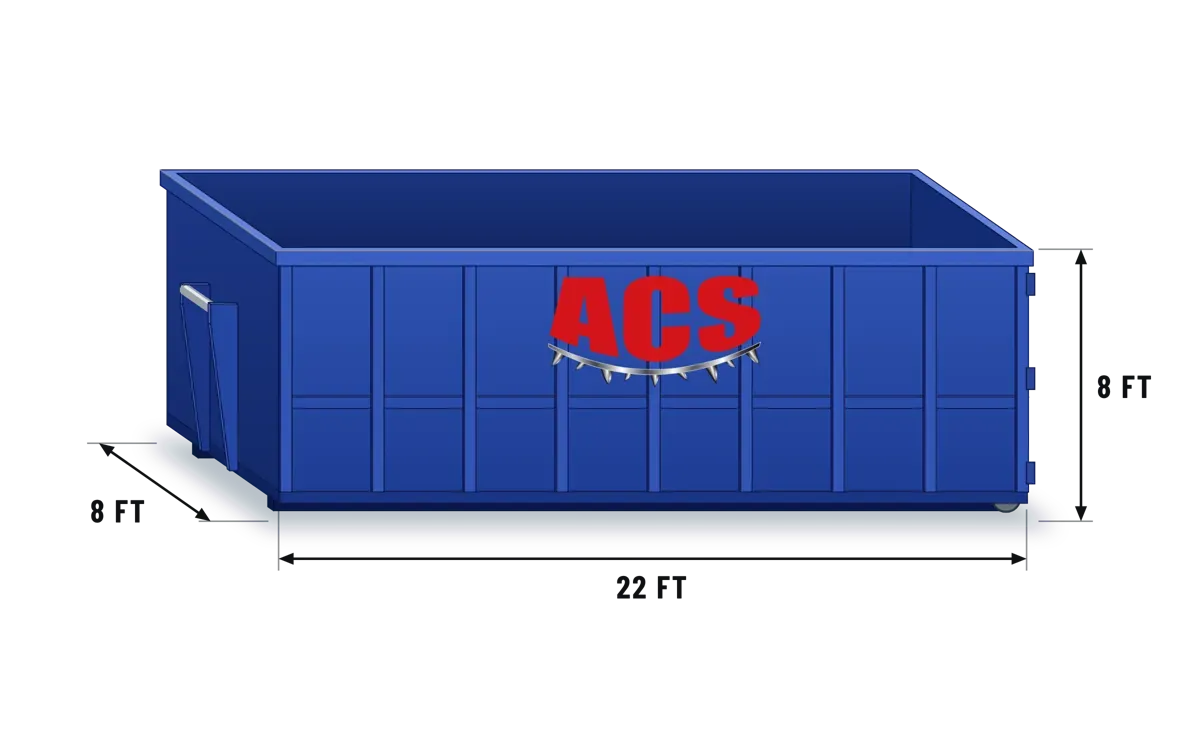
About 22' × 8' × 8' (L × W × H)
40-Yard: bulky low-slope material, rarely shingles
Rarely the right answer for shingles alone, and often the wrong one. A 40-yard of shingles reaches its legal payload with about two-thirds of the space unused. It earns its place on bulky low-slope material such as insulation board and membrane. Weight limits still apply.
Approximate dimensions. Containers vary; confirm the actual size for your site before the first placement.
A loose container that looks full is mostly air. Compaction can reduce volume by up to 70%, depending on the material. Shingles close that gap long before the rim. Sizing up on a shingle job buys room the road limit will not let you use; sizing right, and pulling at payload, is where a roofing job's trips are won.
Accepted Materials
What Goes in a Roof Tear-Off Container, and What Doesn't
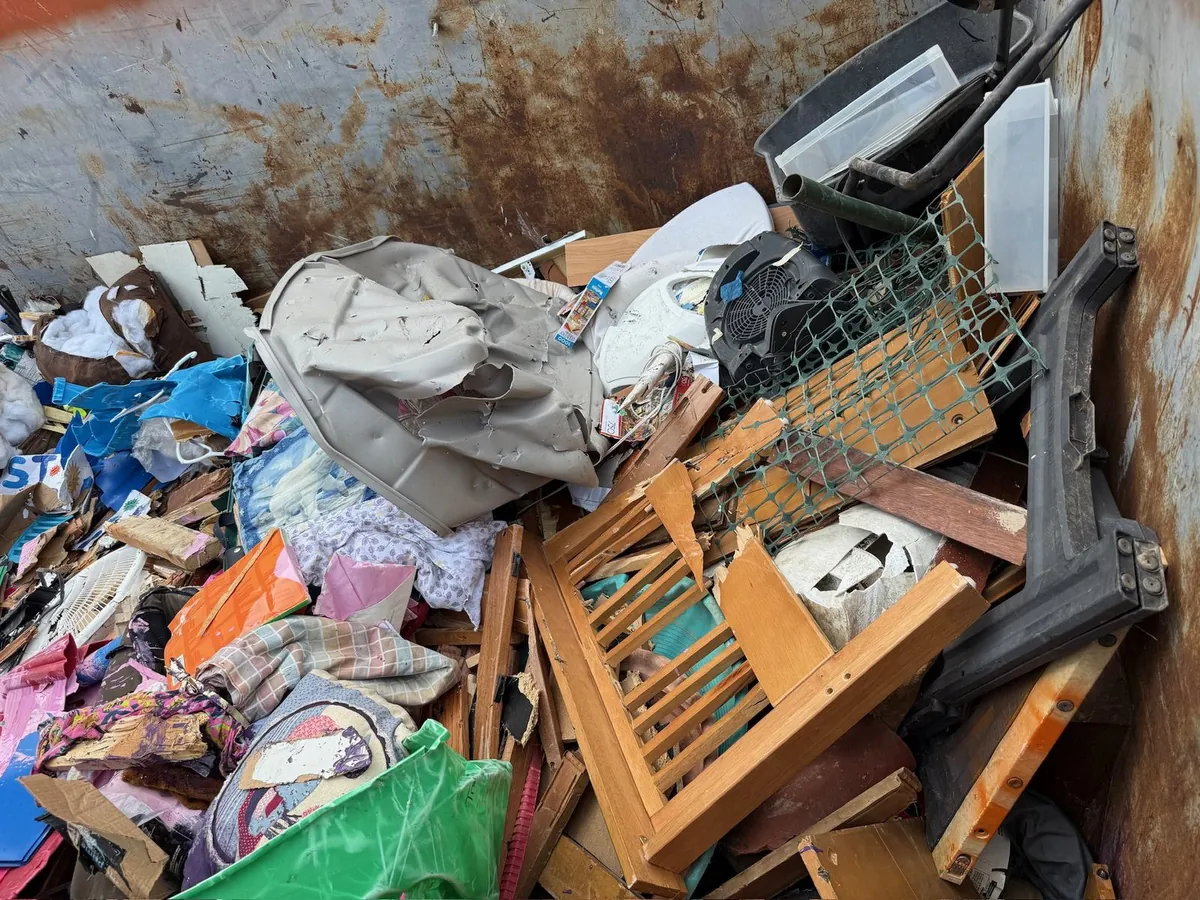
A tear-off produces asphalt shingles, underlayment and felt, ice-and-water membrane, flashing, drip edge and metal trim, rotted decking and sheathing, ridge vents and boots, nails and fasteners in the debris, packaging and banding from the new material, and gutters and downspouts removed as part of the job. What a container can take is set by the receiving facility; the accepted materials page has the full list. Where shingles can go after the pull is a local rule, so tell us if the job needs shingles kept separate from other debris.
What we compact
Cardboard and packaging; plastic film and wrap; wood and pallets; construction and demolition debris, including drywall, insulation, ceiling grid and fiberglass; compost and organics, as long as your hauler accepts it. On a roofing job, that means the mixed fraction: decking, insulation, packaging and trim, not the shingles.
What we won't compact
We will not compact liquids; dirt, soil, aggregate or other dense material with no air in it; hazardous or regulated waste; sealed drums or pressurized vessels; or anything the receiving hauler won't accept. On a pure dense load like broken concrete, we'll tell you to skip compaction and have it hauled.
Leftover coatings, adhesives and solvents still in liquid form stay out of the load. Gravel ballast from a low-slope roof is aggregate: declare it before the container is set, because it changes the size and whether the receiving hauler will take the load.
The Workflow
How the Tear-Off Workflow Runs
A roofing container is a timing problem more than a logistics problem. Get the container in the right spot before the first shingle comes off, and the rest of the job loads itself.
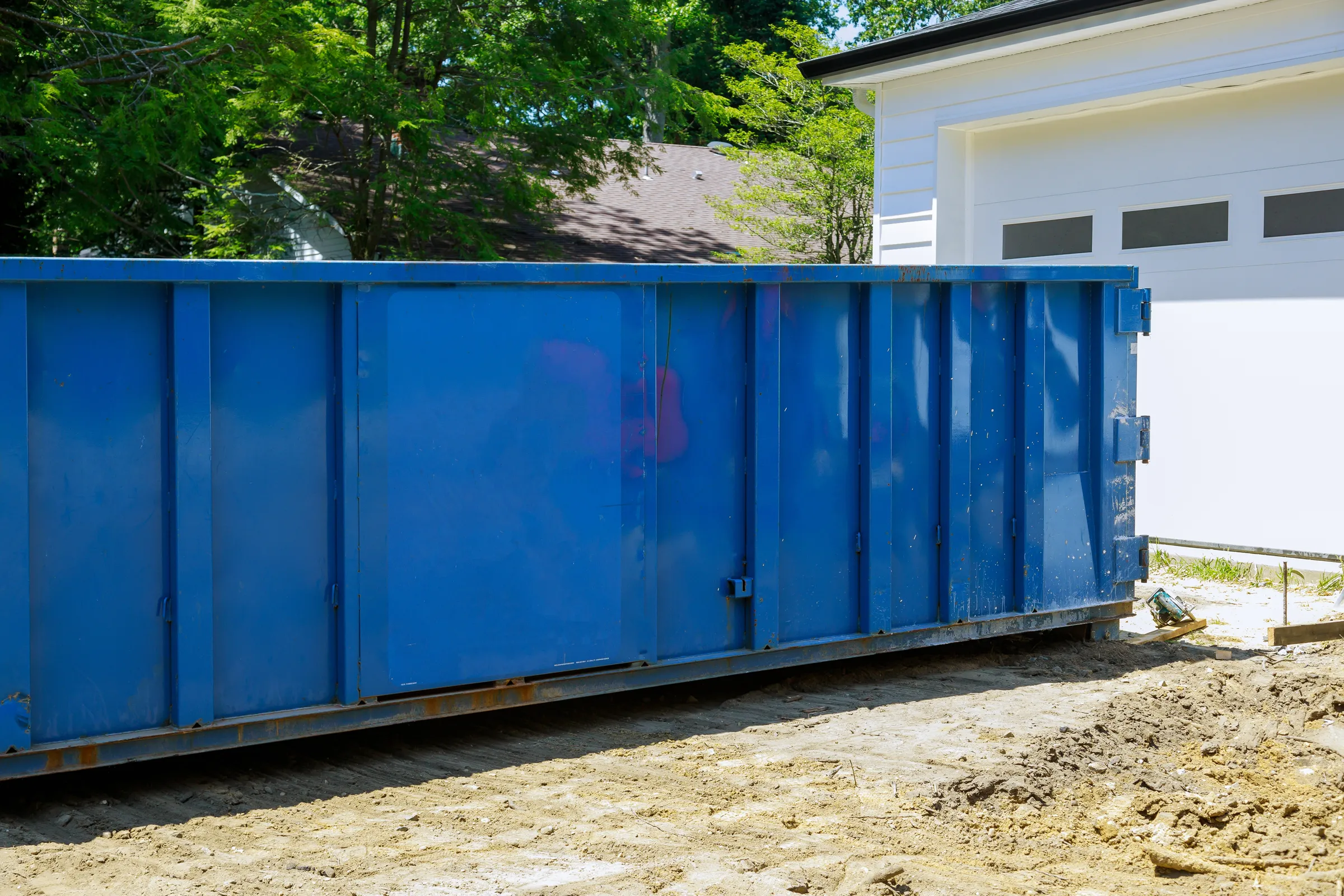
Placement before tear-off day
Plan the delivery for the afternoon before the tear-off or first thing that morning, and book it when the job is booked. We do not publish a guaranteed turnaround window. That makes the start date the most useful thing you can give us early.
Position relative to the drop zone
The container goes under the slope being torn off, where a chute can land inside it or the crew can toss straight in. On a multi-slope roof, pick the spot that serves the most slopes, and plan the chute runs from there.
Surface protection
Driveways, parking aprons and paved lots all take a container. We'll confirm placement and access with you before delivery.
Same-day loading
Shingles go from the roof into the container, handled once. Nothing is staged on the ground to be picked up again, which keeps debris off landscaping and walkways.
Clearance for the truck
The truck needs roughly sixty feet of straight-line approach and clear overhead. Power lines, tree limbs, canopies and the roof edge itself decide how close to the building the container can sit; gates, bollards and parked vehicles decide whether the truck can reach it.
The pull
On a single-day job, the container is pulled when the crew is done. On a multi-day or multi-building job, it is swapped when weight says it is time, so the crew always has somewhere to load.
Recurring Accounts
Recurring Accounts for Roofing Contractors
A roofing company rarely runs one roof at a time. American Compaction Services sets roofers up with one account across every jobsite, with a container scheduled against each tear-off date and swapped on multi-day jobs.
When storm and claim work stacks several tear-offs into the same weeks, the schedule is adjusted rather than rebuilt, and each address keeps its own placement notes. Give us the dates as early as you have them. If your company runs other trades too, the contractor dumpster rental page covers the wider account.
The Honest Version
On-Site Compaction for Roofing Dumpster Rental: The Honest Version
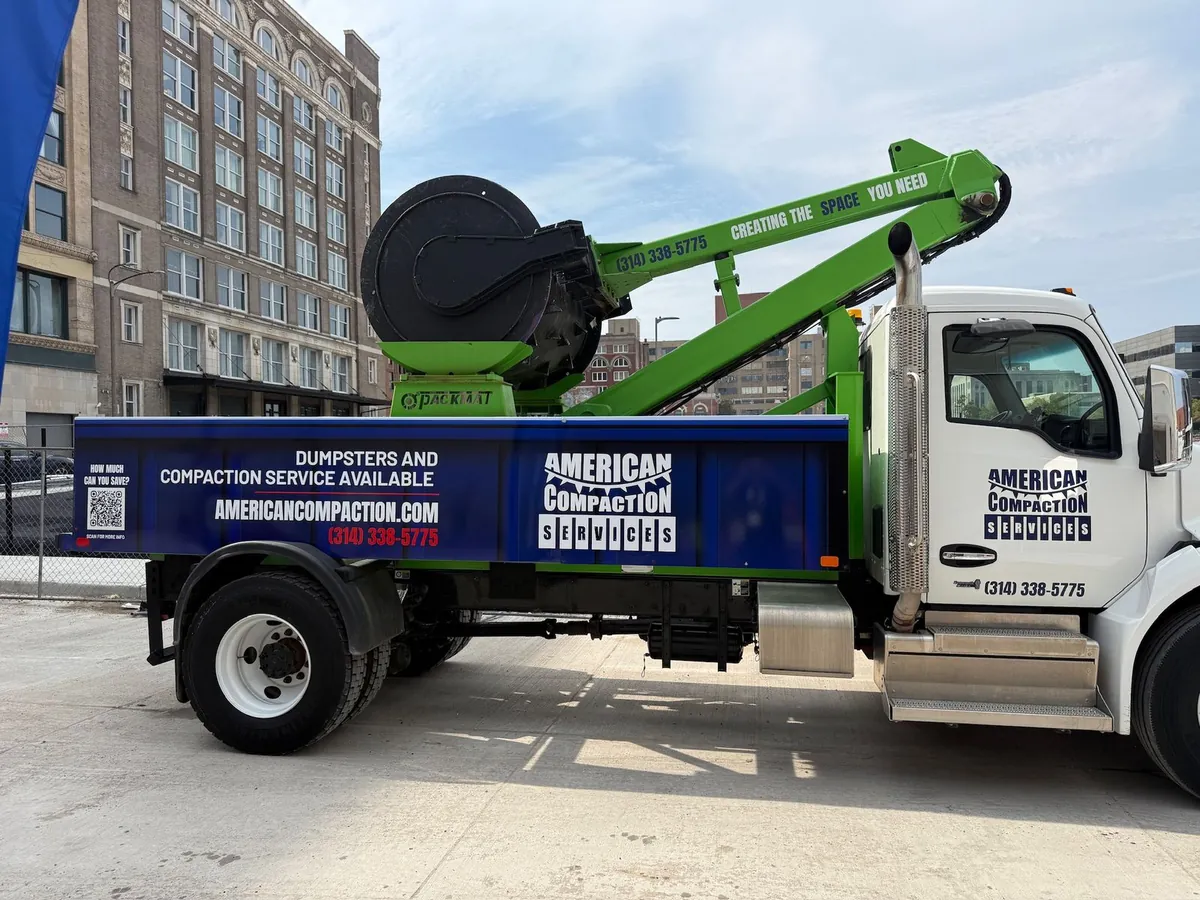
American Compaction Services is built around compaction, and roofing is not always the right waste stream for it. Here is where it helps and where it does not.
Compaction can reduce volume by up to 70%, depending entirely on the material. It is never a guarantee.
| Material | Compaction |
|---|---|
| Cardboard and packaging | Compacts well |
| Plastics | Compacts well |
| Pallets and wood | Compacts well |
| Furniture and bulky commercial waste | Compacts well |
| Light construction debris | Compacts well |
| Concrete, masonry and roofing shingles | Never compacted |
| Red iron, liquids and hazardous waste | Never compacted |
Asphalt shingles are dense, with little trapped air, and a shingle container usually reaches its weight limit first.
Where it helps is the mixed fraction: decking, insulation board, membrane, ridge vents, gutters, carpentry debris and the packaging from the new material. It also helps on a standing container at a roofing company's own shop or yard. Roofing shingles are never compacted. Where a visit does fit, compaction visits are set by your fill rate.
On a bulky low-slope tear-off, the loose 40-yard described under sizes is the starting point. A loose container that looks full is mostly air.
Compaction reduces haul-offs; it never eliminates them. A compaction visit is itself a visit. What changes is that a short on-site visit happens instead of a haul-off.
Two ways to start
Already have a dumpster? Keep it and keep your hauler; we compact what's in it. Need dumpster service? We supply the container and compact it on site. No contract to sign: no exclusivity, no minimum, no term. The on-site waste compaction page walks through a visit step by step.
See it on your own debris
Free on-site demo: we compact one of your own containers while you watch. The demo carries no obligation and is photographed before and after. If it isn't a fit, we tell you on the spot.
The pricing guide explains what drives a roofing waste bill, and the savings calculator gives a planning number from your own inputs. These results are estimates from the numbers you enter. They are not a quote, a promise or a guarantee.
The Process
How Roofing Container Service Runs, Start to Finish
- 1
1. You describe the roof.
Square footage, layers, decking, the scope, the tear-off date and where a container can sit.
- 2
2. Placement is planned.
The spot, the approach, the overhead and the surface are settled before delivery.
- 3
3. Delivery before tear-off.
The container is set under the drop zone, on a surface that will hold it loaded.
- 4
4. The crew loads it.
Straight off the roof, by chute or by hand.
- 5
5. Swap or pull.
A single-day job is pulled when the crew is done. A multi-day or multi-building job is swapped at weight.
- 6
6. Compaction, where it helps.
Only on a separate container of accepted bulky material or a yard container. Roofing shingles are never compacted.
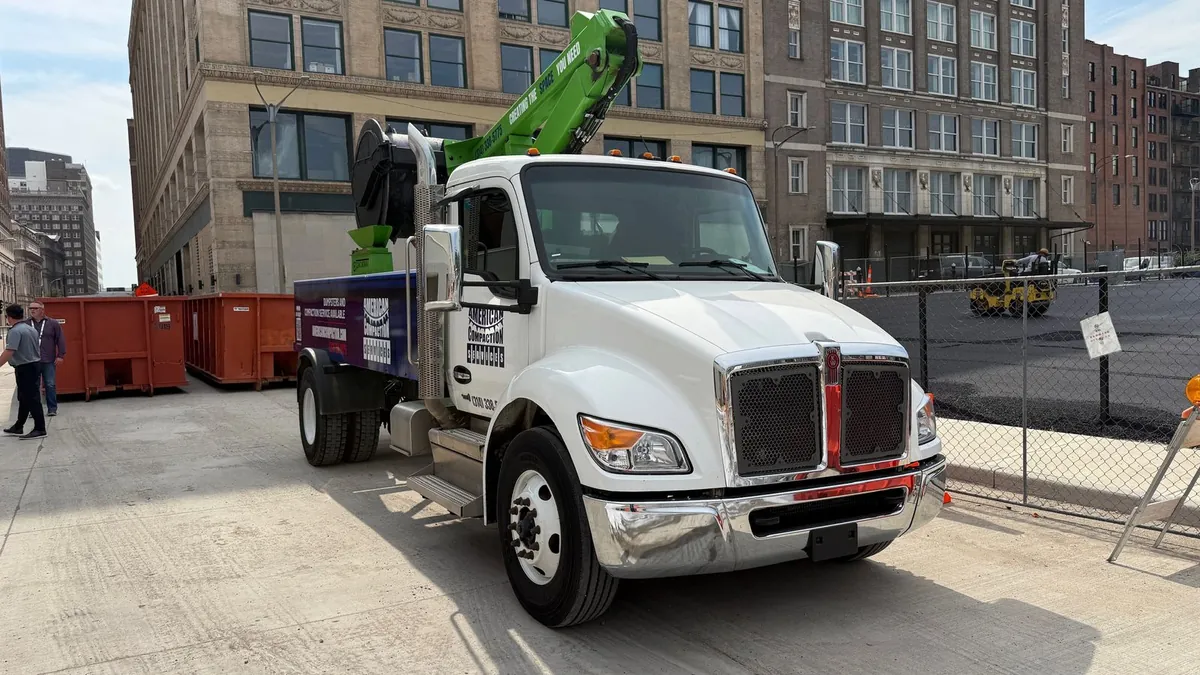
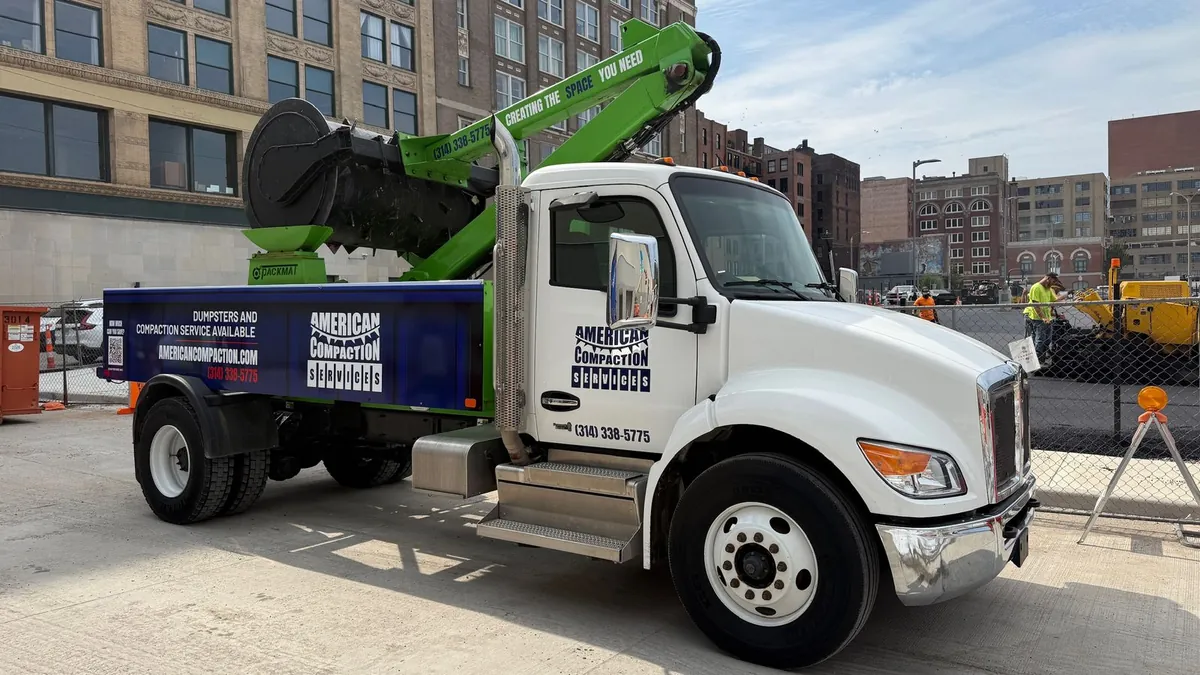
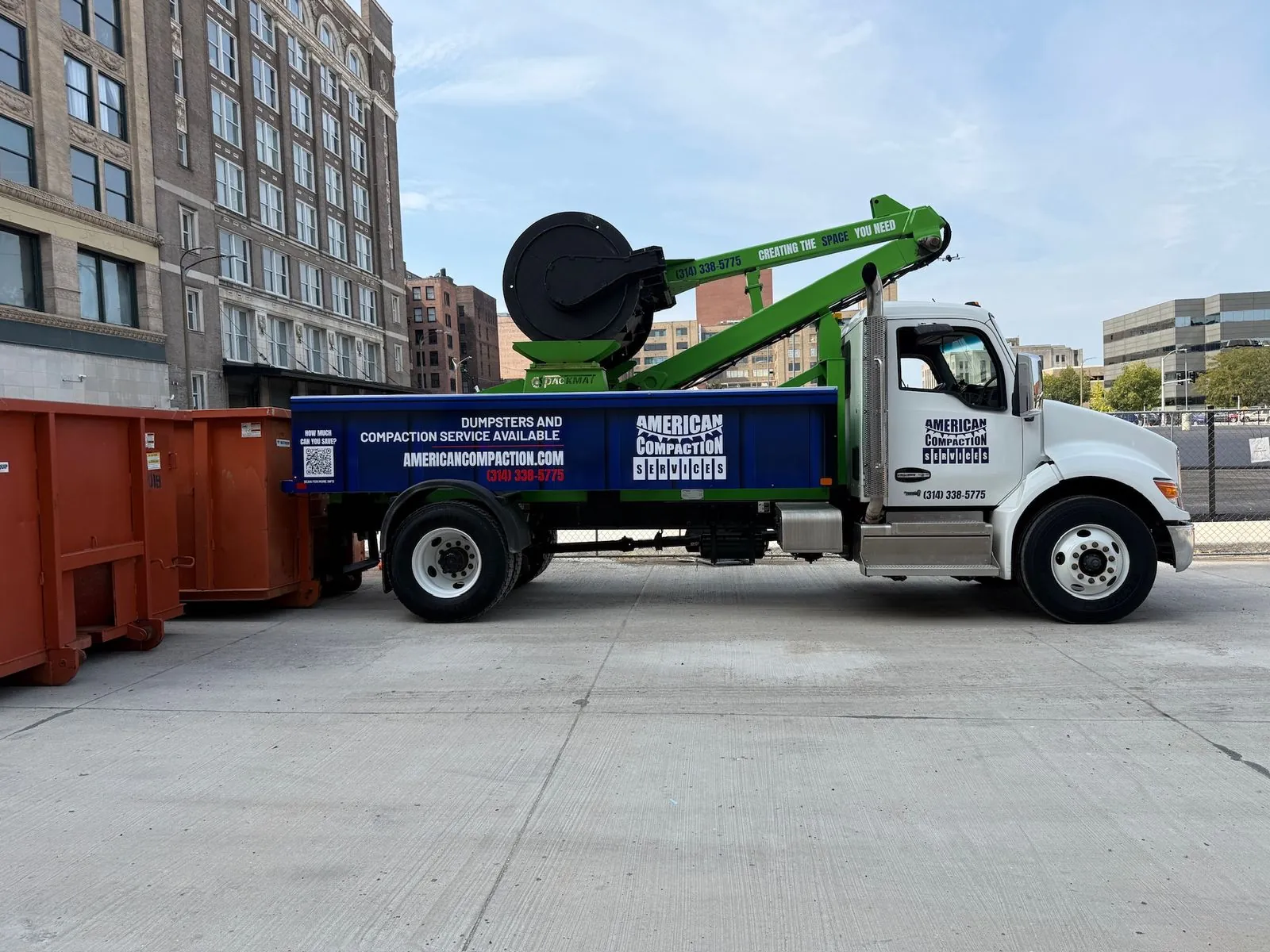
American Compaction Services builds the visit around not touching the container. Every visit includes a before-and-after inspection with photo documentation. A heavy steel drum, narrower than the container, works the load down and never touches the walls. The drum works on its own weight, with no hydraulic down-force. Safeguard wheels and end guards keep the unit off the container's structure, and our operators run a zero-touch policy. When the container belongs to you or your hauler, the documentation is the point: it goes back to work the way it came.
Why American Compaction Services
Why Roofing Contractors Work With American Compaction Services
Containers sized for weight, not for looks.
A 20-yard on a shingle tear-off is usually the right answer, and it is the smaller sale.
Delivery planned around the tear-off.
The container is booked against the tear-off date, when the job is booked, not the day before.
Straight answers about compaction.
Roofing shingles are never compacted. We can compact a separate container of accepted bulky packaging, wood and insulation.
Keep your hauler.
If a hauler already sets your containers, keep the container and keep the hauler; we compact what is in it where it helps.
Built for accounts, not one-off orders.
One account across every roof you run, with placement notes kept per address.
Documented handling.
Every visit includes a before-and-after inspection with photo documentation, on your container or ours.
Where We Operate
Available in These Markets
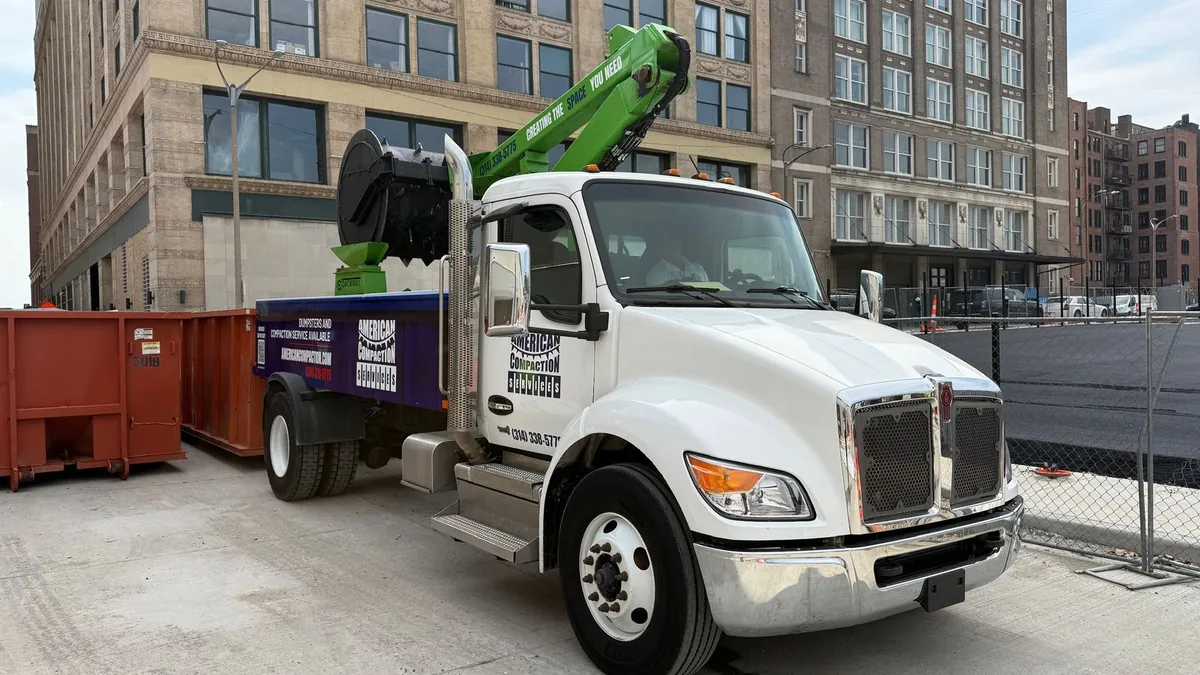
American Compaction Services supplies roofing containers market by market. Each market has its own page, phone number and service area, and the market page covers the local details, including where roofing material can go, and how to reach the team there.
If your city is not on the list, the locations page shows every market we serve.
Frequently Asked Questions About Roofing Dumpster Rental
Related Services and Guides
Roll-Off Dumpster Rental
pulls, swaps and who does what.
On-Site Waste Compaction
how the unit works a container in place.
Contractor Dumpster Rental
one account across every jobsite.
Demolition Dumpster Rental
another weight-first stream, sized for heavy debris.
Property Management Dumpster Rental
capital projects such as re-roofs on managed properties.
How Businesses Cut Roll-Off Haul Costs
the levers that move a haul bill.
Start Your Roofing Dumpster Rental
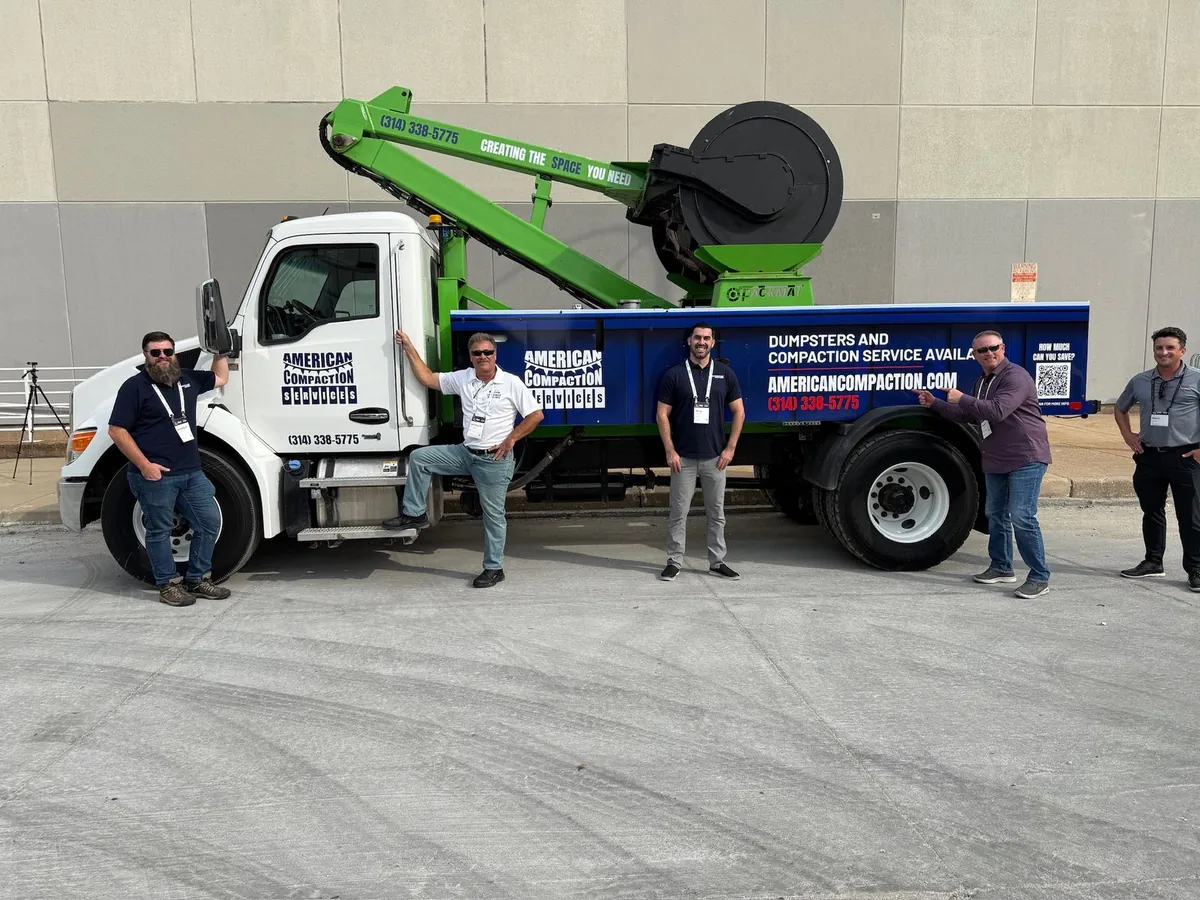
Tell us the roof, the layers, the address and the day the crew starts. American Compaction Services will size the container for the weight, plan the placement around the tear-off, and tell you honestly whether compaction has anything to do on your job. The on-site demo is free.
With roll-off, every haul is a call. With American Compaction Services, nobody has to call.
We set you up on a schedule and we compact on site. Dumpsters and compaction. All handled.
You already pay for dumpster space. Compaction lets you use more of it.
Getting started takes four details
- A photo of your dumpster and the space around it
- Your location
- What goes in the box
- The container size, if you know it
They help us plan for site access and match compaction service to your site.
We will prove it. Call or text (877) 651-7660.