

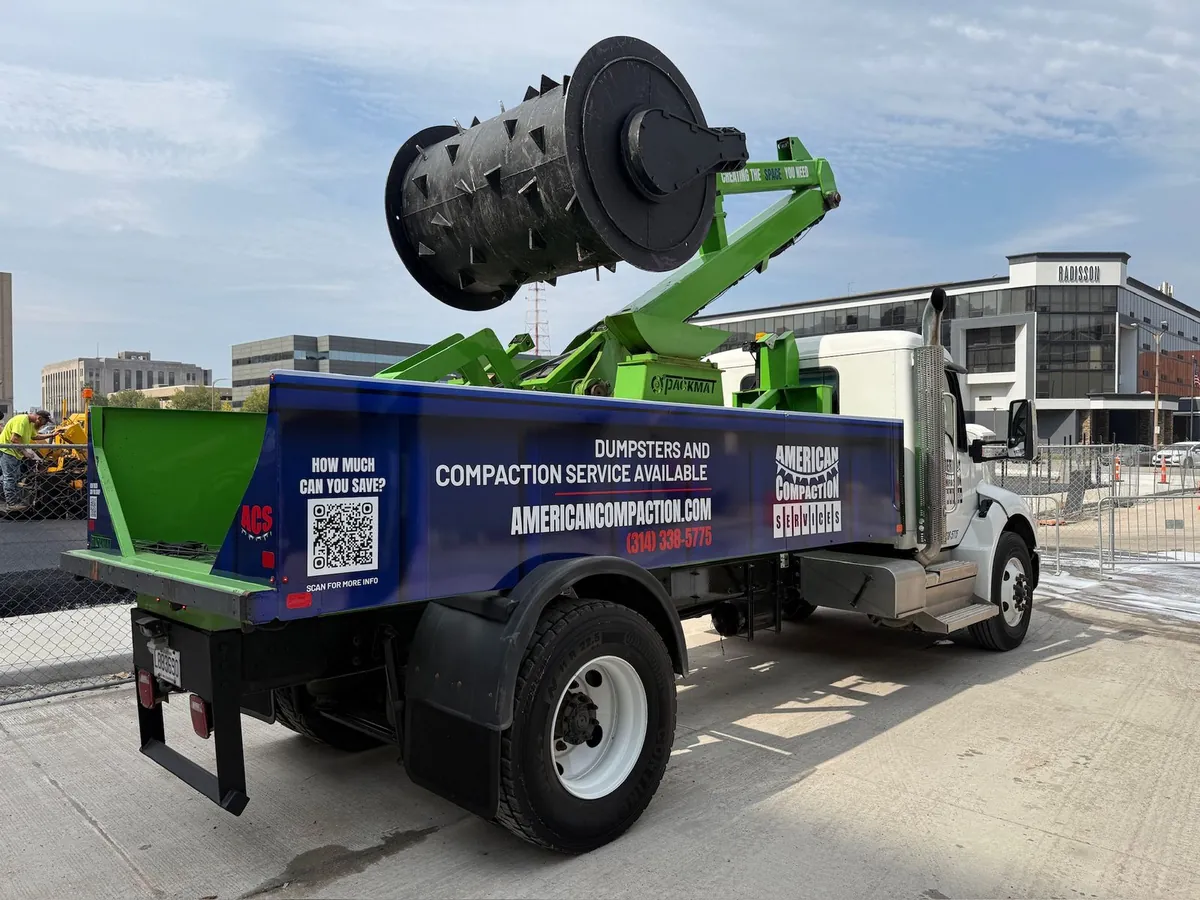
A visit, not equipment
On-Site Waste Compaction for Commercial Roll-Offs
We automate your roll-off. You'll never run out of room. Fair price. Great service.
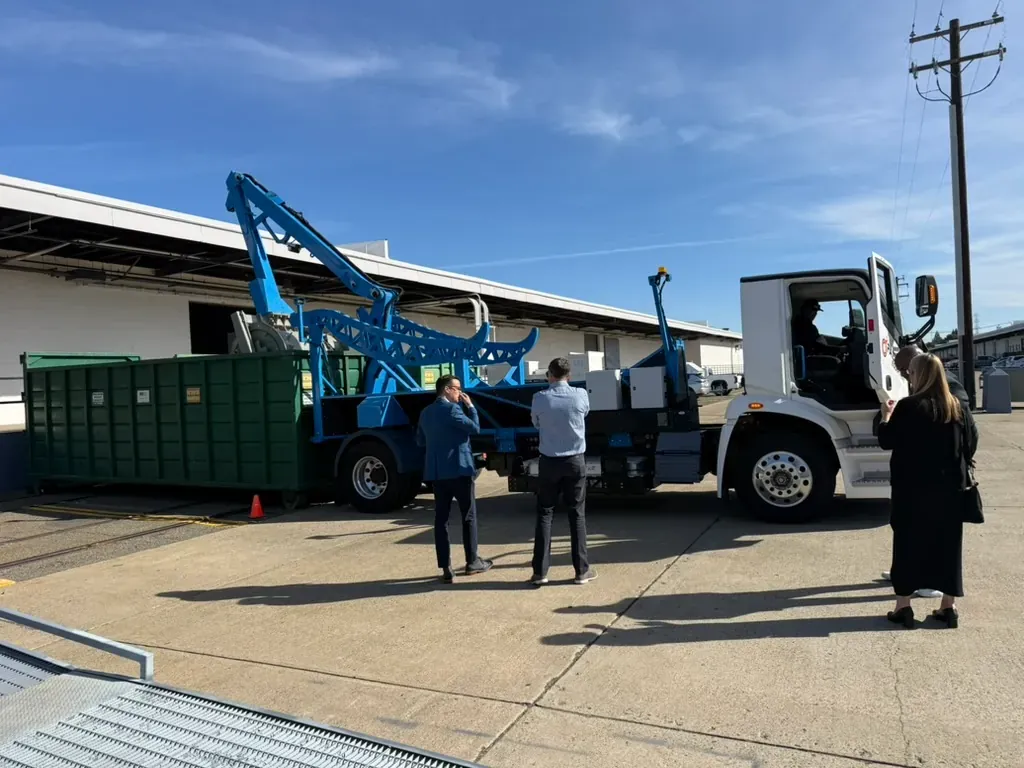
A mobile compaction unit from American Compaction Services comes to your facility and crushes the waste already inside your roll-off, so the same container holds more before it has to be pulled.
On-site waste compaction is a visit, not equipment. We bring a mobile unit to the roll-off container already sitting on your property, press the load down where it sits, and leave. The container holds more, so it gets pulled less often. This page covers how the service works, how the container is protected, which waste it suits, what it changes about weight and cost, and the two ways to start.
What It Is
What On-Site Waste Compaction Is
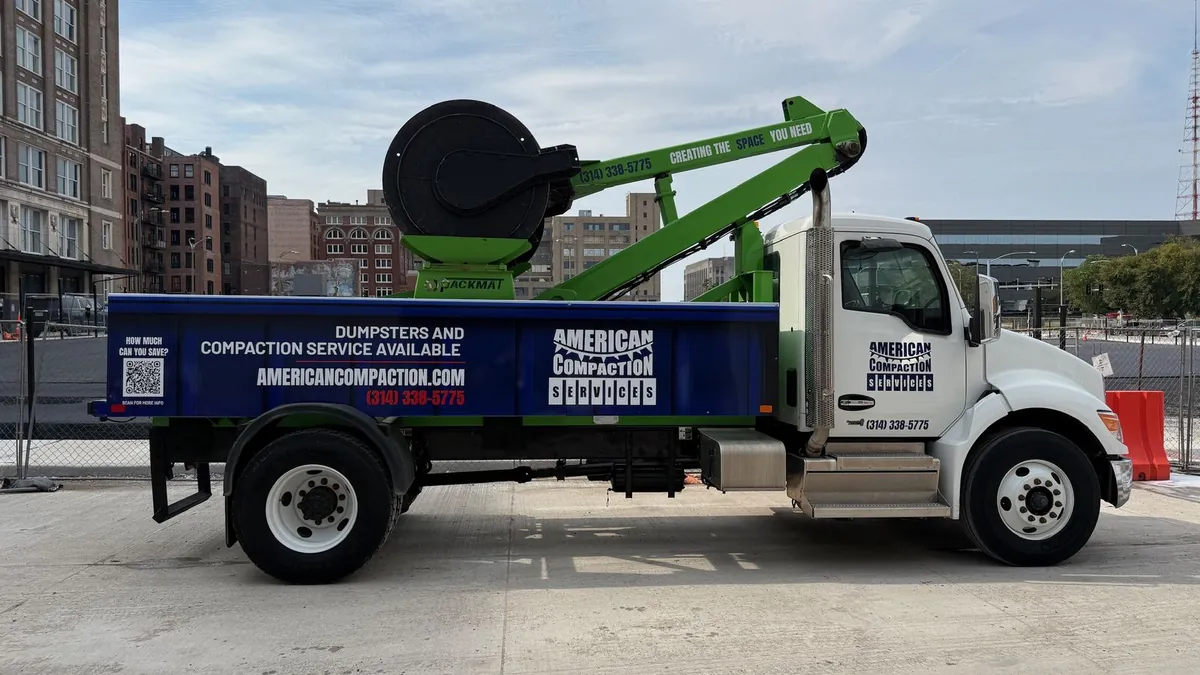
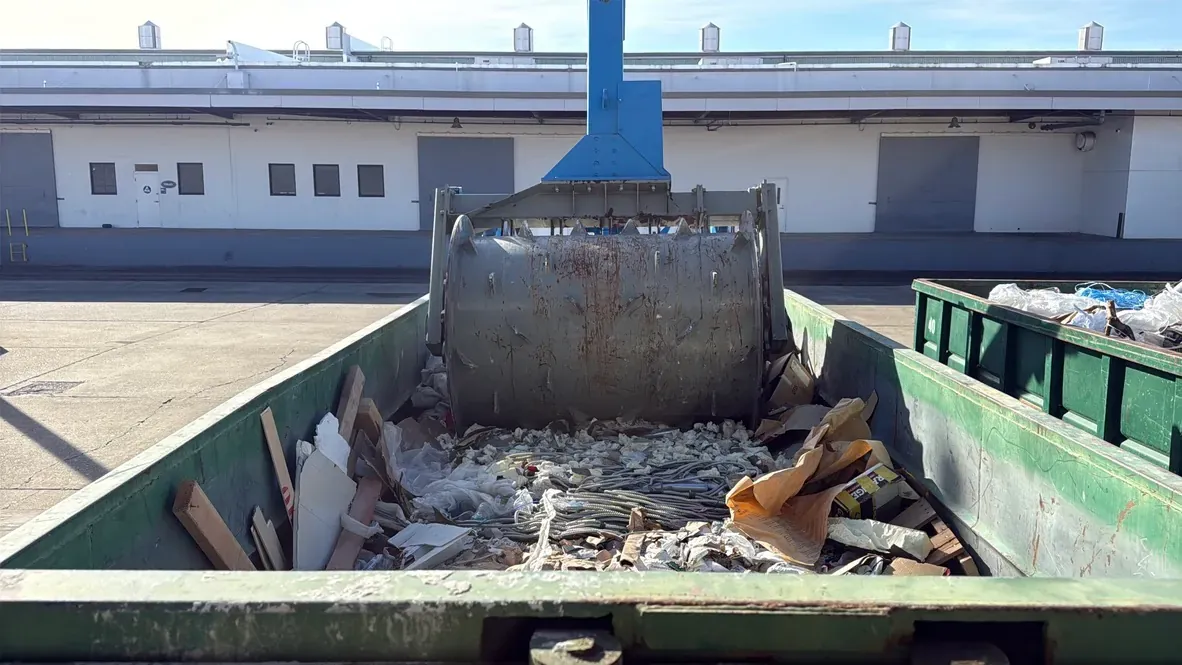
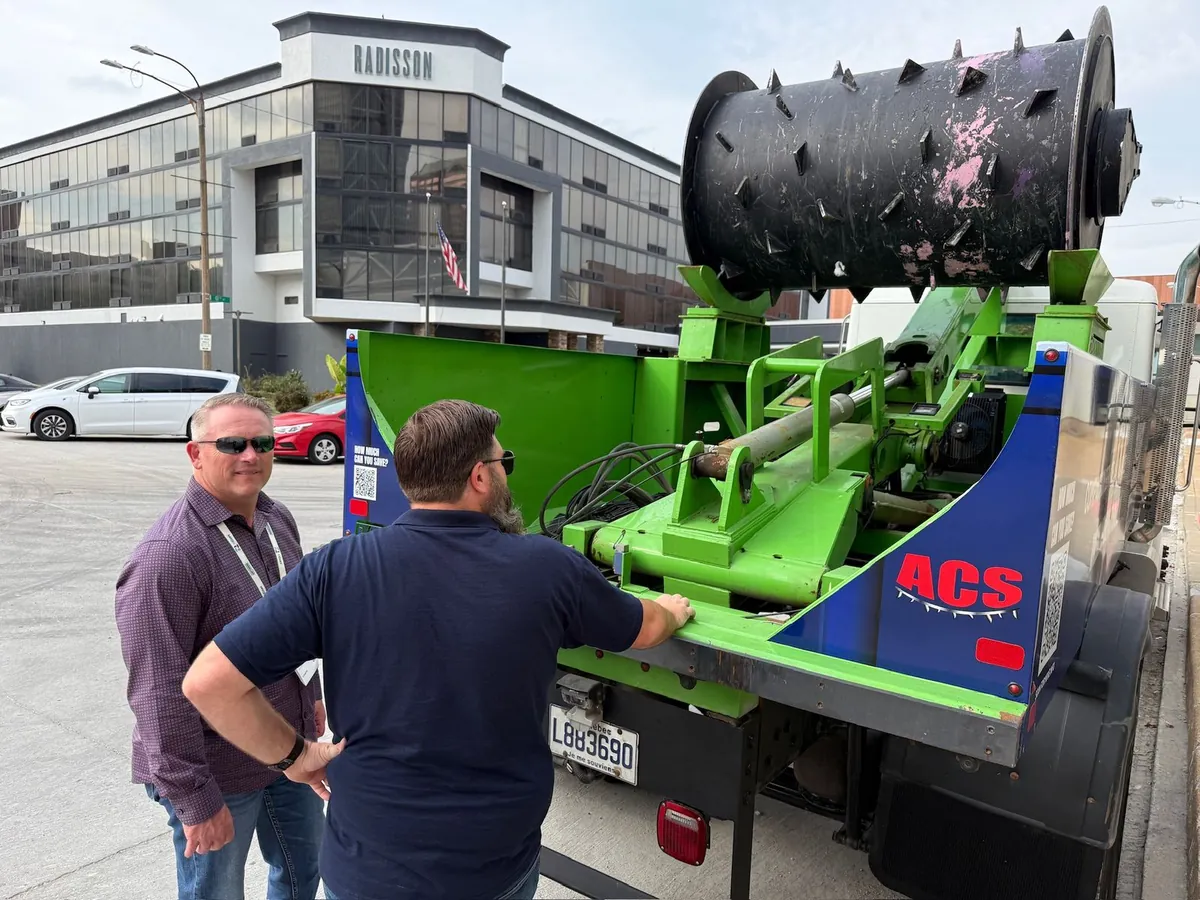
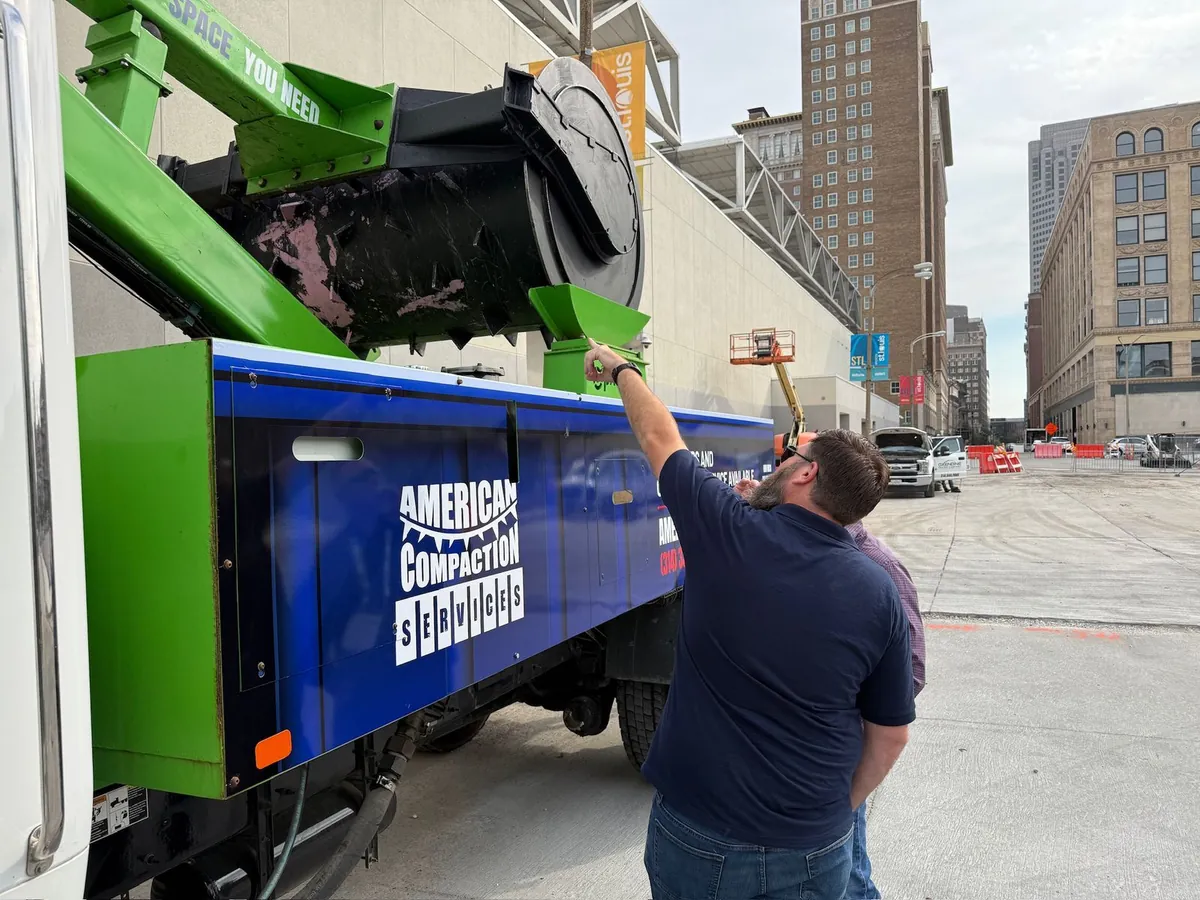
Mobile on-site compaction is a service, not a machine you buy. A fully self-contained mobile compaction unit comes to your site. It positions a heavy steel drum over the open container you already have and rolls it back and forth across the load. The drum's weight collapses the voids, flattening boxes, splitting pallets and crushing packaging down, until the material lies dense instead of bridged.
No equipment to buy, nothing installed, no power or pad. Your container stays where it is. Nothing leaves your site during the compaction.
Fill it, we compact it, fill it again, we compact it again, then it goes. That is the whole rhythm, and it is why the same container gets pulled less often.
Mobile Compaction, Delivered as a Service.
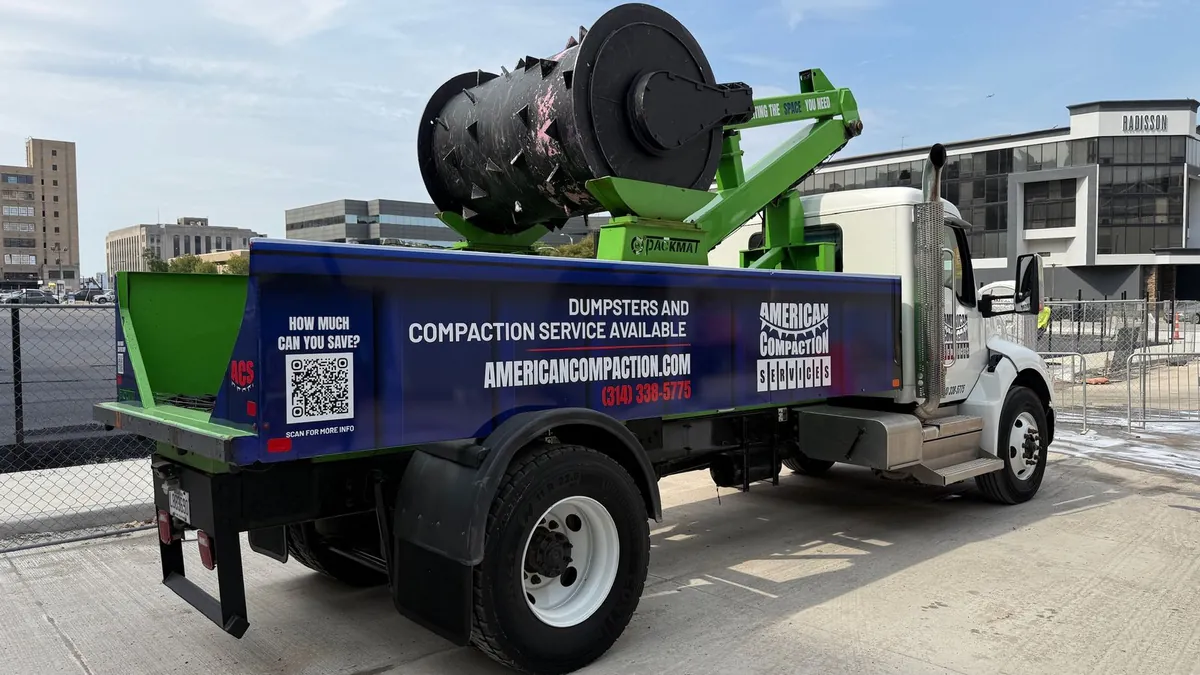
ACS gives your team the benefits of waste compaction without requiring you to buy, maintain, staff, or operate your own compaction truck. Our trained operators arrive on-site with specialized mobile compaction equipment, compact the material directly inside your open-top roll-off dumpsters, and create more capacity in minutes. You keep your current waste setup. ACS helps you get more performance out of it.

More Capacity From the Dumpsters You Already Use
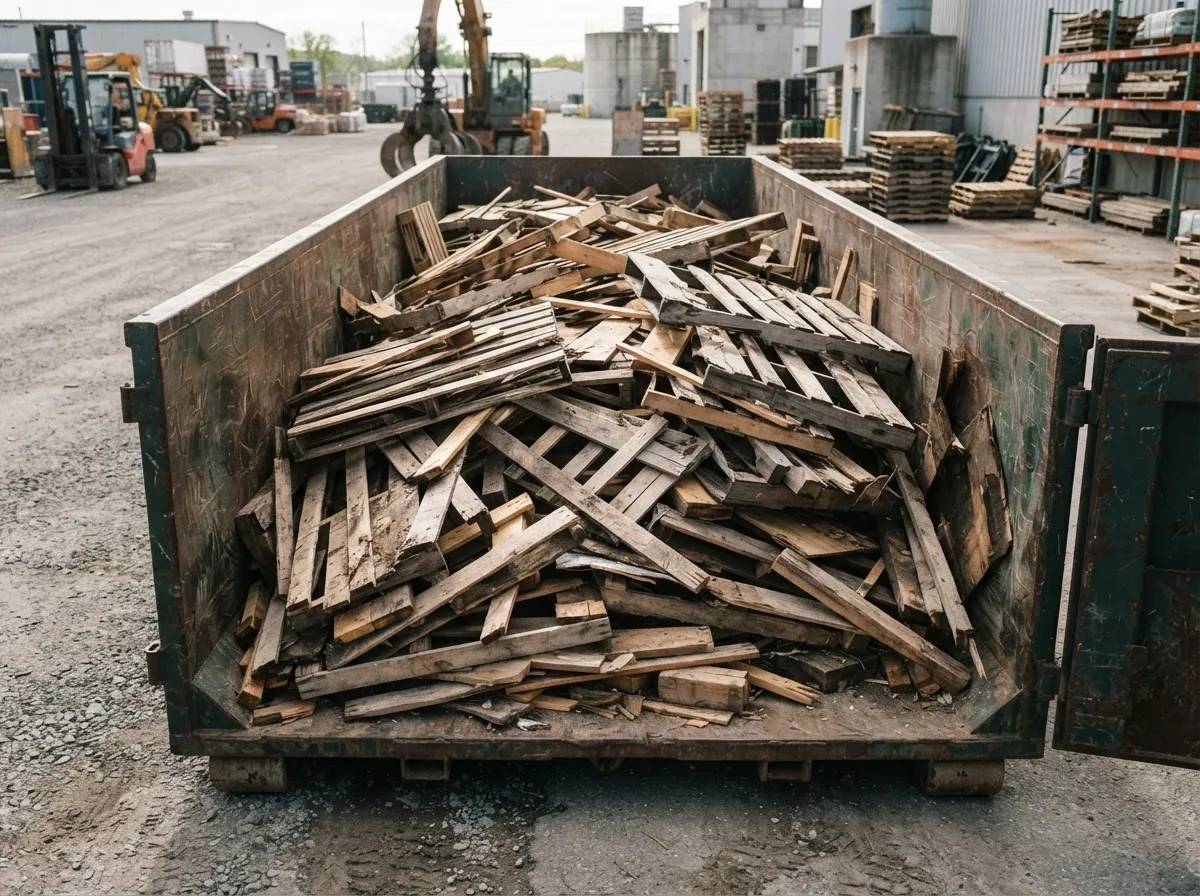
Instead of adding more roll-offs to the site, ACS helps you maximize the space inside your existing dumpsters by breaking down bulky, low-density waste.

Fewer Unnecessary Hauls
By compacting material before pickup, your dumpsters can stay in service longer, helping reduce avoidable swaps, emergency pickups, and inefficient hauling.

A Cleaner, Easier Site to Manage
Compaction helps keep waste contained below the rim, reduce overflow, and improve the appearance and flow of busy job sites, yards, facilities, and public drop-off areas.

No Equipment Investment Required
ACS provides the equipment, operators, and service model. Your team gets the operational benefits of compaction without adding fleet assets, maintenance responsibilities, or internal training.
Container Safety
Built to Protect Your Container
American Compaction Services builds the visit around not touching the container, because the container is often somebody else's steel.
Narrower than the container
A heavy steel drum, narrower than the container, works the load down and never touches the walls.
No hydraulic down-force
The drum works on its own weight, with no hydraulic down-force.
Wheels and guards
Safeguard wheels and end guards keep the unit off the container's structure.
Zero-touch
Our operators run a zero-touch policy. The equipment contacts the waste and nothing else.
Inspected and photographed
Every visit includes a before-and-after inspection with photo documentation.
Weight limits still apply. When the container belongs to your hauler, it goes back to work the way it came.
The Economics
Why It Pays
Commercial waste is billed around the trip. Cardboard, pallets and packaging fill a container with air long before they come near its weight limit, so every early pull is a full-price truck run spent moving empty space. Compaction removes the air, and the trips that were just moving air come off your schedule.
Why sites use ACS
More capacity from dumpsters you already use
Load leveling creates the room so cardboard, pallets, packaging, and bulky debris settle — each container works longer.
Dumpsters and compaction, all handled
We set you up on a schedule and compact on site. Fair price. Great service.
Lower cost to provide the space you need
Stretch the dumpsters you already run instead of adding more or calling early hauls.
Cleaner sites, fewer emergency pulls
Less overflow between services. Keep waste below the rim and the tarp clean.
A lower monthly bill
Fewer haul-offs on the same waste. A waste bill has three parts: per trip, per ton and the monthly rental. The trip charge is the only line that really moves.
Helps reduce waste volume by up to 70% depending on the material. Fewer haul trips to service your project or facility — you pay for fewer pulls. Your numbers will land somewhere else: material mix, pull frequency and hauler rates decide them. The free demo and the calculator are how you find yours.
Same footprint, more room
The container stays the same size, in the same spot. You get room back without a bigger container or a second one taking up the lot.
Photos after every compaction
We compact it on site as needed, and send you and your hauler photos after every compaction.
Your crew stays off the trash
Nobody on your team climbs into a load to make room or chases loose debris across the lot, and fewer emergency calls go to the hauler.
What Compaction Actually Recovers
Up to 70% Volume Reduction
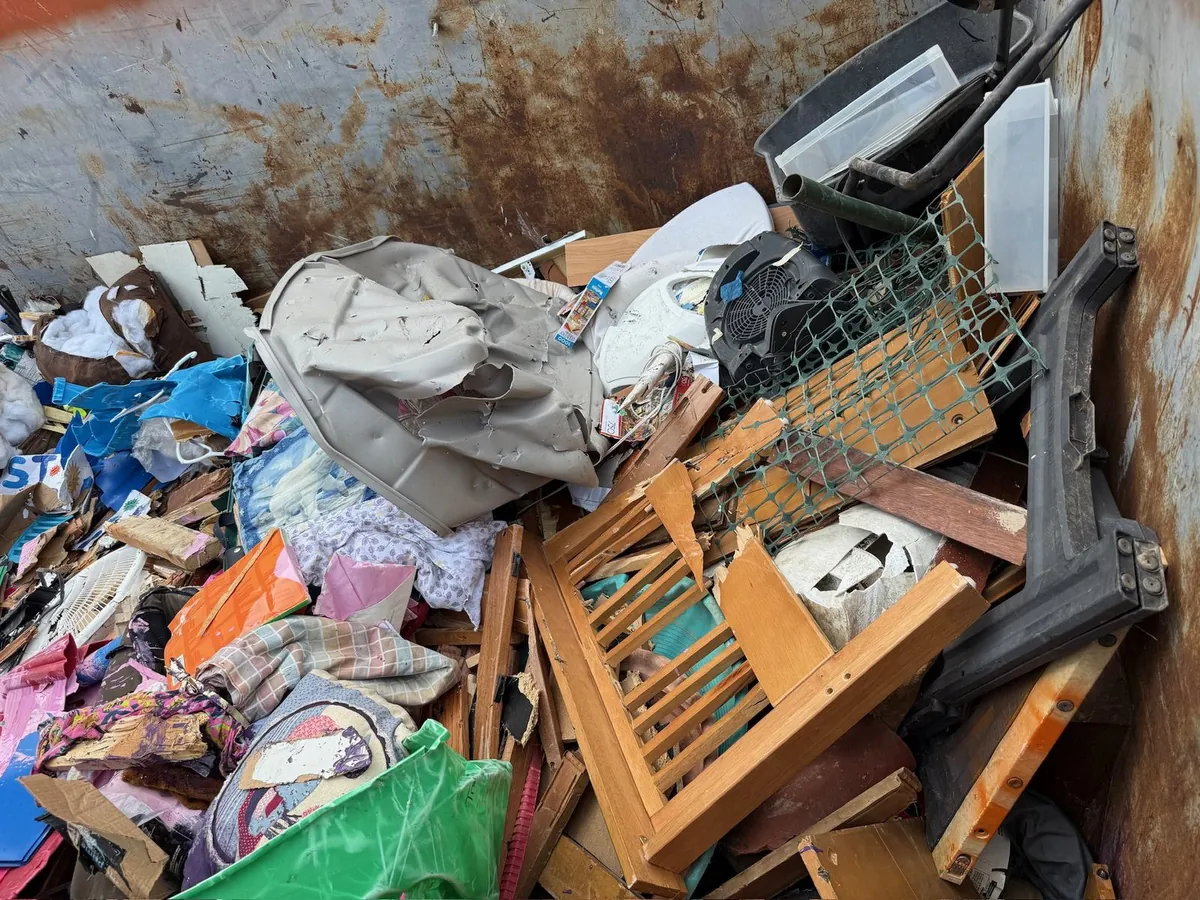
Compaction does not remove waste. It removes the air around the waste, so how much space comes back depends on what is in the container. Compaction can reduce volume by up to 70%, depending entirely on the material. It is never a guarantee.
| Material | Compaction |
|---|---|
| Cardboard and packaging | Compacts well |
| Plastics | Compacts well |
| Pallets and wood | Compacts well |
| Furniture and bulky commercial waste | Compacts well |
| Light construction debris | Compacts well |
| Concrete, masonry and roofing shingles | Never compacted |
| Red iron, liquids and hazardous waste | Never compacted |
Cardboard, packaging, plastics, pallets, wood, furniture, light construction debris and bulky commercial waste compact well. Concrete, masonry, roofing shingles, red iron, liquids and hazardous waste are never compacted.
Compaction helps reduce waste volume by up to 70% depending on the material. Book a free demo and we will prove it on your own waste.
Containers
Containers We Compact
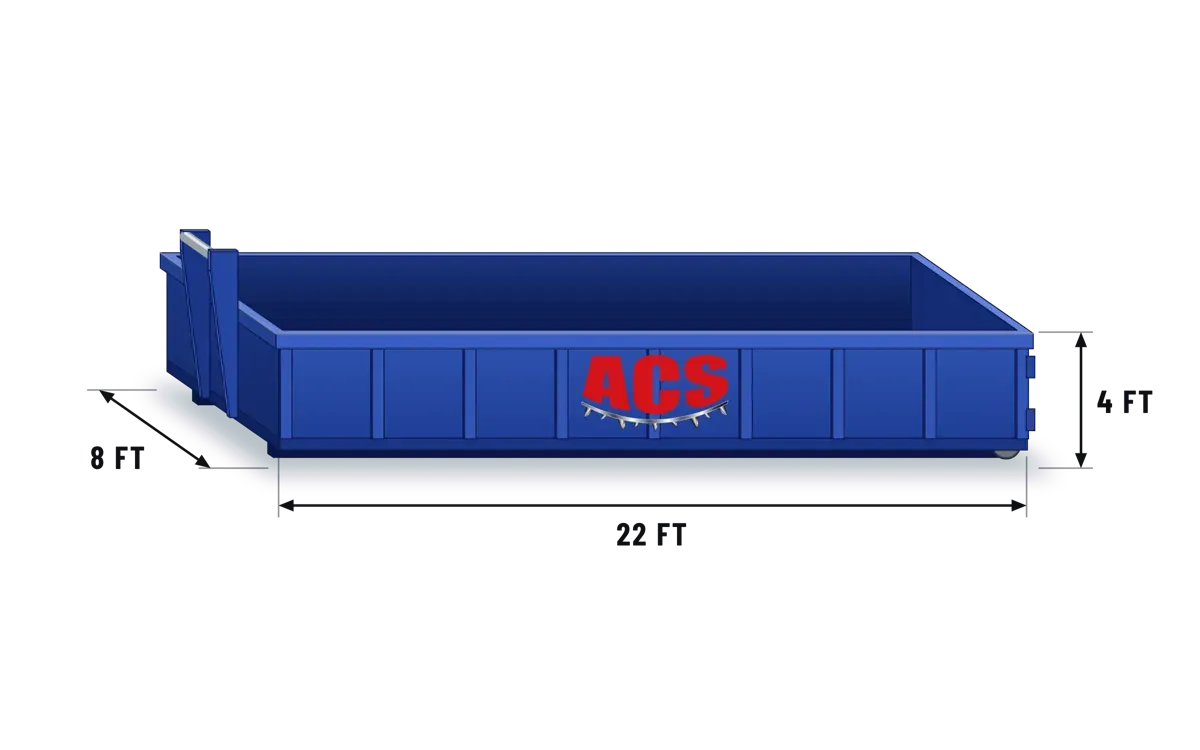
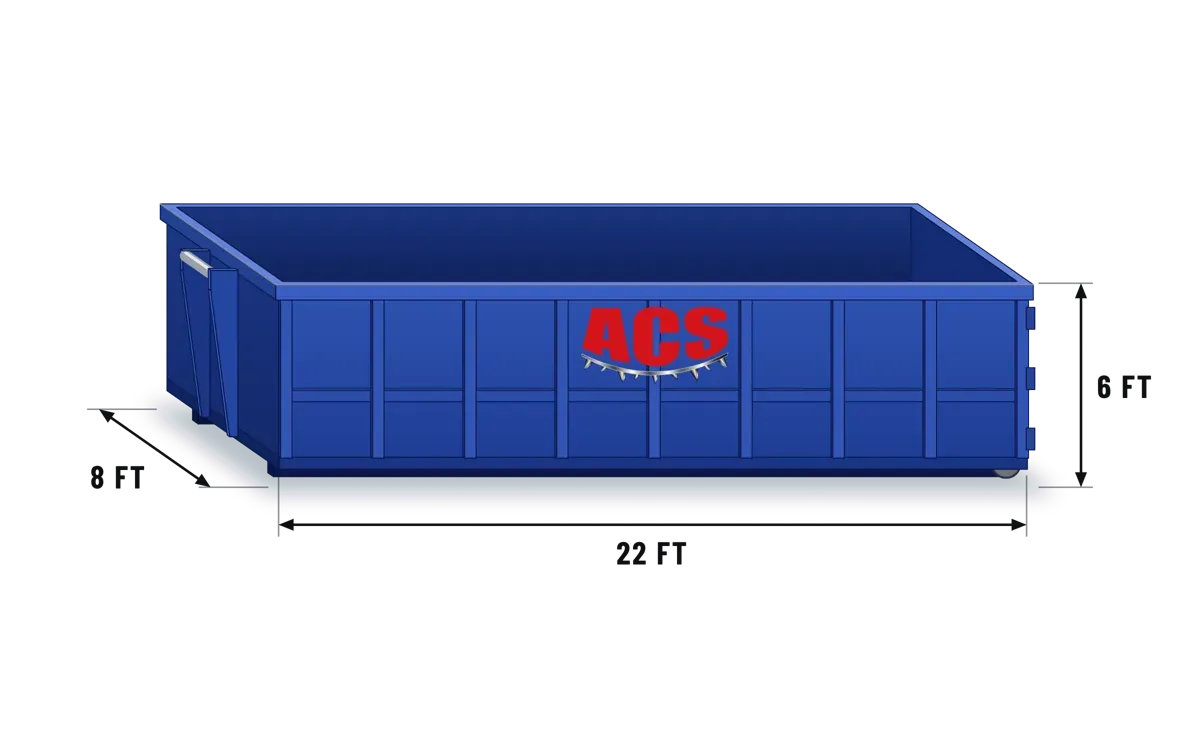
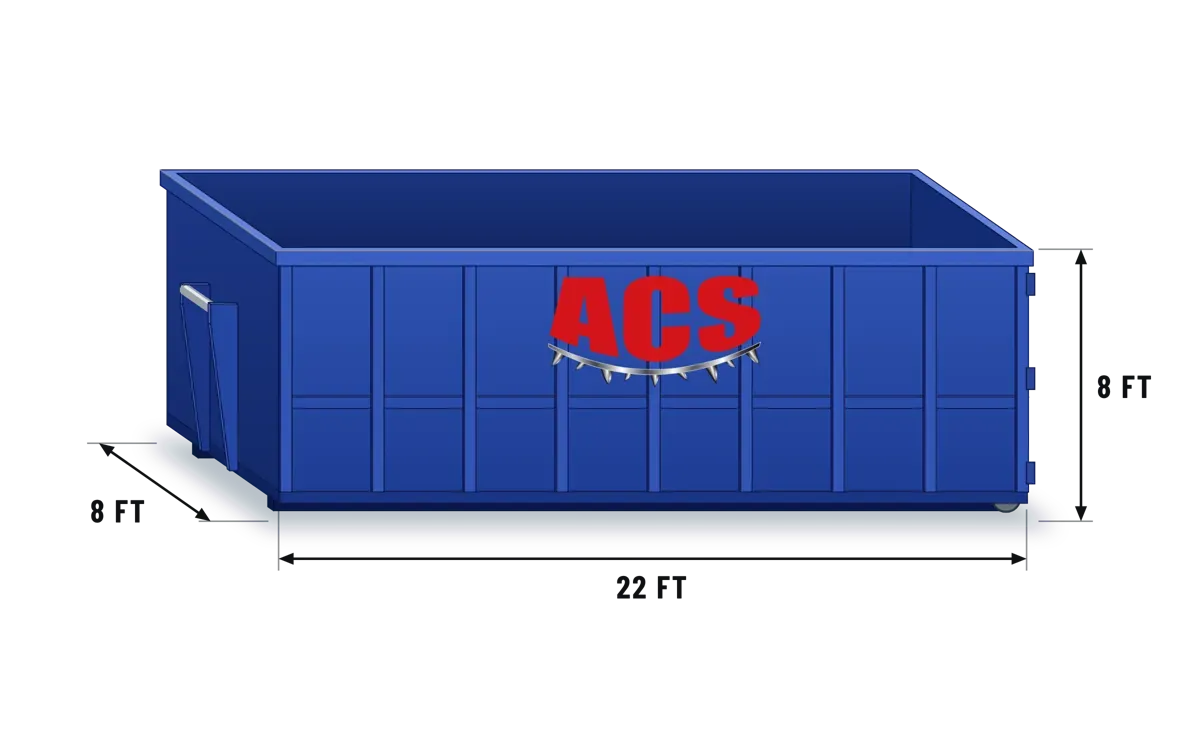
Approximate dimensions. Containers vary; confirm the actual size for your site before the first placement.
The unit works on open-top roll-off containers in 20-, 30- and 40-yard sizes, including hook-lift containers. It is not for trailer-style roll-off dumpsters.
The container can be one we supply as part of roll-off dumpster rental, or one your current hauler already has on your site; the two ways to start are set out below. Size is a separate decision, made by weight and fill rate. The dumpster sizes page covers the choice, and the 20 yard, 30 yard and 40 yard pages cover what compaction changes for each size.
Fit
Is Your Waste a Fit for Compaction?
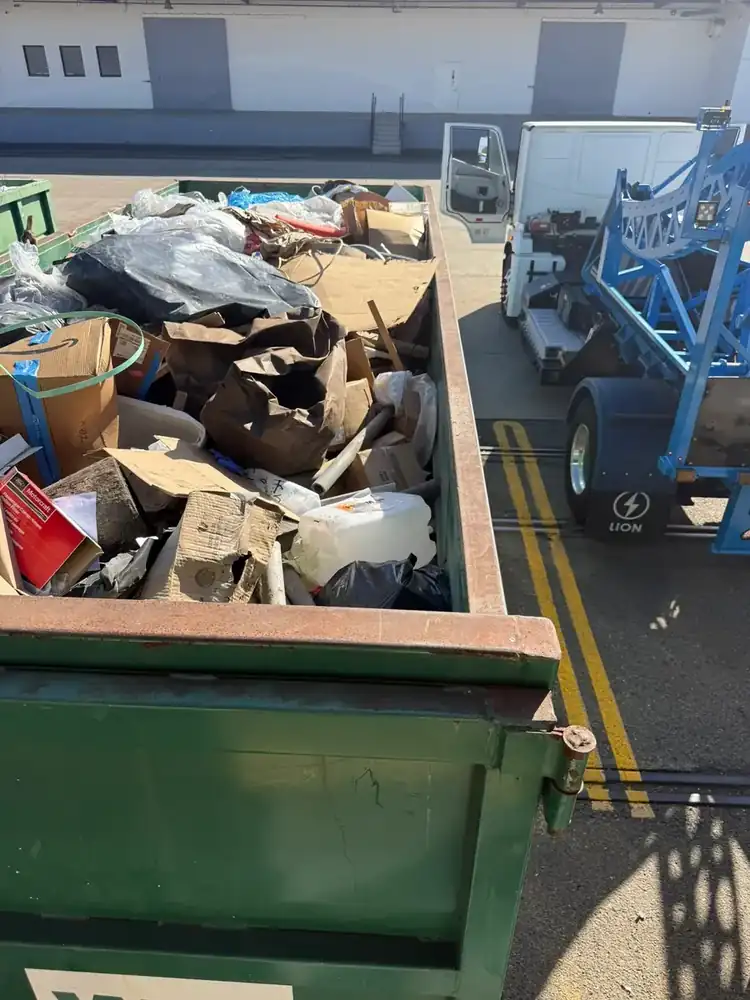
Compaction pays on containers that fill with air and leave often. It does very little for containers that fill with dense material or rarely leave. American Compaction Services would rather tell you which one you have before the first visit than after the third.
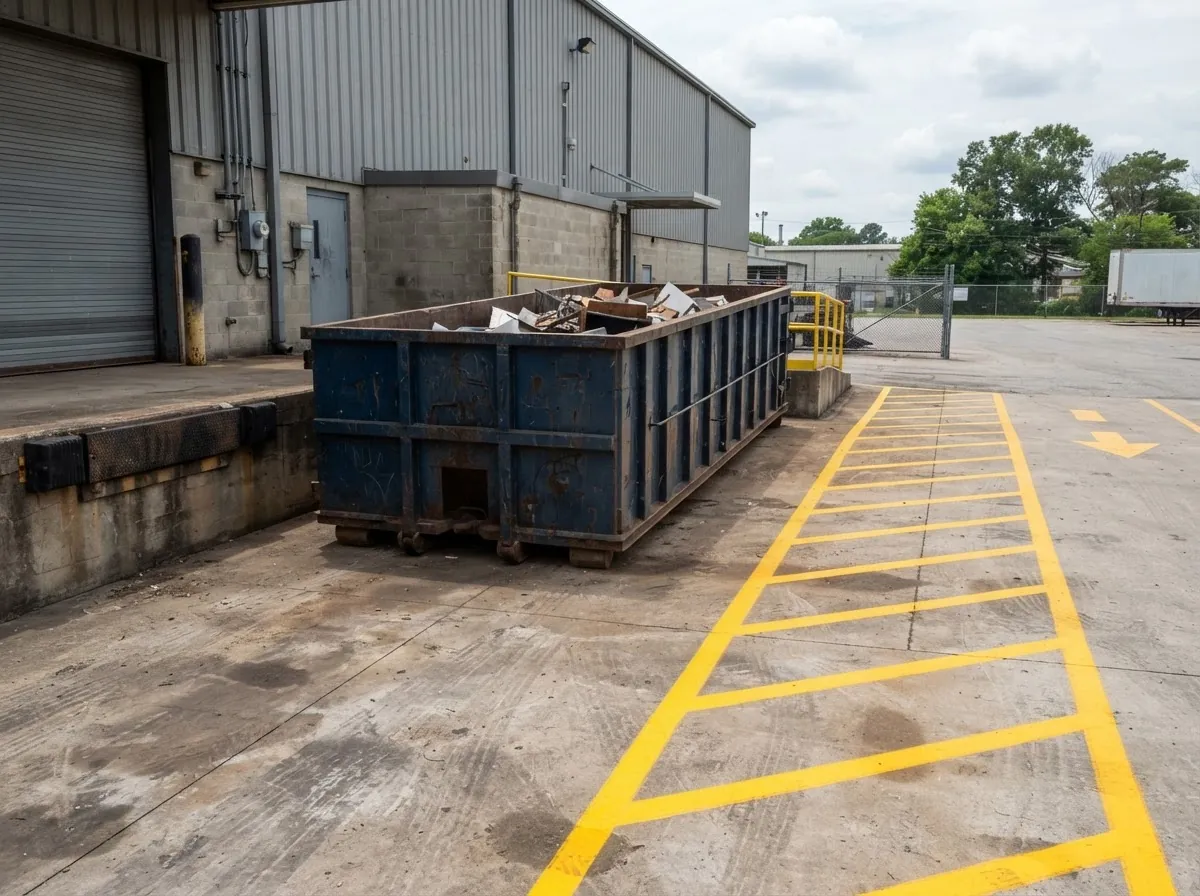
A strong fit
Cardboard and cartons, packaging, film and banding, pallets and crating, and the mixed commercial waste that comes off a receiving dock or a production floor. These loads carry a lot of trapped air. If the container is going out weekly or more, this is where compaction earns its keep. Warehouses and distribution centers, manufacturers and retail and restaurant sites usually land here.
A partial fit
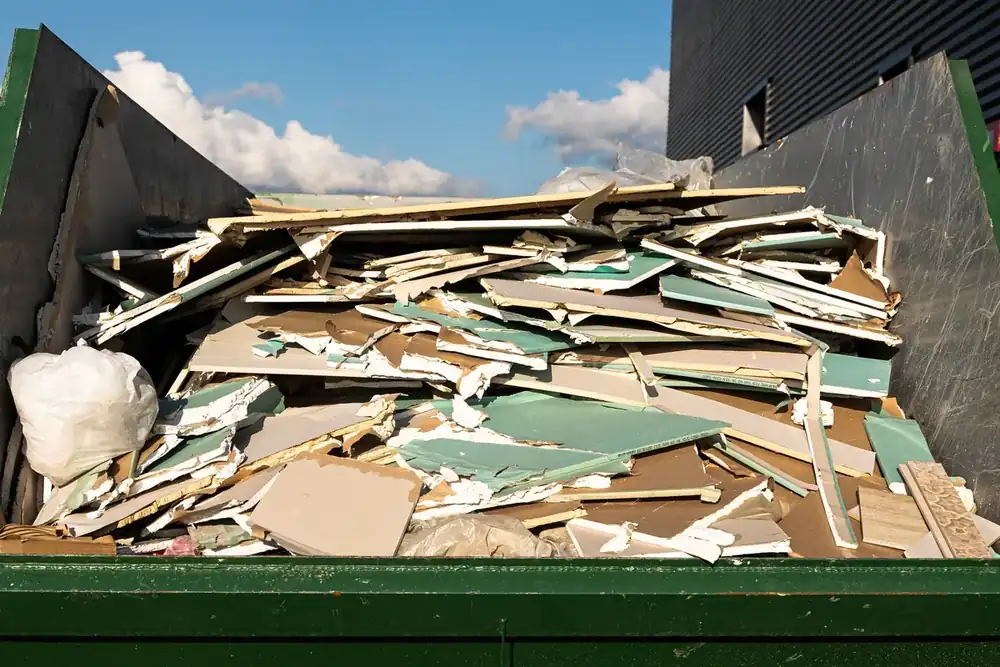
Light construction debris compacts well; concrete, masonry and roofing shingles are never compacted. On a job pulling containers every few days, that can still take real trips off the schedule. Construction, contractor and property management accounts often sit here, and the demo shows what your load does.
A poor fit
A container that goes out once a month and is not straining to get there. A stream that already runs through a stationary compactor. Loads that are heavy for their size, like shingles or dense metal scrap. Concrete is never compacted or used in demos. There is little air left to take out, so there are few trips to save; the demolition and roofing pages cover when compaction still helps on those jobs.
What we do not compact
We will not compact liquids; dirt, soil, aggregate or other dense material with no air in it; hazardous or regulated waste; sealed drums or pressurized vessels; or anything the receiving hauler won't accept. Concrete is never compacted or used in demos, including in mixed loads. The accepted materials page has the full list.
The Visit
What Happens During a Compaction Visit
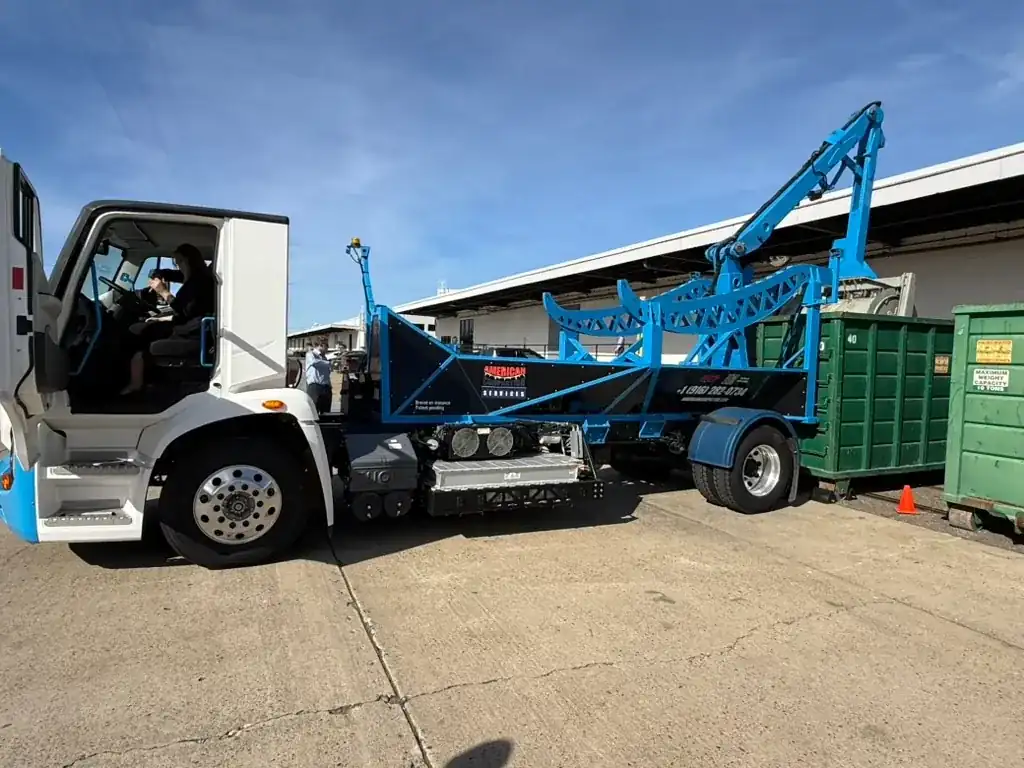
- 1
The schedule is set from your fill rate.
Visits are timed to land when the container is filling up, on a schedule set by your fill rate and around your dock hours.
- 2
The unit works the container where it sits.
The container does not move, and nothing is hooked up to your building.
- 3
The container is inspected and photographed.
This happens before the drum goes in.
- 4
The drum makes its passes.
The steel drum is lowered into the load and rolled across it until the material lies dense. The container stays where it is.
- 5
The container is inspected and photographed again.
The before and after photos document the container's condition on both sides of the visit.
- 6
The unit leaves.
Your container keeps filling on top of a dense load instead of a stack of voids.
Nobody on your crew handles anything during the visit. The questions worth asking before a first visit are laid out in How On-Site Waste Compaction Works (and What to Ask), and how it works follows a site from first call to first pull.
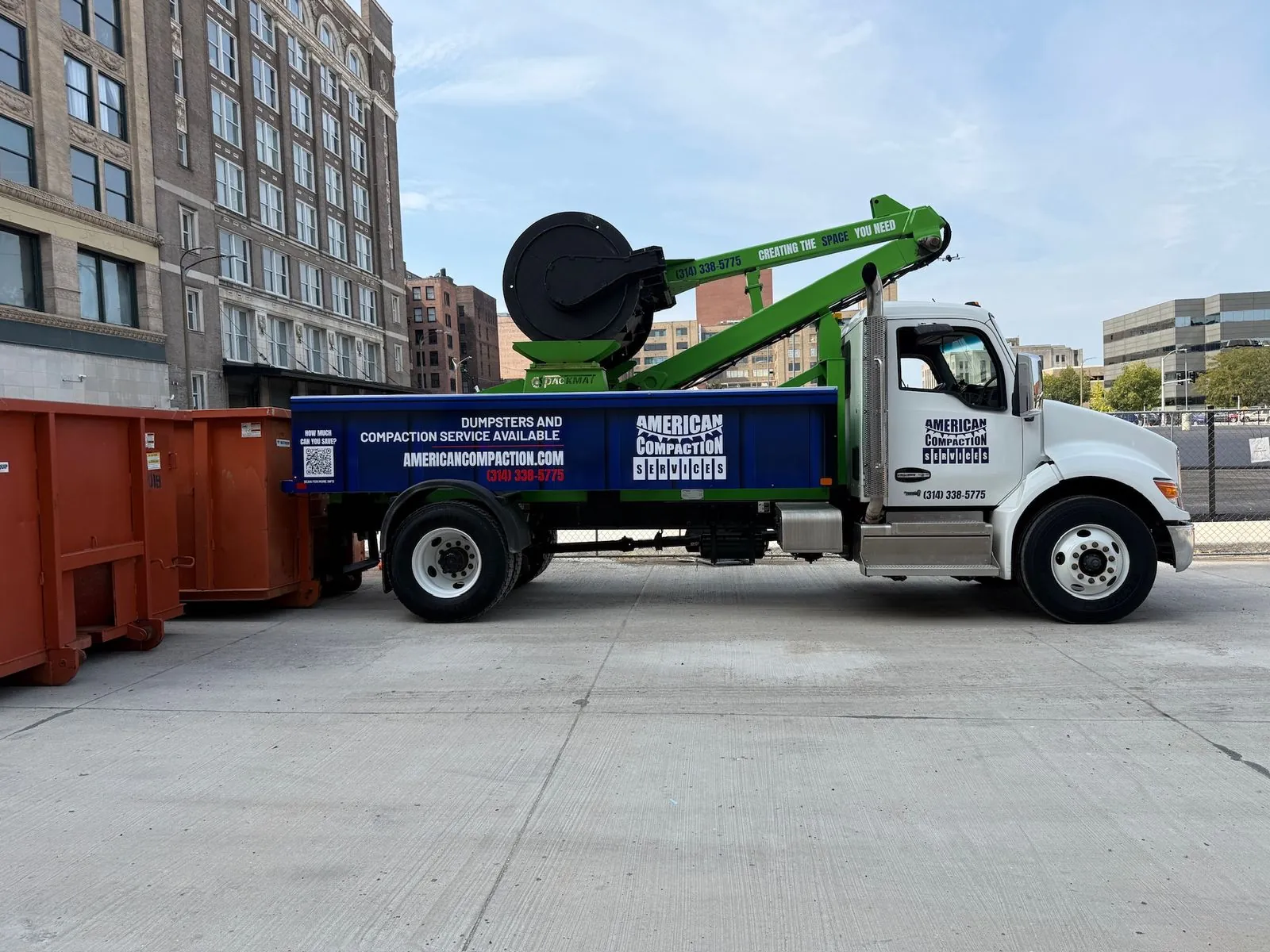
Volume
Volume: What Compaction Changes and What It Does Not
Compaction does not add to your waste. It makes room, so the container holds more before it leaves. A loose container that looks full is mostly air. Compaction can reduce volume by up to 70%, depending on the material. That air is what you have been paying to haul.
Compaction does not raise any legal limit, and the hauler's driver has the final say on every load.
The saving is in fewer pickups on the same waste.
Where the Savings Come From
Everybody Wins Except the Air
A fair question: if this saves you money, who is losing it?
You
You pay for waste moved, not air moved. The same waste leaves in fewer trips, and the trip charge was always the line you could actually move.
Your hauler
They run fewer, fuller trips, and the account stays theirs. Their drivers get dense, level loads.
Us
We get paid per crush. For compaction-only customers who keep their existing hauler, the hauling account stays with that hauler, and American Compaction Services provides the compaction. Density is the whole business.
The savings do not come out of anyone's pocket. They come out of trips that never run.
Who Does What
Who Does What on a Compaction Account
You
- Keep your container on your pad
- Load it the way you do now
- Tell us your site hours
American Compaction Services
- Runs compaction visits on your schedule
- Works the container where it sits
- Inspects and photographs before and after
Your hauler
- Keeps your hauling account
- Pulls the container when it is actually full
- Bills the hauls as today
Compaction-only account: nothing about your container or hauling account changes except how often the container is pulled.
ACS provides waste management through dumpster rental and on-site compaction. On a compaction-only account, your container, your hauler and your hauling account stay exactly where they are, and we run the compaction visits. The full breakdown of who supplies, places, pulls and bills on each kind of account is on the roll-off dumpster rental page.
Getting Started
Two Ways to Start
Adding compaction to an existing service
Already have a dumpster? Keep it and keep your hauler; we compact what's in it. Three checks and you are running. Confirm the container owner is on board: if the container belongs to your hauler, we handle the conversation with them. Confirm your material is a fit; the demo answers that on the spot. And if your service runs on a fixed schedule, ask about moving to on-call pulls, so you are not paying for pulls you no longer need.
Container and compaction together
Need dumpster service? We supply the container and compact it on site. That suits a new site, a new project, or several half-used containers replaced by one that is sized right. Containers come in 20, 30 and 40 yard sizes, and when we supply the container, one combined invoice covers the container, the hauls and the compaction. The roll-off dumpster rental page covers container options, and the dumpster sizes page helps you choose.
Ongoing Service
How Ongoing Service Runs
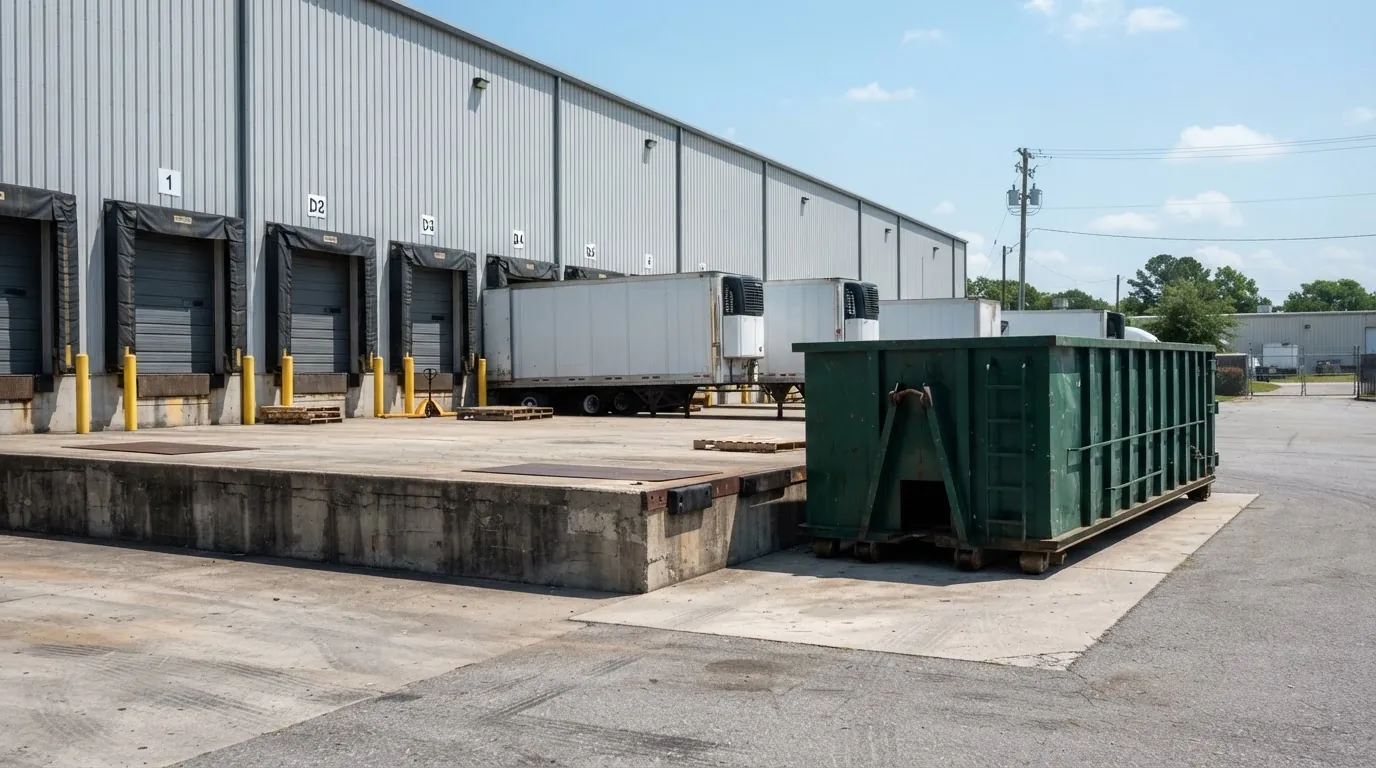
American Compaction Services builds the visit schedule from your actual fill rate, not from a default interval. Compaction visits are set by your fill rate and placed around your dock hours so the unit is not in your receiving lane during the hour you need it most. When your volume moves, the cadence moves with it, whether that is a seasonal rush, a plant shutdown or a new line coming up.
There are three ways to run the hauling side. Scheduled pulls suit a steady, predictable flow, though a fixed schedule against a variable stream means some pulls happen early. On-call pulls mean you never pay for a trip you did not ask for, but the call tends to come late. The third way is built for compaction: compaction visits on a rhythm, and haul-offs called when the load is actually at capacity.
One thing to be clear about. Compaction reduces haul-offs; it never eliminates them. A compaction visit is itself a visit. What changes is that a short on-site visit happens instead of a haul-off: no truck hooking your container, driving it to a disposal facility and crossing a scale for that load.
Based on your operation, we recommend the right service model: on-demand support, scheduled compaction, high-volume service, or a pilot program.
Cost
What Affects the Cost of On-Site Waste Compaction
Compaction is priced per visit, set per market and per account. We don't publish prices; the pricing guide explains what drives the bill. Your quote comes off three things: how fast the container fills, what is in it, and how easy it is to reach. The saving is the difference between the haul-offs you stop paying for and the compaction visits that replace them.
The savings calculator gives you a planning number from your own inputs. These results are estimates from the numbers you enter. They are not a quote, a promise or a guarantee.
How fast the container fills
The fill rate sets how many compaction visits land between pulls.
What is in it
Material and weight decide how much room compaction recovers and how heavy the load leaves.
How easy it is to reach
Site access — the approach, clearance and surface — affects every visit.
Why American Compaction Services
Why Businesses Choose American Compaction Services
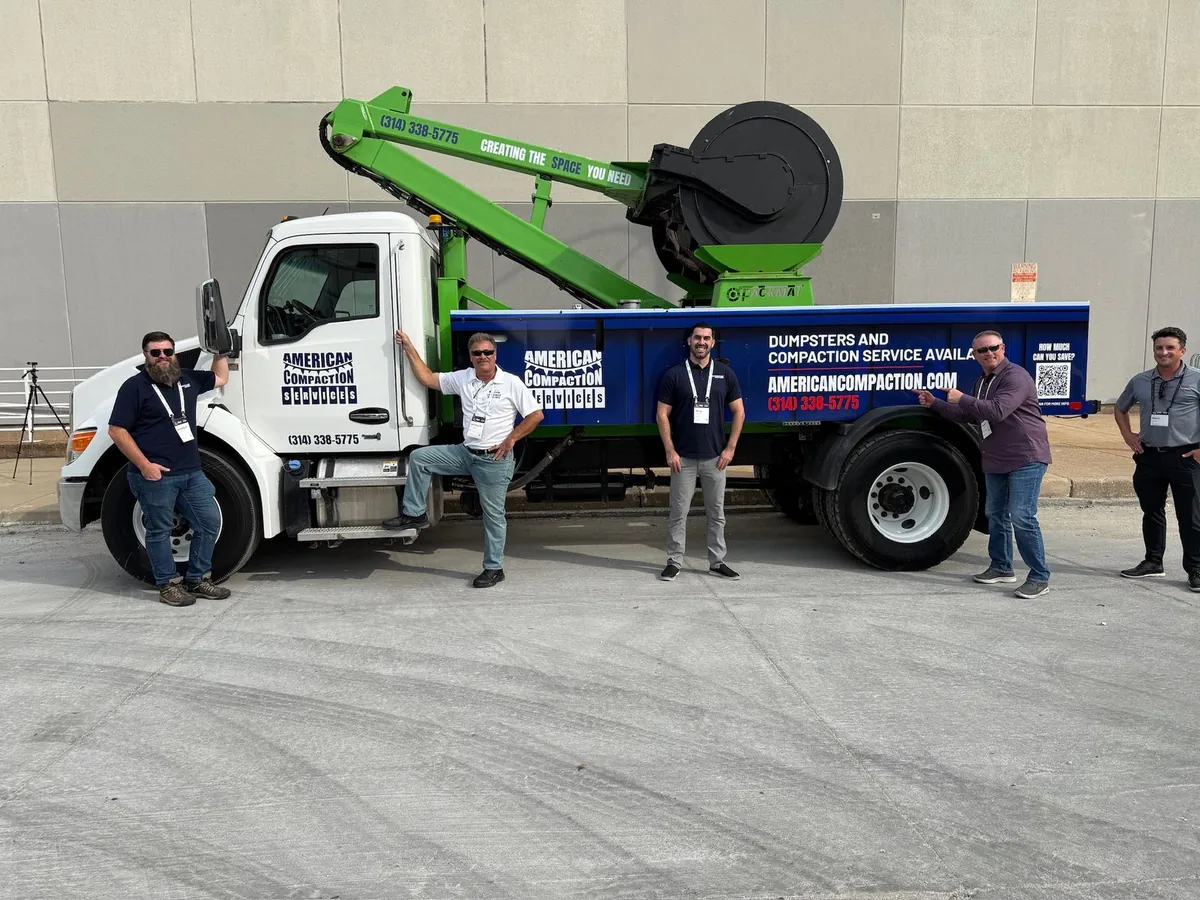
Keep your hauler and your container.
If you have a hauler you are happy with and a container you already pay for, keep both. We compact suitable non-concrete waste on your pad. Concrete is never compacted or used in demos.
Numbers you can check.
The reduction table, the planning ratios and the weight stop are all on this page, so you can see where your material sits before a visit is booked.
A zero-touch policy.
Our operators run a zero-touch policy, on your container or ours.
Visits set by your fill rate.
The schedule comes from how fast your container fills, and it moves when your volume does.
No contract to sign.
No exclusivity, no minimum, no term. The service has to keep earning its place on your schedule.
Straight answers about fit.
If it won't move your number, we'll tell you on the spot. The free demo exists so you can see the result on your own material instead of taking our word for it.
Where We Operate
Available in These Markets
American Compaction Services runs on-site waste compaction market by market. Each market has its own page, phone number and service area, and its compaction page covers how the service runs on local sites and how to reach the team there.
If your city is not on the list, the locations page shows every market we serve.
See It on Your Own Container
We will prove it.
Watching it happen to your own waste answers more than this page can. Free on-site demo: we compact one of your own containers while you watch. The demo carries no obligation and is photographed before and after. If it isn't a fit, we tell you on the spot. You see how far your material compresses, whether the load was as full as it looked, and whether your pull count can realistically come down.
Frequently Asked Questions About On-Site Waste Compaction
Pricing, permits and scheduling questions are answered in the pricing guide and on the FAQ page.
Related Services
Roll-Off Dumpster Rental
20, 30 and 40 yard containers, pulls, swaps and who does what.
Dumpster Sizes
matching a size to your material.
Accepted Materials
what goes in the container.
Dumpster Rental Pricing
what drives the bill.
How It Works
first call to first pull.
How On-Site Waste Compaction Works (and What to Ask)
the questions worth asking before a first visit.
See What Comes Back on Your Own Container.
Tell us your site and your container; we'll take it from there.
Overflowing dumpster?
Has your hauler told you they can’t haul it?
Sometimes, dumpsters get overfilled. You often pay a dry-run fee, remove everything sticking above the dumpster, then call them back for another haul.
Creating the space you need
Compact it first. Fewer hauls after.
We compact it first so it’s ready for the haul. No overflow, no dry runs, no second trip.
Government · Cities · Counties · Municipalities · Public Works · Transfer Stations · Convenience Centers
Keep public sites working with fewer hauls
Mobile compaction for municipalities, public works, transfer stations and convenience centers, without buying a compaction truck. American Compaction Services compacts bulky waste inside open-top roll-offs on site.
We serve municipal sites, including convention centers.
Some agencies award hauling contracts or permits. Some provide the service themselves. Some markets are open, with little or no oversight on roll-offs.
More capacity from dumpsters already in service
Raise density on site so each container works harder.
Lower cost to provide the space people need
Compaction stretches the dumpsters you already run. More usable space without adding containers.
Fewer overflows, fewer complaints
Handle more service requests and keep citizens happier.
Downstream impact: Disposal wait times · Fewer transfer-trailer loads · Landfill capacity and lifespan · Easier on drivers.
Typical fit: open-top or hook-lift 20 to 40-yard dumpsters. Not trailer-style roll-offs. Up to 70% less volume, depending on the material.
With roll-off, every haul is a call. With American Compaction Services, nobody has to call.
We set you up on a schedule and we compact on site. Dumpsters and compaction. All handled.
You already pay for dumpster space. Compaction lets you use more of it.
Getting started takes four details
- A photo of your dumpster and the space around it
- Your location
- What goes in the box
- The container size, if you know it
They help us plan for site access and match compaction service to your site.
We will prove it. Call or text (877) 651-7660.