

Container Sizes
Dumpster Sizes: 20, 30 & 40 Yard Roll-Offs
We automate your roll-off. You'll never run out of room. Fair price. Great service.
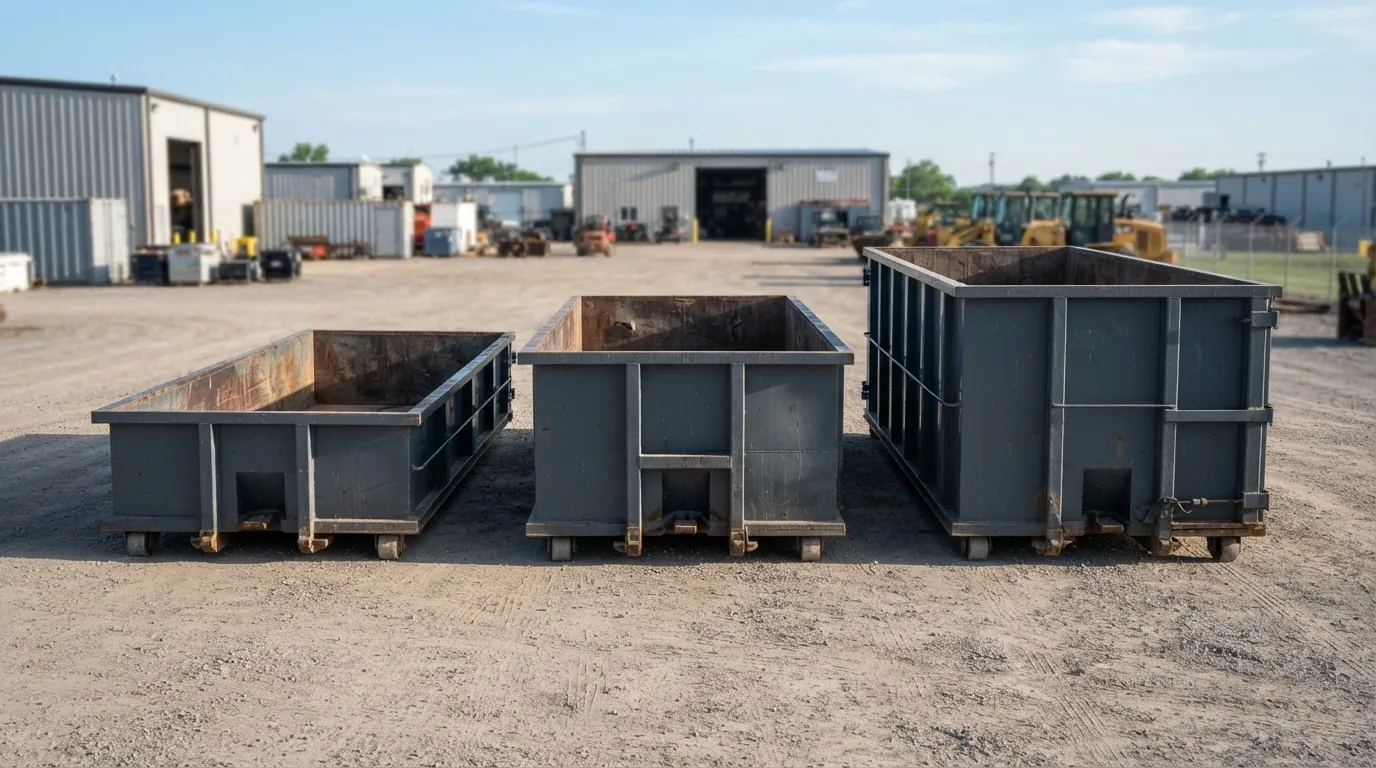
American Compaction Services offers three dumpster sizes to business accounts: 20, 30 and 40 yard open-top roll-offs. The 20-yard is the call for heavy material, and the 40-yard is built for bulky, light volume such as cardboard, packaging and pallets. If you can load a 40, start with a 40: it gives you the most room between services.
Below are the approximate dimensions, the materials each size suits, the weight limit that can end a load before the walls do, and the factor that changes the whole calculation: on-site compaction can let a smaller container do a larger container's work.
Why Size Is the Decision That Sets Your Waste Bill
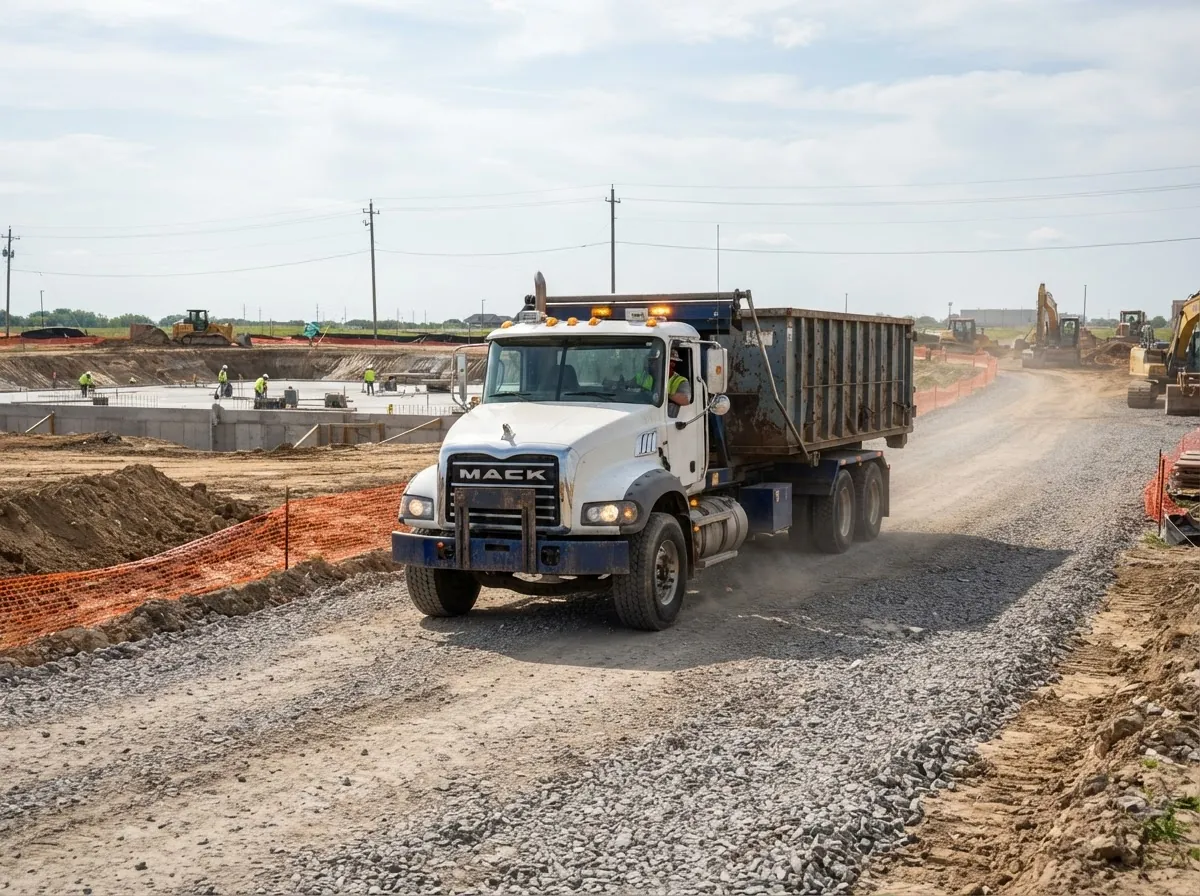
Container size looks like a volume question. It is really a trip question. Every time a truck rolls to your property, hooks a container, drives it to the landfill or transfer station, dumps it and brings it back, you pay for that round trip whether the box left full or half empty. The trip is the cost, not the box.
That is why the wrong size hurts in two directions. Too small, and you pay for extra pulls on loads full of air. Too large, and you are handling a container that eats dock space, blocks a lane or sits half full for weeks while the service schedule keeps running. Neither problem shows up on the invoice as a line labeled "wrong size." It shows up as a haul-off count that feels higher than the amount of waste your operation actually produces.
American Compaction Services sizes containers around three things: the footprint you have available, the density of what you are throwing away, and how fast the container fills between pulls. Get those three right and the size takes care of itself. Get them wrong and no amount of scheduling fixes it.
There is one more variable, and it changes the math. A roll-off holds whatever volume it holds, but loose waste carries a lot of empty space: boxes that never got broken down, pallets stacked at angles, film and packaging that trap air. Compacting that material on site changes what a given size can hold, which is why the size conversation and the compaction conversation belong on the same page.
How to Tell You Are in the Wrong Size
You usually do not need a study to know the size is off. A few patterns give it away.
The container leaves before it is full
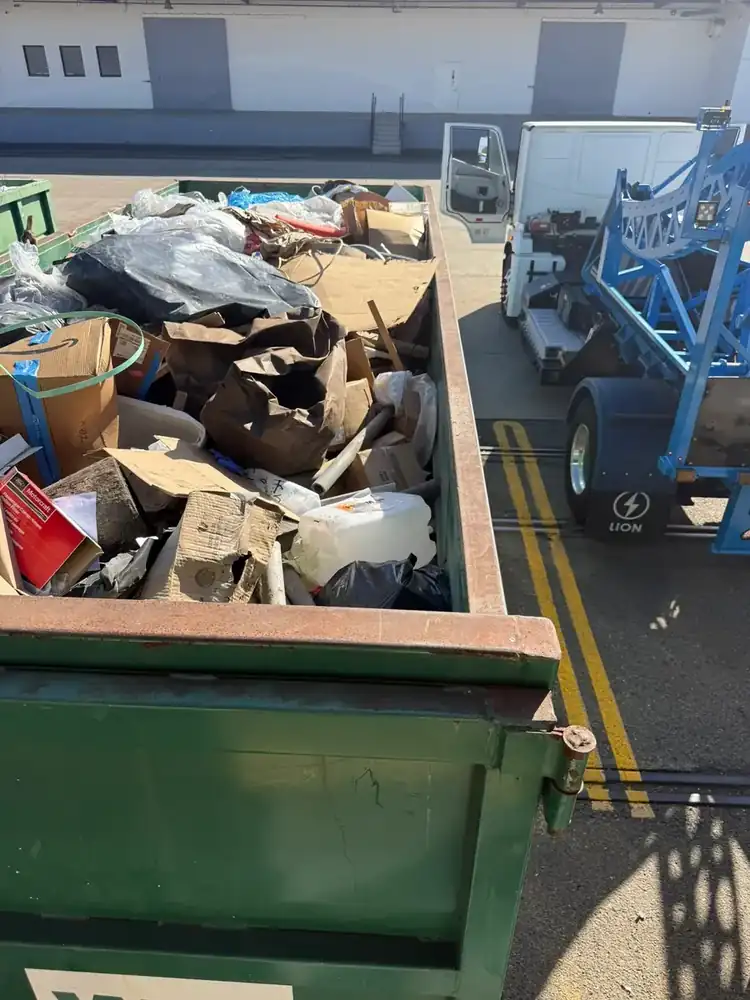
If your hauler is pulling a box that is heaped with loose material and still light, you are paying for trips that haul air.
Someone is climbing in to stomp the load down
That is an unsafe workaround for a container that cannot keep up with the volume you generate. Nobody should be inside a roll-off to make room.
Waste stacks up next to the box between pulls
Overflow on the pad means the size or the schedule is behind your operation.
You are calling for an extra pull most months
Unscheduled pulls are the clearest signal that the current setup is undersized for your flow.
The container is heavy and half full
That is the opposite problem: dense material in an oversized box. You will hit the weight ceiling long before you hit the volume ceiling.
None of these mean you automatically need a bigger container. The last one means you need a smaller one, and the first two often mean the load needs working down rather than more box. That is the part a size chart cannot tell you, and it is why we look at the material before we recommend the box.
Three Dumpster Sizes, Three Different Jobs
Each size has its own page covering dimensions, loading, access and the industries that run it. The short version:
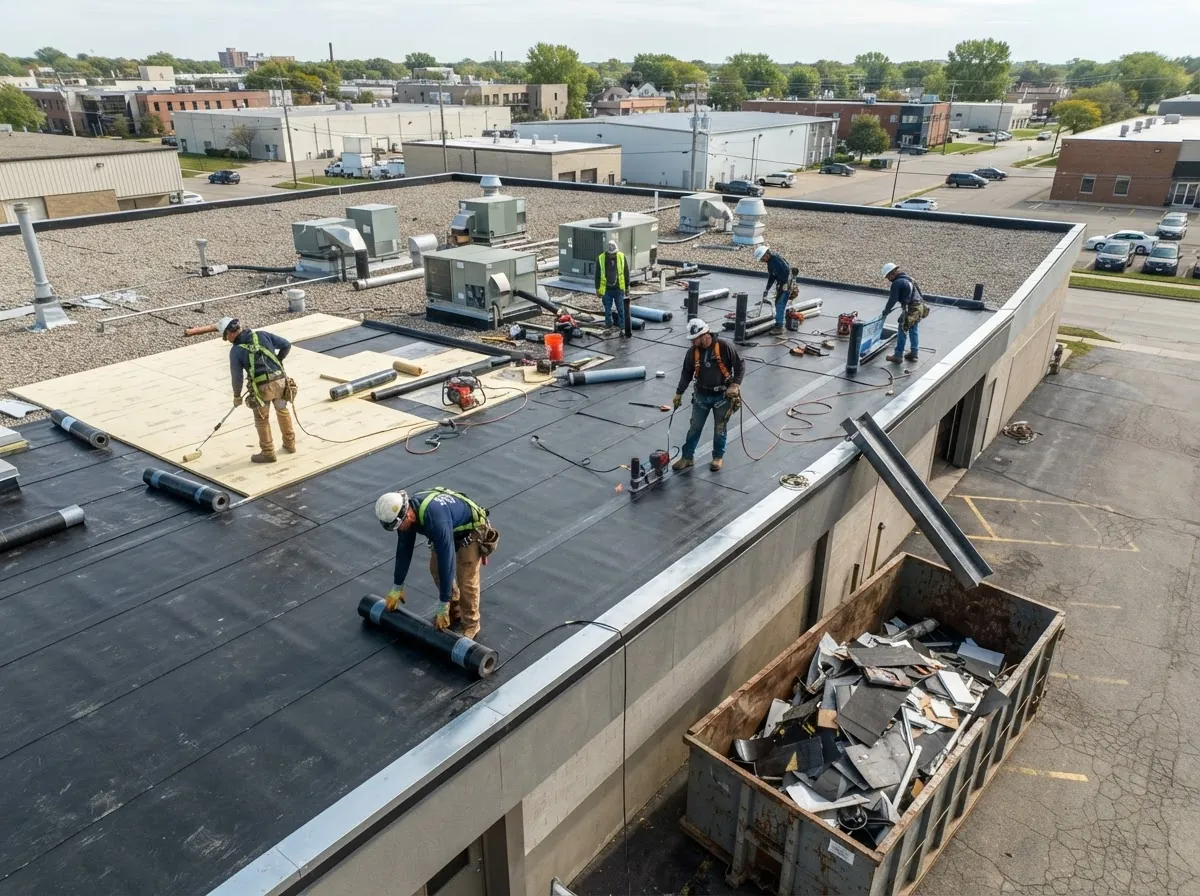
20-Yard: Dense Material, Low Walls
The heavy-material container. Choose it when the stream runs dense enough that weight, not volume, ends the load: demolition and remodel debris, roofing tear-offs, heavy production scrap. The low walls let a crew load over the side by hand. Read more about 20 yard dumpster rental.
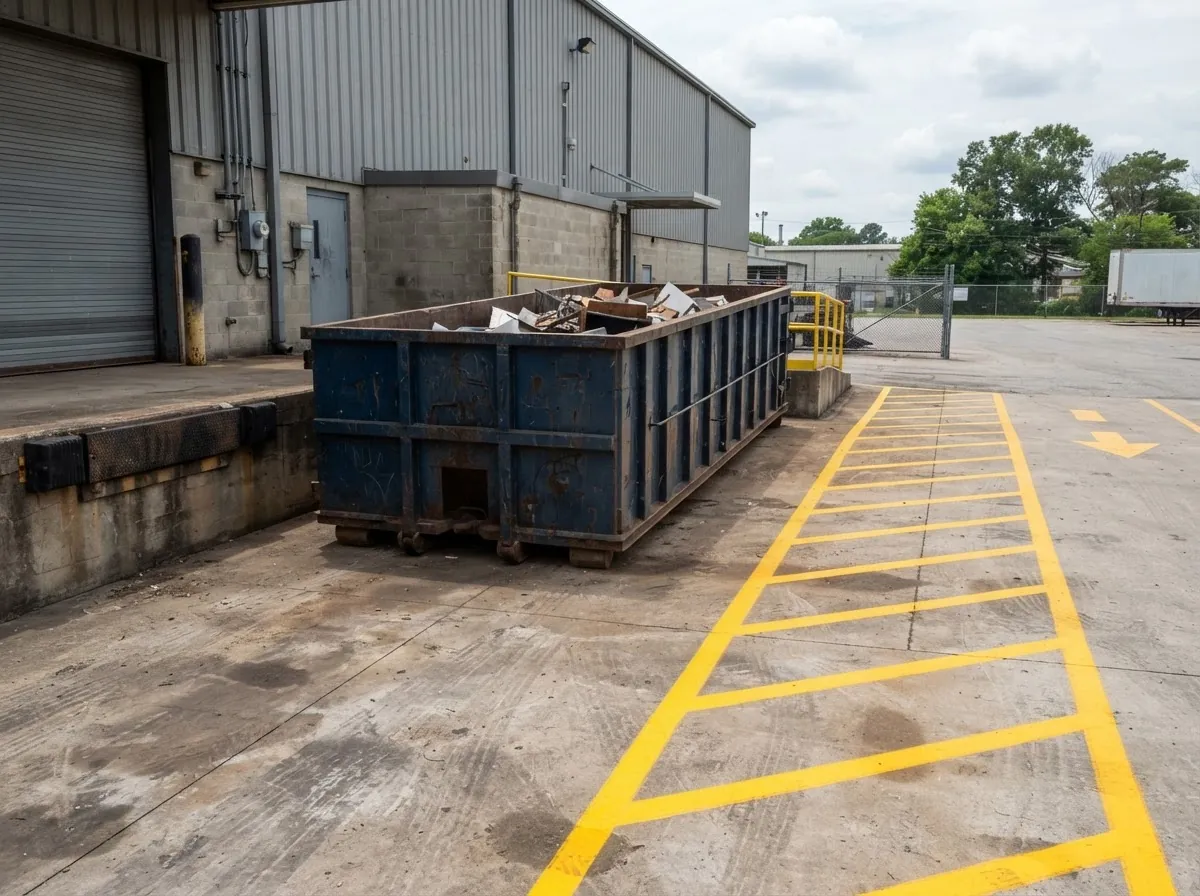
30-Yard: The Default Commercial Size
The container for a mixed stream: some cardboard, some packaging, general refuse, the occasional pallet, or the changing mix of debris on an active construction job. It holds real volume without the wall height of a 40. Read more about 30 yard dumpster rental.
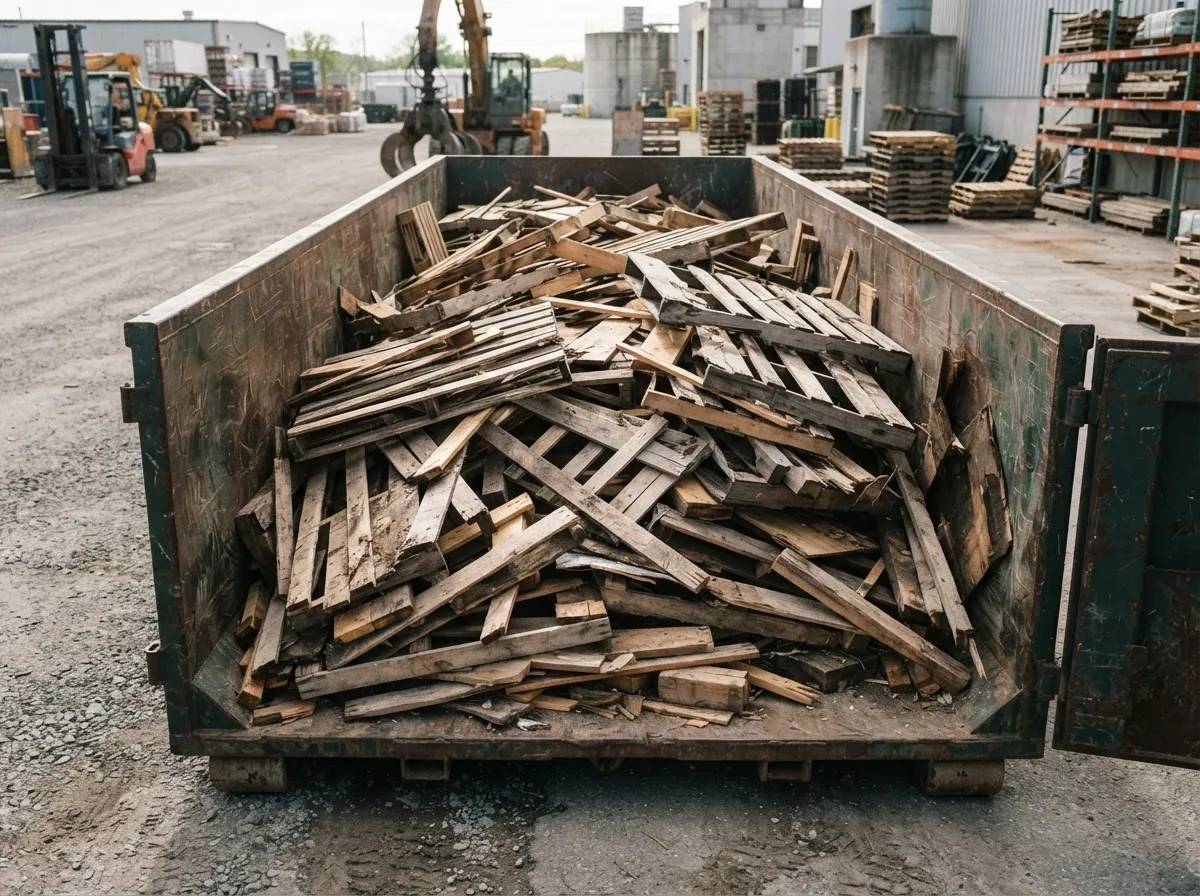
40-Yard: Bulky, Light Volume
The volume container, for material that fills space long before it approaches a weight limit: cardboard and corrugated at volume, packaging and film, pallets and wood, fixtures and store-set debris. It is never the box for dense material. Read more about 40 yard dumpster rental.
Dumpster Sizes at a Glance
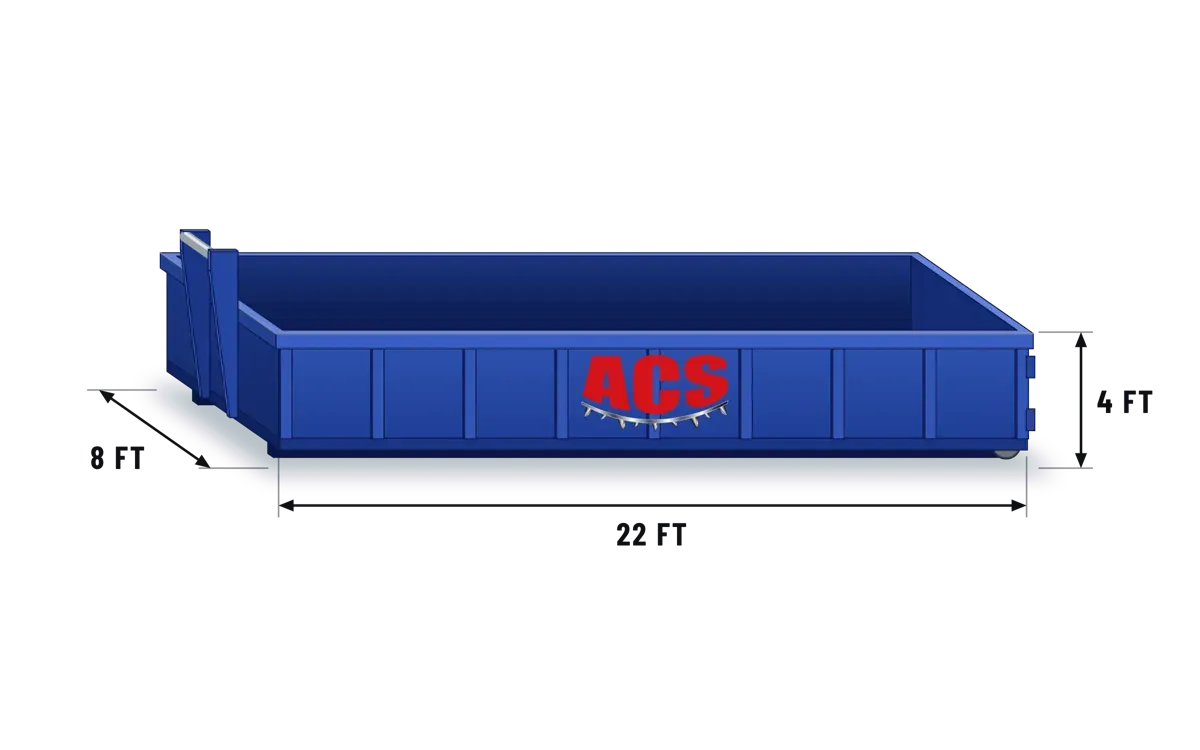
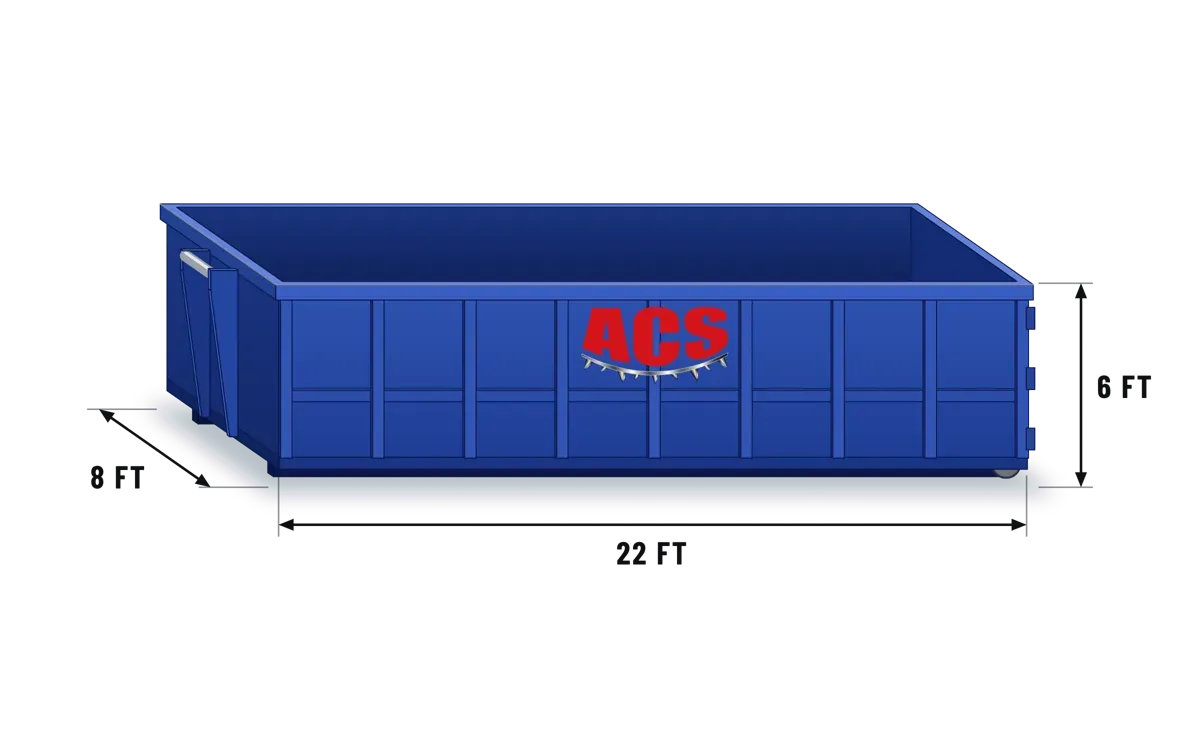
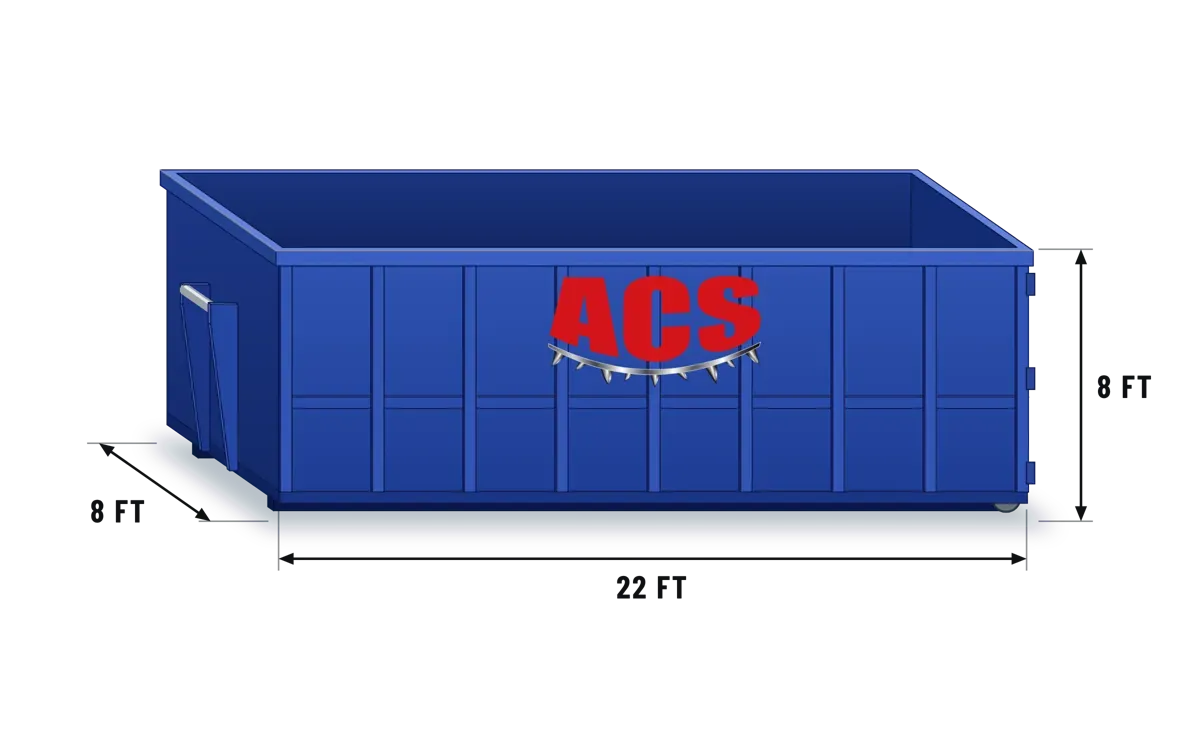
Approximate dimensions. Containers vary; confirm the actual size for your site before the first placement.
| Size | Approximate dimensions (L × W × H) | Suits | Typical materials |
|---|---|---|---|
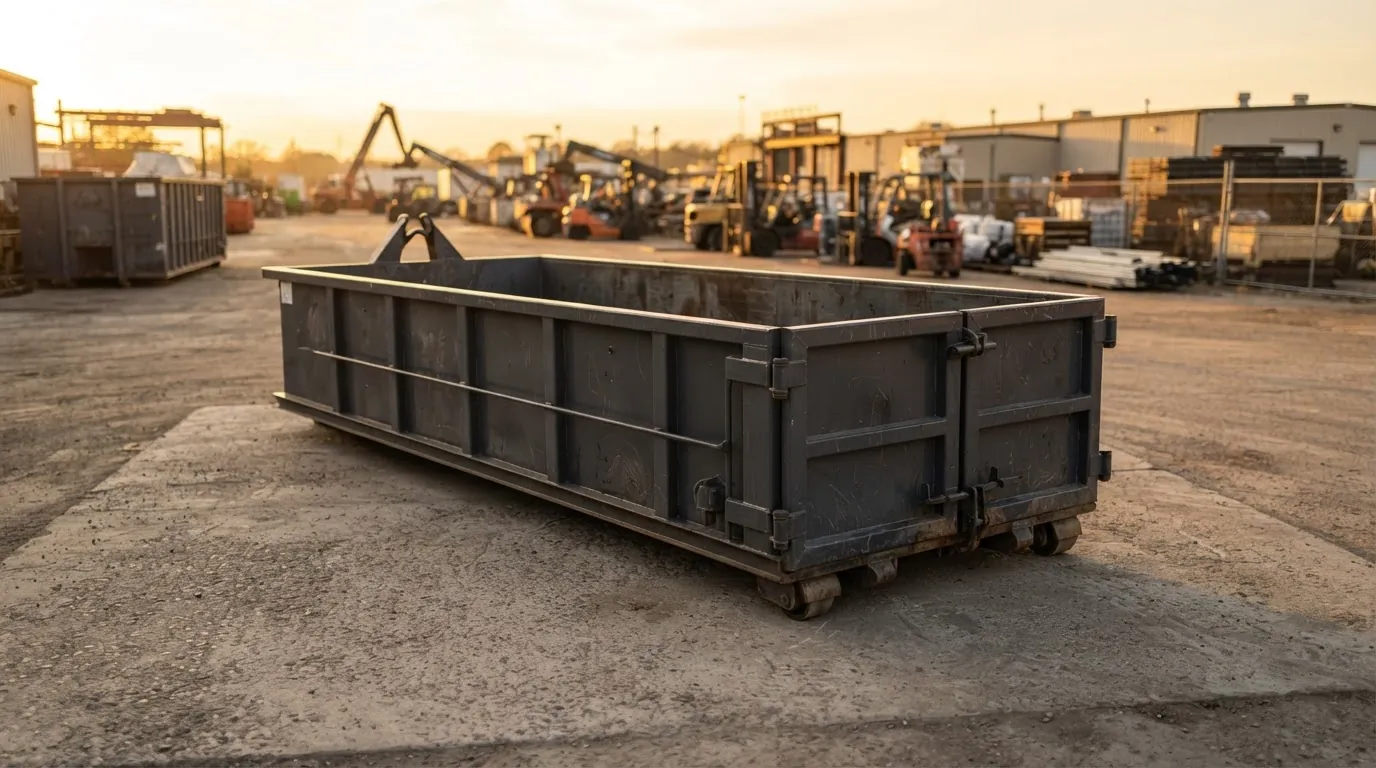
| 20-yard | about 22' × 8' × 4' | Dense waste, weight-limited loads, hand loading | Demolition and remodel debris, roofing tear-offs, heavy production scrap |
| 30-yard | about 22' × 8' × 6' | The default commercial stream: mixed volume and weight | General business refuse, packaging, moderate cardboard, mixed construction and demolition debris, commercial property waste |
| 40-yard | about 22' × 8' × 8' | High-volume, low-density material | Cardboard and corrugated, film and packaging, pallets and wood, fixtures and store-set debris |
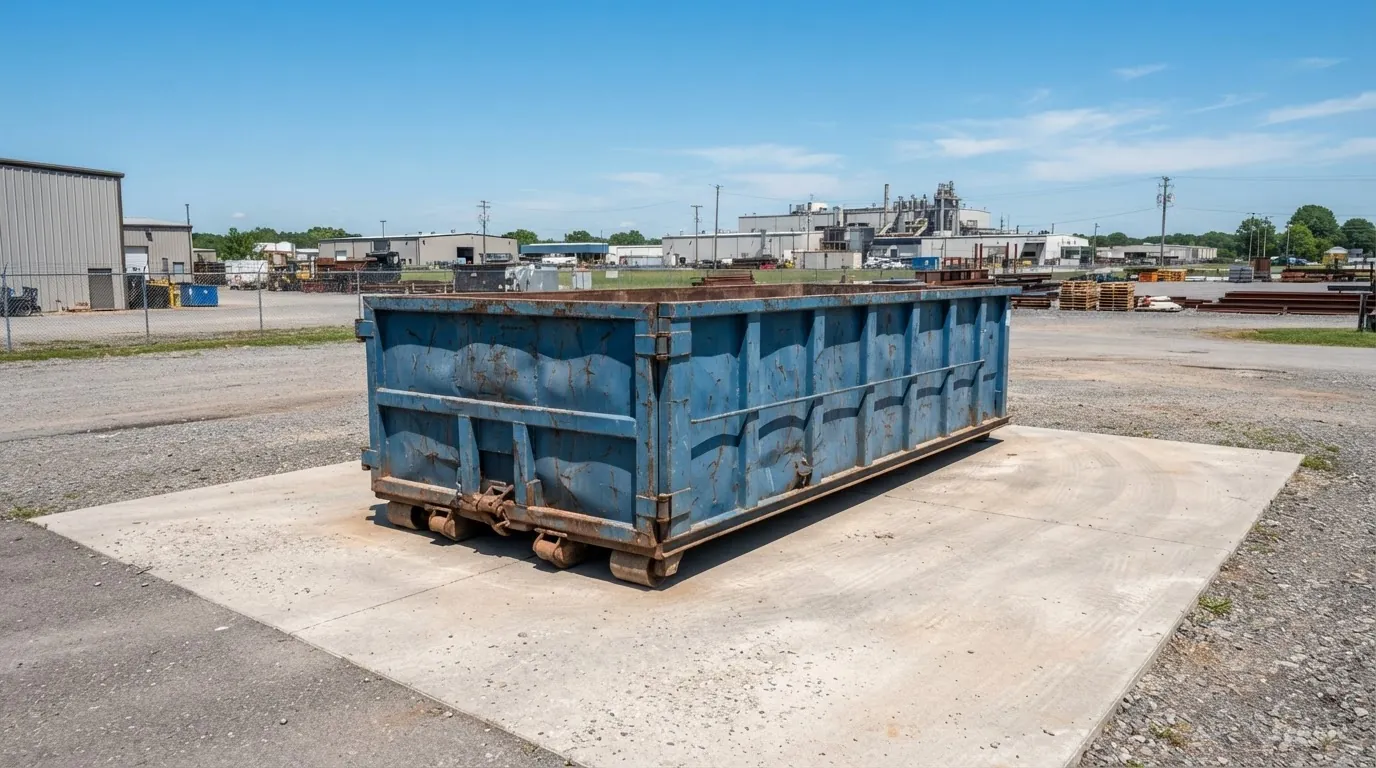
Dimensions are approximate and vary by container. Lower yardage does not guarantee a smaller ground footprint, so choose the capacity for your material and fill rate, then confirm the actual length, width, height and delivery clearance for your site.
Choosing Between Sizes: Density Before Volume
This is the real question, and the honest answer starts with density, not volume.
Step one: name the material
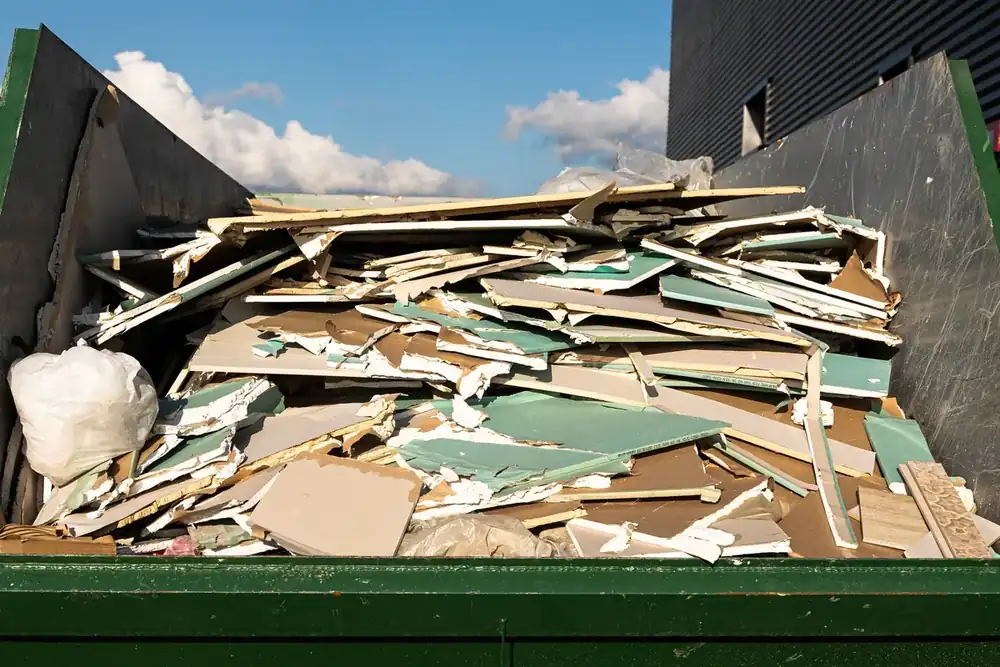
If your stream is dominated by cardboard, packaging, film or pallets, size up: the volume will run out long before the weight does. If it is dominated by demolition debris or heavy production scrap, size down: the weight will run out long before the volume does. Mixed streams that sit between those two extremes are where the 30-yard earns its reputation.
Step two: count the trips, not the yards
What matters is how many times a truck has to come. A larger container pulled less often usually beats a smaller one pulled more often, because every pull is a trip. But if that larger container leaves half empty, you have simply moved the air from your pad to the truck bed.
Step three: check the footprint honestly
Measure the pad, the approach lane and the overhead clearance before the truck arrives. All three sizes run about 22 feet long and 8 feet wide; they differ mainly in wall height. So the question is almost always vertical clearance and turning room, not pad length.
Step four: factor in compaction, because it moves the line
This is where standard size guidance stops being accurate. If the material in a container gets compacted on site between pulls, the same container carries more before it has to leave, sometimes enough that a 30-yard covers what used to need a 40. Compaction does not change the box. It changes how much fits in it, and therefore how often it has to leave.
If you are genuinely between two sizes, we would rather look at your material and your pad than guess. American Compaction Services will tell you if the smaller container is the better fit, and we will tell you if your waste stream is too dense or too infrequent for compaction to be worth it. That answer costs nothing, and it saves everyone a wasted delivery.
The Other Ceiling: Weight Limits and Payload
Every roll-off has two ceilings. The first is volume: the walls. The second is weight: what the loaded truck can legally carry on the road. Whichever ceiling you reach first ends the load, and it is often the weight one.
Road-legal payload, not container capacity, sets the practical limit. A hauler cannot legally move a container over the weight limits, however much room is left inside it, so the tonnage a container can leave with depends on the truck, its axle configuration and the road rules, not the number on the side of the box. Those rules are set state by state, so the limit is not the same in every market. Your market page has the local note: find your market.
Here is the part that matters for sizing. A loose container that looks full is mostly air. Compaction can reduce volume by up to 70%, depending on the material. Same steel box, same pad, same truck. The difference is entirely in how the material was arranged before it left.
Structurally, the containers handle far more than a typical load asks of them. Weight limits still apply.
Practical ways to stay under the ceiling without extra pulls:
- Keep dense material out of oversized containers.
- Break down cardboard, so the volume you pay to move is waste rather than air.
- Keep prohibited material out entirely.
- Put compaction to work on high-volume, low-density streams, where the gap between a loose load and the weight limit is widest.
How On-Site Compaction Changes the Size Math
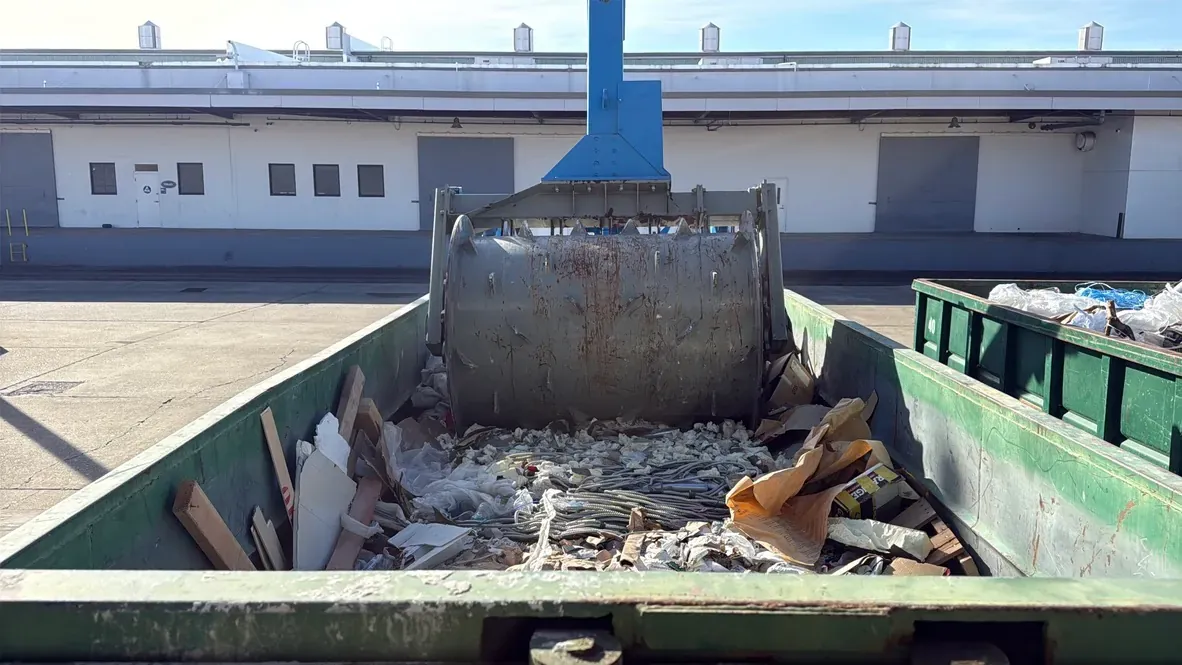
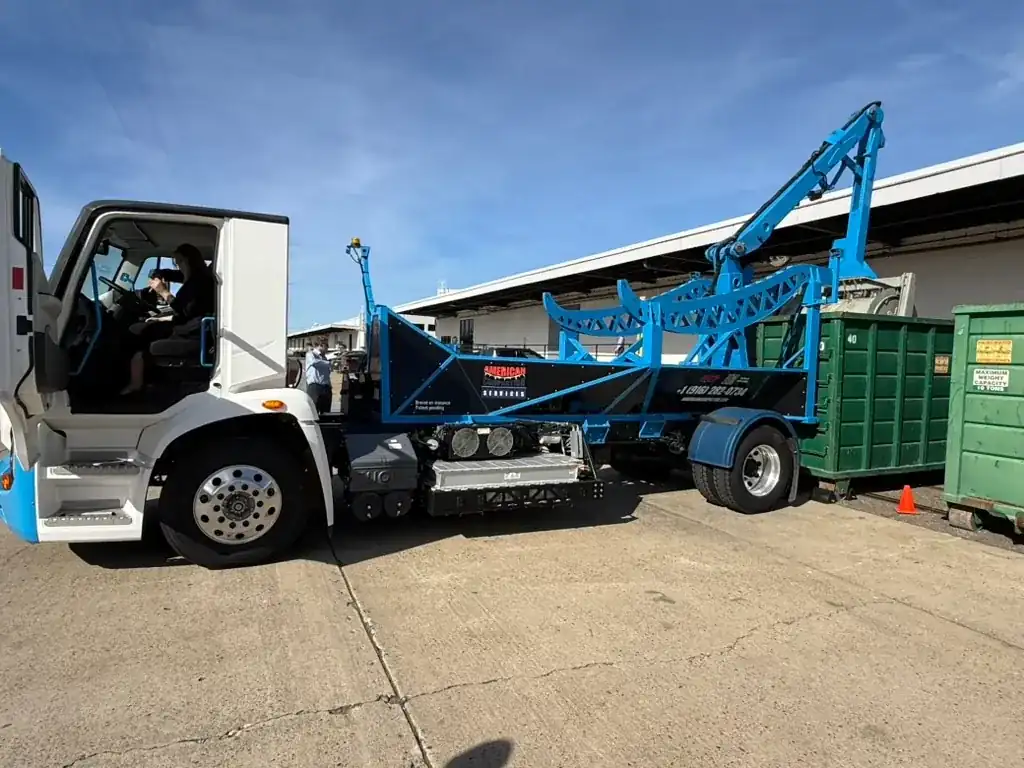
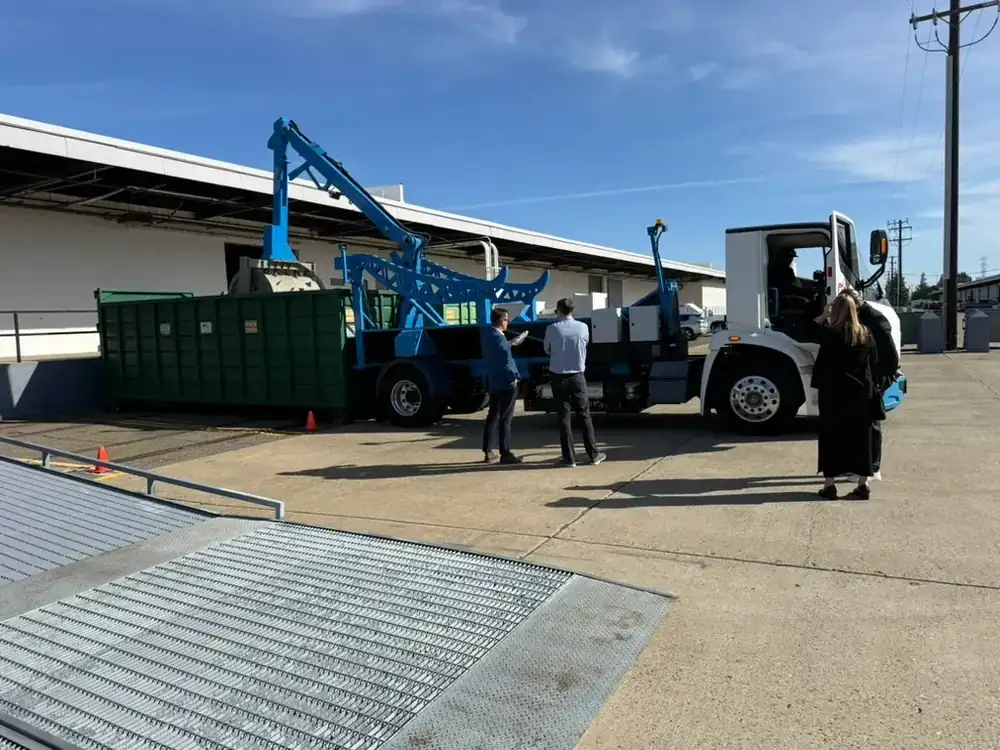
American Compaction Services runs on-site compaction on containers that are already in place, ours or the ones you already have. A compaction unit comes to your property, works the load down in the container where it sits, and leaves. The container stays put. We compact containers on site, including containers that belong to your own hauler.
The point is simple: instead of a haul-off, you get a compaction visit. Compaction helps reduce waste volume by up to 70% depending on the material. Compaction visits are set by your fill rate.
Compaction can reduce volume by up to 70%, depending entirely on the material. It is never a guarantee.
| Material | Compaction |
|---|---|
| Cardboard and packaging | Compacts well |
| Plastics | Compacts well |
| Pallets and wood | Compacts well |
| Furniture and bulky commercial waste | Compacts well |
| Light construction debris | Compacts well |
| Concrete, masonry and roofing shingles | Never compacted |
| Red iron, liquids and hazardous waste | Never compacted |
Here is what that does to a size decision. A container that used to leave with a load full of air can take compaction visits before its pull, so the size you already have covers more of your stream. Sometimes that means staying on a 30-yard instead of stepping up to a 40. Sometimes it means the same container gets pulled less often. Either way, the size choice and the compaction choice are made together.
The honest limits: compaction reduces haul-offs; it never eliminates them. A compaction visit is itself a visit. What changes is that a short on-site visit happens instead of a haul-off. Dense material and infrequent waste streams may not benefit much, and if it won't move your number, we'll tell you on the spot. How a visit runs, step by step, is on the on-site waste compaction page.
The savings calculator runs the trip arithmetic on your own numbers. These results are estimates from the numbers you enter. They are not a quote, a promise or a guarantee.
Material Rules: What Goes In, and What We Won't Compact
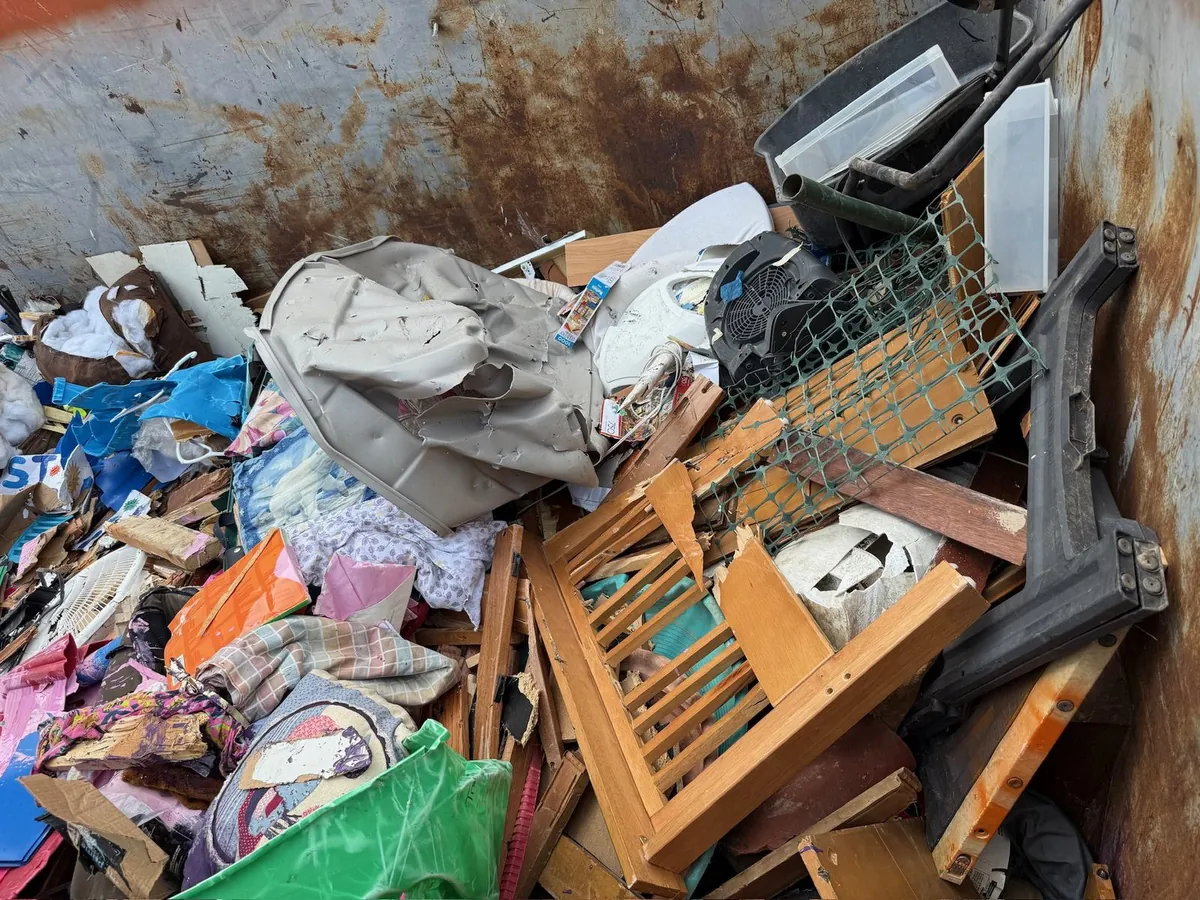
No size works if the material does not belong in the container. The full list of what can go in, and what to do about the items that turn up by accident, is on the accepted materials page.
Compaction has its own short, firm list, the same at every size. We will not compact liquids; dirt, soil, aggregate or other dense material with no air in it; hazardous or regulated waste; sealed drums or pressurized vessels; or anything the receiving hauler won't accept. On a pure dense load like broken concrete, we'll tell you to skip compaction and have it hauled.
These exclusions are not fine print. A prohibited load can leave a container sitting on your pad because it cannot legally or safely be moved, which is a much bigger problem than picking the wrong size. If you are unsure about a specific material, ask before it goes in.
How Sizing Works With American Compaction Services
Tell us what you throw away
Not the yardage: the material. Cardboard volume, production scrap, demolition debris, facility refuse. That is what determines the size.
We look at the pad and the access
Pad length, approach lane, turning room and overhead clearance. This is the step that keeps a truck from showing up to a spot it cannot service.
You get a recommendation, including the smaller one
If a 20-yard does the job, we say 20-yard. If your stream is too dense or too infrequent for compaction to help, we say that too.
Placement
The container is placed where your operation actually needs it: near the dock, out of the fire lane, clear of the drive aisle. Placement gets confirmed before the truck leaves.
Fill, then compact
Your crew loads the container normally. Between pulls, we compact the load on site, in place, on a schedule built around your working hours rather than against them.
Pull or swap
Your hauler pulls the container, or swaps it for an empty one, when it is genuinely full, not when the calendar says so. Then the cycle starts again.
Container safety is built into the compaction step, not bolted on. A heavy steel drum, narrower than the container, works the load down and never touches the walls. The drum works on its own weight, with no hydraulic down-force. Safeguard wheels and end guards keep the unit off the container's structure. Our operators run a zero-touch policy. Every visit includes a before-and-after inspection with photo documentation.
Why Businesses Size Their Containers With American Compaction Services
We work with businesses: contractors, builders, roofers, property managers and facility operators. We don't serve homeowners hiring directly. That focus is the reason the sizing advice holds up. Construction sites, demolition crews, plants, warehouses, stores and restaurants, roofing companies and managed properties all produce waste streams that behave differently, and matching the container to that behavior is the whole job. Each has its own page: construction, demolition, industrial and manufacturing, warehouse and distribution, retail and restaurants, contractor accounts, roofing and property management.
American Compaction Services is built around compaction, and that is the part that gets more useful the longer it runs. We reduce how often the box has to move. The size you pick on day one is not a decision you are stuck paying for every week after. No contract to sign: no exclusivity, no minimum, no term.
Free on-site demo: we compact one of your own containers while you watch. The demo carries no obligation and is photographed before and after. If it isn't a fit, we tell you on the spot.
Available in These Markets
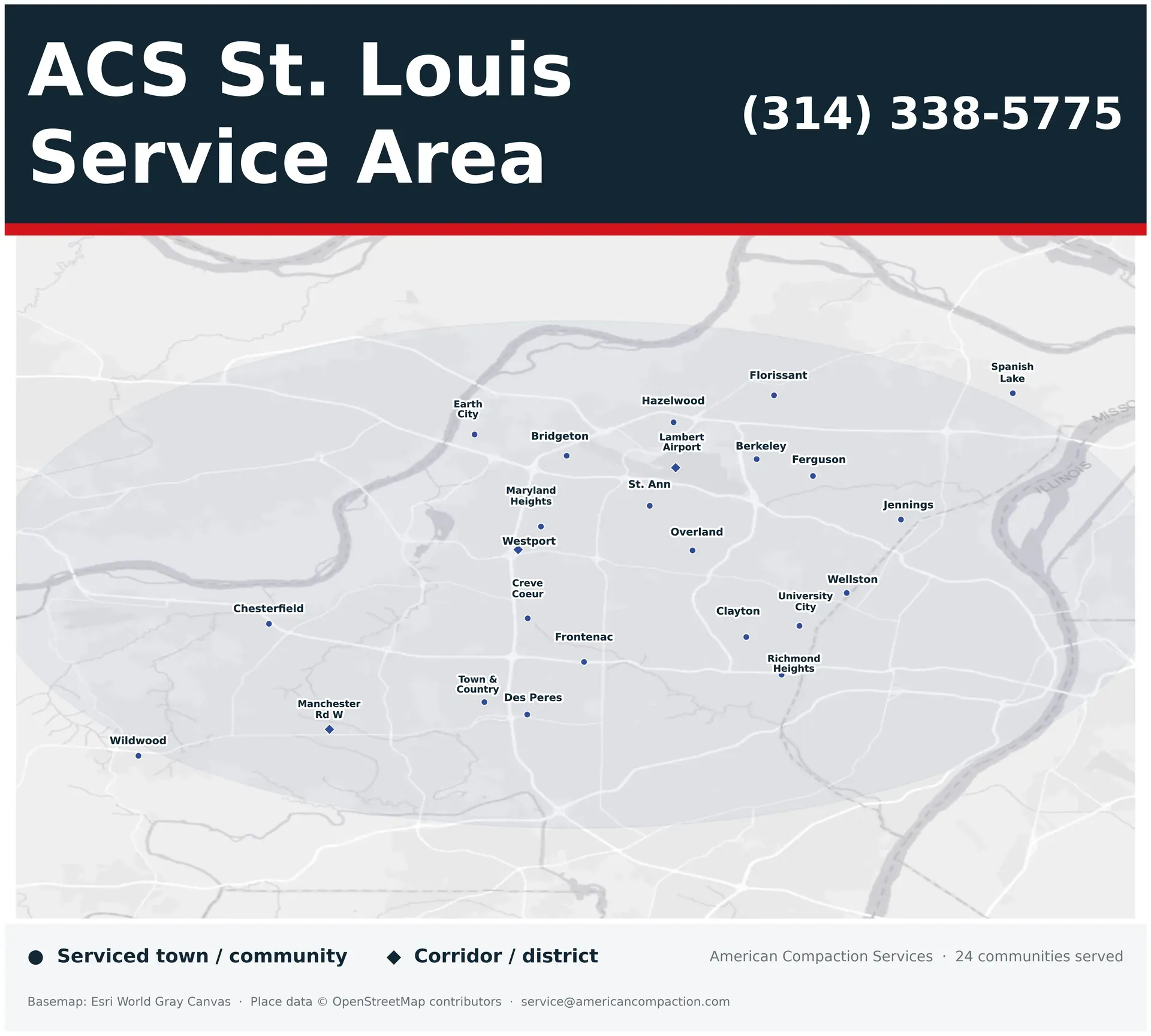
American Compaction Services supplies 20, 30 and 40 yard containers, with on-site compaction, in the markets listed below. Each market has its own page.
If your operation runs several sites, sizing does not have to be uniform. A distribution site running high cardboard volume and a fabrication shop running dense scrap should not be on the same container, even when one business runs both. We size each site from its own material and its own pad.
Dumpster Sizes: Frequently Asked Questions
Related Services and Guides
Roll-off dumpster rental
how placement, filling and pulls work once you have chosen a size.
On-site waste compaction
the service that changes how much a given size holds, and how often it has to move.
Dumpster rental pricing
what drives the bill, and why we don't publish prices.
Accepted materials
what can go in the container at every size.
Get the Right Size on Your Pad
Pick the size from the material, not the guess. Tell us what your operation throws away, what your pad looks like and how often the container fills, and you will get a straight recommendation, including the smaller container when that is the honest answer. If your stream is bulky enough that compaction moves your numbers, the free demo shows it on your own container.
With roll-off, every haul is a call. With American Compaction Services, nobody has to call.
We set you up on a schedule and we compact on site. Dumpsters and compaction. All handled.
You already pay for dumpster space. Compaction lets you use more of it.
Getting started takes four details
- A photo of your dumpster and the space around it
- Your location
- What goes in the box
- The container size, if you know it
They help us plan for site access and match compaction service to your site.
We will prove it. Call or text (877) 651-7660.