
Clayton, MO · Downtown Clayton & I-170
Commercial Dumpster Rental in Clayton, MO
We automate your roll-off. You'll never run out of room. Fair price. Great service.
American Compaction Services · 20, 30 and 40 yard roll-off containers, compacted on site, for tower fit-outs, occupied-building renovations, new high-rise construction and public-building work in downtown Clayton, off I-170, Forest Park Parkway and Hanley Road.
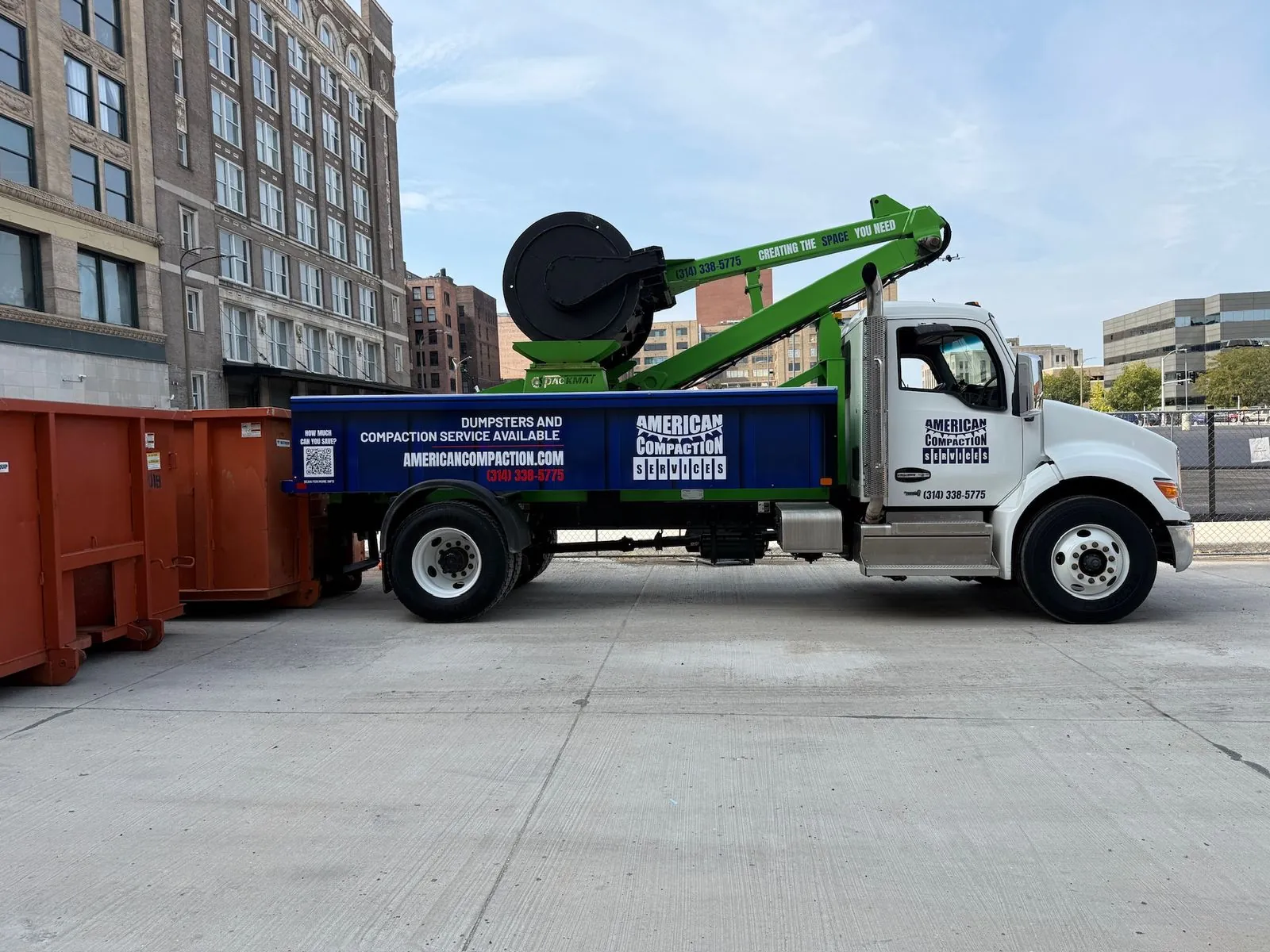
American Compaction Services provides waste management through commercial dumpster rental and on-site compaction in Clayton, the county seat of St. Louis County and the office core in the middle of the county, where high-rise towers line Forest Park Parkway, Bonhomme Avenue and Central Avenue between I-170 and the City of St. Louis line. We supply open-top roll-off containers to the contractors, tenant-improvement crews, property managers and facility teams working in those towers, and we compact them on site so a container in a tight loading bay holds more before it is pulled.
Clayton's waste is a building-trades stream in a downtown with no spare ground. A tenant leaves a floor and the next one refits it. A tower modernizes its lobby while the tenants above keep working. A developer puts up a new tower on a half-block site with room for one container. The constraint is never the size the job wants; it is the size the bay will take.
- Downtown Clayton & I-170
- Commercial accounts only
- Self-contained mobile compaction unit
Clayton at Work
What Clayton Businesses Put in a Container
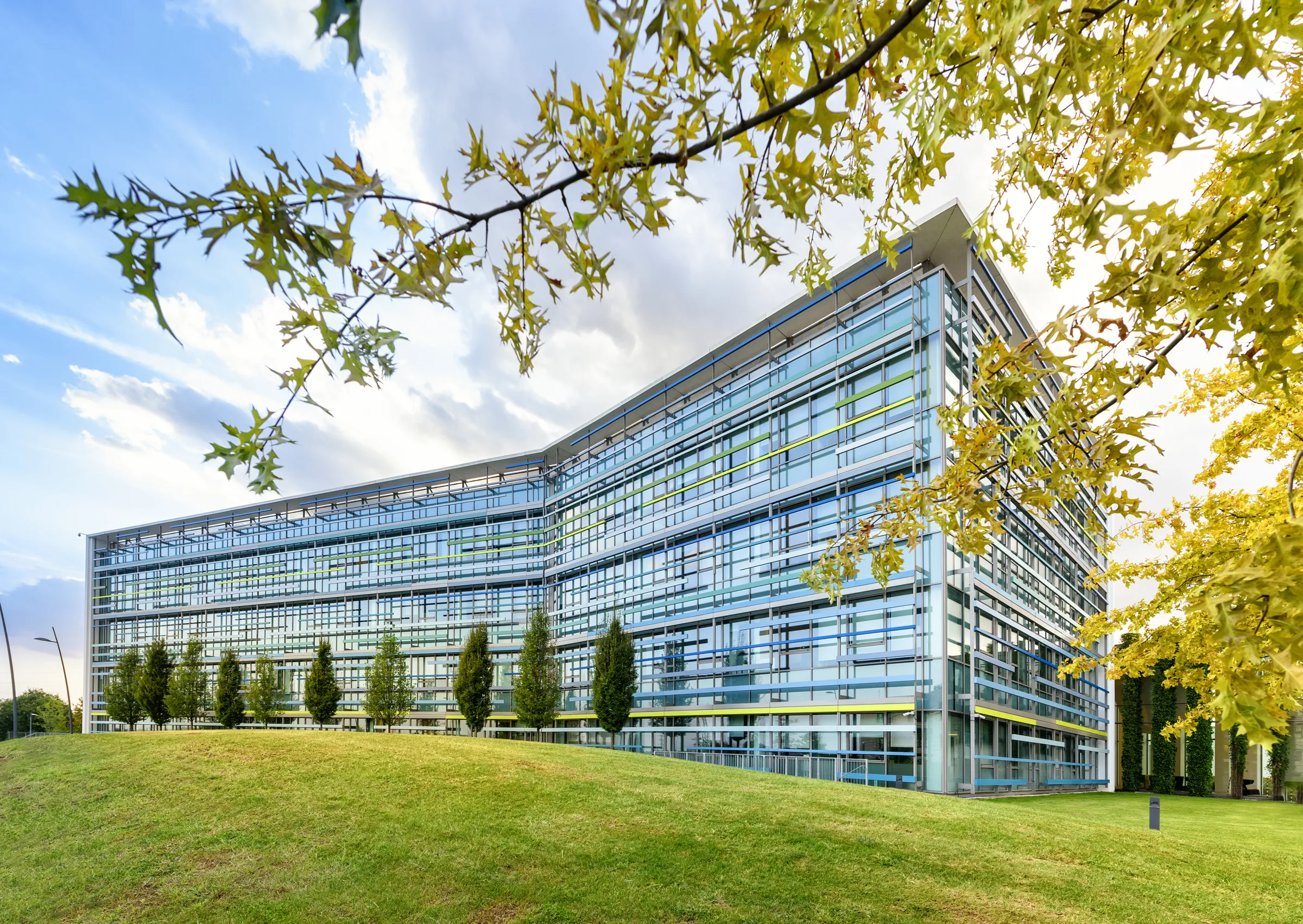
Clayton is compact. I-170 runs along the city's west side with its interchange at Forest Park Parkway, Hanley Road drops south to I-64, and the downtown grid of Forest Park Parkway, Maryland Avenue, Bonhomme Avenue, Central Avenue and Carondelet Plaza holds the office towers, the hotels, the Clayton MetroLink station and Shaw Park within a few blocks of each other. Almost every commercial site here is a building, not a lot.
Tower Floors: Fit-Outs, Renovations and New Construction
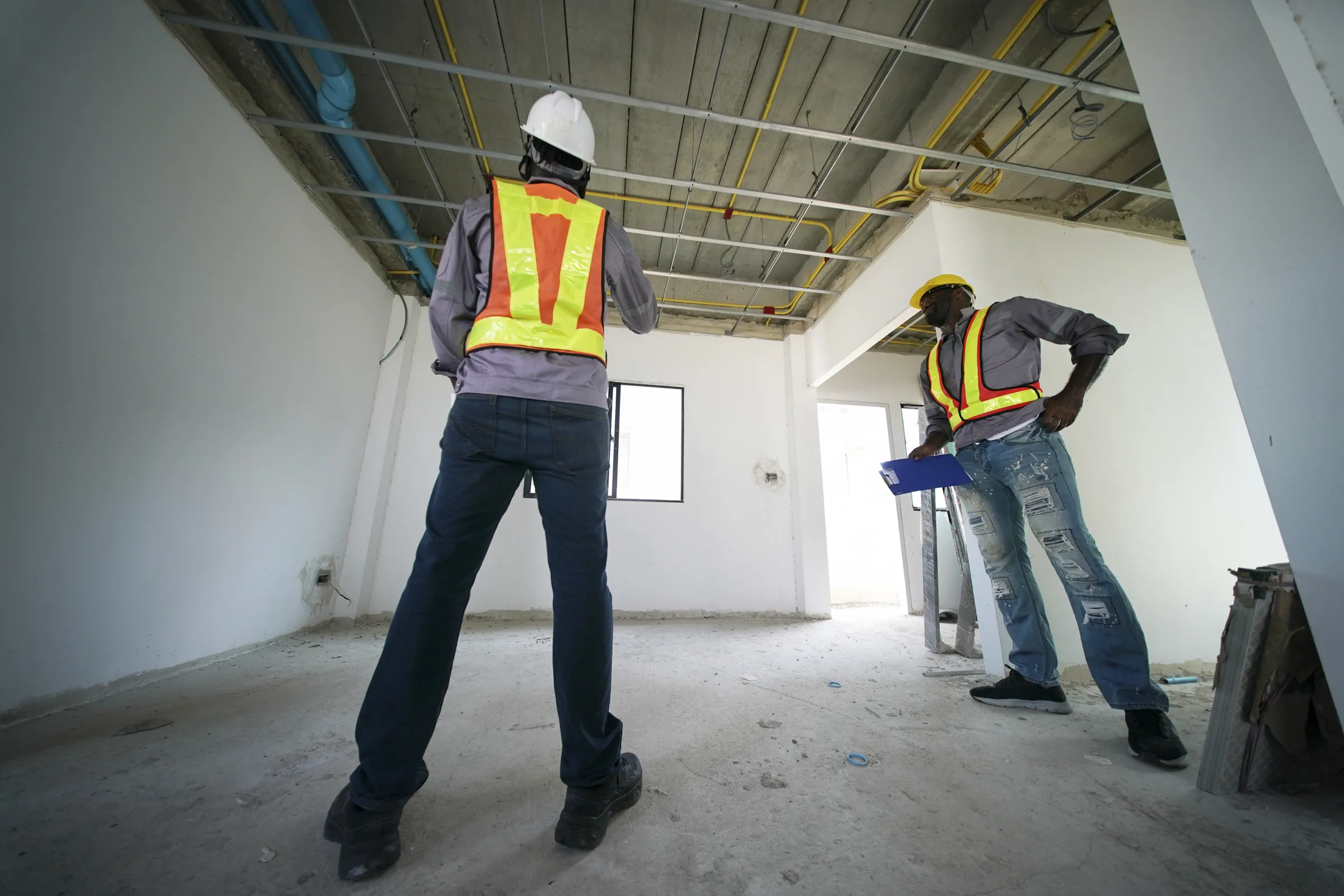
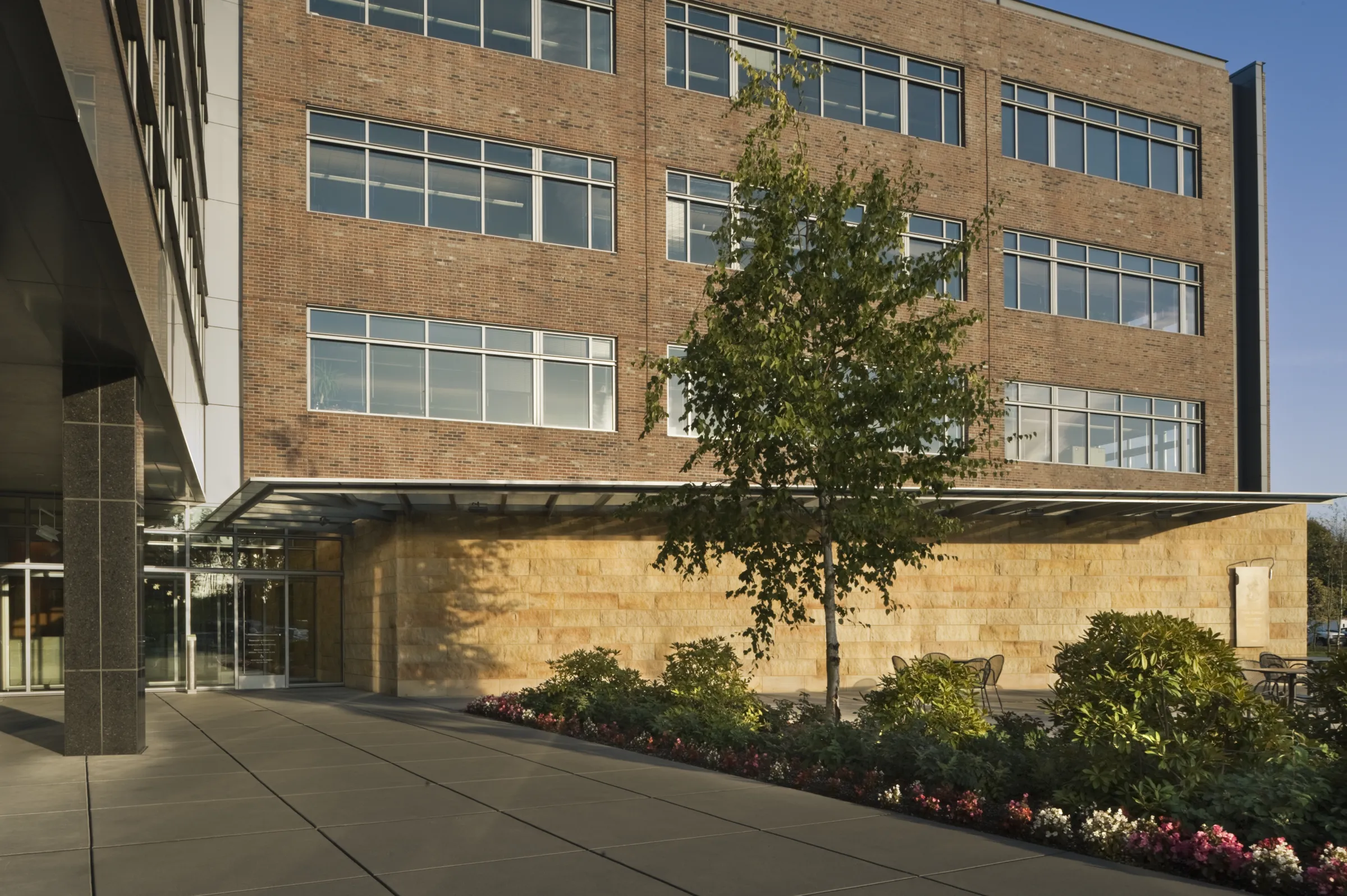
Downtown Clayton is headquarters country: Centene's plaza, Emerson's headquarters, moved to Clayton in 2025, and Graybar's head office all sit here, alongside a Washington University campus and new high-rise office and apartment towers going up or recently finished. A fit-out throws away crates, cardboard, foam and packaging from furniture and systems. A renovation in an occupied tower throws away ceiling grid, carpet tile, drywall, light fixtures and the previous tenant's casework. A new tower throws away framing scrap and drywall offcuts and, at the end, a close-out cleanout of packaging from every finish trade at once.
The County Seat: Government Center, Courthouse and Public Buildings
The St. Louis County Government Center and the county courthouse sit in downtown Clayton, and public buildings are renovated in phases like any occupied tower, with the added rule that the public keeps coming through the front door. Containers for that work sit on the service side and are pulled outside court and office hours.
The Account
Commercial Dumpster Rental in Clayton: How the Account Works
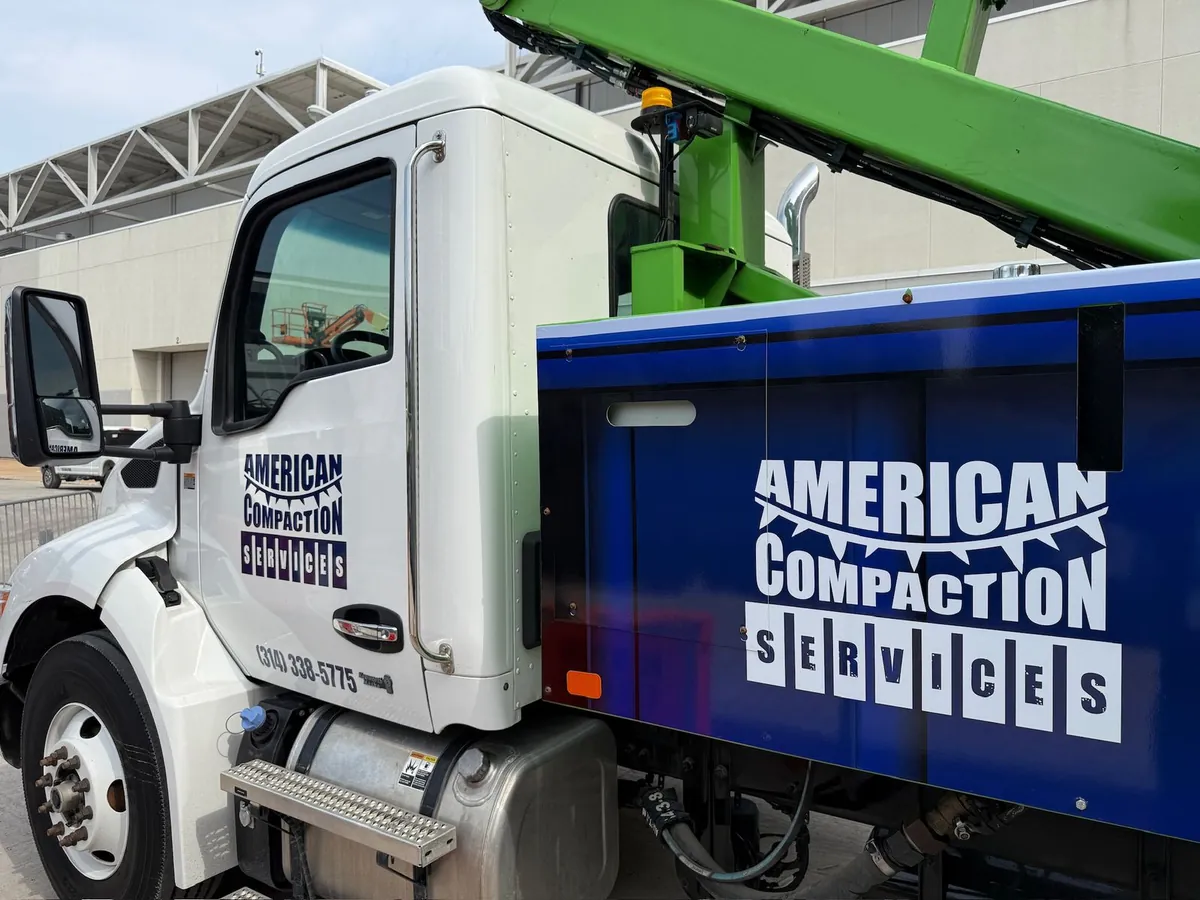
In Clayton, American Compaction Services places 20, 30 and 40 yard open-top roll-off containers and compacts them in the bay they sit in. ACS provides waste management through dumpster rental and on-site compaction.
There are two doors in. Already have a dumpster? Keep it and keep your hauler; we compact what's in it. Need dumpster service? We supply the container and compact it on site. No contract to sign: no exclusivity, no minimum, no term. On a Clayton fit-out that usually means a 20 or 30 yard in the loading bay, with compaction visits between swaps.
We work with businesses: contractors, builders, roofers, property managers and facility operators. We don't serve homeowners hiring directly.
Free on-site demo: we compact one of your own containers while you watch. The demo carries no obligation and is photographed before and after. If it isn't a fit, we tell you on the spot.
Job Types
Container Service by Job Type in Clayton
Tenant Fit-Outs in Downtown Towers
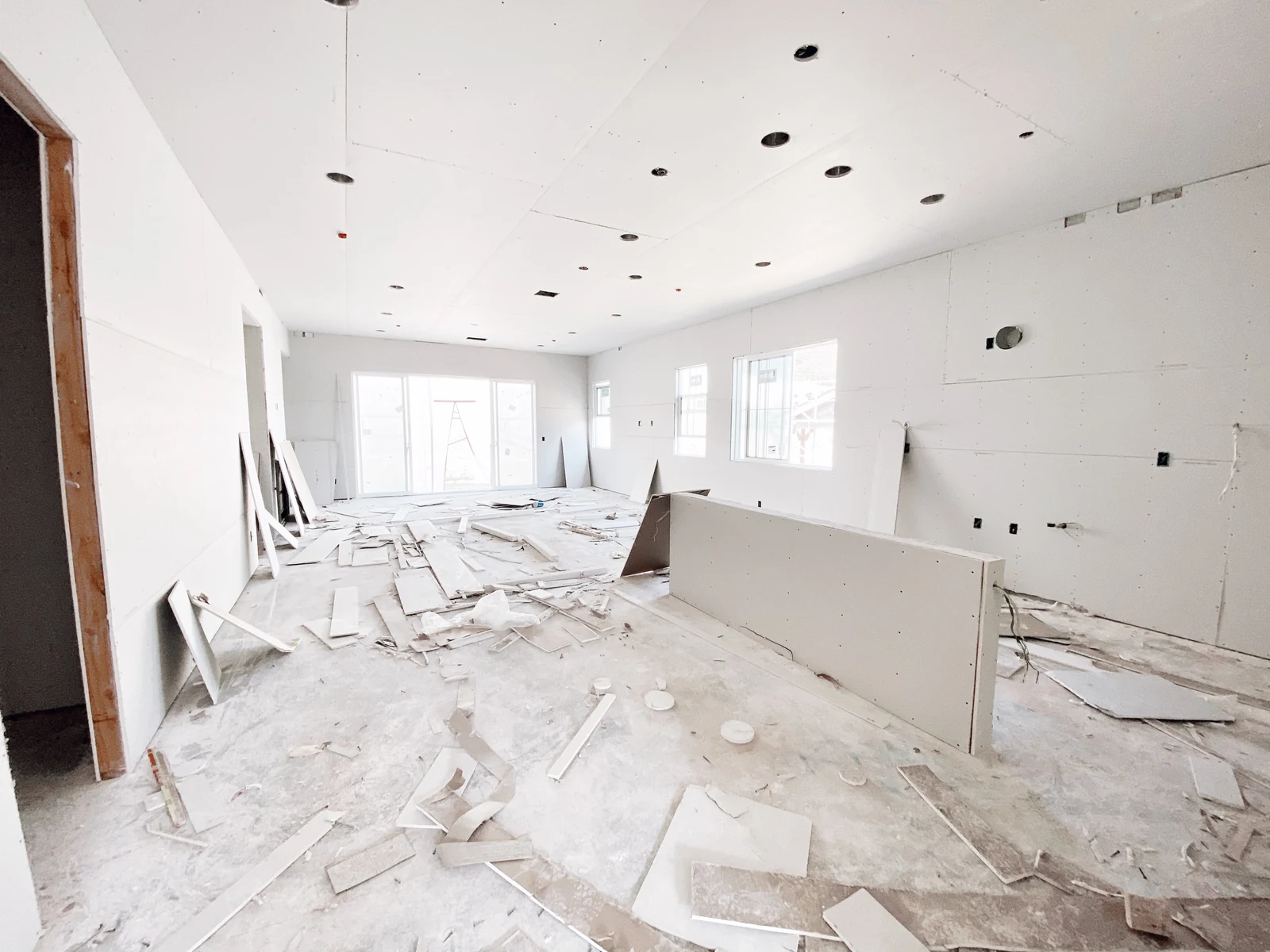
The signature Clayton job. A tenant-improvement crew takes a floor from strip-out to move-in on a fixed date, with a 20 or 30 yard in the loading bay and a swap between the two stages; the strip-out load compaction reduces less, the fit-out load, crates and cardboard, it reduces most. For work-hour and street rules on jobsites across the metro, see the St. Louis construction page.
Renovations in Occupied Towers
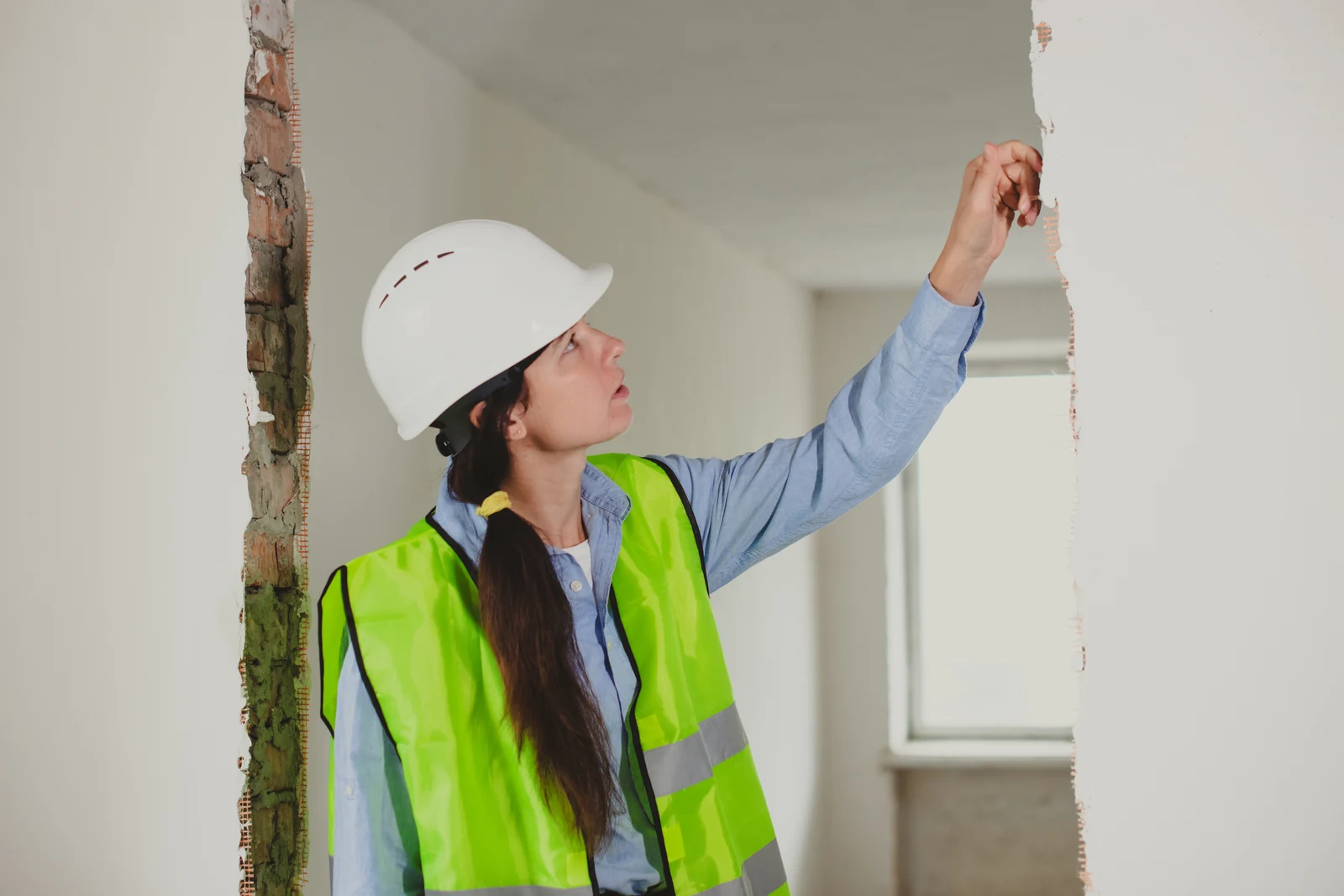
Lobby modernisations, mechanical-floor replacements and elevator upgrades run while the building stays full. The container has one possible spot, the bay, shared with every tenant's deliveries, so pulls and compaction visits are timed to the building's quiet hours. How those visits are routed across St. Louis is on the St. Louis compaction page.
New Towers on Half-Block Sites
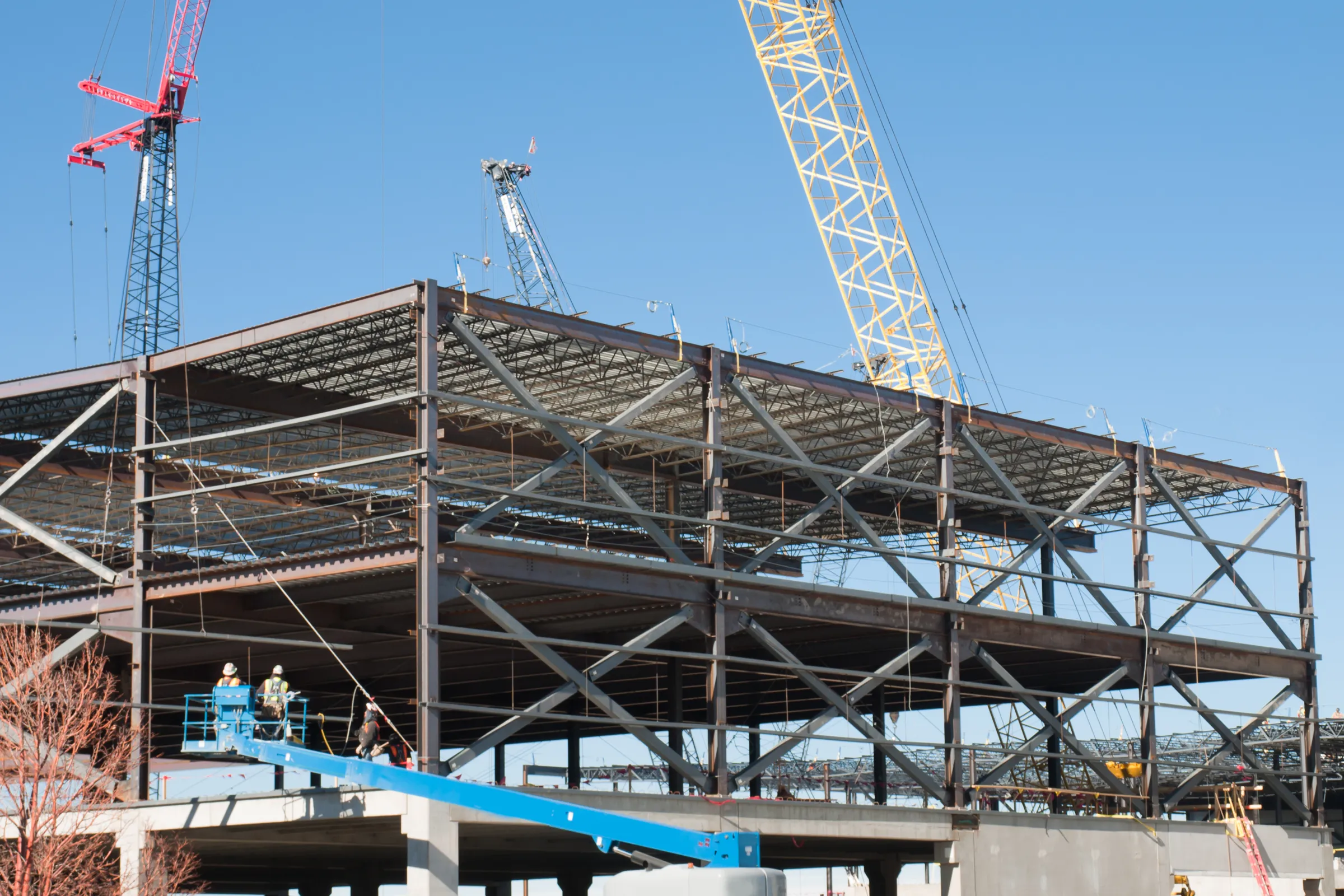
A high-rise going up on a downtown Clayton parcel has room for one container, and the crane, the pump and the hoist all want the same ground. American Compaction Services sets the container where it can be pulled through every phase; compaction earns its place in the packaging-heavy finish months, not the structural ones.
On-Site Compaction
On-Site Compaction in Clayton: When the Bay Sets the Size
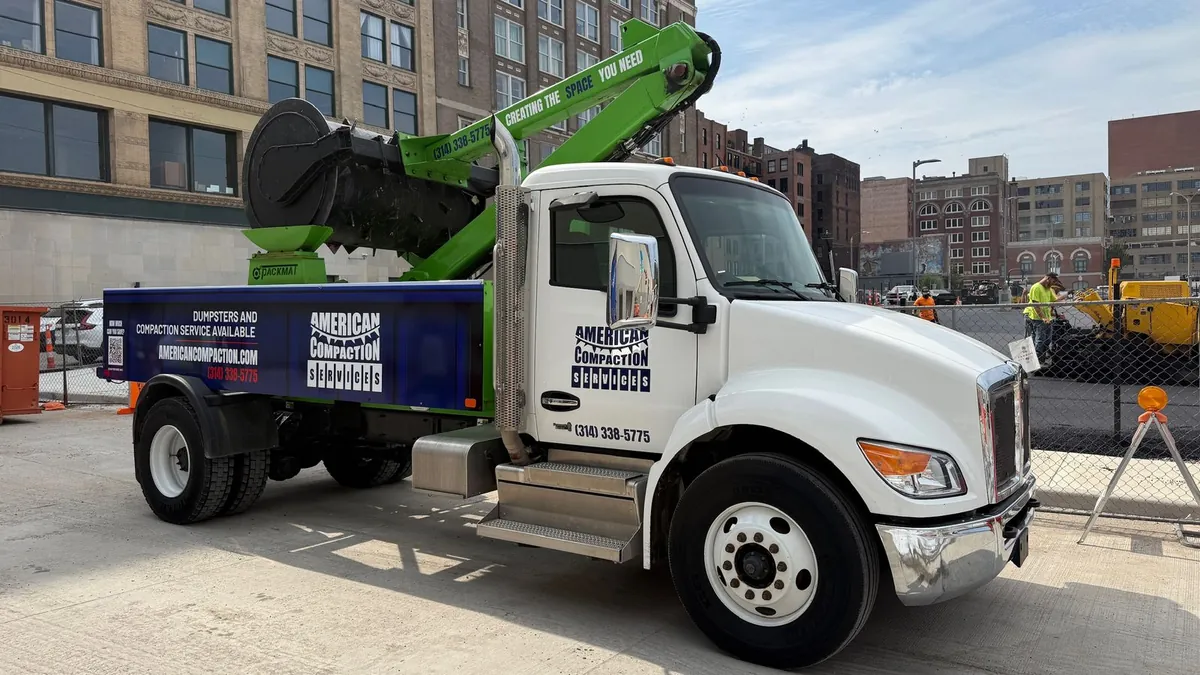
In Clayton the container cannot grow, because the loading bay decides its size. What compaction changes is how much a 20 or 30 yard holds before it has to leave. A visit takes out air and nothing else, so the load decides what comes back. Compaction can reduce volume by up to 70%, depending entirely on the material. It is never a guarantee.
| Material | Compaction |
|---|---|
| Cardboard and packaging | Compacts well |
| Plastics | Compacts well |
| Pallets and wood | Compacts well |
| Furniture and bulky commercial waste | Compacts well |
| Light construction debris | Compacts well |
| Concrete, masonry and roofing shingles | Never compacted |
| Red iron, liquids and hazardous waste | Never compacted |
Fit-out packaging from a Clayton tower, the crates, cardboard and foam that furniture and systems arrive in, is on the compacts-well list. Strip-out debris, ceiling grid, carpet and drywall, counts as light construction debris, and old casework sits with pallets and wood. How many compaction visits fall between pulls is set by your fill rate.
A loose container that looks full is mostly air. Compaction can reduce volume by up to 70%, depending on the material.
Compaction reduces haul-offs; it never eliminates them. A compaction visit is itself a visit. What changes is that a short on-site visit happens instead of a haul-off. If it won't move your number, we'll tell you on the spot.
Cost Context
What Drives the Bill in Clayton
The general drivers of a commercial dumpster bill are in the pricing guide; in Clayton, four things do most of the moving.
The Run From Downtown to Disposal
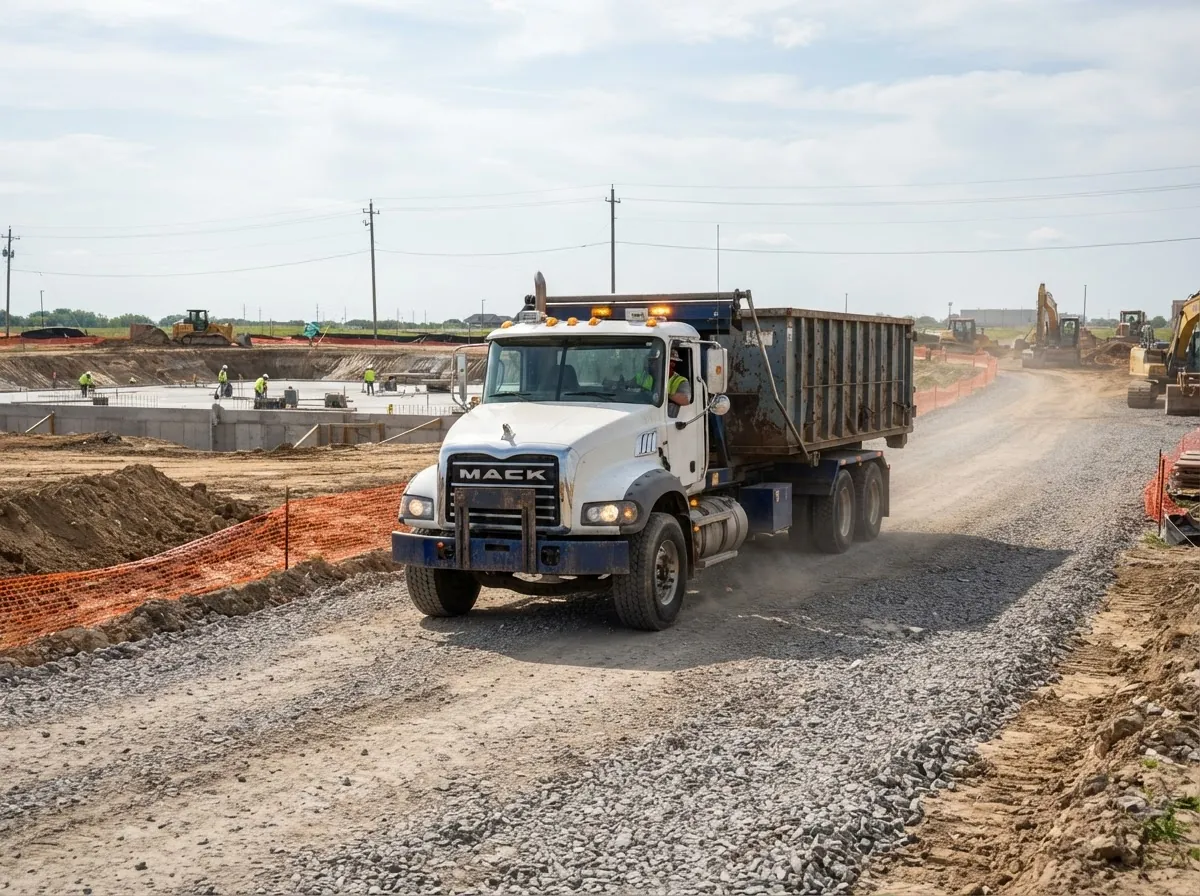
Every load from a Clayton bay leaves the city, because downtown has no disposal site of its own, and the pull is the whole trip to the disposal facility and back. For the facilities themselves, see the St. Louis overview.
Bay, Alley or Street
A container on the street or right-of-way needs approval from the local jurisdiction, and the rules vary by city. In Clayton the road's owner is the approver: the City of Clayton on its streets, St. Louis County on any county-maintained road inside the city, MoDOT if the road is a state route. Downtown, a street placement can also mean a lost parking lane and a traffic-control plan, which is why the bay or the alley is nearly always the answer.
Garages, Skywalks and Foot Traffic
Getting the truck to the container is the whole question downtown. Three things shape a Clayton placement: parking-garage entries and low canopies that take the overhead away, alleys a roll-off truck cannot turn into, and sidewalks full of office workers, MetroLink riders and courthouse visitors.
The Size the Bay Will Take
Downtown Clayton runs on 20s and 30s, because that is what a tower loading bay fits; the 40 yard belongs on a new-tower site with its own laydown area. A planning figure comes from the savings calculator, using your pull count and container.
These results are estimates from the numbers you enter. They are not a quote, a promise or a guarantee.
Sizes
Picking a Size for a Clayton Site
Bay first, stream second: that is how a Clayton container gets chosen. The dumpster sizes page compares the three.
A 20 Yard in a Tower Loading Bay
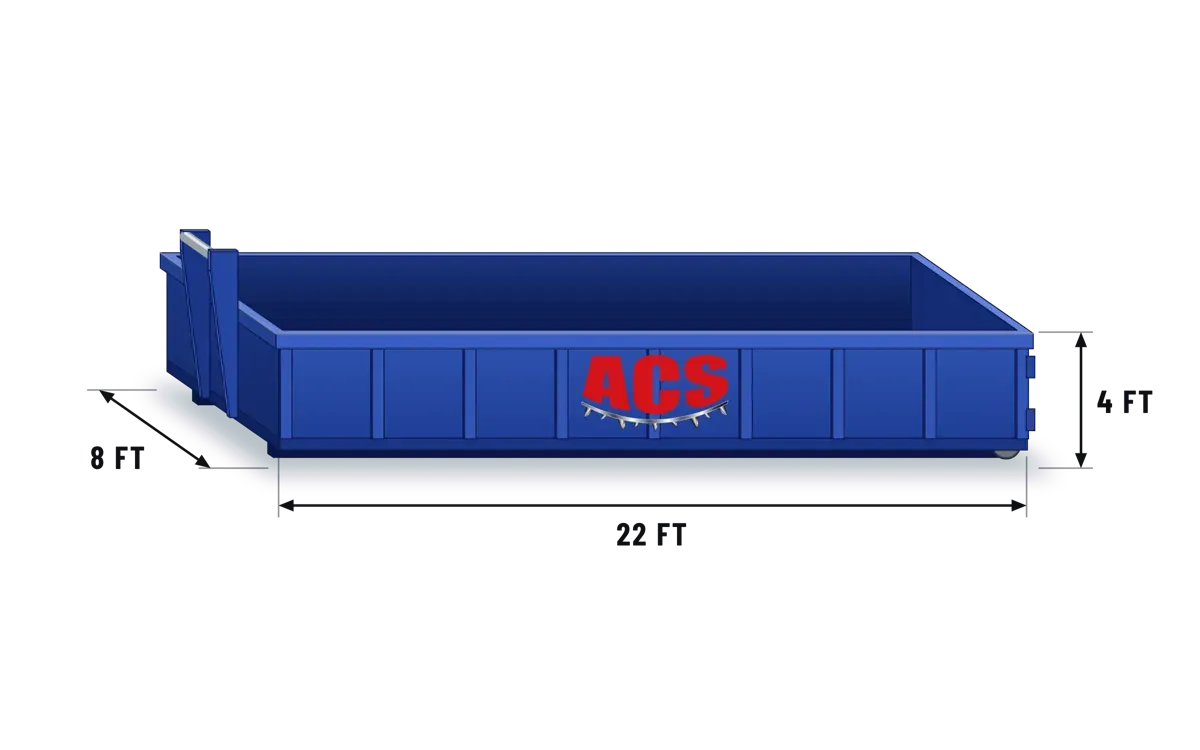
The downtown default: a shared bay, a low ceiling, deliveries all day. Compaction is how a 20 carries a whole-floor strip-out without a swap every other day.
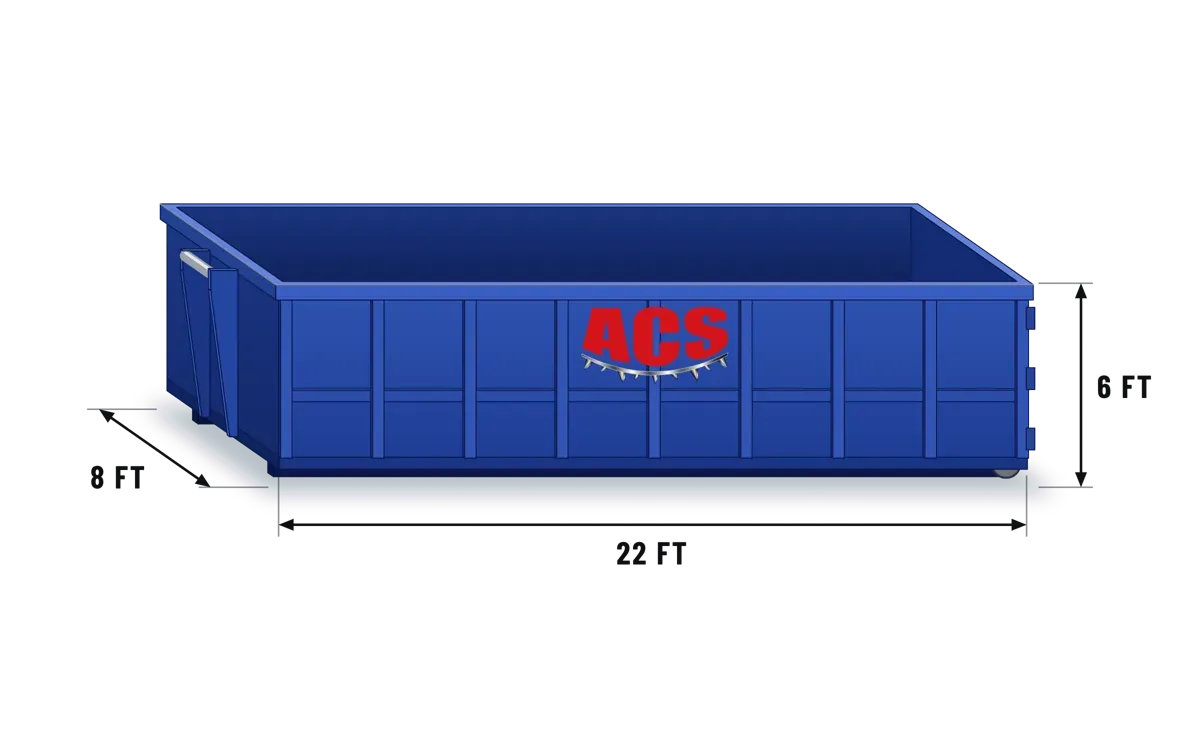
A 30 Yard for a Whole-Floor Fit-Out
Where the bay or the alley has the length, the 30 covers a full floor's fit-out packaging and casework between swaps.
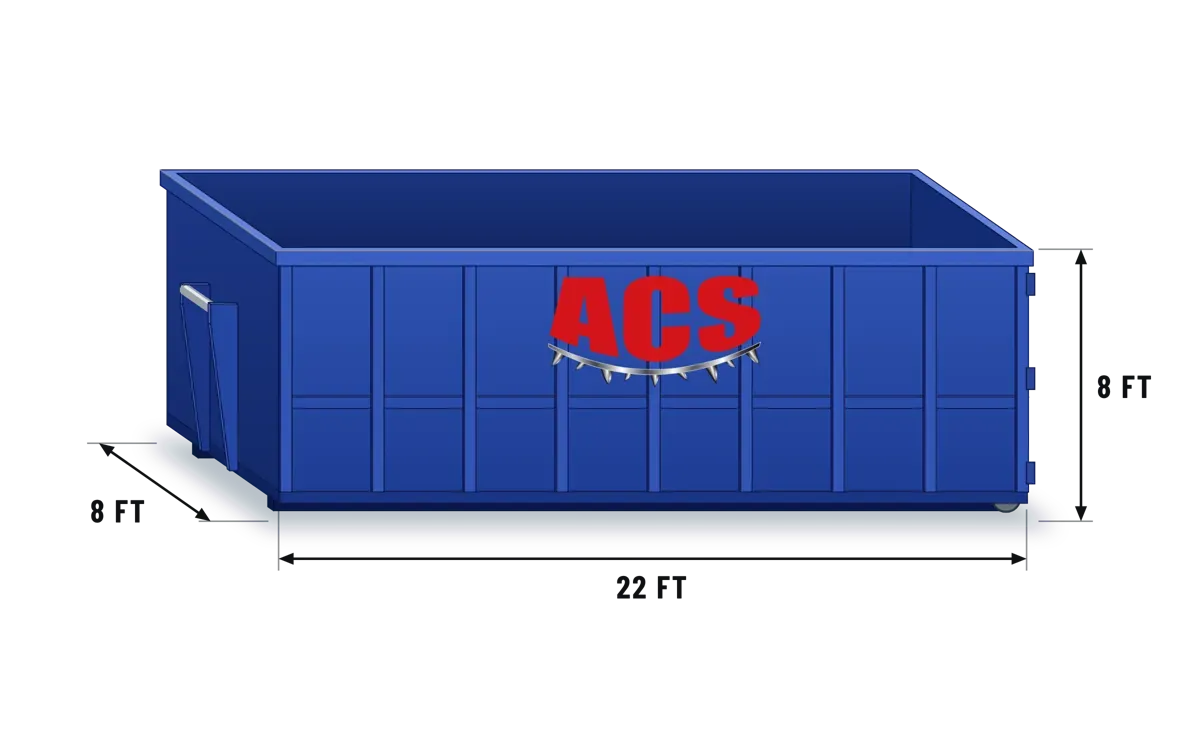
A 40 Yard on a New Tower Site
For the finish months of a new high-rise, when every trade's packaging arrives at once.
Drive Time
Getting to Clayton
We serve Clayton, down I-170, as part of Serving St. Louis City and County. The unit comes to the container, so compaction visits are booked on a route day; pulls and swaps keep their own calendar. Clayton sites are a few blocks from Forest Park Parkway, Hanley Road or Clayton Road.
Downtown, the window matters more than the drive. A tower's bay is busiest through the working day, so American Compaction Services books compaction visits into the early morning or after the offices empty. We do not publish a guaranteed turnaround window. The St. Louis team that quotes your job is the team that schedules it.
On Site
Serving Clayton Sites: Bays, Alleys and Sidewalks

Building Management Sign-Off in a Multi-Tenant Tower
A contractor working a downtown tower does not control the bay. The property manager or the building engineer sets the spot, the hours and the route through the building, and those are agreed before delivery.
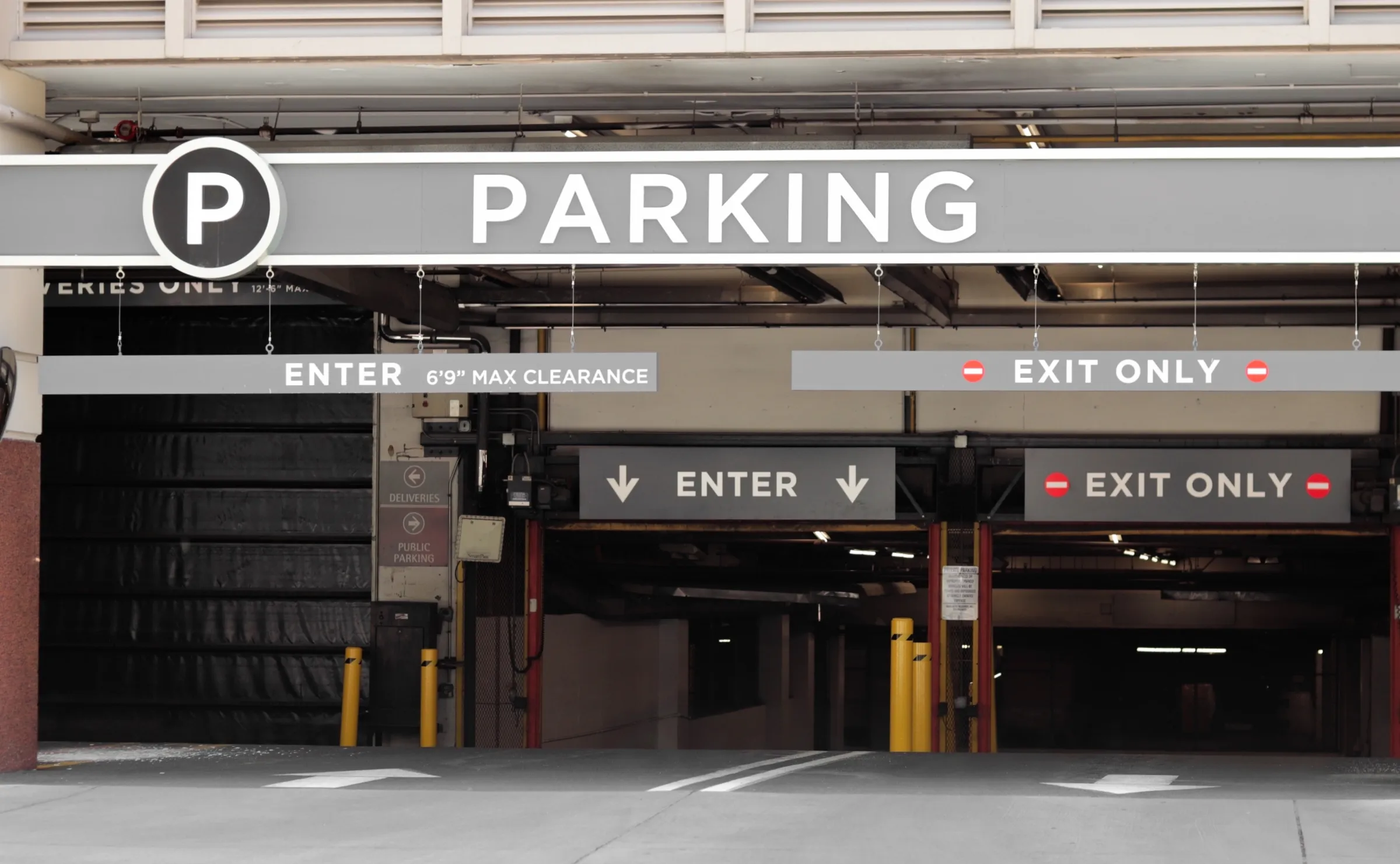
Four Feet of Clearance
Most container problems downtown come down to four feet of clearance somewhere. A bay ceiling, a garage entry, a canopy over the service door or an enclosure gate can each turn a 30 into a 20 or a lift into a return trip, so we look at the overhead and the approach before the container is chosen.
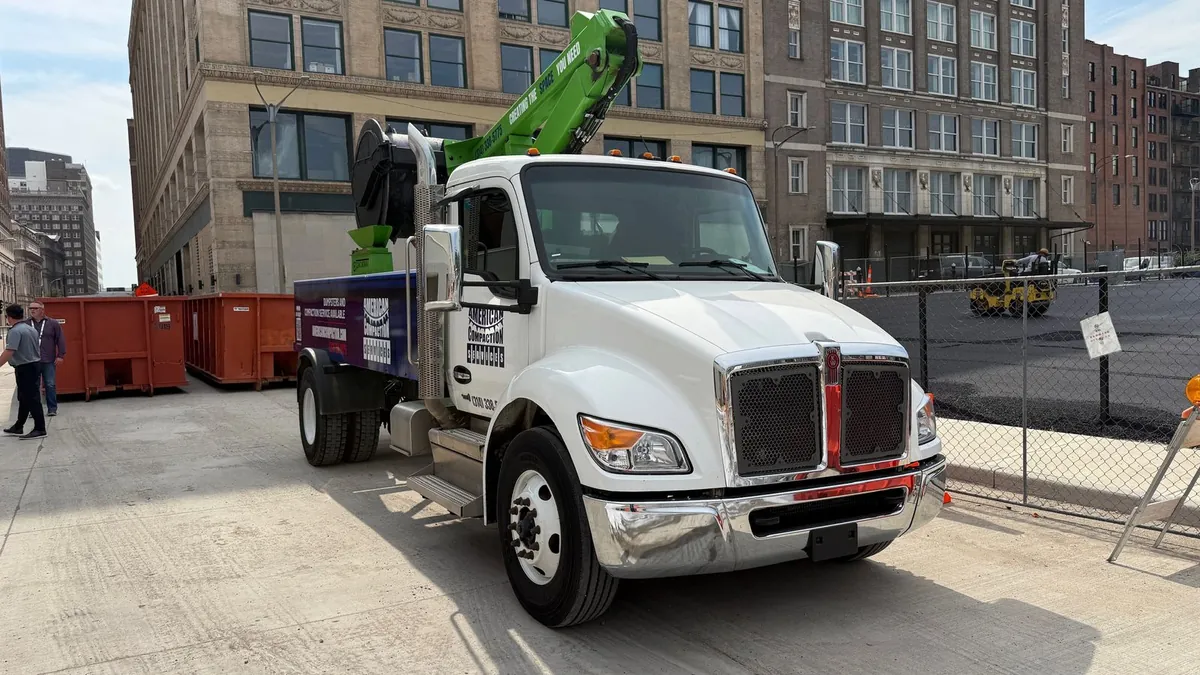
Sidewalks, MetroLink Riders and Courthouse Foot Traffic
A roll-off truck working a downtown Clayton bay crosses a sidewalk that office workers, MetroLink riders and courthouse visitors use all day. American Compaction Services sets pulls and compaction visits for the hours when that sidewalk is quietest.
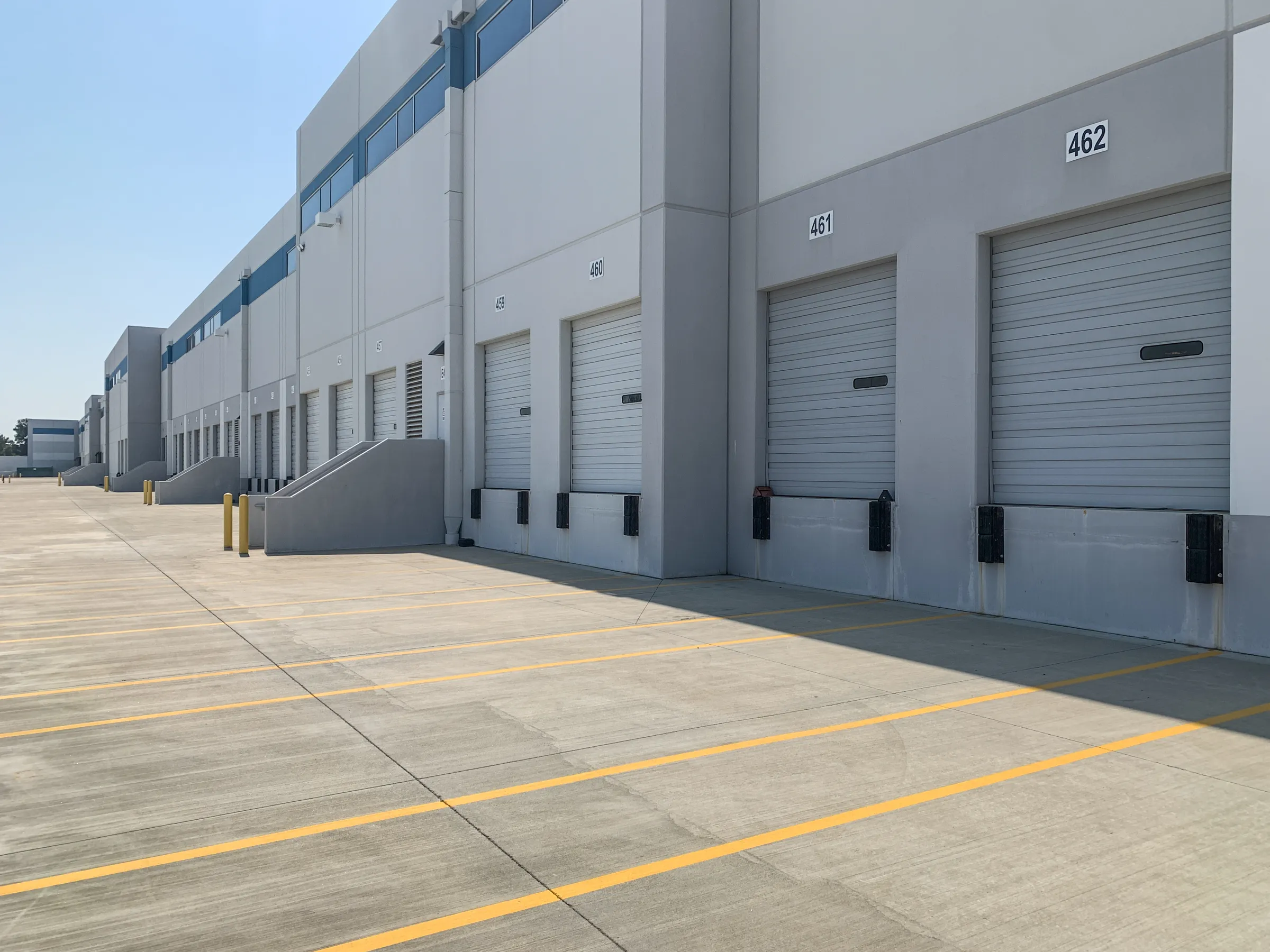
Concrete Aprons and Surface Lots
Most Clayton containers sit on the concrete apron of a bay. On the surface lots that remain downtown, we'll confirm placement and access with you before delivery.
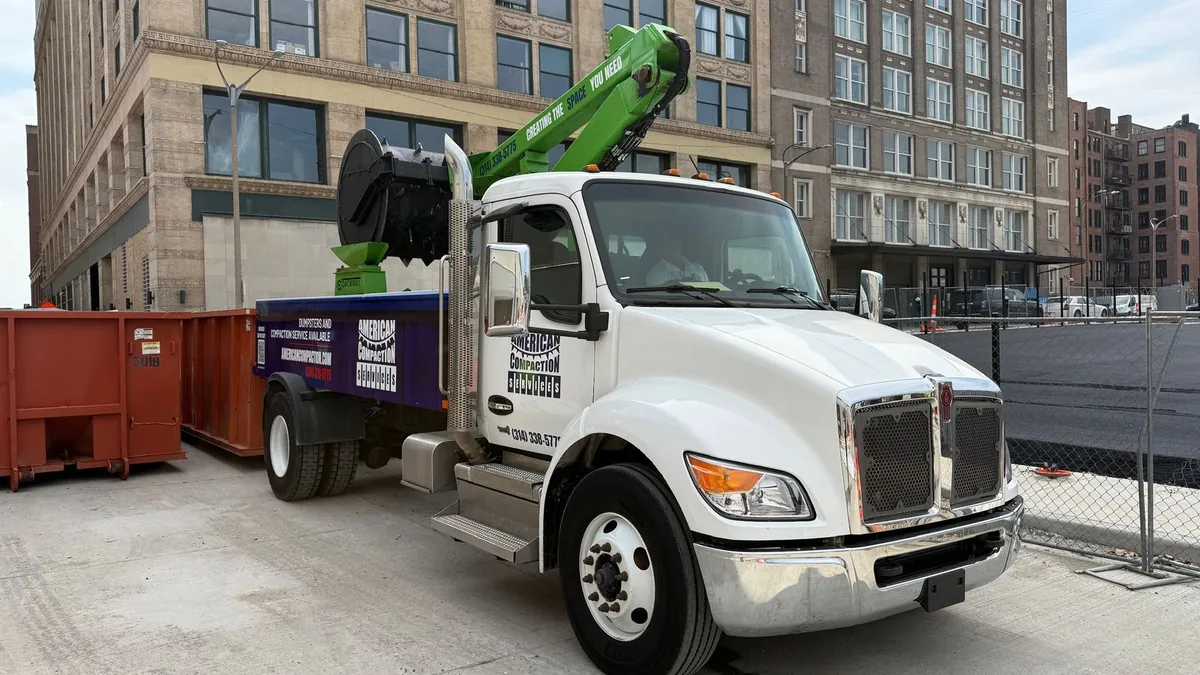
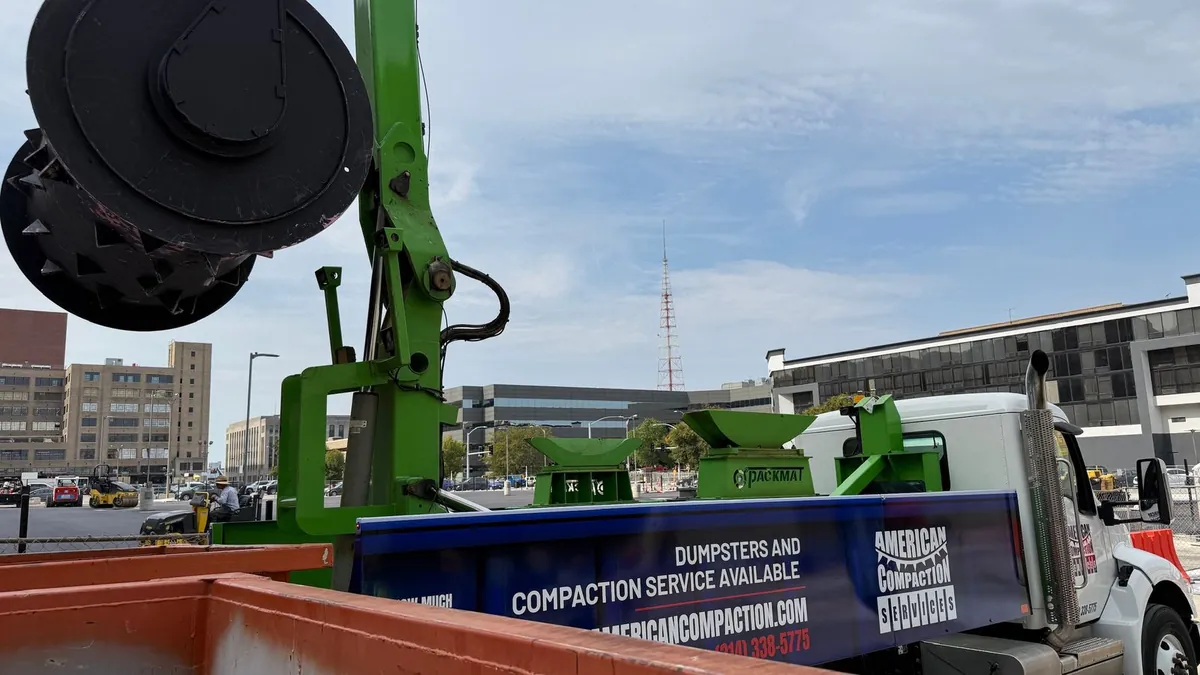
American Compaction Services runs every visit so the container itself is never touched. A heavy steel drum, narrower than the container, works the load down and never touches the walls. The drum works on its own weight, with no hydraulic down-force. Safeguard wheels and end guards keep the unit off the container's structure. Our operators run a zero-touch policy. Every visit includes a before-and-after inspection with photo documentation.
We will not compact liquids; dirt, soil, aggregate or other dense material with no air in it; hazardous or regulated waste; sealed drums or pressurized vessels; or anything the receiving hauler won't accept. On a pure dense load like broken concrete, we'll tell you to skip compaction and have it hauled. For the full list of what a container may hold, see the accepted materials page.
Commercial Dumpster Rental in Clayton: Questions
Near Clayton: Related Pages and Neighboring Communities

Start Commercial Dumpster Rental in Clayton
Tell us the building, the bay and the stages of the job, through the request form or by phone. American Compaction Services – St. Louis fits the container to the bay, books the visits in the building's quiet hours and says which stage of the job compaction pays on.
With roll-off, every haul is a call. With American Compaction Services, nobody has to call.
We set you up on a schedule and we compact on site. Dumpsters and compaction. All handled.
You already pay for dumpster space. Compaction lets you use more of it.
Getting started takes four details
- A photo of your dumpster and the space around it
- Your location
- What goes in the box
- The container size, if you know it
They help us plan for site access and match compaction service to your site.
We will prove it. Call or text (314) 338-5775.