

On-Site Waste Compaction
How On-Site Waste Compaction Works (and What to Ask)
We automate your roll-off. You'll never run out of room. Fair price. Great service.
What a visit does, how much volume comes out, the five questions worth asking, and when it isn't worth doing.
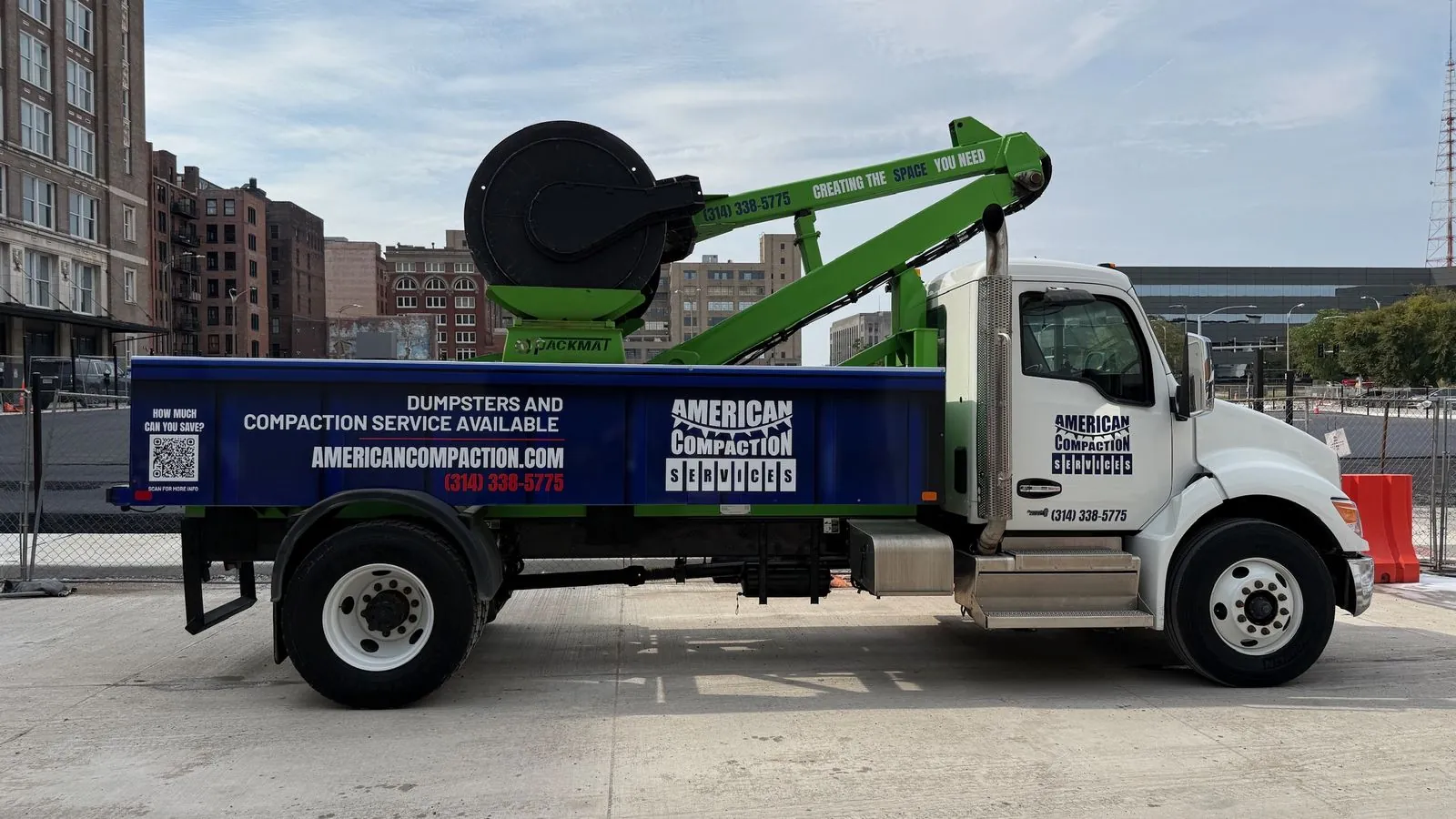
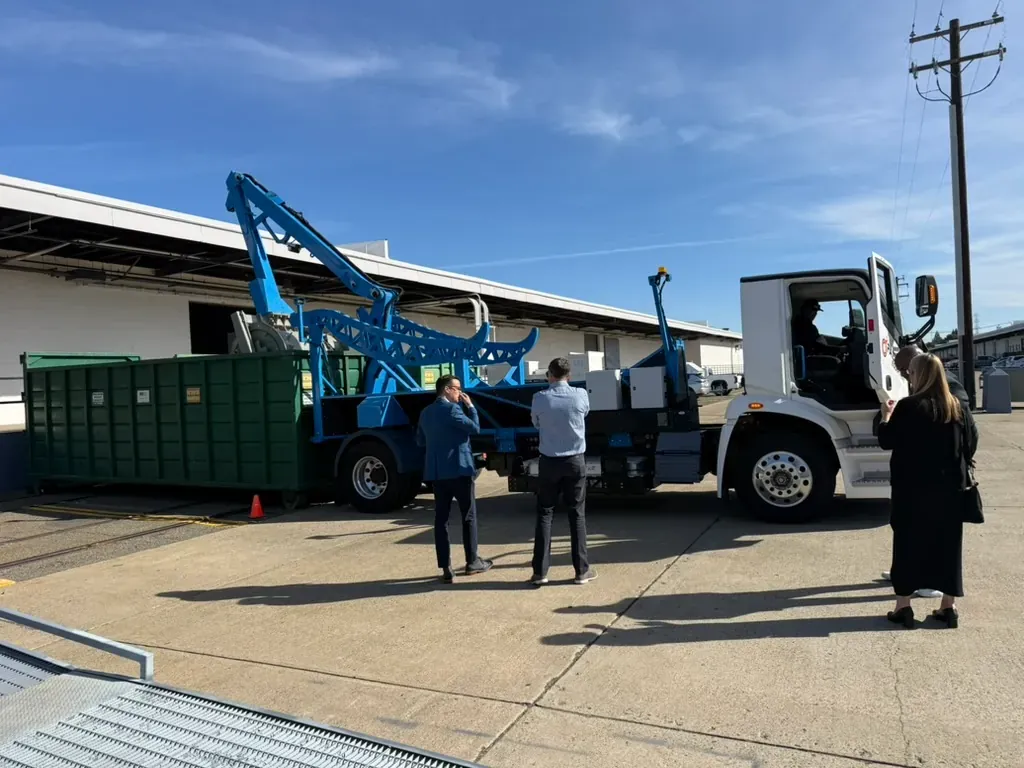
Here is how on-site waste compaction works, in one line: it is a visit, not equipment. A mobile compaction unit comes to the roll-off container already on your site, works the load down where it sits and leaves, so the same container holds more before it has to be pulled. Nothing about the container changes except how much is in it when it goes.
This guide explains what happens during a visit, how much volume comes out and why, what a visit looks like on a working dock, the five questions any facility should ask a compaction provider, and when compaction is not worth doing. American Compaction Services runs these visits, so the answers to those five questions are ours, in writing.
Quick Answer: How On-Site Waste Compaction Works at a Glance
- 1
A visit, not equipment. A mobile compaction unit works the container already on your site.
- 2
The drum does the work. A heavy steel drum, narrower than the container, works the load down and never touches the walls.
- 3
It removes air, not waste. Most “full” dumpsters are full of air, and the air is what a visit takes out.
- 4
The material decides how much comes back. Cardboard and packaging give back the most; construction debris and wood give back less.
- 5
Up to 70% less volume. Helps reduce waste volume by up to 70% depending on the material.
- 6
Visits follow your fill rate. Compaction visits between pulls are set by your fill rate.
- 7
Fewer haul-offs, not fewer trucks. Compaction reduces haul-offs; it never eliminates them. A compaction visit is itself a visit, and on some streams it is not worth doing.
See what your material gives back. The savings calculator gives you a planning number from your own inputs. These results are estimates from the numbers you enter. They are not a quote, a promise or a guarantee.
How On-Site Waste Compaction Actually Works
The visit
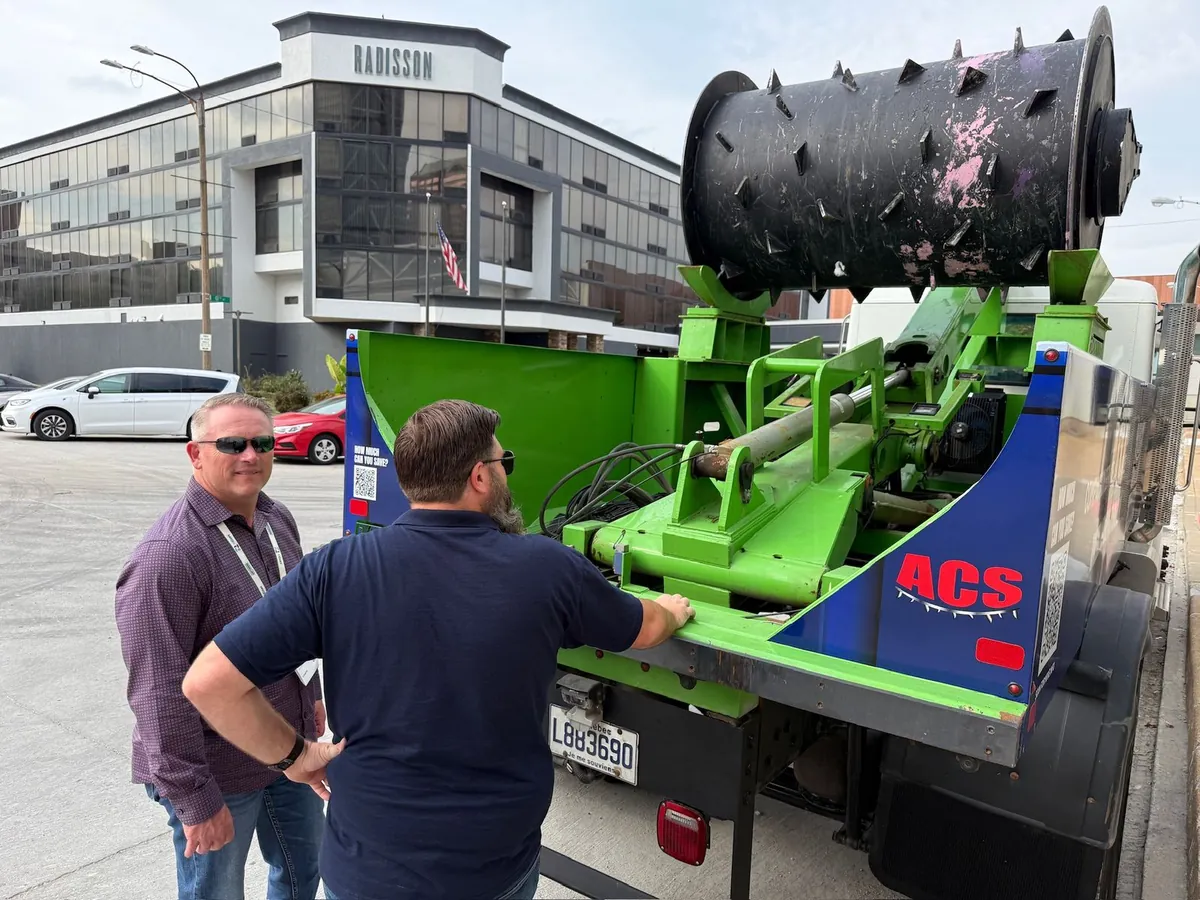
The unit positions a heavy steel drum over the open container you already have and rolls it back and forth across the load. The drum's weight collapses the voids, flattening boxes, splitting pallets and crushing packaging down, until the material lies dense instead of bridged. The drum works on its own weight, with no hydraulic down-force. The container stays where it is, nothing leaves your site during the visit.
Mobile dumpster compaction is an on-site service where specialized equipment compacts waste directly inside an open-top roll-off dumpster. This creates more usable space and can help reduce the number of hauls needed.
Service time depends on dumpster size, material, access, and load condition. We schedule visits around your site so your team can keep working.
How much comes out
Compaction does not remove waste. It removes the air around the waste, so how much space comes back depends on what is in the container. Compaction can reduce volume by up to 70%, depending entirely on the material. It is never a guarantee.
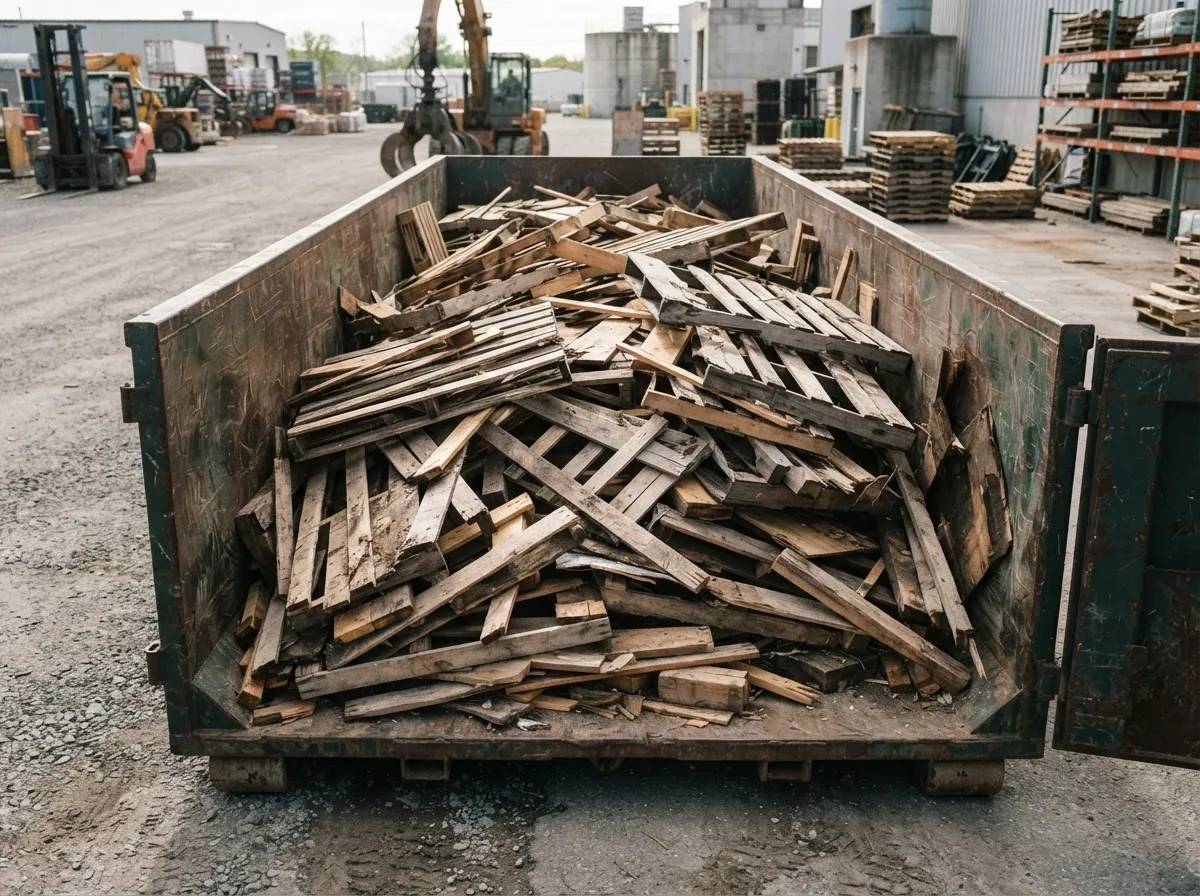
Read it as a fit test: a container that fills with materials that compact well has the most to gain. Concrete, masonry, roofing shingles, red iron, liquids and hazardous waste are never compacted.
| Material | Compaction |
|---|---|
| Cardboard and packaging | Compacts well |
| Plastics | Compacts well |
| Pallets and wood | Compacts well |
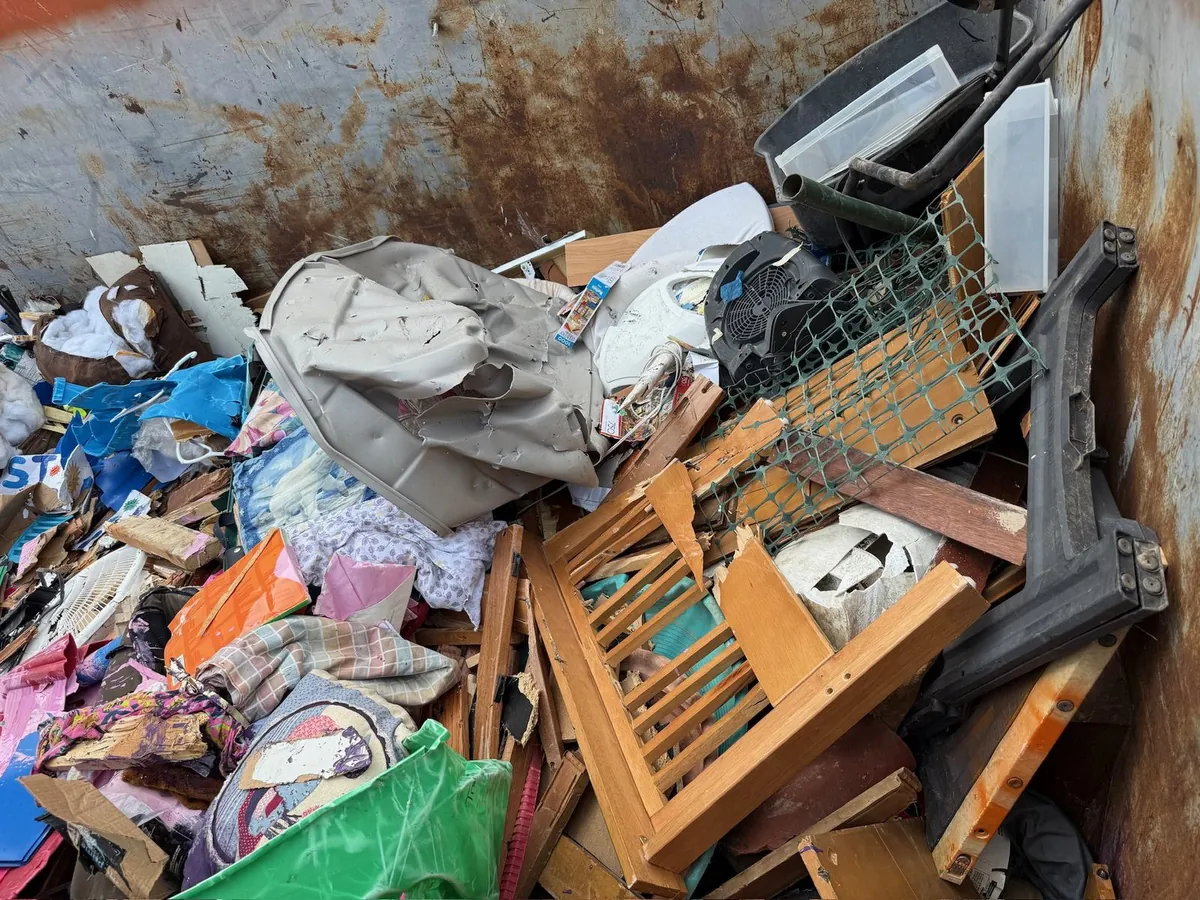
| Furniture and bulky commercial waste | Compacts well |
| Light construction debris | Compacts well |
| Concrete, masonry and roofing shingles | Never compacted |
| Red iron, liquids and hazardous waste | Never compacted |
Why the air settles it
A loose container that looks full is mostly air. Compaction can reduce volume by up to 70%, depending on the material. That air is what you have been paying to haul. Compaction does not raise any legal limit.
The saving is in fewer pickups on the same waste. With heavy materials, hauling limits still need to be considered. ACS can help you determine when compaction makes sense based on material type and hauling rules.
What changes on the schedule
Fill it, we compact it, fill it again, we compact it again, then it goes. The visits land between pulls, and the pull is called when the load is actually at capacity.
Helps reduce waste volume by up to 70% depending on the material. Fewer haul trips to service your project or facility — you pay for fewer pulls. Your numbers will land somewhere else: material mix, pull frequency and hauler rates decide them. The free demo and the calculator are how you find yours.
The on-site waste compaction page covers the service itself: the containers we compact, which waste fits and the ways to start.
How a visit compares with the other ways to make room
A site that runs out of container space has four options. They are not equally good, and which one wins depends on the material.
| Option | What changes on your site | What happens to trips | Where it tends to fit |
|---|---|---|---|
| Add pulls | Nothing; the truck comes more often | Every added pull is another full trip | A genuine spike: a demolition week, a plant shutdown, a seasonal surge |
| Size up | A larger container on the same lot | Fewer pulls if the load is light; little change if it reaches the weight limit first | Light, bulky material and room on the lot |
| Stationary compactor | Compaction equipment installed at the facility | Its own container is pulled when full | One location with a large, steady stream and room for installed equipment |
| On-site compaction visits | Nothing; the unit comes to the container you already have | Fewer haul-offs, with compaction visits between pulls | Bulky streams in open-top roll-offs that go out weekly or more |
What a Compaction Visit Looks Like on a Working Dock
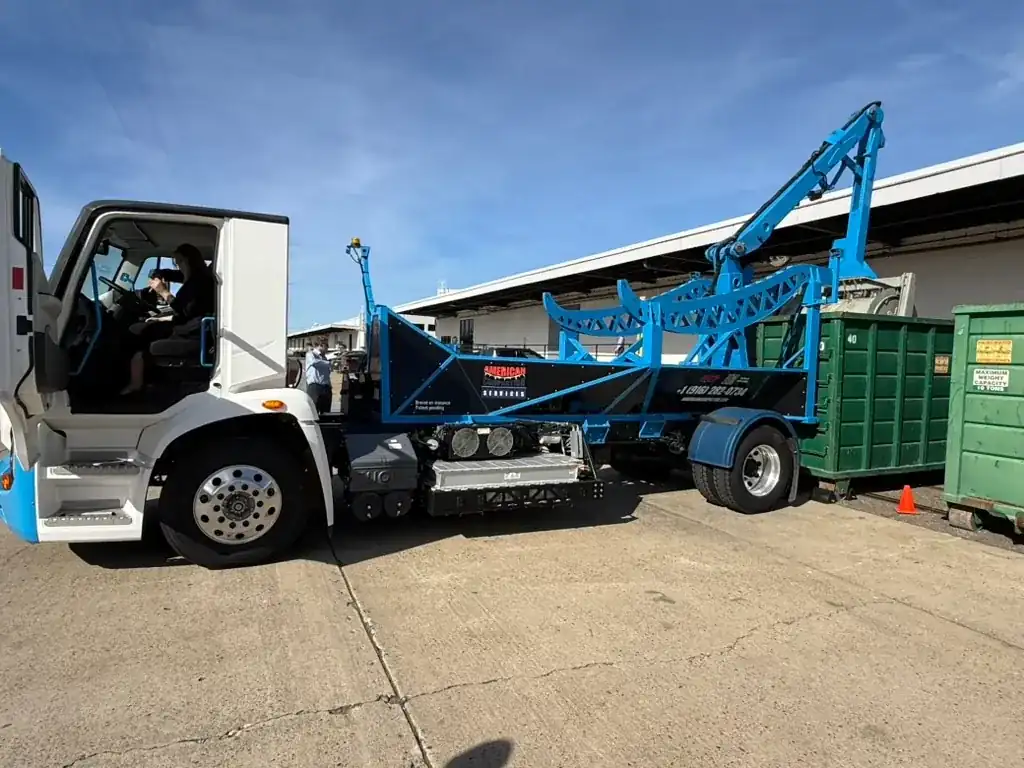
Visits are built around the dock, not the other way round. The schedule comes from your fill rate, and it is set around your dock hours so the unit is not in your receiving lane during the hour you need it most. When your volume moves, the cadence moves with it, whether that is a seasonal rush, a plant shutdown or a new line coming up.
Tight pads are common behind a dock: a container wedged between a door and a fence line, or sharing a lot with parked trailers. The container stays where it sits, and the unit works it in place. The demo is where we check that the unit can reach yours.
The container is inspected and photographed before the drum goes in, and again when the visit is done. Our operators run a zero-touch policy: the equipment contacts the waste and nothing else. Nobody on your crew climbs into a load to make room, and every haul-off that comes off the schedule is one less time a hook truck sits in your receiving lane.
Five Questions Any Facility Should Ask, and Our Answers
Before anyone works a container on your site, ask these. They tell you whether the service fits your site before a schedule is written, and the answers below are the ones American Compaction Services gives.
1. Will you run a measured demo on our own waste, in our own container, before we commit?
Yes. Free on-site demo: we compact one of your own containers while you watch. The demo carries no obligation and is photographed before and after. If it isn't a fit, we tell you on the spot. You see how far your material compresses, whether the load was as full as it looked, and whether your pull count can realistically come down.
2. What are your container-safety practices?
The equipment is built around not touching the container, because the container is often somebody else's steel. A heavy steel drum, narrower than the container, works the load down and never touches the walls. Safeguard wheels and end guards keep the unit off the container's structure. Our operators run a zero-touch policy. Every visit includes a before-and- after inspection with photo documentation. Weight limits still apply.
3. What will you refuse to compact?
We will not compact liquids; dirt, soil, aggregate or other dense material with no air in it; hazardous or regulated waste; sealed drums or pressurized vessels; or anything the receiving hauler won't accept. Concrete is never compacted or used in demos, including in mixed loads. A provider's refusal list tells you as much about the service as its accepted list does.
4. How is service scheduled?
From your fill rate, not from a default interval: compaction visits are set by your fill rate and placed around your dock hours. The haul-off is called when the load is actually at capacity, and the cadence changes when your volume does.
5. Is this an account or a series of tickets?
An account. The schedule is built around your container and your volume, and it keeps moving with them. No contract to sign: no exclusivity, no minimum, no term. We work with businesses: contractors, builders, roofers, property managers and facility operators. We don't serve homeowners hiring directly.
When On-Site Compaction Is Not Worth Doing
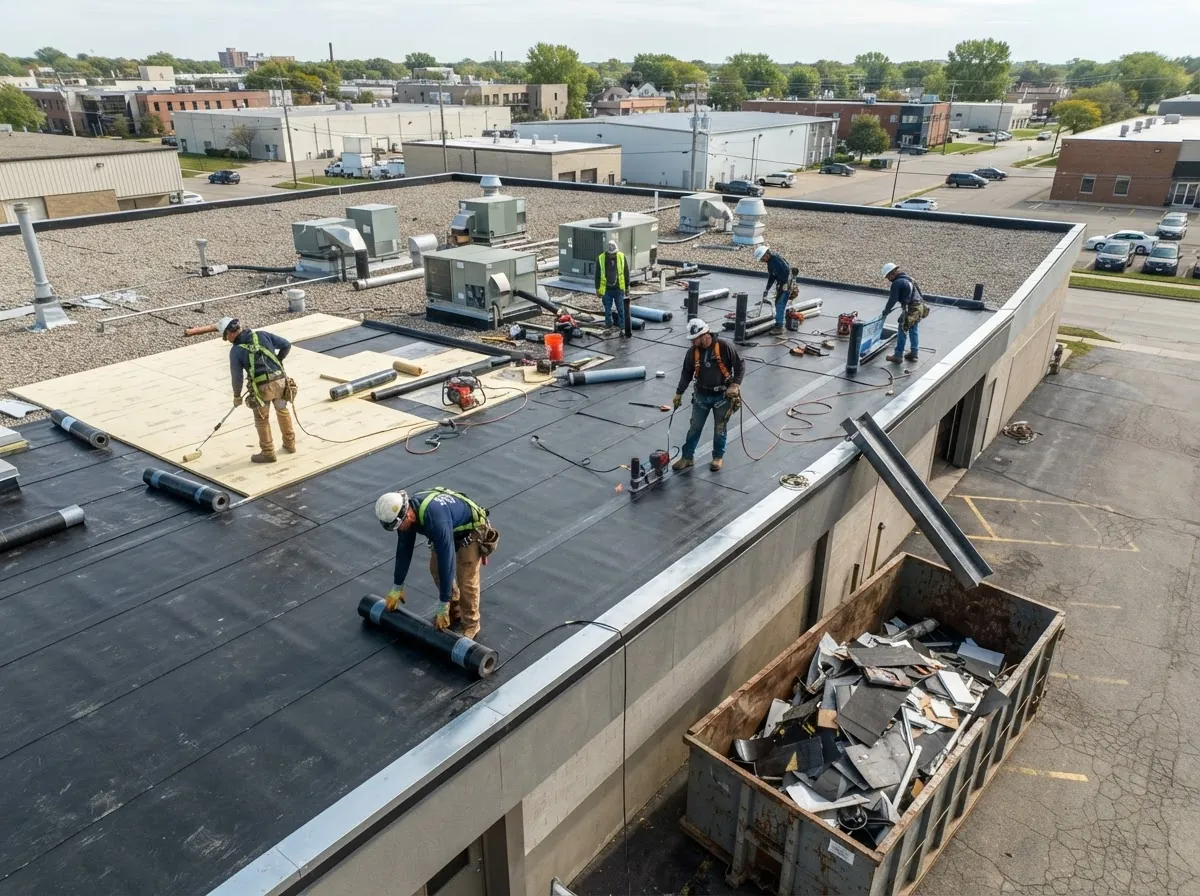
Compaction pays on containers that fill with air and leave often. It does very little in four situations, and American Compaction Services would rather tell you which one you are in before the first visit than after the third.
Dense material. Broken concrete, masonry, shingles and dense metal scrap are heavy for their size. There is little air left to take out, so there are few trips to save.
Low-volume containers. A container that goes out once a month and is not straining to get there has few trips to remove.
Streams already handled. A stationary compactor or strict separation may already be doing the valuable part.
A sizing problem in disguise. Sometimes the container is the wrong size for the stream, and the fix is a different container, not a visit. How Businesses Cut Roll-Off Haul Costs walks through the four levers, including right-sizing.
Two limits apply everywhere. Compaction reduces haul-offs; it never eliminates them. And it does not mean fewer trucks in your lot: a compaction visit is itself a visit. What changes is that a short on-site visit happens instead of a haul-off, with no truck hooking your container, driving it to a disposal facility and crossing a scale for that load.
Where You Are Changes the Number
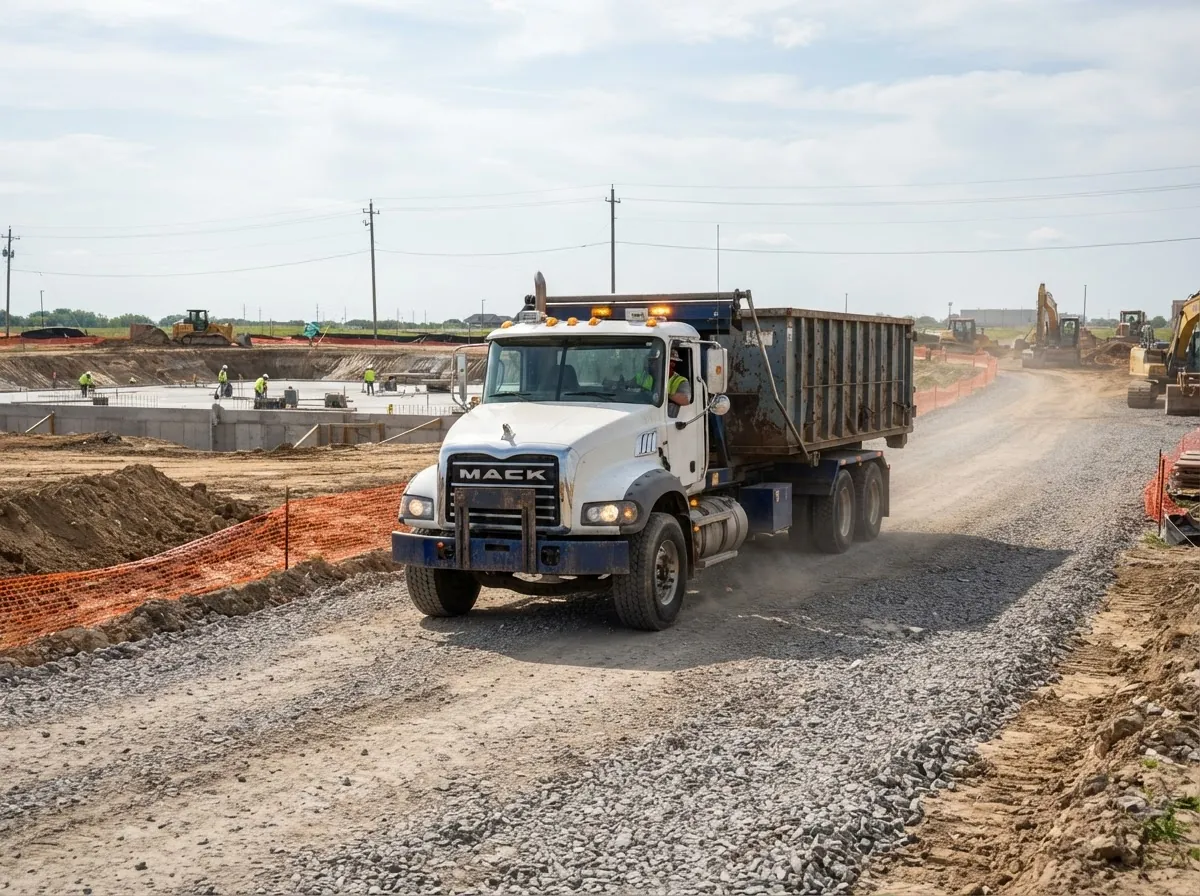
How much compaction pays depends partly on where your site is. In most metros, the disposal site is a drive from where the waste is made, and the longer that run, the more each haul-off taken off the schedule is worth. Hauling rates are set locally, and American Compaction Services prices compaction per market. Site layouts vary too: older districts often mean tight pads, shared alleys and low overhead, while newer industrial parks tend to have open yards and long approaches. And rain turns a bulky load into a heavier one, which leaves less room to recover before the weight stop.
Service details and quotes are confirmed for the market and the individual site.
Each live market has its own page, with the local details and the team that runs it.
American Compaction Services' Take
On-site compaction is a fit question, not a persuasion question. The numbers on this page tell you where to look; your own container tells you the answer. Judge it on what you see in your own lot, not on what anyone says about it, including us.
If it won't move your number, we'll tell you on the spot. We would rather say that on your pad than months into an arrangement that was never going to pay.
The rule we hold ourselves to: measure it on your own waste before anything gets scheduled.
— American Compaction Services
How American Compaction Services Can Help
American Compaction Services does two things: on-site compaction visits, on a container we supply or one your hauling company already has on your site, and roll-off container rental in 20, 30 and 40 yard sizes. ACS provides waste management through dumpster rental and on-site compaction. If you already have a container from another hauler, keep it and keep your hauler: we compact what is in it.
- The on-site waste compaction page covers the containers we compact, which waste fits and how ongoing service runs.
- How Businesses Cut Roll-Off Haul Costs covers the trip economics behind all of this.
- The savings calculator gives you a planning number from your own inputs.
- The request form takes your site, your container and your current pull count.
Frequently Asked Questions: How On-Site Waste Compaction Works
See It on Your Own Container
A free demo on your own container answers more than this page can. Tell us your site and your container, and American Compaction Services will take it from there.
Overflowing dumpster?
Has your hauler told you they can’t haul it?
Sometimes, dumpsters get overfilled. You often pay a dry-run fee, remove everything sticking above the dumpster, then call them back for another haul.
Creating the space you need
Compact it first. Fewer hauls after.
We compact it first so it’s ready for the haul. No overflow, no dry runs, no second trip.
Government · Cities · Counties · Municipalities · Public Works · Transfer Stations · Convenience Centers
Keep public sites working with fewer hauls
Mobile compaction for municipalities, public works, transfer stations and convenience centers, without buying a compaction truck. American Compaction Services compacts bulky waste inside open-top roll-offs on site.
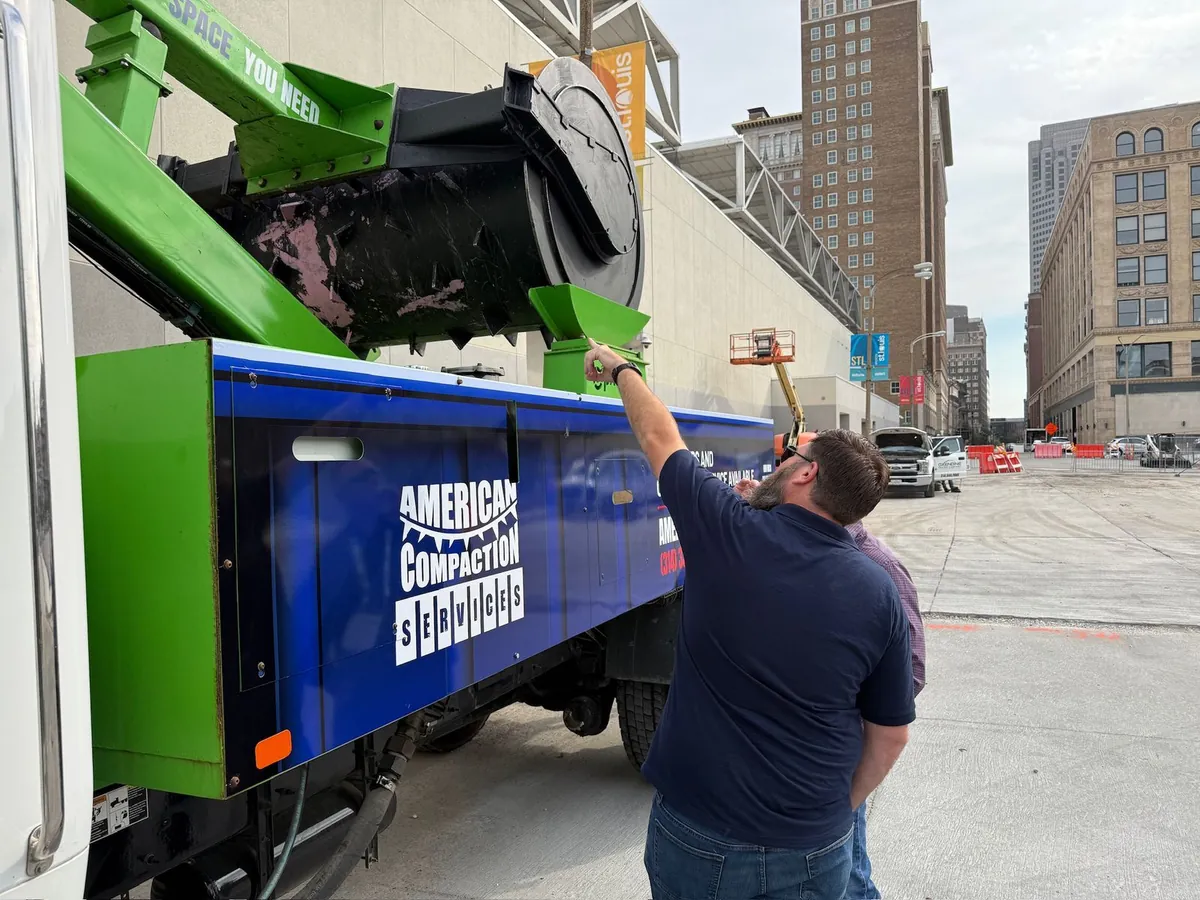
We serve municipal sites, including convention centers.
Some agencies award hauling contracts or permits. Some provide the service themselves. Some markets are open, with little or no oversight on roll-offs.
More capacity from dumpsters already in service
Raise density on site so each container works harder.
Lower cost to provide the space people need
Compaction stretches the dumpsters you already run. More usable space without adding containers.
Fewer overflows, fewer complaints
Handle more service requests and keep citizens happier.
Downstream impact: Disposal wait times · Fewer transfer-trailer loads · Landfill capacity and lifespan · Easier on drivers.
Typical fit: open-top or hook-lift 20 to 40-yard dumpsters. Not trailer-style roll-offs. Up to 70% less volume, depending on the material.
With roll-off, every haul is a call. With American Compaction Services, nobody has to call.
We set you up on a schedule and we compact on site. Dumpsters and compaction. All handled.
You already pay for dumpster space. Compaction lets you use more of it.
Getting started takes four details
- A photo of your dumpster and the space around it
- Your location
- What goes in the box
- The container size, if you know it
They help us plan for site access and match compaction service to your site.
We will prove it. Call or text (877) 651-7660.