

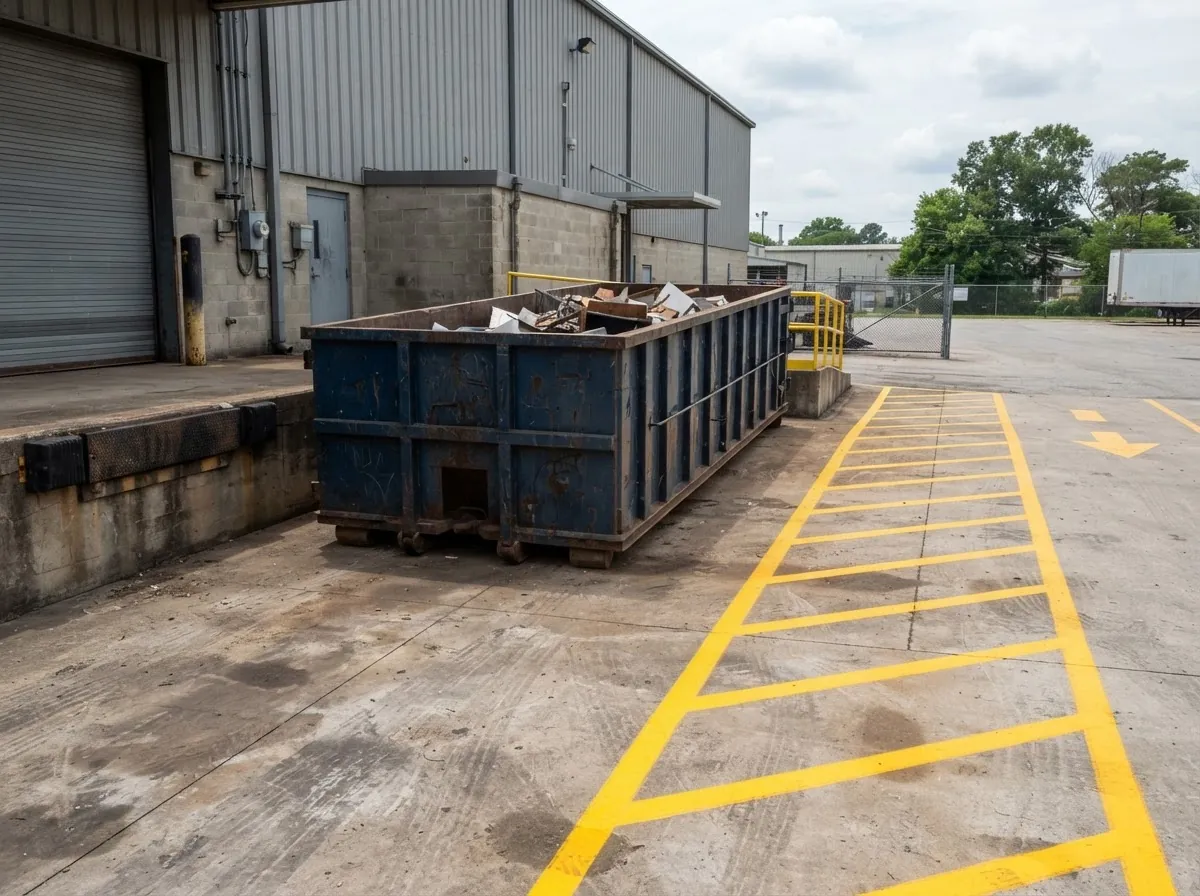
Manufacturing & Industrial
Cutting Waste Costs in Manufacturing & Industrial Facilities
We automate your roll-off. You'll never run out of room. Fair price. Great service.
Why a standing waste stream bills by the trip, which plant materials compact well, and how to work the schedule down.
To cut manufacturing waste costs, cut the number of trips. A plant's waste bill is set mostly by how many times a truck comes to the property, and much of what those trucks carry away from a packaging-heavy plant is air. Fix the pull schedule, size the container for the rate, split the dense scrap off, and then work the air out of what is left.
A plant does not have a waste problem. It has a waste rate. Waste comes off the floor every shift whether anyone is watching it or not, and the cadence set when the account opened tends to outlive the production pattern it was built for. American Compaction Services supplies 20, 30 and 40 yard roll-off containers to plants and industrial facilities and compacts them on site, and plant packaging is a stream where the trip arithmetic works hard. This guide covers that arithmetic, the two streams every plant runs, the four levers and the limits.
Quick Answer: What Cuts Manufacturing Waste Costs
- 1
You're billed by the trip, not by the pound. Every pull is a driver, a truck, fuel and a disposal run, whether the container was full or not.
- 2
A standing stream becomes a standing bill. Every pull, every week, all year.
- 3
Plant waste is mostly air. Most “full” dumpsters are full of air: uncollapsed cartons, film, foam and dunnage.
- 4
Plant packaging compacts well: cardboard, packaging and plastics are at the top of the table.
- 5
The planning ratios are modest and real. Compaction helps reduce waste volume by up to 70% depending on the material.
- 6
Loose loads leave light. A loose container that looks full is mostly air. Compaction can reduce volume by up to 70%, depending on the material.
- 7
The service has to fit the dock. The container stays where it is, the line keeps running.
- 8
Fewer haul-offs, never zero. Compaction reduces haul-offs; it never eliminates them. A compaction visit is itself a visit.
The savings calculator runs that arithmetic on your own pull count. These results are estimates from the numbers you enter. They are not a quote, a promise or a guarantee.
Why Manufacturing Waste Costs Are a Trip-Count Problem
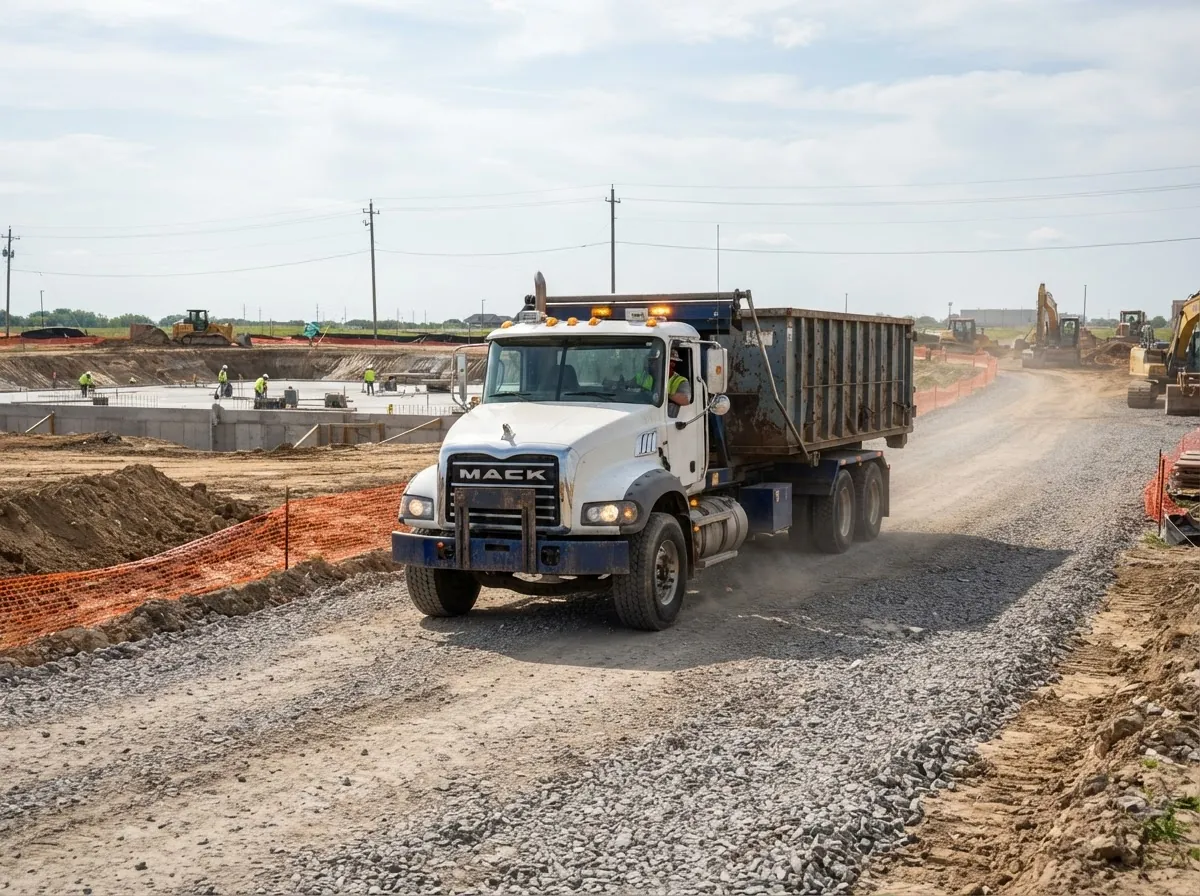
Plant waste behaves like a subscription. The cadence set when the account opened becomes a standing bill, and it tends to survive for years whether or not it still matches the plant. Nobody revisits it, because the container always goes out looking full.
A waste bill has three parts: per trip, per ton and the monthly rental. The trip charge is the only line that really moves. The saving is in fewer pickups on the same waste. The rental is fixed. That leaves the trip count as the variable a plant can change without changing haulers, contracts or anything on the floor, and it is why American Compaction Services starts every plant conversation with the pull count.
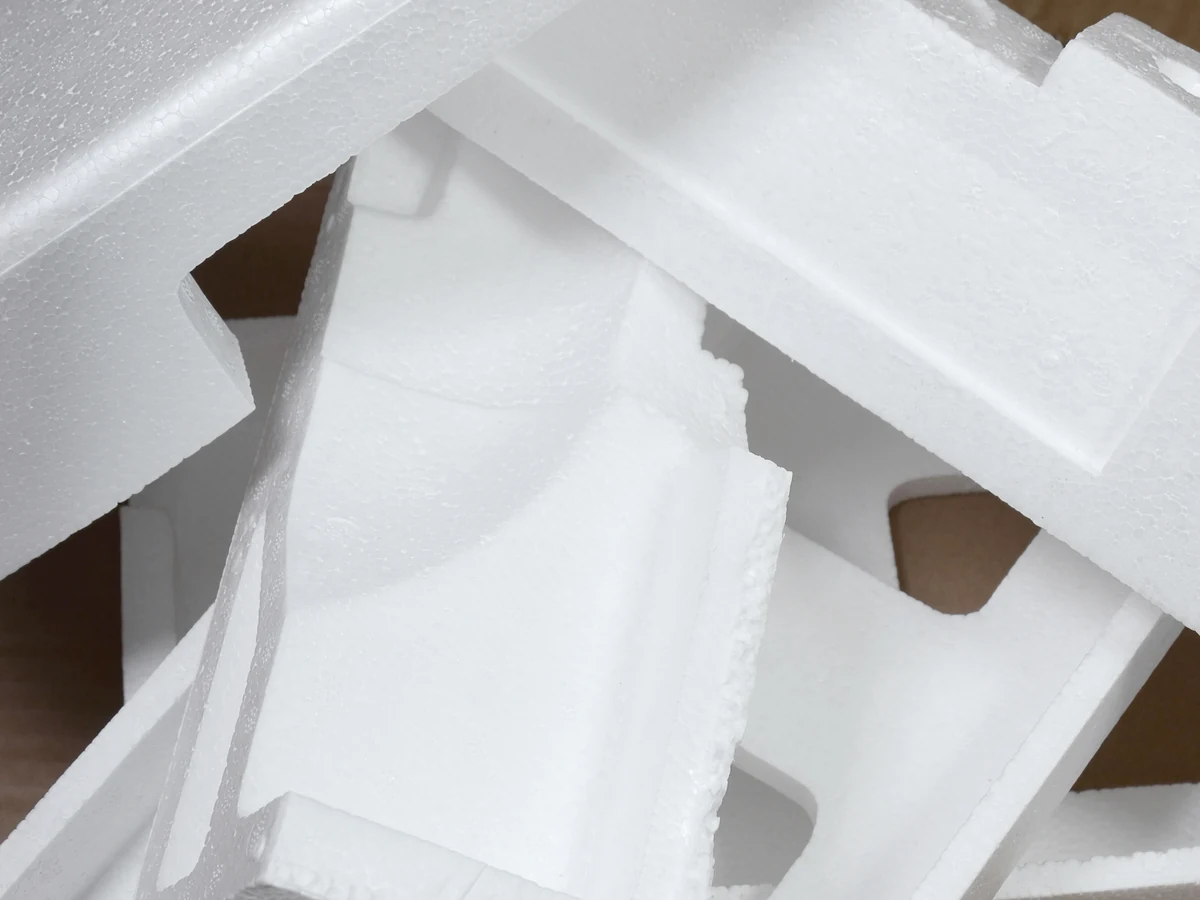
Plant packaging is light, bulky material: gaylords tipped in whole, cartons nobody flattened, stretch film that springs back, foam corner blocks and dunnage. The container reaches the rim long before the truck gets near its weight limit, so each trip moves a great deal of space along with the waste.
There is an operations cost too. When the container is full before the pull, material stacks on the dock, a trailer bay turns into storage, and a forklift driver ends up managing waste instead of moving product. None of that appears on the hauling invoice.
How Businesses Cut Roll-Off Haul Costs lays out the trip arithmetic for any business and works one container through it. This article runs the same arithmetic through a plant.
The Two Streams Every Plant Runs: Packaging In, Offcuts Out
Every manufacturing waste stream is really two streams sharing one container. Inbound packaging (corrugate, film, banding, foam, dunnage and damaged pallets) arrives in bursts on receiving days and weighs very little. Production offcuts (trim, drop, rejects, wood and light metal scrap) follow the production schedule, and some of them are dense enough to change the arithmetic.
| Plant stream | What ends the load | What compaction does | The lever that pays |
|---|---|---|---|
| Corrugate, cartons, inbound packaging | Volume, long before weight | A lot: cardboard and packaging compact well | Flatten what flattens; work the container between pulls |
| Stretch film, banding, foam, dunnage | Volume | Substantial: this is almost pure trapped air | A larger container with compaction visits between pulls |
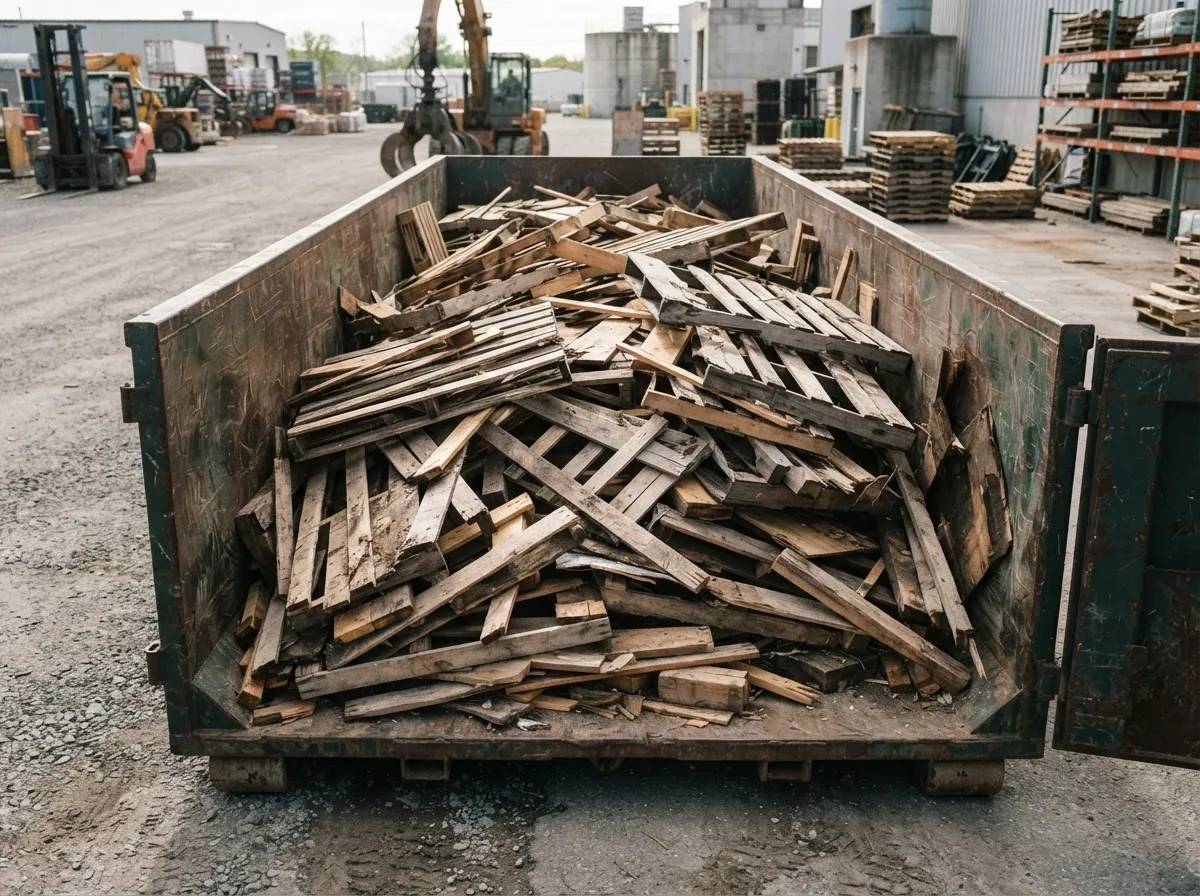
| Wood scrap, crating, broken pallets | Volume | Compacts well | Break down crating; size for volume |
| Light production offcuts and trim | Depends on the mix | Real on a packaging-heavy blend | Keep dense scrap out of this container |
| Dense metal scrap, castings, turnings | Legal payload, early | Very little: there is no air to remove | Size down and run it separately |
Split the dense fraction off. One container reaching payload on metal and another reaching volume on corrugate means both trips are full trips. Mixed together, the metal ends the load on weight while the packaging wastes the space around it.
Top of the Table: Why Plant Packaging Compacts Well
Compaction can reduce volume by up to 70%, depending entirely on the material. It is never a guarantee.
| Material | Compaction |
|---|---|
| Cardboard and packaging | Compacts well |
| Plastics | Compacts well |
| Pallets and wood | Compacts well |
| Furniture and bulky commercial waste | Compacts well |
| Light construction debris | Compacts well |
| Concrete, masonry and roofing shingles | Never compacted |
| Red iron, liquids and hazardous waste | Never compacted |
For most plants, the stream is mostly cardboard, packaging and plastics: corrugate, cartons and film, which all compact well. Dense scrap is a weight problem, not a space problem, which is why the dense fraction belongs in its own container. Compaction helps reduce waste volume by up to 70% depending on the material. Compaction visits between pulls are set by your fill rate.
A loose container that looks full is mostly air. Compaction can reduce volume by up to 70%, depending on the material.
There are two things the table cannot tell you: how your own blend behaves, and how full your container really is when it leaves. American Compaction Services measures both on your own container at the free demo.
Service That Fits Production
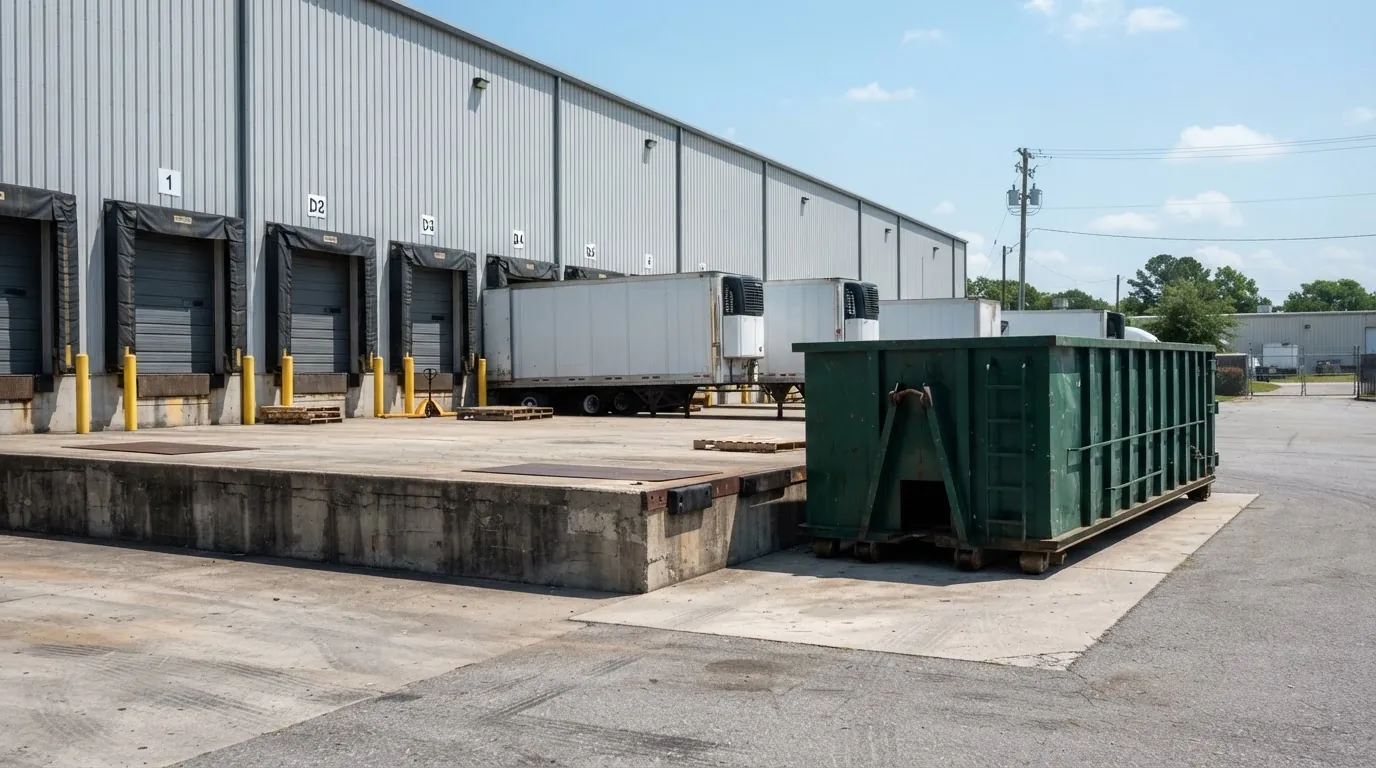
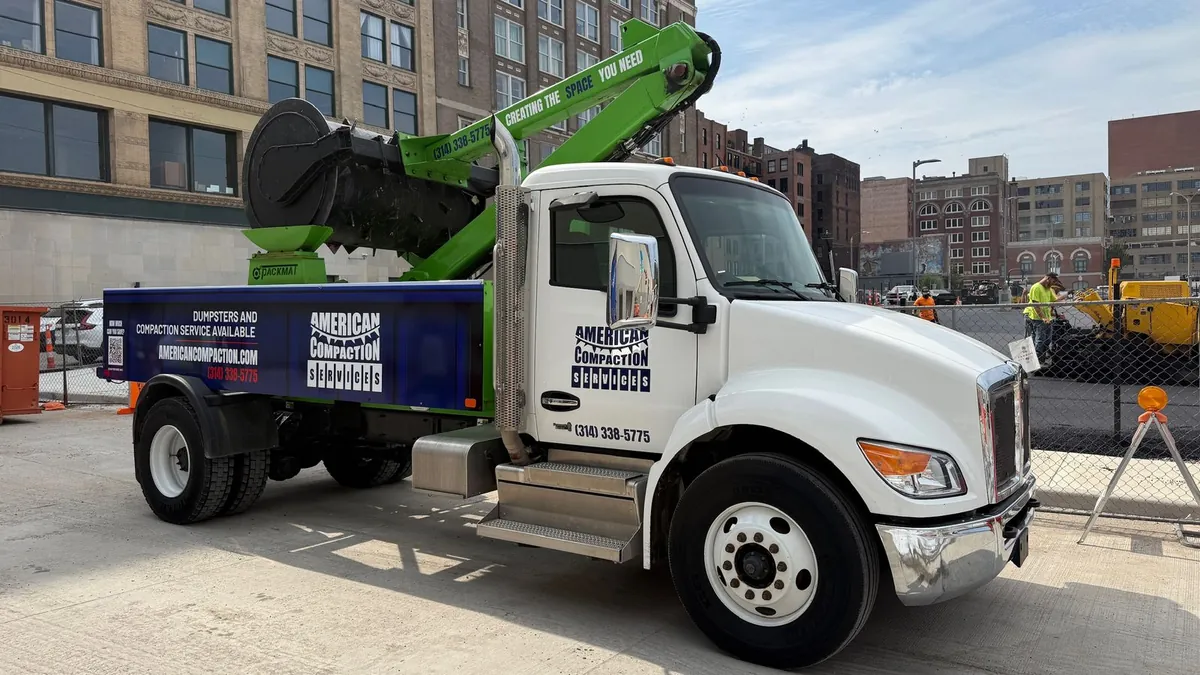
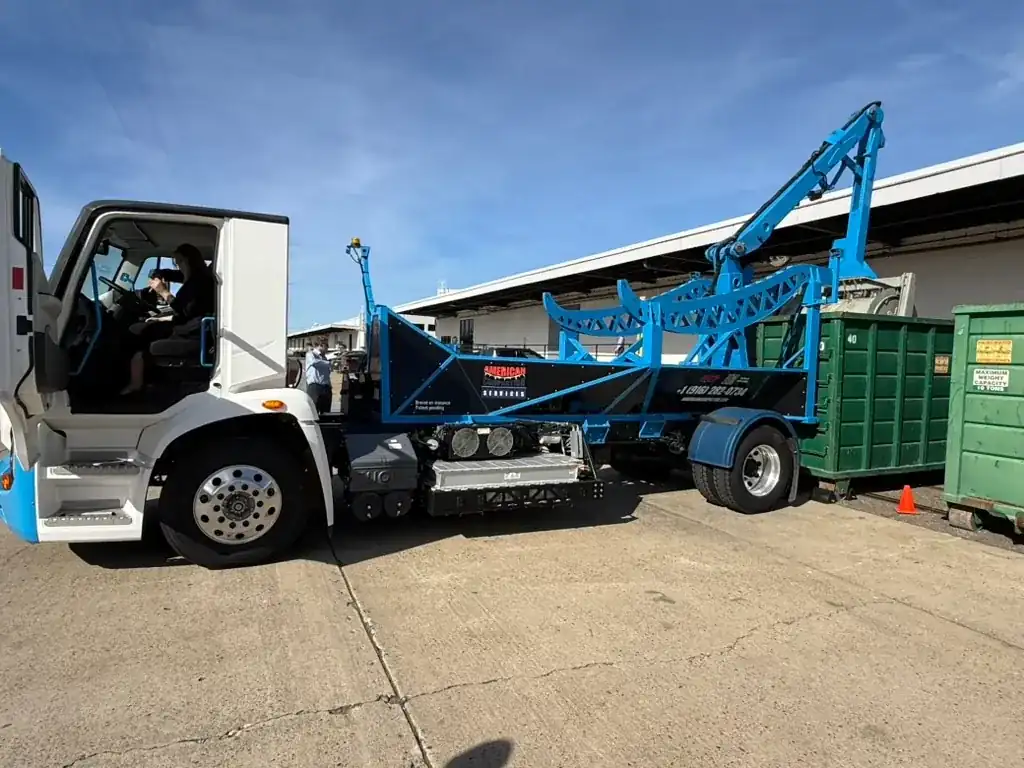
A compaction visit is built so the floor keeps working. The unit works the container on the pad where it sits: nothing is hooked, lifted or driven off, and no receiving door or forklift lane is tied up while it runs. The container stays where it is. Visits go into gaps the plant already has, such as a shift change or the hour before receiving opens, and site rules for PPE, check-in, badges and traffic are settled at setup, not at the gate.
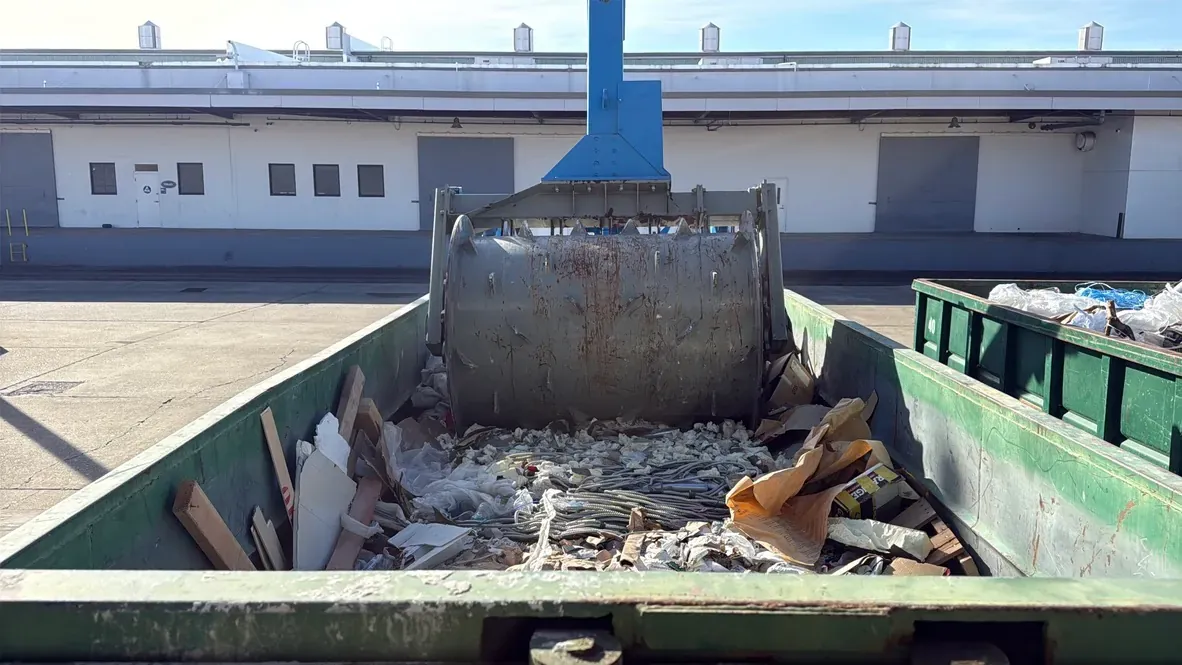
The container is somebody's asset, often your hauler's, and American Compaction Services builds the visit around not damaging it. A heavy steel drum, narrower than the container, works the load down and never touches the walls. The drum works on its own weight, with no hydraulic down-force. Safeguard wheels and end guards keep the unit off the container's structure. Our operators run a zero-touch policy, so nobody on your floor handles anything. Every visit includes a before-and-after inspection with photo documentation.
Four Levers That Cut Manufacturing Waste Costs
The order matters. The first two cost nothing, and the fourth works because the other three came before it.
1. Audit the cadence
2. Size for the rate, not the total
3. Split the dense fraction off
4. Then work the air out
When Compaction Won't Cut Manufacturing Waste Costs
American Compaction Services says this before a schedule is written, not after.
Dense streams gain little
Metal turnings, castings and dense rubber carry almost no trapped air. They still leave in a container; they just do not gain much from a visit.
Low pull frequency leaves little to remove
A plant pulling its container once a month has very few trips to cut, and the arithmetic rarely justifies a visit.
Some material does not belong in a roll-off at all
Regulated process waste, such as solvents, oils and chemical residues, belongs with a specialist disposal vendor, not in a roll-off. The industrial page lists what we will not compact.
And the standing honesty rule: Compaction reduces haul-offs; it never eliminates them. A compaction visit is itself a visit. What changes is that a short on-site visit happens instead of a haul-off. If it won't move your number, we'll tell you on the spot.
Where You Are Changes the Number
The arithmetic is the same in every plant. The inputs change from one market to the next.
Distance to the receiving facility
Every pull is a round trip from your dock to the disposal facility and back. The longer that run, the more each pull costs, and the more a pull taken off the schedule is worth.
Local rates
Hauling and disposal rates are set locally, so the same container on the same schedule can cost differently in two places.
The rhythm of the plant
A plant fed by daily trailers produces packaging on a different clock from one fed weekly. Seasonal lines, shutdown periods and model changeovers move the fill rate, and a schedule set in the busy season tends to run on into the slow one.
Service details and quotes are confirmed for the market and the individual site.
Each live market has its own page with the local detail.
American Compaction Services' Take
On a plant account, the container is almost never the problem and the cadence almost always is. Compaction is the second step, not the first. Count the pulls, look inside the container, size it for the rate and split off the dense scrap, and part of the saving is made before a compaction visit is ever booked.
Then the demo decides the rest. If the container comes back with room in it, the case makes itself. If it barely moves, you have learned something worth knowing before you bought anything. The rule we hold ourselves to: fix the schedule first, size for the rate second, and pay to work a load that has air in it, and nothing else.
— American Compaction Services
How American Compaction Services Can Help
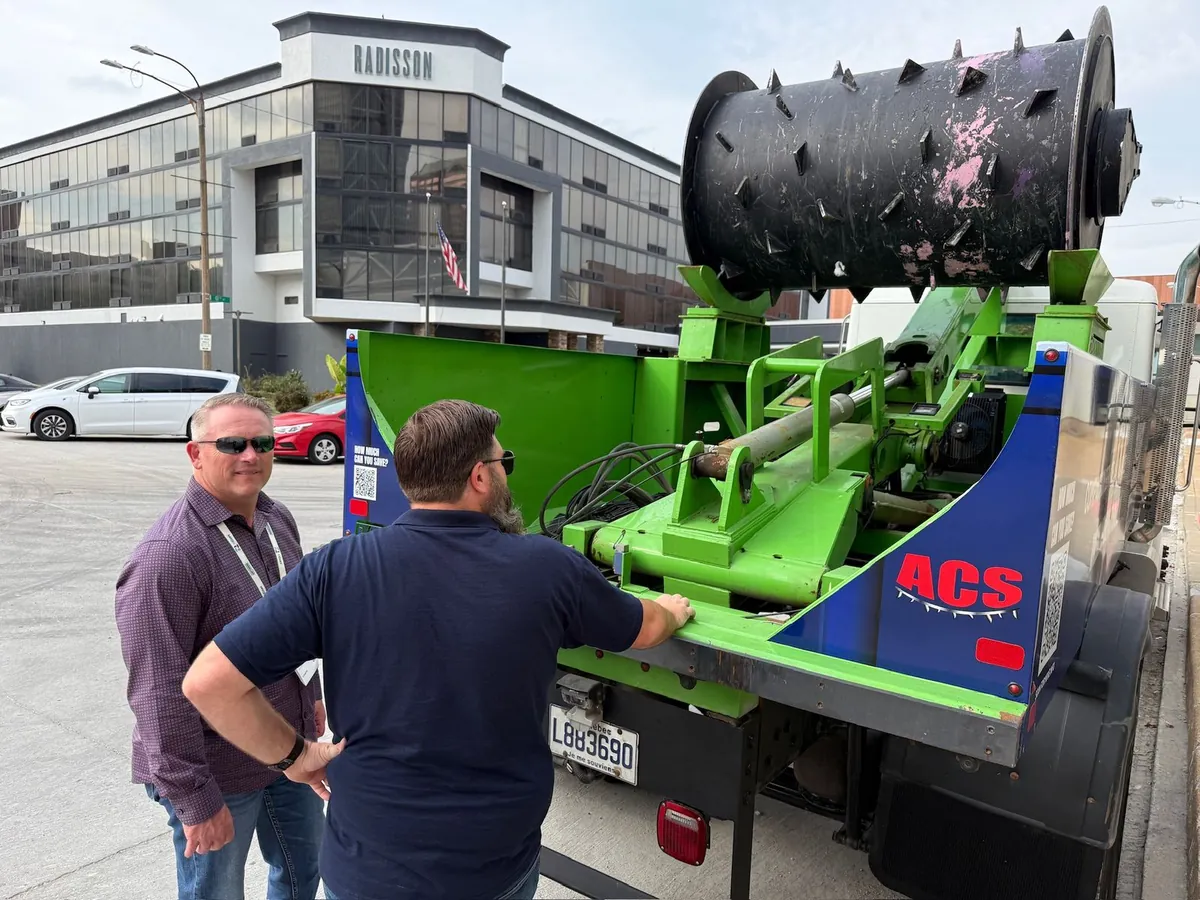
American Compaction Services works with manufacturers, industrial facilities and the receiving and shipping docks inside them. Every account is a business. We do not rent to homeowners.
ACS helps facilities reduce haul frequency by compacting waste on-site, making better use of existing dumpsters and improving the flow of waste through the operation.
ACS provides waste management through dumpster rental and on-site compaction. If your hauler already has a container on your pad, keep it and keep your hauler: we compact what is in it. No contract to sign: no exclusivity, no minimum, no term.
The industrial dumpster rental page covers standing service, sizes and the material guide for plants. How Businesses Cut Roll-Off Haul Costs covers the trip arithmetic, and the savings calculator runs it on your own numbers.
Free on-site demo: we compact one of your own containers while you watch. The demo carries no obligation and is photographed before and after. If it isn't a fit, we tell you on the spot. On a plant, that means the container already on your pad, with the material already in it.
Frequently Asked Questions About Cutting Manufacturing Waste Costs
Put Your Plant's Numbers Against This
Bring last quarter's pull counts and a rough idea of what goes out on receiving days. American Compaction Services will look at the cadence before the container, tell you what splitting off the dense scrap would change, and show you on your own dock whether compaction moves the number. The on-site demo is free.
With roll-off, every haul is a call. With American Compaction Services, nobody has to call.
We set you up on a schedule and we compact on site. Dumpsters and compaction. All handled.
You already pay for dumpster space. Compaction lets you use more of it.
Getting started takes four details
- A photo of your dumpster and the space around it
- Your location
- What goes in the box
- The container size, if you know it
They help us plan for site access and match compaction service to your site.
We will prove it. Call or text (877) 651-7660.