

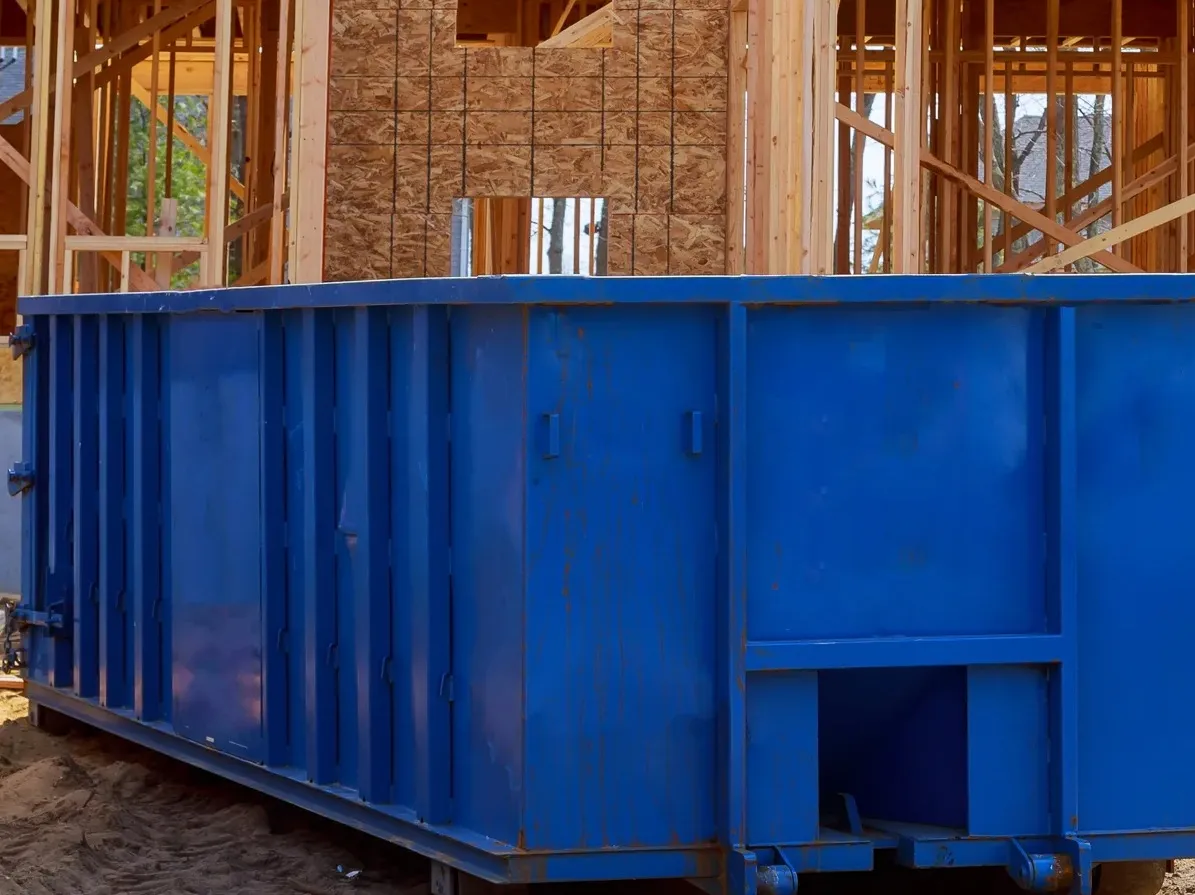
Construction
Cutting Waste Costs on Construction Projects
We automate your roll-off. You'll never run out of room. Fair price. Great service.
Phase-by-phase waste, swap-trip math, and where mid-project compaction earns its place.
To cut construction waste costs, pay for fewer swap trips. Jobsite waste is billed around the trip, and the container plan set at sitework is usually wrong by the time the finish crews arrive. Match the container to the phase you are in, keep the heavy fraction out of the bulky box, and take the air out of the bulky phases, and the swap count comes down with the bill.
American Compaction Services supplies 20, 30 and 40 yard roll-offs to commercial jobsites and compacts containers in place. This guide covers how construction waste changes shape from phase to phase, the swap-trip math, where mid-project compaction pays and where it does not, and four levers that cut jobsite waste costs whoever supplies your container.
Quick Answer: What Actually Cuts Construction Waste Costs
- 1
The swap trip is the unit of cost. You're billed by the trip, not by the pound.
- 2
Waste changes shape every phase. Sitework and demolition come out heavy; dry-in, rough-in and finishes come out bulky and light.
- 3
Size by phase. Tell us about heavy phases so we size them right, a 30 for framing and mixed debris, a 40 for the bulky finish stretches. Changing the size between phases can cost less than swapping the same box more often.
- 4
Light construction debris, cardboard and packaging compact well; concrete and masonry are never compacted.
- 5
Compact the high-air phases. Mid-project compaction belongs from dry-in through finishes, with compaction visits between pulls set by your fill rate.
- 6
Declare what is heavy. Dense loads go in their own container, sized by weight, and stay out of the box being compacted.
- 7
Keep dirt out of the bulky box. Excavated soil and aggregate add weight fast and have no air to give back.
- 8
Fewer haul-offs, never zero. Compaction reduces haul-offs; it never eliminates them.
Run it on your numbers. The savings calculator gives you a planning number from your own inputs. These results are estimates from the numbers you enter. They are not a quote, a promise or a guarantee.
Why a Jobsite Pays by the Trip, Not by the Ton
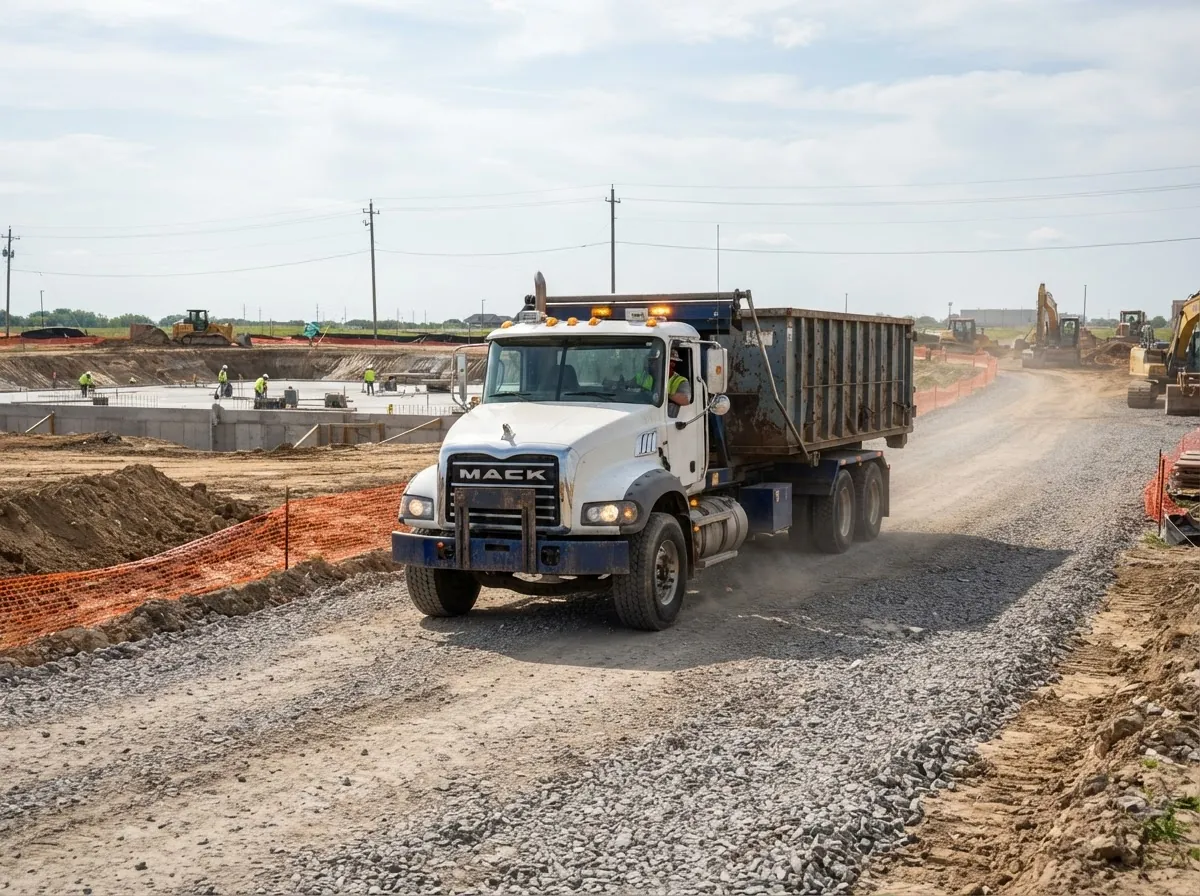
Every swap is a full truck trip: a driver, a roll-off truck, road time and a run to the disposal facility. A waste bill has three parts: per trip, per ton and the monthly rental. The trip charge is the only line that really moves. The saving is in fewer pickups on the same waste.
Every container has two ceilings: the volume inside the box, and the weight the truck may legally carry. Jobsite debris reaches one or the other depending on the phase. Masonry and broken slab reach weight early. Drywall, cartons, crates and insulation reach the rim while the load is still light. A loose container that looks full is mostly air. Compaction can reduce volume by up to 70%, depending on the material.
That air is where the swap trips go. Fewer haul trips to service your project or facility — you pay for fewer pulls.
The trips a job did not need show up in two places: on the invoice, and on the schedule, when a full container that cannot be swapped until tomorrow stops the crew today. The general case for trip economics, beyond the jobsite, is in How Businesses Cut Roll-Off Haul Costs.
Construction dumpsters often fill with bulky, irregular materials that leave large pockets of unused space. ACS helps contractors get more capacity out of every roll-off dumpster before calling for another haul.
Construction Waste Changes Shape Every Phase
A construction job does not produce one waste stream. It produces five or six, in sequence, and each one ends a load differently.
| Project phase | Dominant debris | What ends the load | Compaction fit |
|---|---|---|---|
| Sitework, demolition, slab breakout | Concrete, masonry, rubble | Weight, early | Little to none |
| Structure and framing | Wood offcuts, banding, pallets, scrap metal | Volume, with weight climbing | Moderate |
| Dry-in and envelope | Wrap, cartons, insulation bags, envelope scrap | Volume, well before weight | Strong |
| MEP rough-in | Conduit and pipe offcuts, spools, fitting cartons | Volume | Good on the packaging fraction |
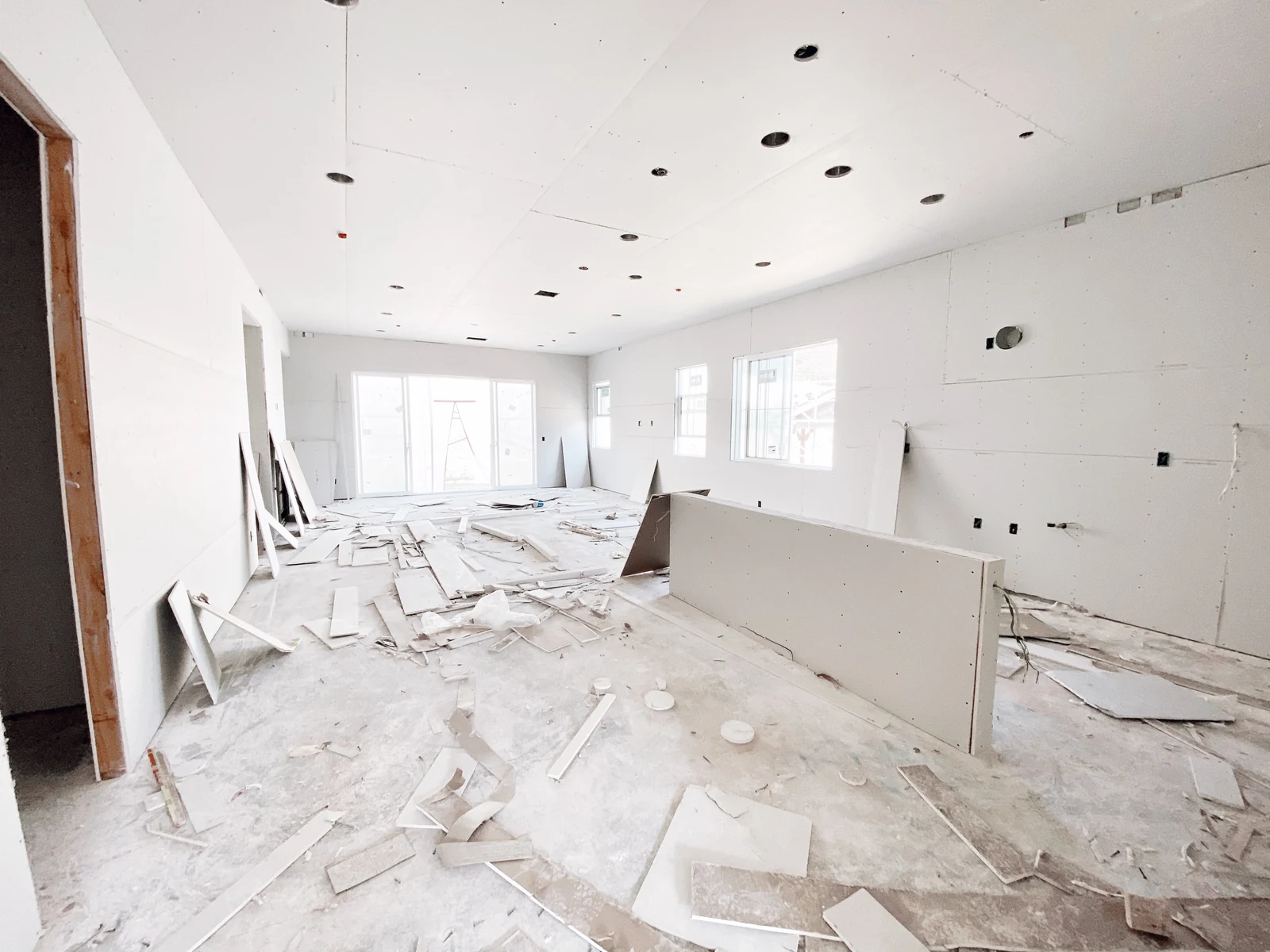
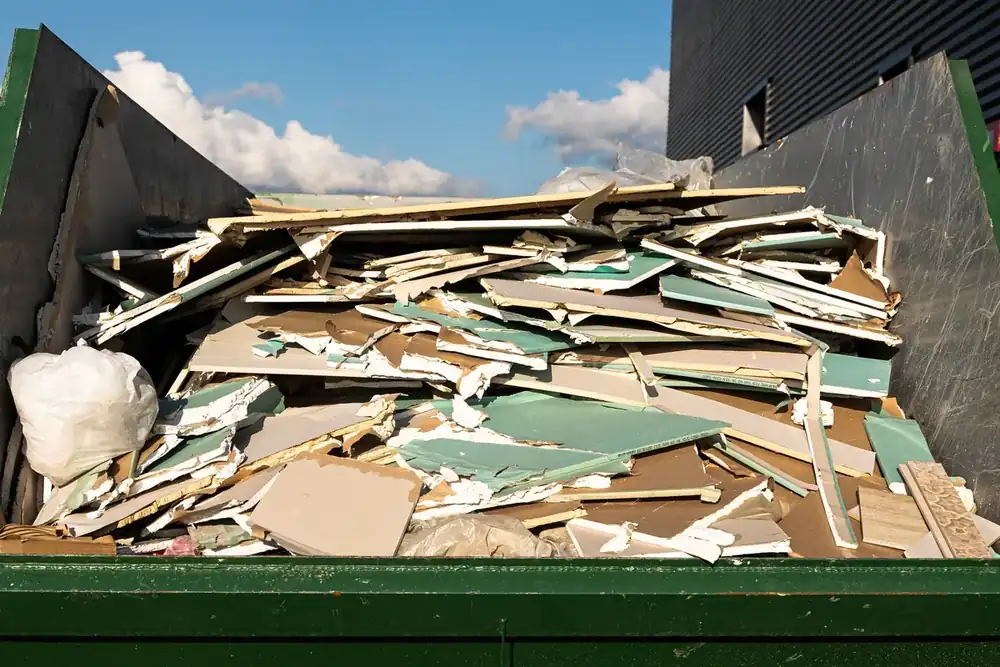
| Drywall and finishes | Board scrap, cartons, fixture and appliance packaging | Volume; the box goes out light | Strongest phase on the job |
| Punch list and final cleanout | Mixed bulky debris, protection material | Volume | Good, though the stream is inconsistent |
Read down the last column and the pattern is plain: the heavy phases come first and the light ones last. A container plan set in week one fits the heavy phases and misfits the light ones, and a plan set for the finishes is wrong for sitework.
Streams, and where each one belongs
Phases overlap on a real job, so it helps to think by stream as well.
| Jobsite stream | Container that suits it | Compaction fit |
|---|---|---|
| Concrete, masonry, brick and tile | Tell us first; we size it with you | Little to none: have it hauled |
| Excavated soil and aggregate | Kept out of the bulky container | None: no air to give back |
| Wood offcuts, pallets and forming lumber | A 30 through framing | Moderate |
| Metal studs, conduit and pipe offcuts | Rides in the mixed container | Moderate |
| Drywall scrap and insulation | A 30 or a 40 through finishes | Good |
| Cartons, wrap, crates and packaging | A 40 through fit-out and finishes | Strong |
Structural demolition is its own category, with its own weight math. The construction dumpster rental page covers container sizes by phase, access on an active site, and how a teardown phase and a buildout phase run on one account.
What Construction Debris Actually Does Under Compaction
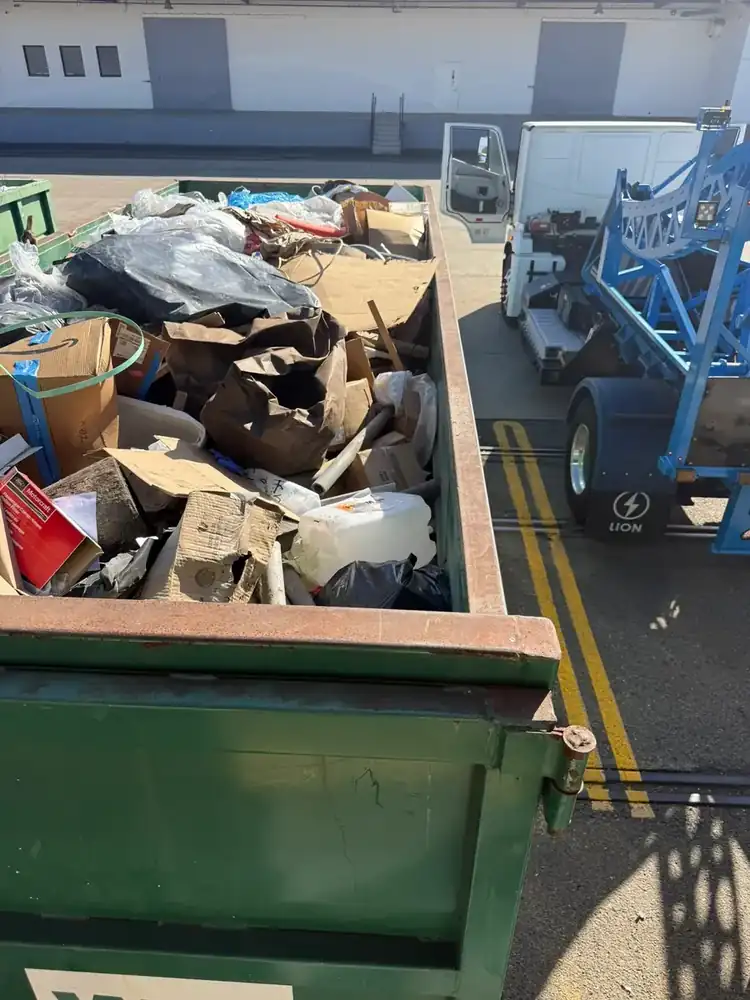
Compaction removes air, not debris. Compaction can reduce volume by up to 70%, depending entirely on the material. It is never a guarantee.
| Material | Compaction |
|---|---|
| Cardboard and packaging | Compacts well |
| Plastics | Compacts well |
| Pallets and wood | Compacts well |
| Furniture and bulky commercial waste | Compacts well |
| Light construction debris | Compacts well |
| Concrete, masonry and roofing shingles | Never compacted |
| Red iron, liquids and hazardous waste | Never compacted |
Read that table honestly. Light construction debris compacts well; concrete and masonry are never compacted. The fit-out, finish and close-out stretches, heavy with cartons, crates, wrap and insulation, compact well.
Compaction helps reduce waste volume by up to 70% depending on the material. On a jobsite, let a demo on your own container show where your load actually sits.
Mid-Project Compaction: Putting It Where It Pays
Mid-project compaction belongs on the phases that generate air: dry-in, rough-in and finishes, with compaction visits between pulls. American Compaction Services books visits around pours, lifts and inspections, because a truck arriving mid-pour helps nobody.
1. Start it when the stream turns bulky
2. Keep the heavy fraction out of the bulky box
3. Stop when the stream turns dense again
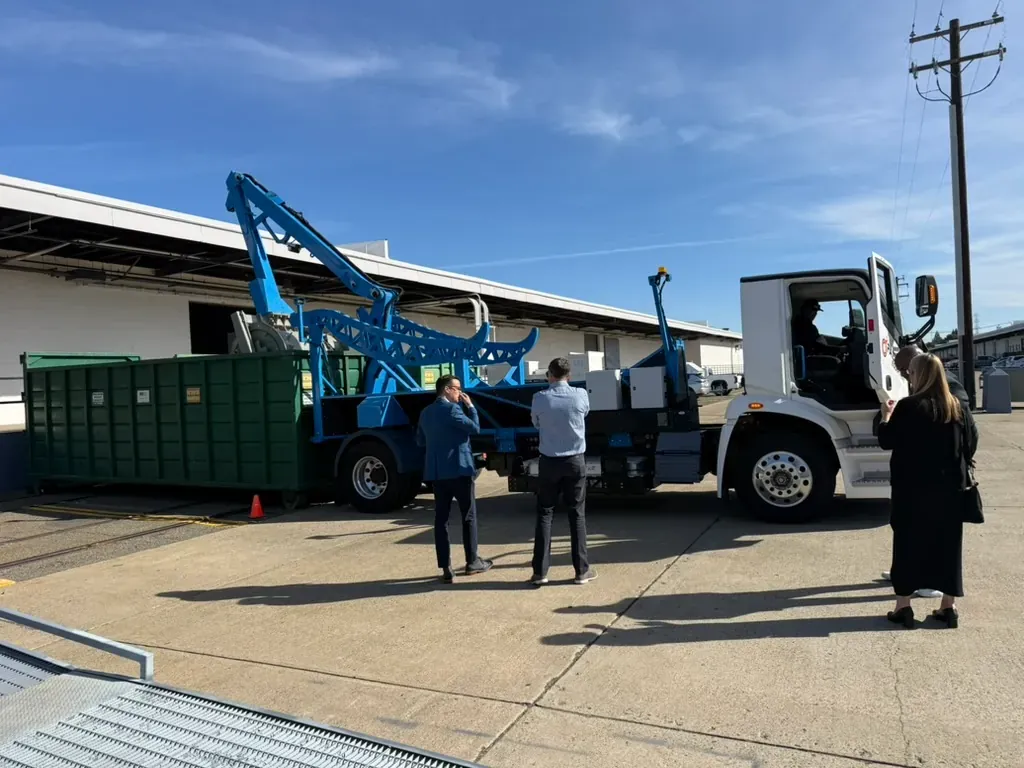
The visit itself stays off the crew's back. A heavy steel drum, narrower than the container, works the load down and never touches the walls. The drum works on its own weight, with no hydraulic down-force. Our operators run a zero-touch policy, and every visit includes a before-and-after inspection with photo documentation. Fewer trips is the point of compaction, so there is never a reason for us to argue for more trips than the job needs.
Four Levers That Cut Construction Waste Costs
The general version of these levers, with a way to audit your own waste spend, is in How Businesses Cut Roll-Off Haul Costs. On a jobsite, they look like this.
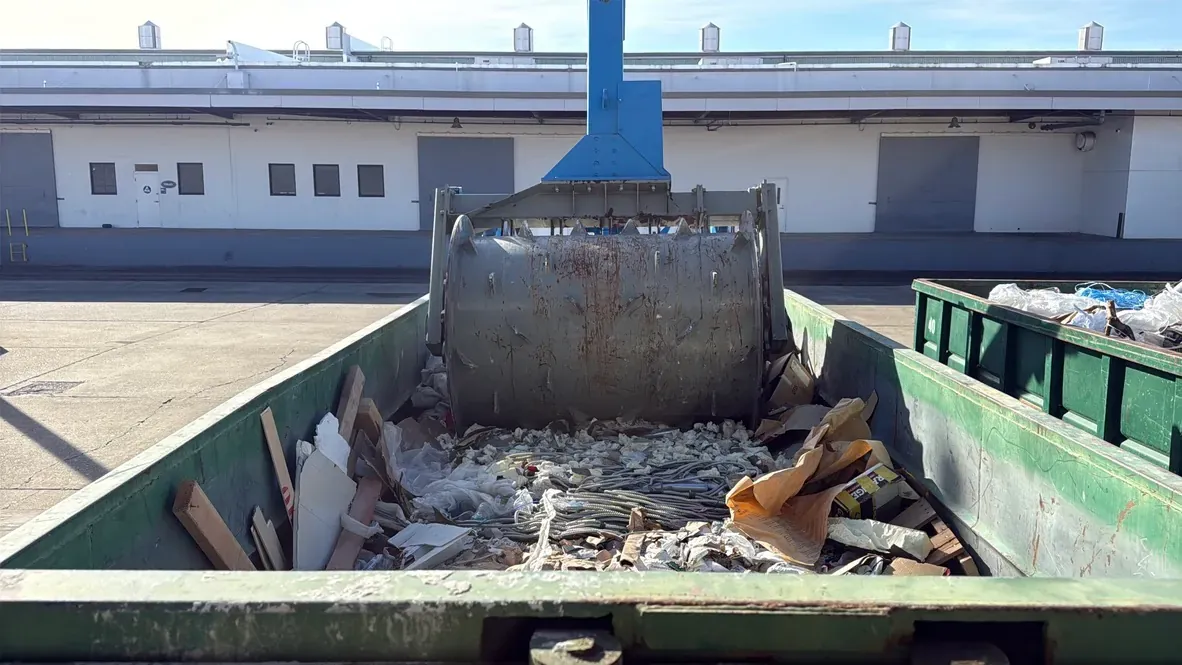
1. Size by phase
Heavy demolition weeks are sized with you once you tell us what is coming out; a 30 suits framing and a 40 the finishes. Put dense debris in a 40 and the load reaches the weight limit with room still showing; put finish packaging in a 20 and you pay for a swap every few days.
2. Set the swap schedule against the phase
Demolition weeks and close-out weeks produce far more debris than the middle of a job. A swap schedule built on an average is wrong in both directions: too many trips while framing goes up, not enough during the finish push. Give notice before a surge, so a swap or a compaction visit lands before the container overflows, not after.
3. Break down what breaks down
Crates, cartons, pallets and fixture packaging go in flat, not whole. Nest what nests, load flat and level, and keep dense debris low. It costs nothing but crew habit, and it pushes back every swap.
4. Remove the remaining air with compaction
Once sizing, scheduling and loading are right, what is left in a bulky container is air. That is the part compaction removes, on the phases that have it.
When Compaction Won't Cut Construction Waste Costs
Some jobs should skip compaction, and American Compaction Services would rather say so at the start. That is a smaller sale on purpose.
Containers that already leave at weight. Sitework, demolition and slab breakout fill by weight. There is no air to remove, so there is nothing to save.
Short jobs. A job that needs a pull or two in total has few trips to take off the schedule.
Mixed heavy and bulky loads. When masonry rides in with the packaging, the weight fills before the air comes out. Separate the streams before you think about compaction.
Phases that swap rarely. A container that leaves once per phase has little for a visit to act on.
Compaction reduces haul-offs; it never eliminates them. A compaction visit is itself a visit. What changes is that a short on-site visit happens instead of a haul-off, on the stretches of the job where the load is mostly bulk. If it won't move your number, we'll tell you on the spot.
Where You Are Changes the Number
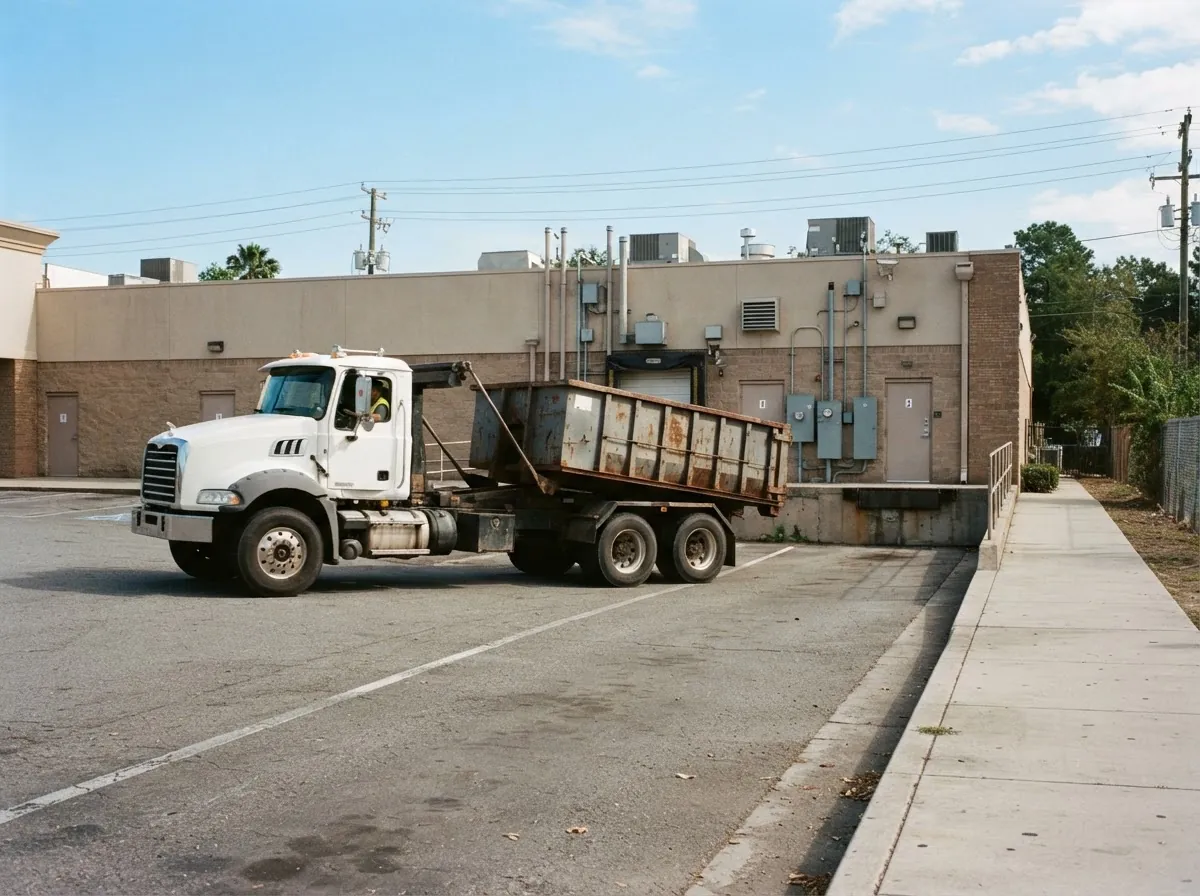
The same job can carry a different waste line in a different market. In most metros, the disposal site the hauler uses is a drive from the jobsite, and the longer that round trip, the more each swap costs. A container on the street or right-of-way needs approval from the local jurisdiction, and the rules vary by city. Wet weather matters too: rain turns a bulky load of wood, drywall and insulation into a heavier one, and a heavier load leaves less room to recover. And the local mix of work, from tilt-up shells in industrial parks to infill on tight older sites, decides which phases dominate your containers.
Service details and quotes are confirmed for the market and the individual site.
Each live market has its own page, with the local details on placement, permits and scheduling.
American Compaction Services' Take
Construction waste costs are a phase-timing problem wearing a container costume. Many jobs pick a container once and keep it, and that container is right for some phases and wrong for others. The trips that fix nothing pile up in the phases it was wrong for.
The fix costs little. Size it for the phase you are in, declare what is heavy, and compact what has air in it, nothing else.
— American Compaction Services
How American Compaction Services Can Help
American Compaction Services works with general contractors, builders, subcontractors and commercial developers. ACS provides waste management through dumpster rental and on-site compaction. If your hauler already has a container on the job, keep it and keep your hauler: we compact what is in it. No contract to sign: no exclusivity, no minimum, no term.
- The construction dumpster rental page covers containers by phase, jobsite access and swaps.
- How Businesses Cut Roll-Off Haul Costs covers the trip economics and a self-audit you can run on any account.
- The savings calculator runs the trip arithmetic on your own numbers.
- The request form takes the job, the phases and where the container would sit.
Free on-site demo: we compact one of your own containers while you watch. The demo carries no obligation and is photographed before and after. If it isn't a fit, we tell you on the spot.
Frequently Asked Questions About Cutting Construction Waste Costs
Tell Us What Phase You're In
Tell us the job, the phases and where the container would sit. American Compaction Services will size it to the phase you are in, set the swaps around the work and tell you honestly whether compaction changes your numbers.
Safer than pushing a load down with a loader or excavator
We compact the load right in your roll-off, on site. The box stays where it is. The room comes back.
Up to 70% less volume, depending on the material.
With roll-off, every haul is a call. With American Compaction Services, nobody has to call.
We set you up on a schedule and we compact on site. Dumpsters and compaction. All handled.
You already pay for dumpster space. Compaction lets you use more of it.
Getting started takes four details
- A photo of your dumpster and the space around it
- Your location
- What goes in the box
- The container size, if you know it
They help us plan for site access and match compaction service to your site.
We will prove it. Call or text (877) 651-7660.