
Sacramento Guide · Disposal
Where Sacramento Commercial Waste Goes
We automate your roll-off. You'll never run out of room. Fair price. Great service.
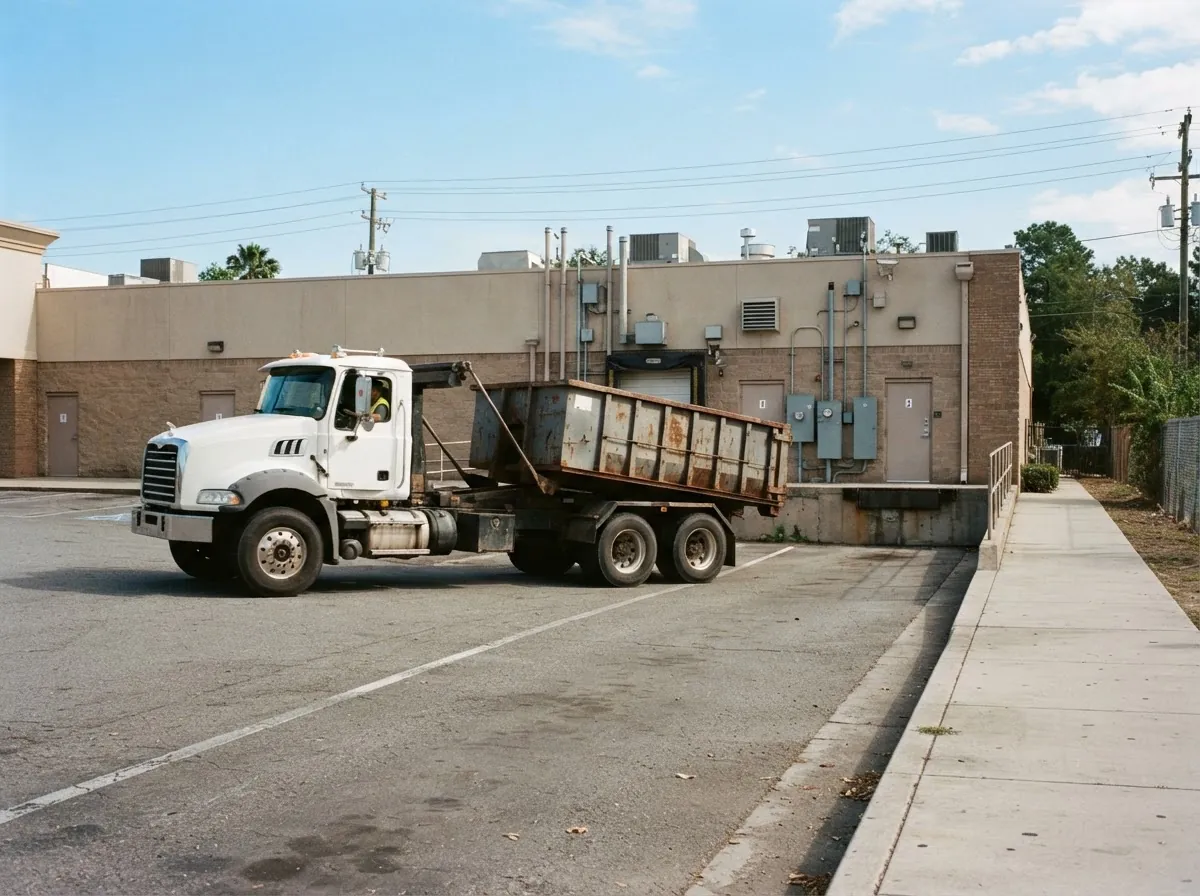
Every commercial dumpster pull ends at a scale. A truck carries the container from your site to a landfill, a transfer station or a sorting facility, empties it, and drives back. What happens there, and how far away it is, shapes much of a commercial waste bill. This guide covers the main public and commercial disposal sites serving the Sacramento market, what each one is for, and why distance and load type matter.
The facility your load goes to depends on the material, the jurisdiction and your hauler. Hours and acceptance rules change; check with the site or your hauler before relying on them.
Landfills, Transfer Stations and Sorting Facilities
Three kinds of site take commercial loads.
Landfills are the final destination for waste that is not recycled.
Transfer stations take loads from smaller trucks and consolidate them into larger loads bound for a landfill or recycler. Many also pull out recyclables.
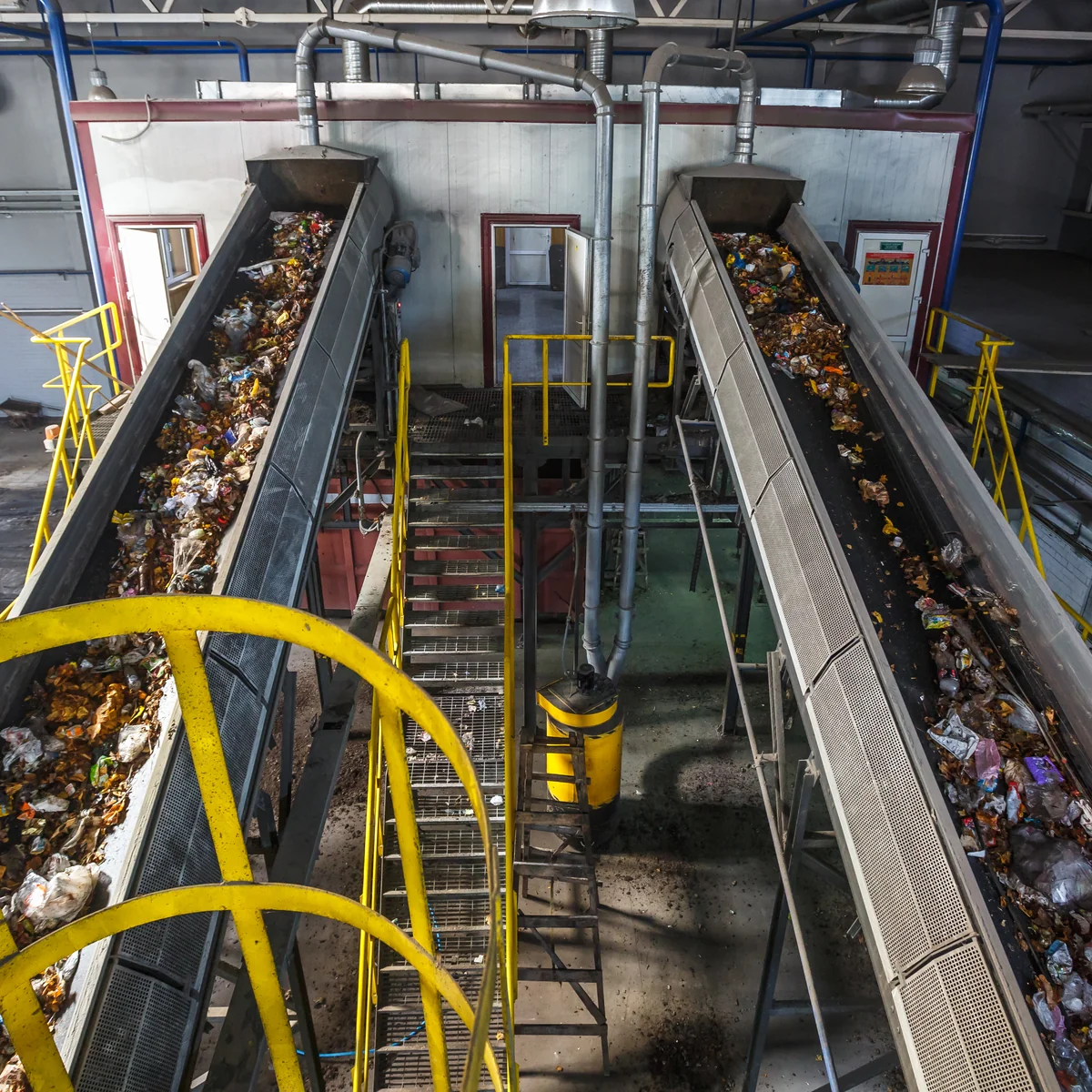
Sorting facilities (materials recovery facilities) take mixed loads, especially mixed construction and demolition debris, and sort out wood, metal, concrete, cardboard and other recoverable material. In the Sacramento area, some are certified by the County, and their recovery rate is what counts toward a project's diversion target.
County Sites
Kiefer Landfill, Sloughhouse
Kiefer Landfill is the County's landfill, at 12701 Kiefer Boulevard at Grant Line Road in Sloughhouse. It accepts waste from the public, businesses and private haulers, along with recyclables and some hard-to-handle wastes, with no residency requirement. Weekday hours are 6:30 a.m. to 4:30 p.m.; weekends 8:30 a.m. to 4:30 p.m.
North Area Recovery Station, North Highlands
The North Area Recovery Station is the County's transfer station, at 4450 Roseville Road in North Highlands. It takes the same customer types as Kiefer. Weekday hours are 6:30 a.m. to 6 p.m.; weekends 8 a.m. to 6 p.m.
The Power Inn Cluster
Southeast of downtown, the Power Inn industrial area holds a cluster of private disposal and processing sites, all close to each other:
- a landfill and materials recovery facility at 8635 Fruitridge Road;
- a resource recovery facility at 4201 Florin Perkins Road that takes wood, concrete, brick, asphalt, drywall, roofing, metal, brush, clean soil and bulky items, but no food, medical or hazardous waste;
- a recycling and transfer station at 8260 Berry Avenue;
- a recycling and transfer station at 8491 Fruitridge Road;
- a transfer station at 8642 Elder Creek Road.
The first three are County-certified sorting facilities for mixed construction and demolition debris.
That cluster is why hauls from central Sacramento tend to be short.
Sites Outside the Core
Western Placer Waste Management Authority, Lincoln
The regional facility at 3195 Athens Avenue in Lincoln takes western Placer County's mixed waste and green waste and runs construction recycling, composting and household hazardous waste programs. Roseville requires its mixed construction debris to go here.
Yolo County Central Landfill, Woodland
The Yolo County landfill at 44090 County Road 28H near Woodland takes construction recycling loads only if they are at least 65% recyclable by weight. Less recyclable loads pay a surcharge, and loads under 50% recyclable get no diversion credit. This matters most for West Sacramento jobs.
Diamond Springs, El Dorado County
A transfer station and materials recovery facility at 4100 Throwita Way in Diamond Springs serves the El Dorado County side.
Why Distance Shapes the Bill
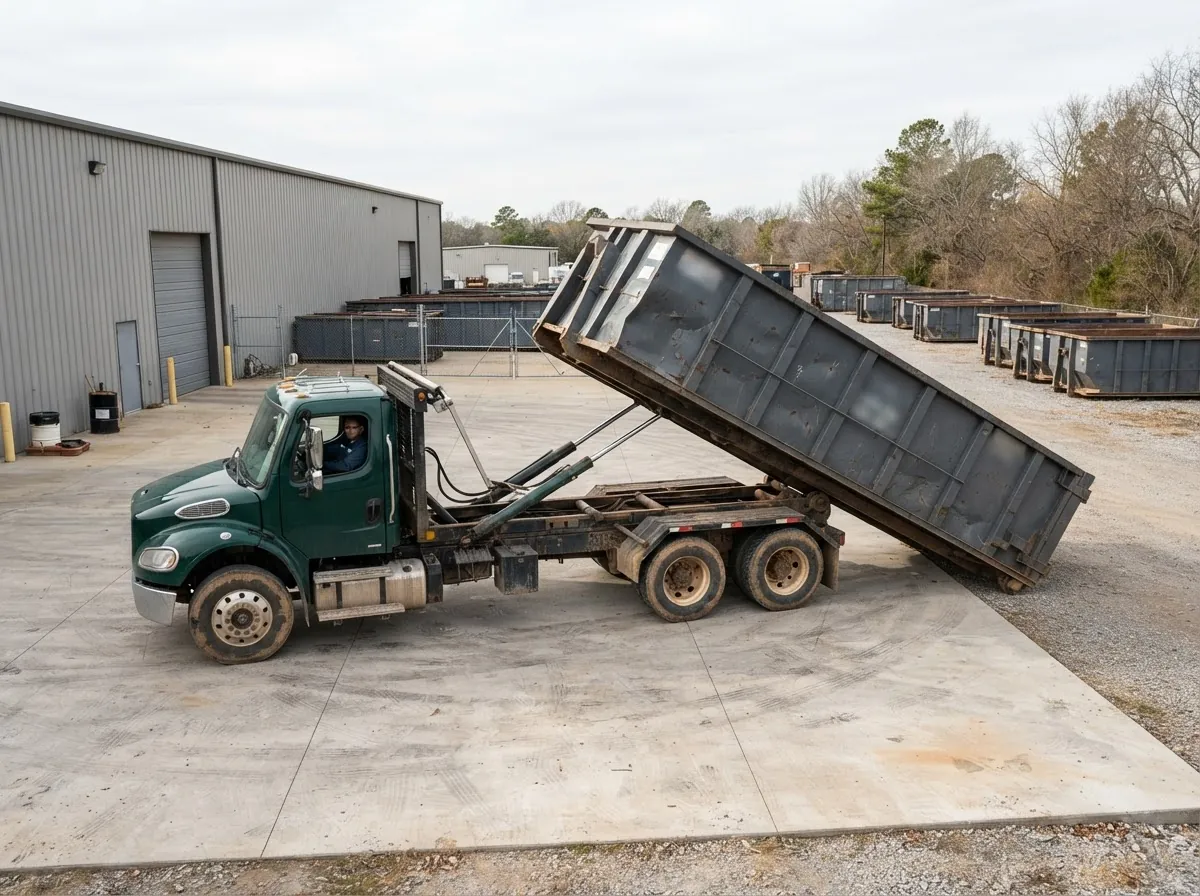
A pull is a round trip: your site to the disposal facility and back. The longer the run, the more each pull costs in truck time and fuel, and the fewer pulls a truck can make in a day.
Central Sacramento is well placed, with the Power Inn cluster close by. Jobs at the edges of the market run longer: south county jobs heading to Kiefer, Placer County jobs heading to Lincoln, foothill jobs heading to Diamond Springs.
What Compaction Changes, and What It Doesn't
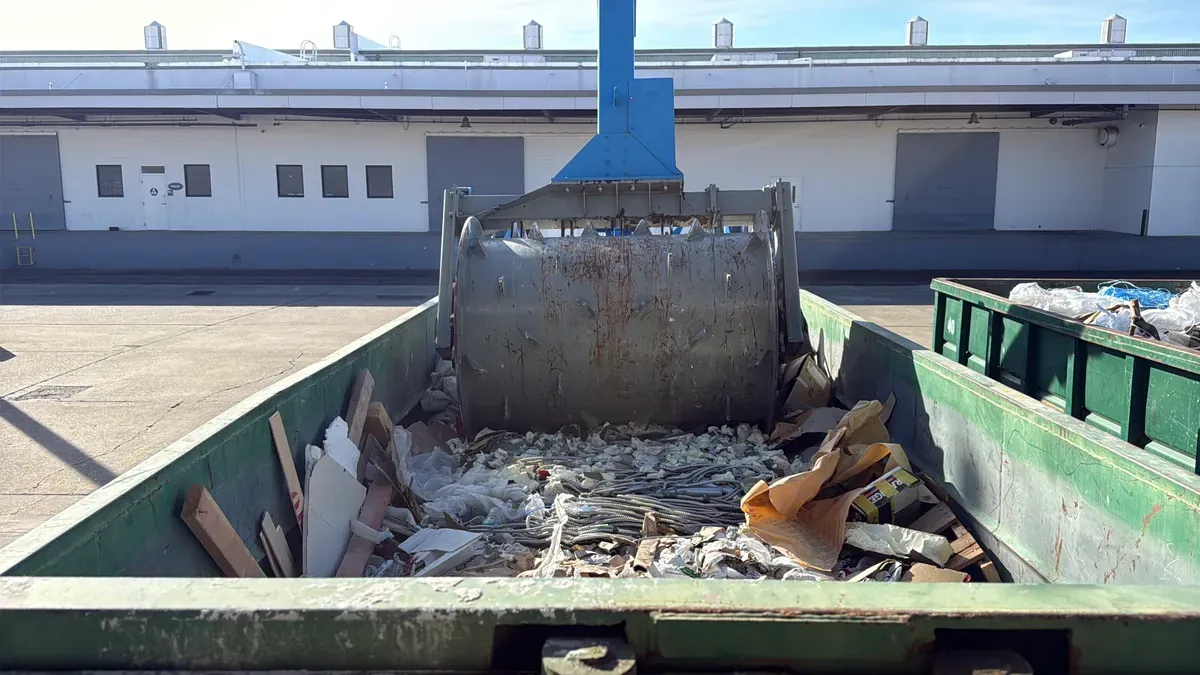
Compaction removes air, not material. The saving is in fewer pickups on the same waste: what it changes is how many times the truck makes the trip. A compacted container holds more before it is pulled, so the same waste leaves in fewer loads.
That makes compaction most valuable in two cases: where pulls are frequent, and where runs to disposal are long. On short central runs, the saving comes from pull count; at the edges of the market, every pull removed also saves a long drive. More on how visits work is on the Sacramento compaction page.
One caution for construction loads: a compacted mixed load still has to be accepted by the certified sorting facility that gives it diversion credit. Confirm acceptance before compacting mixed construction debris.
Rain and Weight
Most of Sacramento's yearly rain falls between November and March. Rain soaking into an uncovered container adds weight, and that weight is charged at the scale. Tarping open containers in the wet season keeps water from riding along to disposal.
Questions About Sacramento Disposal
Talk to the Sacramento Team
Want to know what fewer pulls would mean for your site? Send us your address, container and pull frequency.
American Compaction Services – Sacramento
Phone: (916) 282-0734 (Serving the Sacramento Area)
With roll-off, every haul is a call. With American Compaction Services, nobody has to call.
We set you up on a schedule and we compact on site. Dumpsters and compaction. All handled.
You already pay for dumpster space. Compaction lets you use more of it.
Getting started takes four details
- A photo of your dumpster and the space around it
- Your location
- What goes in the box
- The container size, if you know it
They help us plan for site access and match compaction service to your site.
We will prove it. Call or text (916) 282-0734.